주요 콘텐츠로 건너뛰기

‘스노든 폭로’ 이후 2년, 여전히 계속되는 집단 감시

지역

‘스노든 폭로’ 이후 2년, 여전히 계속되는 집단 감시

익명 (미확인) | 금, 2015/06/05- 09:23
국제앰네스티 영국지부는 러시아에 체류중인 에드워드 스노든과 화상으로 연결해 대량감시에 대한 질문과 답변을 주고받았다 ⓒRudi Netto

국제앰네스티 영국지부는 러시아에 체류중인 에드워드 스노든과 화상으로 연결해 대량감시에 대한 질문과 답변을 주고받았다 ⓒRudi Netto

에드워드 스노든(Edward Snowden)이 미국과 영국 정보부의 국제적 감시 프로그램을 폭로한 지 2년째를 맞이한 가운데, 국제앰네스티와 프라이버시 인터내셔널(Privacy International)은 5일 공동 브리핑을 발표하고, 각국 정부는 무차별 감시 프로그램의 정당성에 관한 논쟁에서 패배했음을 인정하고 정보 수집 방식에 있어 자신들의 과오를 바로잡아야 할 것이라고 밝혔다.

에드워드 스노든은 5일 전세계 신문에 실린 기사를 통해, “힘의 균형이 옮겨가고 있다”며 “법정에서의 승소와 법률 개정을 통해, 우리는 공포보다 사실이 더욱 확실하다는 것을 입증하고 있다”고 말했다.

브리핑 <’스노든 폭로’ 후 2년: 무차별 감시 시대에서의 인권 보호>는 법원과 의회, 많은 인권단체가 집단 감시 프로그램을 인권침해라고 비판하고 있음에도 이를 강행하고 확대하려는 국가정부에 대해 경고하고 있다. 이는 이번 주 미 의회가 미국 자유법(USA Freedom Act)을 채택한 데 뒤이어 발표된 것으로, 스노든의 폭로 이후 감시 권력의 법적 후퇴를 보여주는 유일무이한 사례였다.

칼리 니스트(Carly Nyst) 프라이버시 인터내셔널 법무국장은 “스노든의 폭로 덕분에 수백만 명의 일반 시민들은 자신의 가장 은밀한 비밀조차도 정부의 감시로부터 안전하지 못하다는 것을 알게 되었다. 다양한 국립 및 국제 전문가 집단이 이미 분명히 밝혔듯이, 무차별적인 집단 통신기록 감시는 인권 침해다. 이미 승부는 났고, 국가정부가 무차별적 집단 감시 프로그램을 개혁해야 할 때가 왔다”고 말했다.

셰리프 엘세이드 알리(Sherif Elsayed-Ali) 국제앰네스티 글로벌이슈 부국장은 “정부가 아직 집단 감시 프로그램이 인권침해라는 사실을 받아들이지 못하고 있는 점은 실망스럽다. 미국 자유법의 통과로 감시활동의 제한 가능성이 제시되긴 했지만, 프랑스와 영국의 감시활동이 더욱 치밀해졌다는 점은 국민의 사생활에 대해 더 많은 정보를 얻고자 하는 국가정부의 욕구가 충족되지 않았음을 보여주는 것”이라고 말했다.

여론 반대 무릅쓰고 감시 확대하는 정부

지난 2년 간, 법원과 의회 청문회 및 정부가 선임한 법적, 기술적 전문가 집단, 유럽위원회 및 유엔 등의 국제기구 등으로부터 집단 감시 프로그램은 불필요한 인권침해라는 비판이 계속됐다.

이번 브리핑은 이러한 국제적 비판에도 불구하고 미국과 영국의 감시 프로그램은 여전히 비밀에 싸여 있으며, 다른 국가들은 독자적으로 새로운 감시활동을 모색하고 있다고 경고했다.

덴마크, 핀란드, 프랑스, 네덜란드, 파키스탄, 스위스 등은 자국 및 그 외 국가까지 아울러 통신 감시 역량을 높인다는 내용의 신규 정보법안을 논의 중이거나 상정할 예정에 있다. 이번 주만 해도 프랑스 상원에서는 정부의 감시 역량을 대폭 강화하는 내용의 신규 법안이 가결되었다.

이번 브리핑은 또한 기술 발전으로 감시 기술이 더욱 저렴하고, 강력하고, 광범위해질 것이라고 경고했다. 현재 대부분 미국과 영국 정보부만이 보유하고 있는 감시 기술은 향후 더 많은 국가에 보급될 가능성이 높다.

디지털 시대의 인권 보호를 위한 7대 계획

국제앰네스티와 프라이버시 인터내셔널은 국가정부에 감시 프로그램의 사용에 있어 적절한 법적 통제 및 의회의 관리감독 등 견제와 균형 원칙을 적용할 것을 촉구하는 내용의 7대 계획을 발표했다. 국제앰네스티와 프라이버시 인터내셔널은 국가정부의 통신 감시 활동이 국제인권법이 허용하는 한도 안에서 이루어지기를 바라며, 즉 다음과 같은 상황에만 허용할 것을 촉구한다.

  • 범법행위가 있었다는 충분한 증거에 기반하여, 대상이 명확하고, 판사와 같이 독립적이고 엄격한 감독자에게 허가를 받았을 경우
  • 투명하고 독립적인 의회 및 사법 절차를 통해 관리 감독되는 경우
  • 공개적으로 열람이 가능하고 충분히 구체적으로 서술된 규칙과 정책에 따라 관리될 경우

국제앰네스티와 프라이버시 인터내셔널은 또한 공격적인 감시활동과 범죄 공격으로부터 수억 명의 인터넷과 통화 내용을 보호하기 위해 유력 인터넷 및 통신 업체가 더욱 큰 역할을 해야 한다고 촉구했다. 이러한 업체들은 정보의 보호와 익명화를 위해 암호화 및 그 외 사생활 보호 기술의 신규 개발과 강화에 더욱 투자하고, 법에 따라 보유한 정보를 정부에 제공해야 할 경우에는 사용자에게 고지해야 한다.

셰리프 엘세이드 알리 부국장은 “기술업체들은 온라인상에서의 사용자의 사생활과 표현의 자유를 보호하기 위해 더욱 적극적으로 나서야 한다. 애플(Apple)과 구글(Google) 등의 대형 업체들은 더욱 강력한 암호화 기준을 채택하기 시작하는 등의 움직임을 보이고 있는 반면 여타 업체들은 뒤처지고 있다. 기술업체들은 언제든 가능할 때 자사의 서비스에 종단간 암호화 기술을 기본적으로 도입해야 한다”고 말했다.

칼리 니스트 국장은 “대규모로 통신 기록을 수집하는 활동의 정당성 여부는 더 이상 논의의 대상이 아니다. 이는 명백한 인권침해이자 국제법 위반이다. 집단 감시 프로그램을 폐기하고, 명확한 대상을 설정해, 인권을 존중하는 책임 있는 방법으로 대체해야 한다”고 말했다.

영어전문 보기

Two years after Snowden, governments resist calls to end mass surveillance

Governments must accept they have lost the debate over the legitimacy of mass surveillance and reform their oversight of intelligence gathering, Amnesty International and Privacy International said today in a briefing published two years after Edward Snowden blew the lid on US and UK intelligence agencies’ international spying network.

“The balance of power is beginning to shift,” said Edward Snowden in an article published today in newspapers around the world. “With each court victory, with every change in law, we demonstrate facts are more convincing than fear.”

The briefing, Two years after Snowden: Protecting human rights in an age of mass surveillance, warns that governments are looking to maintain and expand mass surveillance, despite the practice being condemned as a human rights violation by courts, parliaments and human rights bodies. It comes on the heels of the adoption of the USA Freedom Act by the US Congress this week, a solitary and limited example of legislative rollback of surveillance powers since Snowden’s revelations began.

“Thanks to Edward Snowden, millions of ordinary people are now aware that not even their most intimate secrets are safe from government snooping. National and international expert bodies could not have spoken more clearly: the indiscriminate mass surveillance of communications is a violation of human rights. The game is up and the time has come for governments to reform their indiscriminate mass surveillance programmes,” said Carly Nyst, Legal Director at Privacy International.

“It is disappointing that governments have not accepted that mass surveillance violates human rights. While the passage of the USA Freedom Act shows that it is possible to roll back surveillance, the prospect of more intrusive spying powers in France and the UK shows that governments’ appetite for ever more information on our private lives is unsated,” said Sherif Elsayed-Ali, Deputy Director of Global Issues at Amnesty International.

Governments defy public opinion by expanding surveillance

During the past two years, mass surveillance has been condemned as excessive and a violation of human rights by courts, parliamentary enquiries and legal and technology experts appointed by governments and international institutions such as the Council of Europe and the United Nations.

The briefing warns that, in defiance of global condemnation, UK and US spying programmes remain shrouded in secrecy, while several other governments are seeking new surveillance powers of their own.

Denmark, Finland, France, the Netherlands, Pakistan and Switzerland are discussing or set to present new intelligence bills that will increase their ability to spy on communications in these countries and beyond. Just this week, the French Senate voted on a new bill that would grant the authorities vastly increased surveillance powers.

The briefing also warns that technological advances will make surveillance technology cheaper, more powerful and more widespread. Much of the capability currently available only to US and UK intelligence agencies will likely be available to many more countries in future.

Seven-point plan for protecting human rights in the digital age

Amnesty International and Privacy International today presented a seven-point plan calling on governments to introduce checks and balances on the use of surveillance, including proper judicial control and parliamentary oversight.

The rights groups want communications surveillance to be reeled in within the bounds of international human rights law, which means it only happens when it is:

  • Targeted, based on sufficient evidence of wrongdoing, and is authorized by a strictly independent authority, such as a judge,
  • Overseen by transparent and independent parliamentary and judicial processes,
  • Governed by publicly available and sufficiently detailed rules and policies.

The rights groups are also calling on powerful internet and telecoms companies to do more to protect the internet and phone communications of billions of people from invasive surveillance and criminal attacks. Companies should invest in new and better encryption and other privacy technologies for securing and anonymizing data, and inform users when the law may oblige them to hand their data over to governments.

“Tech companies must do much more to protect their users’ privacy and freedom of expression online. While some big firms like Apple and Google have started adopting stronger encryption standards, others are lagging behind. Tech companies need to introduce end-to-end encryption in their services by default, whenever possible,” said Sherif Elsayed-Ali.

“The legitimacy of collecting communications in bulk is no longer up for debate – it is a violation of human rights and international law. Mass surveillance must be dismantled and replaced by targeted, accountable measures that respect human rights,” said Carly Nyst.

시민들의 의견

댓글 달기

Plain text

  • 웹 페이지 주소 및 이메일 주소는 자동으로 링크로 전환됩니다.
  • 줄과 단락은 자동으로 분리됩니다.
  • 사용할 수 있는 HTML 태그: <a href hreflang> <em> <strong> <cite> <blockquote cite> <code> <ul type> <ol start type> <li> <dl> <dt> <dd>
이미지
무제한 수의 파일을 이 필드에 업로드할 수 있습니다.
50 MB 한계입니다.
허용된 유형: png gif jpg jpeg.
Enter the YouTube URL. Valid URL formats include: http://www.youtube.com/watch?v=1SqBdS0XkV4 and http://youtu.be/1SqBdS0XkV4.
CAPTCHA
스펨 사용자 차단 질문

포털 ‘임시조치’가 악법인 이유

글 | 손지원(고려대 한국인터넷투명성보고팀, 변호사)


기업이 듣기 싫어하면 소비자 불만글도 내려라??

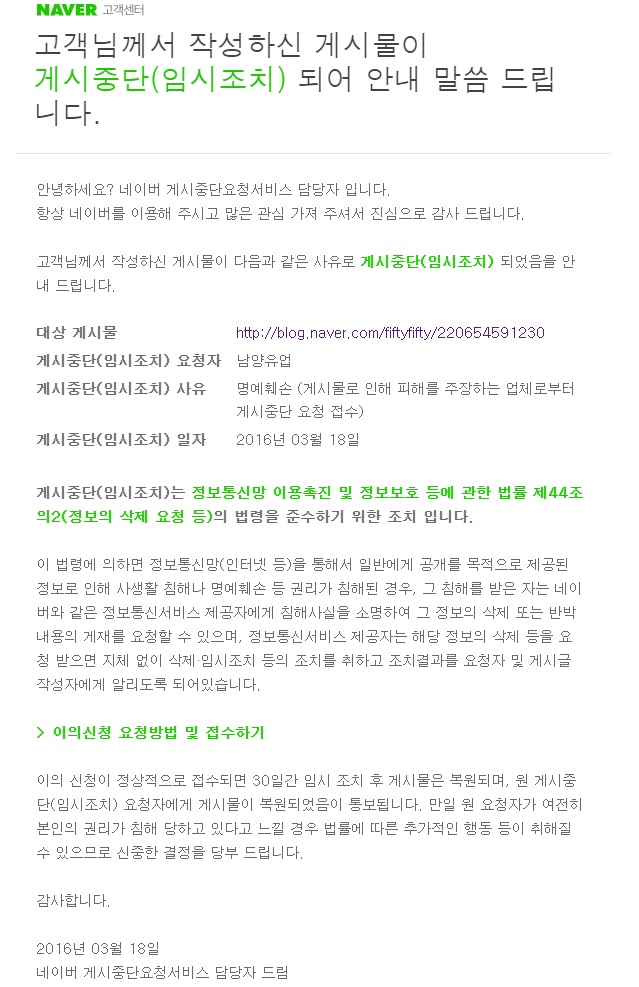
유제품 회사인 남양유업은 2010년대 초에 자사 제품의 과장광고 및 대리점 운영상 갑질 행태 의혹으로 곤욕을 치른 바 있다. 한 네티즌은 자신의 네이버 블로그에 이 같은 의혹에 대한 기사를 링크, 인용하며 비판하는 글들을 올렸다. 남양유업은 이 글들에 대해 명예훼손 신고를 하였고, 글들은 모두 임시조치(게시중단)되었다. 해당 네티즌은 즉각 이의신청을 하였지만 돌아온 것은 30일이 지난 후에야 복원하겠다는 답변이었다.

아무런 문제가 없는 글, 더군다나 소비자의 알 권리나 대기업의 횡포와 관련하여 사회적 이슈를 제기하기 위하여 애써 올린 공익적·합법적 포스팅이 왜 누군가로부터 신고되었다는 이유만으로 30일간 차단되어야 할까? 블로그 서비스를 제공하는 포털이 이용자의 권리를 부당하게 침해하는 것이 아닐까? 해당 블로그를 방문한 손님은 “(명예훼손 신고로) 임시적으로 게시가 중단된 게시물입니다” 같은 알림말로 도배된 블로그를 보면서 블로거에 대한 신뢰를 잃게 되지는 않았을까? 분노한 해당 네티즌은 블로그 서비스 제공사인 네이버를 상대로 손해배상청구 소송을 제기하였다.

2017-05-11-1494488124-3515491-1.jpg

그러나 2017년 4월, 법원은 네이버의 손을 들어줬다. 정보통신망법상 ‘임시조치’ 제도에 따른 적법한 행위라는 것이다. 정보통신망법 제44조의2 제4항은 정보통신서비스 제공자가 권리의 침해 여부를 판단하기 어렵거나 이해당사자 간에 다툼이 예상되는 정보에 대해서는 접근을 임시적으로 차단하는 조치를 할 수 있다고 규정되어 있고, 네이버와 같은 포털로서는 어떠한 게시글이 명예훼손인지 판단하기 어려우므로 해당 조항에 따라 게시중단을 한 것이 위법하지 않다고 판단한 것이다.

이러한 판결에 따르면 온라인상의 모든 글은 특정인, 특정 기업이 언급되어 있다는 이유만으로 명예훼손 분쟁 소지가 있는 글로 간주될 수 있고, 따라서 관련자가 신고하기만 하면 모두 30일간 차단될 수 있다. 이번 소송의 원인이 된 게시글 중에는 남양유업이 아니라 무턱대고 글을 차단한 네이버를 비판하는 글도 있었다. 이 사건과 같이 공익성이 명백한 경우 게시글이 함부로 차단되지 않도록 법원이 최소한의 기준을 설정하였어야 하는 것이 아닌가하는 아쉬움이 든다.

공익성을 가진 합법적 표현물을 차단하는 행위에 대해서 책임지는 주체가 아무도 없으니, 기업이나 업주들이 이를 악용하여 자신에 대한 온라인의 비판적 이용 후기나 소비자 불만글을 대량 차단하는 사례가 부지기수다. 이번 소송 과정에서도 남양유업을 비판하는 글들을 신고한 주체가 남양유업이 고용한 ‘온라인 삭제 대행업체’인 것으로 확인된 바 있다. 이러한 종류의 마케팅 서비스가 최근 번성하고 있는 것은 우려스러운 일이 아닐 수 없다. 긍정적인 면을 부각하는 홍보에 그치지 않고 소비자가 쓴 비교적 객관적인 후기까지 일방적으로 삭제, 차단하는 것은 평판을 조작하겠다는 것과 다름없기 때문이다.

임시조치 제도의 폐단은 우리나라의 불합리한 명예훼손, 모욕죄 법리로 인해 더욱 악화된다. 진실을 말해도 명예훼손죄가 성립할 수 있고 단순히 욕만 해도 모욕죄가 성립하는 우리 법제 하에서는, 누군가에게 듣기 싫은 말을 하는 순간 걸면 걸릴 수 있는 분쟁과 형사책임의 위험을 떠안게 된다. 이렇다보니 포털들도 일단 신고가 들어오면 법적 책임을 회피하기 위하여 차단을 선택할 수밖에 없게 되는 것이다.

또한 게시자가 이의를 제기하더라도 30일간 차단한 뒤에야 재게시하도록 한 것은 표현의 자유를 무조건적으로 후퇴시키는 불평등한 조치다. 저작권법(제103조 제3항)에서 저작권 침해 신고로 게시 중단된 경우 게시자가 이의를 제기하면 지체없이 심의하여 재게시하도록 규정하고 있는 것과 비교된다.

임시조치로 온라인상에서 사라지는 글은 한해 45만 건이 넘는다. 소비자 불만글, 대기업 비판글뿐만 아니라 공인에 대한 비판글 역시 임시조치로 무차별적으로 사라지고 있다. 표현의 자유와 알 권리가 침해되고 공론장이 위축됨으로써 오는 피해는 오로지 국민의 몫으로 돌아가고 있다.

불합리한 임시조치 제도는 폐지하거나 개선하는 수밖에 없다. 문재인 대통령은 임시조치 제도에 대해서 게시자가 이의를 제기할 경우에는 즉시 임시조치를 해제하고 분쟁조정기구의 심의나 법원의 최종 판단이 나올 때까지 게시를 유지하도록 제도를 개선하겠다고 공약한 바 있다. 새 정부가 최소한 이 공약을 지켜 표현의 자유와 알 권리를 한 단계 진보시키는 데에 앞장서는 모습을 보여주길 기대한다.


* 위 글은 허프포스트코리아에 기고했습니다. (2017.05.12.)

금, 2017/05/12- 14:19
440
0
 

나이지리아 니제르델타 지역의 기름유출로 오염이 심각한 지역에 대해 이미 정화작업을 마쳤다는 거대 석유기업 쉘(Shell)의 주장이 명백히 거짓임이 드러났다고 국제앰네스티와 환경인권개발센터(CEHRD)가 3일 신규 보고서를 통해 밝혔다.

보고서 <오염지역 정화하라: 니제르델타 기름유출에 대한 쉘의 거짓말>은 쉘 측이 이미 수년 전 정화 작업을 실시했다고 주장한 4개 유출 지점에서 여전히 오염이 진행되고 있는 점에 대해 다루고 있다. 이 보고서는 1995년 11월 10일, 니제르델타 지역의 석유 기업들이 초래한 피해에 반발하며 쉼없이 캠페인을 벌였던 환경운동가이자 작가인 켄 사로위와(Ken Saro-Wiwa)가 처형된 지 20주기가 되는 날을 기리며 발표되었다.

마크 두멧(Mark Dummett) 국제앰네스티 기업과인권 조사관은 “쉘은 자사의 송유관과 유정관의 오염을 충분히 정화하지 않으면서 수천 명의 남녀와 어린이가 오염된 토지, 물, 공기에 길게는 수십 년까지 노출되도록 방치하고 있다”며 “기름유출로 인해 니제르델타 주민들이 생계와 식량을 의존하고 있는 들판과 숲, 어장 등은 처참한 피해를 입었다. 기름유출 사고 지점을 방문한 사람들은 누구나 오염이 전 지역으로 퍼졌음을 냄새와 눈으로 확인할 수 있을 것”이라고 말했다.

이 보고서는 석유산업을 규제하지 못한 나이지리아 정부의 실책에 대해서도 다루고 있다. 관련 감시기관인 나이지리아 원유유출 감시대책기구(NOSDRA)은 재원도 부족할뿐더러 원유로 인한 오염이 눈에 띄는 지역도 청결하다고 보고하고 있는 실정이다.

환경인권개발센터의 스테빈 오보도케(Stevyn Obodoekwe) 국장은 “나이지리아 국민은 물론 전세계 사람들이 1995년 처형된 켄 사로위와와 오고니 대표 8인을 아직도 기억하고 있는 만큼, 쉘과 나이지리아 정부는 니제르델타의 석유 기업들이 남긴 끔찍한 유산을 모른 척해서는 안 된다. 이 지역 주민 대부분에게 석유는 고통만을 가져다 주는 존재”라며 “기름때로 얼룩진 토양과 강물에 둘러싸여 살아가고 있는 주민들의 삶의 질은 처참할 수준으로, 이미 수십 년 째 지속되고 있다”고 말했다.

조사를 통해 쉘이 정화했다고 밝힌 지역에서 눈에 띄는 오염 발견

니제르델타는 아프리카에서 가장 원유생산량이 많은 지역이다. 쉘은 이곳에서 가장 규모가 큰 다국적 석유기업으로, 유전 50개와 5,000km에 이르는 송유관을 운영하고 있으나, 대부분 노후하고 제대로 관리되지 않는 상태다. 쉘 역시 자체 발표를 통해 2007년 이후 1,693건의 원유 유출이 발생했다고 인정한 바 있으며, 실제 유출 건수는 더욱 높을 것으로 추정된다.

2011년 유엔 환경계획(UNEP)은 니제르델타의 오고니랜드에 설치된 쉘의 송유관에서 유출된 원유로 막대한 수준의 오염이 발생했다고 밝혔다. 또한 쉘이 유출된 원유를 제대로 정화하지 않으면서 피해 지역의 생태계와 주민들에게 더욱 심각한 피해를 끼쳤다는 사실도 공개했다. 쉘은 UNEP가 지적한 피해 지역에 대해 정화 사업을 실시하고, 향후의 유출 사고 대응방식을 개선하겠다고 약속했다.

그러나 국제앰네스티와 환경인권개발센터가 2011년 유엔 환경계획이 오염 수준이 심각하다고 지적했던 4개 지역을 현장 조사한 결과, 이미 정화사업을 실시했다는 쉘의 주장에도 불구하고 4개 지역 모두 2015년에도 여전히 눈에 띄게 오염된 상태임을 확인할 수 있었다. 조사 결과 이러한 오염은 새로운 원유 유출 때문이 아니라 정화작업이 충분히 이루어지지 않은 것이 원인이었다.

오염 지역 중 하나인 11번 보무 유전에서 조사관들은 원유 유출이 발생한 지 45년이 지났음에도 여전히 검게 변한 흙과 물 위에 뜬 기름때를 발견할 수 있었다. 쉘 측이 이미 1975년과 2012년 정화사업을 두 번 실시했다고 주장했음에도 불구한 일이다. 나이지리아 규제당국이 정화되었다고 인증한 다른 오염지역의 경우에도 마찬가지로 마을과 농경지 근처에서 기름에 오염된 토양과 물이 발견됐다.

이러한 조사 결과는 쉘이 나이지리아의 기름오염 정화사업에 성의 있게 임하지 않았음을 보여주는 것이다. 정화사업을 직접 시행하는 현지 업자를 교육하거나 감독하는 과정에 있어서도 마찬가지였다.

쉘과 계약한 한 업자는 무성의한 겉핥기식의 정화 작업만으로는 지속적인 환경피해를 막을 수 없다며 “이것은 단지 은폐에 불과하다. 몇 미터만 땅을 파면 기름 찌꺼기가 나오는데, 우리는 그저 땅을 파고 기름 찌꺼기와 흙을 파낸 후 다시 메우기만 했을 뿐”이라고 국제앰네스티에 전했다.

기름 오염의 피해를 감당해야 하는 지역사회

지역 주민들은 국제앰네스티와 CEHRD에 원유 유출 이후 남은 오염물질들이 니제르델타 주민 약 3분의 2가 생계와 식량을 의존하고 있는 토지와 강을 오염시켰다고 말했다. 이제 80대가 된 에마디 로버츠 크파이(Emadee Roberts Kpai)는 2009년 원유 유출이 일어나기 전까지 보무에서 농업과 어업에 종사했다.

“시내는 이제 간 곳이 없고, 고기잡이로는 더 이상 생계를 꾸릴 수 없다. 농사짓던 농장은 이미 쉘에서 유출된 기름으로 황폐화됐고, 작물도 생산성이 없다. 물에는 고기가 없다. 작물을 심으면 자라기는 하지만 작황이 좋지 않다.
쉘이 우리 마을에 처음 들어왔을 때, 여기서 유전을 발견하면 마을을 완전히 탈바꿈시키고 모두가 행복해질 거라고 약속했는데… 우리가 얻은 것은 아무것도 없다.”

“더이상 작물이 자라지도, 물고기가 살지도 않는다.” © Mike Uwemedimo for Amnesty International

유엔 지적에도 불구하고 대응 없는 쉘

쉘 측은 국제앰네스티의 조사 결과에 대해 동의하지 않는다고 밝혔을 뿐 아무런 부연 설명을 덧붙이지 않았다. 대신 조사관들에게 자사 홈페이지를 안내했으나, 사이트상에서 정화사업에 대한 정보는 거의 찾아볼 수 없었다. 또한 쉘은 원유 유출 사건과 오염 대부분이 관리 부족보다는 송유관에서 원유를 절도하는 등의 불법 행위로 인한 것이라는 주장을 반복했다.

국제앰네스티와 환경인권개발센터는 이러한 불법 행위에 대한 쉘의 주장이 거짓이며, 송유관 부식으로 인한 원유 유출의 규모에 대해 지난 보고서에서 공개한 바 있다.

나이지리아는 송유관을 보유한 모든 기업에 대해 원유 유출 원인에 상관없이 정화 작업을 실시해야 할 의무가 있다고 법적으로 규정하고 있다.

국제앰네스티는 정화작업에 더욱 투명하게 임할 것을 쉘 측에 촉구한다. 또한 나이지리아 정부는 관련 감시기구인 나이지리아 원유유출 감시대책기구(NOSDRA)를 더욱 강화할 것을 요청한다.

마크 두멧 국장은 “쉘은 원유 유출의 원인이 절도범들이라고 주장하지만, 그게 사실이라 하더라도 쉘이 계속해서 기름오염 정화사업을 제대로 시행하지 못하는 데 대한 변명은 될 수 없다. 쉘의 책임 전가는 지키지 못한 약속과 방치된 기반시설에 대한 주목을 더 이상 분산시키지 못할 것”이라며 “쉘이 약속을 이행하지 않는 한 니제르델타는 번영을 약속받고도 병들고 황폐화된 땅으로 버려졌다는 교훈적 이야기로만 남게 될 것”이라고 말했다.

배경: 쉘에 대한 ‘클린 잇 업’ 캠페인

이번 보고서는 니제르델타 원유 유출의 처참한 피해를 복구하는 데 나설 것을 쉘에 촉구하는 국제앰네스티의 ‘정화 하세요(Clean It Up)’ 캠페인의 일환으로 발표되었다. 또한 1995년 11월 10일 켄 사로위와가 불공정재판으로 처형된 지 20년이 되는 날을 앞두고, 쉘의 주유소 앞에서 특별 철야농성과 항의 시위를 벌일 예정이다.

또한 공학 전공 학생을 대상으로 한 쉘의 자사 채용광고 “미래를 만드세요(Make the future)”를 바탕으로 패러디한 캠페인 영상도 함께 공개된다.

영어전문 보기

Niger Delta: Shell’s manifestly false claims about oil pollution exposed, again

Claims by oil giant Shell that it has cleaned up heavily polluted areas of the Niger Delta are blatantly false, Amnesty International and the Centre for Environment, Human Rights and Development (CEHRD) said in a new report published today.

Clean it up: Shell’s false claims about oil spills in the Niger Delta documents ongoing contamination at four oil spill sites that Shell said it had cleaned up years ago. The report is being published to mark the 20th anniversary of the execution, on 10 November 1995, of the environmental activist and writer, Ken Saro-Wiwa, who campaigned tirelessly against the damage caused by the oil industry in the Niger Delta.

“By inadequately cleaning up the pollution from its pipelines and wells, Shell is leaving thousands of women, men and children exposed to contaminated land, water and air, in some cases for years or even decades,” said Mark Dummett, Business and Human Rights researcher at Amnesty International.

“Oil spills have a devastating impact on the fields, forests and fisheries that the people of the Niger Delta depend on for their food and livelihood. Anyone who visits these spill sites can see and smell for themselves how the pollution has spread across the land.”

The report also documents the failure of the Nigerian government to regulate the oil industry. Its watchdog, the National Oil Spill Detection and Response Agency (NOSDRA) is under-resourced and continues to certify areas as clean that are visibly polluted with crude oil.

“As people in Nigeria and around the world remember Ken Saro-Wiwa and the eight other Ogoni leaders who were executed in 1995, Shell and the government of Nigeria cannot ignore the terrible legacy of the oil industry in the Niger Delta. For many people of the region, oil has brought nothing but misery,” said Stevyn Obodoekwe, CEHRD’s Director of Programmes.

“The quality of life of people living surrounded by oil fumes, oil encrusted soil and rivers awash with crude oil is appalling, and has been for decades.”

Investigation finds visible pollution at sites Shell says it cleaned

The Niger Delta is the biggest oil-producing region in Africa. The largest international oil company there is Shell. It operates around 50 oil fields and 5,000 km of pipelines, much of them ageing and poorly-maintained. The oil giant’s own figures admit to 1,693 oil spills since 2007, though the real number is probably higher.

In 2011 the United Nations Environmental Programme (UNEP) exposed massive levels of pollution caused by oil spills from Shell pipelines in the Ogoniland region of the Niger Delta. UNEP also exposed how the damage done to the environment and people was exacerbated by the company’s failure to clean up the spills properly. In response, Shell promised to clean up sites identified by UNEP and improve its response to future spills.

Yet in field investigations at four of the spill sites UNEP identified as highly polluted in 2011, Amnesty International and CEHRD found all four remain visibly contaminated in 2015, even though Shell says it has cleaned them. The investigation demonstrates this is due to inadequate clean-up, and not new oil spills.

At one of the locations, Shell’s Bomu Well 11, researchers found blackened soil and layers of oil on the water, 45 years after an oil spill took place – even though Shell claims to have cleaned it up twice, in 1975 and 2012. At other sites, certified as cleaned by the Nigerian regulator, researchers found soil and water contaminated by oil close to where people lived and farmed.

The investigation shows Shell has not addressed problems with its entire approach to cleaning up oil pollution in Nigeria, including how it trains and oversees the local contractors that actually conduct the work.

One contractor who had been hired by Shell told Amnesty International how half-hearted and superficial clean-up efforts fail to prevent lasting environmental damage:

“This is just a cover up. If you just dig down a few metres you find oil. We just excavated, then shifted the soil away, then covered it all up again.”

Communities bear the brunt of oil pollution

Communities told Amnesty International and CEHRD how lingering pollution after oil spills had contaminated the land and rivers that nearly two-thirds of the Niger Delta’s people rely on for food and livelihood. Emadee Roberts Kpai, now in his 80s, was a farmer and fisherman until the oil spill at Bomu Manifold in 2009.

“Our creeks are no more. Fishing activity is no more productive. The farm I should be farming has already been devastated by oil spills from Shell. Our crops are no longer productive. No fish in the water. We plant the crops, they grow but the harvest is poor.

“When Shell came to our community, they promised that if they find oil they’ll transform our community, and everybody will be happy… Instead we got nothing from it.”

Shell fails to act despite UN criticism

Shell told Amnesty International it disagreed with the organizations’ findings, without providing any details. The company directed researchers to its website, but this provides very little information about clean up. Shell also repeated its claim that most oil spills and pollution are caused by illegal activity, such as people stealing oil from pipes rather than poor maintenance.

Amnesty International and CEHRD have exposed false statements made by Shell about illegal activity and the extent of oil spills due to corroded pipes in previous reports.

In any case, Nigerian law says companies who own pipelines are responsible for cleaning up, no matter what causes a spill.
Amnesty International is calling on Shell to be more transparent about its clean-up operations. The organization also says the Nigerian government needs to strengthen its watchdog, the National Oil Spill Detection and Response Agency (NOSDRA).

”Shell says theft is to blame for oil spills, but even if that were true it would not excuse the company’s consistent failure to clean up oil pollution. Shell’s blame game can no longer deflect attention from its broken promises and neglected infrastructure,” said Mark Dummett.

“As long as oil companies fail to live up to their commitments, the Niger Delta will remain a cautionary tale of communities promised prosperity, but left with blighted, devastated lands.”

Background: Clean It Up campaign targets Shell

The report is part of Amnesty International’s Clean It Up campaign, which calls on Shell to finally deal with the devastating impact of oil spills in Niger Delta. The campaign involves special vigils and protest actions outside Shell petrol stations ahead of the 20th anniversary of Ken Saro-Wiwa’s execution after an unfair trial on 10 November 1995.

The campaign will also feature a spoof video based on Shell’s own “Make the future” recruitment campaign targeting engineering students.


목, 2015/11/05- 14:10
438
0

11304207_10206724849103664_1284100308_n

동남아시아 지역에서 수개월에 걸쳐 난민 수천여 명이 탄 배가 좌초되는 참사가 벌어지며 이러한 난민 위기를 해결하고자 정상회담을 개최한 지 한 달이 지났으나, 이 지역 국가들은 지금까지 난민과 이주민을 보호하기 위해 충분한 조치를 취하지 않고 있다고 국제앰네스티가 1일 공개서한을 통해 밝혔다.

지난 5월 29일 방콕에서 열린 ‘인도양 지역의 미등록 이민에 관한 특별회의’에서는 17개국이 참석해 안다만 해와 벵골 만 지역에서 벌어지고 있는 인도적 위기에 관해 논의하는 시간을 가졌다.

리처드 베넷(Richard Bennett) 국제앰네스티 아시아태평양 국장은 “방콕 회담이 열린 지 한 달이 지났지만, 각국 정부가 난민과 이주민의 절박한 상황을 타개하는 데 필요한 조치를 취할 기미는 거의 보이지 않는다. 수색구조 작전에 대한 협력도 여전히 충분히 이루어지지 않고 있고, 연안에 상륙한 사람들에 대한 보호조치도 분명하게 마련되지 않았다”고 말했다.

지난 5월 국제이주기구(IOM)는 주로 미얀마와 방글라데시에서 온 난민과 이주민 약 8,000명이 태국 연안에서 표류하고 있을 것으로 추정했다.

인도네시아와 말레이시아는 그 후로 제3국에 재정착하거나 본국에 송환하는 조건으로 난민 7,000명에 대해 최대 1년까지 임시 보호를 제공하겠다고 약속했다.

해상의 기후가 안정적인 다음 ‘항해 시즌’은 10월에 시작될 것으로 보이며, 이 시기에 난민과 이주민들은 자국을 떠나기 위해 다시 배에 오를 것이다.

리처드 베넷 국장은 “현재의 무대응은 향후 재난을 부르는 지름길이 될 수 있다. 당장 직면한 최악의 해상 위기는 모면한 것처럼 보일지 모르나, ‘항해 시즌’이 시작되면 상황은 다시 악화될 가능성이 높다. 본국에서 기소될 위험에 처한 사람들은 망명을 신청하기 위해 계속해서 해외로 빠져나올 것이다. 동남아 지역의 각국 정부가 더 많은 생명이 희생되지 않도록 적절한 조치를 취하고, 망명 신청자 또는 이주민들이 안전하고 합법적인 수단을 취할 수 있도록 보장하는 것이 무엇보다 중요하다”고 말했다.

국제앰네스티는 공개서한을 통해, 동남아시아 국가연합(ASEAN)과 호주, 방글라데시 정부에 난민 위기를 해결하기 위해 긴급 조치에 나설 것을 촉구한다. ASEAN 외무장관 회담이 2015년 8월 1일부터 6일까지 말레이시아 콸라룸푸르에서 개최될 예정이다.

이러한 조치에는 수색구조 작전의 공조협력 강화, 난민과 이주민 인권의 보호와 존중, 특히 미얀마 정부에 소수민족 로힝야족에 대한 제도적 차별 중단을 촉구하는 등의 현 난민위기의 근본적인 원인 해결이 반드시 포함되어야 한다.

리처드 베넷 국장은 “지금은 한숨을 돌릴 것이 아니라, 바다에서 위험천만한 항해를 경험했거나 곧 경험하게 될 난민과 이주민들의 상황을 타개하기 위해 더욱 노력해야 할 때다. 오랫동안 계속되고 있는 작금의 난민 위기는 무슨 일이 있어도 종식되어야 하며, 이 지역 국가들의 최우선 과제가 되어야 한다. 다가오는 ASEAN 외무장관 회담은 지역수준의 행동을 위한 포괄적 조치를 시행할 또 한 번의 기회”라고 말했다.

공개서한서 원문(국제앰네스티 16개지부 사무국장 서명 포함)

영어전문 보기

South East Asia: Inaction paves theway for future refugee disaster

South East Asian governments have so far failed to take sufficient action to protect refugees and migrants one month after a key summit to address the crisis that saw thousands of people stranded on boats over the past months, Amnesty International said in an open letter today.

The SpecialMeeting on Irregular Migration in the Indian Ocean in Bangkok on 29 May brought 17 countries together to discuss the humanitarian crisis unfolding in the Andaman Sea and the Bay of Bengal.

“One monthafter the Bangkok summit, there are few signs that governments are doing what is necessary to address the desperate plight of migrants and refugees. There’s still inadequate coordination on search and rescue operations, and a lack of clear protection measures for people who have landed on their shores,” said Richard Bennett, Amnesty International’s Asia Pacific Director.

TheInternational Organization for Migration at one point in May estimated that there were as many as 8,000 people – refugees and migrants mainly from Myanmar and Bangladesh – stranded on boats close to Thailand.

Indonesia and Malaysia have since committed to providing temporary protection for up to a year for 7,000 people on the condition that third governments resettle or repatriate them.

The nextsailing season will likely start in October when seas are calmer and refugees and migrants will again take to boats to leave their home countries.

“Inactionnow could pave the way for disaster later. Although it might look like the worst of the immediate crisis at sea is over, it is likely to escalate again once the sailing season starts. Those facing persecutions in their home countries will continue to flee to seek asylum. It is crucial that regional governments put measures in place to ensure that more lives are not lost, and ensure there are safe and legal means for seeking asylum or migrating,” said Richard Bennett.

In the openletter, Amnesty International urges the governments of the Association of South East Asian Nations (ASEAN), Australia and Bangladesh to take urgent measures to address the crisis. ASEAN foreign ministers are scheduled to meet in Kuala Lumpur, Malaysia from 1-6 August 2015.
Measuresmust include stepping up coordinated search and rescue efforts, ensuring that human rights of migrants and refugees are protected and respected, and addressing the root causes of the current crisis, in particular by calling on thegovernment of Myanmar to end systematic discrimination against the Rohingya minority.

“Now is the time not to relax but to intensify efforts to address he situation of refugees and migrants who have or are likely to undergo dangerous journeys at sea. This latest episode in a long-standing crisis is by no means over and should be at the top of the agenda for regional governments. The upcoming ASEAN meeting is another opportunity to put in place comprehensive measures for regional action,” said Richard Bennett.


목, 2015/07/02- 09:53
435
0
국제앰네스티와 화상 인터뷰 중인 에드워드 스노든 ⓒ Rudi Netto

국제앰네스티와 화상 인터뷰 중인 에드워드 스노든 ⓒ Rudi Netto

배경

에드워드 스노든은 국가안보국(NSA)의 전 직원으로서, 2013년 미국 NSA의 대규모 감시 프로그램을 사회에 폭로했다. 그는 NSA가 PRISM이라는 프로그램을 통해 미국인 수백만 명의 이메일을 수집하고 전화를 엿듣고 있음을 알렸고, 당시 NSA가 각국 정상들까지 도청하고 있음이 밝혀지면서 전 세계적인 파장이 일어났다. 당시 스노든과 함께 안보라는 이름으로 자행되는 국가기관의 무차별적인 정보 수집의 문제와 민간인의 사생활 침해를 폭로한 가디언과 워싱턴 포스트는 퓰리처상을 수상했다.
그런데 최근 스노든의 문제가 또다시 화제에 올랐다. 러시아 망명 중인 스노든이 오바마 대통령에게 사면을 요구하자, 그와 함께 했던 워싱턴포스트가 사설을 통해 돌연 스노든을 사면해서는 안 된다고 반박한 것이다.
취재원이었던 스노든을 보호하기는 커녕, 사면을 반대하는 워싱턴포스트의 주장은 다음과 같다.

  • NSA의 PRISM 프로그램은 ‘해외’ 감시 프로그램으로, 이는 미국 국내법상 합법적이다.
  • NSA의 NSA ‘해외’ 감시활동은 미국 자국민들의 사생활 침해와는 무관하다.
  • 스노든의 폭로는 국가 안보에 막대한 피해를 끼쳤다.

국제앰네스티는 에드워드 스노든의 사면을 촉구하며, 워싱턴포스트의 위와 같은 주장에 다음과 같이 반박한다.

조슈아 프랑코(Joshua Franco), 기술과 인권 조사관 및 자문위원

3년 전, 에드워드 스노든(Edward Snowden) 미국 정부의 불법 집단감시 프로그램 관련 보도의 제보자임이 처음 밝혀졌을 당시 “대중의 관심이 내게 쏠리기를 원하지 않는다. 나에 대한 이야기보다는 미국 정부가 벌이고 있는 일이 더 화제가 되기를 바란다”고 밝혔다.

그로부터 3년이 지나고 미국시민자유연합(ACLU), 휴먼라이츠워치(Human Rights Watch), 국제앰네스티 등의 시민사회단체가 스노든 사면 캠페인을 벌이고 있는 지금, 스노든이 우려한 대로 될 위험은 그 어느 때보다 높아 보인다. 워싱턴포스트는 최근 사설을 통해(또한 잭 골드스미스 하버드대 교수 역시 유사한 글을 통해) 스노든의 사면 반대를 주장했다. 공익제보자의 사면을 반대함으로써 이들은 위험하면서 또한 잘못되게도 스노든이 폭로한 인권침해의 심각성을 축소시키는 것도 무릅쓰고 있다.

이들의 주장은 일부 잘못된 전제를 바탕으로 한 것으로, 이에 대한 정정이 필요하다.

전제 1: 미국 외의 사람들에게는 사생활이 없나?

이들의 주장은 미국 외의 사람들에게는 사생활의 권리가 없다는 전제를 바탕으로 하고 있다. 이는 잘못된 것이다.

워싱턴포스트는 (사생활 침해 우려가 제기될 가능성에 대해 마지못해 인정했으나) 미국 애국법(PATRIOT ACT) 215항에 따른 휴대전화 메타데이터 수집 프로그램 등은 PRISM과 같은 “해외” 프로그램과 구별하고, 이러한 ‘해외’ 프로그램은 “명백히 합법이며 사생활에 대한 확실한 위협은 아니다”라고 주장했다.

골드스미스 교수 역시 이러한 견해에 찬성하며 다음과 같이 인용했다. “문제는 [스노든이] 폭로한 것이 [애국법 215항 감시 프로그램] 그 이상의 방대한 내용으로, 미국인이 아닌 해외의 외국인들에 대한 정보까지 포함되어 있다. 이러한 프로그램은 대체로 변화가 없었고, 미국인들은 이에 별 관심이 없다.” 골드스미스 교수는 국내 감시 프로그램에는 개선과 투명성 강화가 필요하다고 주장하면서도 해외 감시 프로그램은 “명백한 합법”이라고 거듭 언급하며, 두 프로그램에 분명한 차이가 존재한다고 보는 듯했다.

미국의 감시 프로그램에 반대하는 입장이 보편적인 다른 국가들의 입장에서, 이러한 전제는 받아들이기 어렵다. 이러한 감시 프로그램이 미국 국내법에 따라(현재 진행중인 소송과 관련이 있다고 보기 어려운 조항이지만) “명백한 합법”이라 하더라도, 그 법률이 국제법상 의무를 다하고 있는가에 대한 해답은 될 수 없다. 미국이 당사국인 수많은 국제인권조약 중에서도 국가의 인권적 의무를 물리적인 국경 내로 한한다는 내용의 면책조항은 존재하지 않는다. 유엔 인권고등판무관과 인권 및 대테러에 관한 특별조사관이 밝힌 바와 마찬가지로, 국가는 자국내에서와 마찬가지로 해외에서도 감시 활동을 수행하는 과정에서 인권을 존중해야 할 의무가 있다. 이러한 논의가 생경하게 느껴진다면, 외국 정부가 당신의 개인적인 통신기록을 송두리째 가져간다고 할 때 어떤 기분일지 생각해 보라.

전제 2: ‘해외’ 감시 활동은 미국인들과는 무관한 일인가?

워싱턴포스트와 골드스미스 교수는 ‘해외’ 감시활동은 미국인에게 영향을 미치지 않는다고 봤다. 이 역시 잘못된 전제다.

골드스미스 교수는 미국 헌법이 해외 감시활동 폭로를 정당화하는 데 사용된 것에 당혹감을 표했다. 예를 들어, 골드스미스 교수는 (아마도 수사적인 표현으로) “[스노든의] 헌법 선서만으로 국가보안국(NSA)의 사이버 공격에 자동으로 대응하는 몬스터마인드(MonsterMind) 개발을 폭로한 것을 정당화할 수 있는가[?]”라며 의문을 표했다. 이러한 질문에 대해 스노든은 “[몬스터마인드는] 수정헌법 제4조를 위반하며 정당한 사유 또는 부정행위 의혹조차 없이도 영장 없이 개인의 통신기록을 수집한다. 그 대상과 시기에도 예외가 없다”고 답변했는데, 골드스미스 교수가 이를 인정하지 않은 것은 이상한 일이다.

스노든이 폭로한, 또는 골드스미스 교수가 인용한 모든 프로그램의 기술적인 세부사항을 논하지 않더라도, 이러한 반응은 숙고해볼 만하다. 인터넷의 세계적이고 상호 연결된 속성을 고려했을 때, 많은 경우 국내와 해외 감시활동을 분리하는 것이 전혀 불가능하다는 것을 분명히 보여주고 있다.

215항 휴대전화 메타데이터 수집 프로그램이 NSA의 프로그램 중 미국인에게 영향을 미치는 유일한 프로그램이며, 그 외에는 “오직” 다른 국가들만을 대상으로 한다고 생각하는 것이 마음은 편할지 모르나, 이러한 구별이 법적으로 의미가 있다고 하더라도 전혀 사실이 아니다.

수정 해외정보감시법(FISA) 702항을 보자. 프리즘(PRISM), 업스트림(UPSTREM)과 같이 사기업 서버와 광케이블에서 막대한 데이터를 수집하는 집단감시 프로그램의 법적 근거로 이용되는 조항이다. 이 프로그램들은 단 한 번의 조작으로 수만 명의 정보를 수집할 수 있어 대상을 전혀 “특정”하지 않으며, 미국인들 역시 영향을 받는다. 뉴욕대 법대 브레넌센터 역시 다음과 같이 지적했다.

“[미국] 정부는 FISA 702항이 해외 외국인만을 대상으로 하고 있다고 거듭 주장하고 있다. 이러한 발언은 외국인들의 통신 기록만을 감시하거나 수집한다는 잘못된 인식을 조장한다. 실제로 그 대상과 대화하거나 대상에 대해 대화한 사람은 누구나 감시 대상이 된다.”

또한, 행정명령 12333으로 승인된 수많은, 대체로 알려지지 않은 프로그램들 역시 해외에서만 사용될 목적으로 개발되었지만 미국인들의 사생활에도 막대한 영향을 끼치고 있다.

이러한 프로그램이 미국인들의 일부 정보 역시 수집하도록 허용하고 있기 때문이기도 하지만, 인터넷의 성질 때문이기도 하다. 외국을 경유하는 웹사이트에 로그인하거나, 해외 서비스일 수도 있는 “클라우드”에 정보를 저장할 경우 당신이 미국 한복판의 소파에서 꼼짝도 하지 않았더라도 이러한 “해외” 통신 감시의 대상이 될 수 있다. 오늘날처럼 상호 연결된 세계에서 미국인만을 제외하고 집단 감시를 한다는 것은 절대 불가능한 일이다.

전제 3: 정보 유출로 인한 국가 안보의 피해가 막대하다

스노든이 미국으로 돌아와 재판을 받아야 한다고 주장하는 사람들은 미국 간첩법(Espionage Act)이 공익 보호에 관한 내용을 전혀 다루고 있지 않다는 점의 심각성을 축소하려는 경향이 있다. 달리 말해, 정보유출이 인권침해 폭로로 정당화될 수 있느냐는 질문은 누설자가 감옥에서 수십 년을 보낼 것인지의 여부와는 전혀 관련이 없다는 것이다. 첼시 매닝에게 가해진 잔혹한 대우를 고려했을 때, 법적으로 이러한 내용이 누락된 것은 정부의 부정행위를 알고 있더라도 이를 나서서 폭로하기 매우 어렵도록 하는 것이나 다름없다.

워싱턴포스트는 이러한 법적 결함을 인정하면서도, 공익 보호에 대해서는 “법적으로 이를 인정하면서 정보누설자들이 빠져나갈 거대한 허점이 생겨나지 않게 할 방법이 분명치 않다”며 반대하는 주장을 펼쳤다.

이러한 주장은 미국 국경 밖 세계에 관심이 전무함을 또 다시 드러내는 것이다. 실제로 다수의 국가가 바로 이러한 공익 보호를 허용하고 있으며, 처음부터 공익제보자를 처벌하기 위한 근거로 피해 사실의 증명을 요구하는 국가는 더욱 많다. 그렇다고 해서 국가안보에 참담한 결과를 일으켰던 사례는 없는 듯하다. 이보다 더 분명한 확신이 필요하다면, 각국 대표자들이 참여해 세계적인 논의를 거친 후 채택된 ‘국가안보와 정보 접근권에 관한 츠와니 원칙’에서 공익의 보호에 관해 명시한 부분을 참고해 봐도 좋을 것이다. 유럽위원회 의회는 스노든 사건과 관련, 공익제보자 보호를 고려해 츠와니 원칙을 공개적으로 지지하고 나서기도 했다.

워싱턴포스트와 골드스미스 교수 모두 상당한 지면을 할애하며 스노든의 폭로가 국가안보에 끼친 해악이 막대하고, 따라서 사면되어서는 안 된다고 주장했다. 그러나 공익 보호는 정보 유출로 인한 피해가 없다는 것이 아니라, 그로 인해 얻는 긍정적인 효과가 더 클 수 있다는 것이다.

그리고 이 점은 미국법상 공익제보자를 보호하는 조항이 없다는 중요한 문제를 흐리고 있다. 워싱턴포스트와 골드스미스 교수는 스노든의 정보유출로 인한 상대적인 손실과 이익을 자체적으로 평가하고 이를 근거로 사면을 반대하고 있으나, 이러한 논쟁이야말로 법원에서 절대 이루어져서는 안 되는 것이다. 인권침해에 대한 선의의 폭로가 기소의 원인이 되어서도 안 되지만, 만약 기소되었다 하더라도 이러한 보호가 이루어질 수 있어야 하는 것이 무엇보다 중요하다. 그렇지 않을 경우 우리는 “아무런 증거도 공개할 수 없지만 우리를 신뢰하라”는 정부의 주장에 의존할 수밖에 없는 처지에 놓이게 된다. 이에 관해서는 반사적으로 정부를 믿고 싶은 사람들도 있겠지만, 스노든의 폭로가 우리에게 남긴 교훈이 있다면, 그것은 정부의 주장을 입증할 역량이 필요하다는 점일 것이다.

영어전문 보기

Pardon Snowden: A Response to the Washington Post

Joshua Franco (@joshyrama) is a Researcher/Advisor on Technology and Human Rights

Three years ago, when Edward Snowden was first revealed to be the source of news reports about unlawful mass surveillance programs by the US government, he said, “I don’t want public attention because I don’t want the story to be about me. I want it to be about what the US government is doing.”

Now, three years later, in the midst of a campaign by the ACLU, Human Rights Watch, Amnesty International and others to pardon Snowden, that risk appears to be greater than ever. A recent editorial by the Washington Post (and at least one other similar piece by Harvard professor Jack Goldsmith) are arguing against a pardon for Snowden. In doing so, they risk dangerously – and incorrectly – minimizing the gravity of the human rights abuses he revealed in an effort to deny a pardon to the whistleblower himself.

These arguments are based on a few flawed premises that need to be corrected.

Premise 1: There is no privacy overseas
The arguments are based on the premise that people outside the USA have no privacy rights. This is wrong.

The Washington Post distinguishes programs such as the cell phone metadata collection program under Section 215 of the PATRIOT ACT (which it grudgingly admits may have raised privacy concerns) and “overseas” programs such as PRISM, which it contends are “clearly legal, and not clearly threatening to privacy.”

Goldsmith likewise cites approvingly the idea that: “The problem is [Snowden] disclosed vastly more than [Section 215 surveillance], involving foreign intelligence not of Americans but of individuals who aren’t American citizens in other countries. No changes were generally made in those programs and Americans don’t really care.” Indeed, Goldsmith seems to believe there is a clear distinction to be made between domestic spying programs, which he concedes were in need of reform and greater transparency, and overseas spying, which he repeatedly states are “obviously lawful.”

For the rest of the world, where opposition to US spying is widespread, this is a difficult premise to accept. Even if these programs are “obviously lawful” under US law (a proposition that is hard to square with ongoing litigation), that says nothing about the question of whether US law comports with its international legal obligations. Nowhere in the numerous international human rights treaties to which the United States is party is there a get-out clause saying that a state’s human rights obligations end at their physical borders. As the United Nations High Commissioner for Human Rights and the Special Rapporteur on Human Rights and Counter-Terrorism have noted, states have an obligation to respect human rights in their surveillance operations overseas as well as at home. If that argument seems far-fetched to you, think how you would feel about foreign governments scooping up all of your personal communications.

Premise 2: “Overseas” surveillance does not affect Americans

The Post and Prof. Goldsmith believe “overseas” surveillance does not affect Americans. This is also incorrect.

Professor Goldsmith expresses bafflement at how the US Constitution could justify revelations of overseas spying. For example, he asks – presumably rhetorically – “why did [Snowden’s] oath to the Constitution justify disclosure that NSA had developed MonsterMind, a program to respond to cyberattacks automatically [?]” It is odd that he did not see fit to acknowledge Snowden’s answer to this question: “[MonsterMind] means violating the Fourth Amendment, seizing private communications without a warrant, without probable cause or even a suspicion of wrongdoing. For everyone, all the time.”

Without discussing the technical details of all the programs Snowden revealed, or those which Goldsmith cites, I think this response merits some reflection. It illustrates how, given the global and interconnected nature of the internet, there simply is no way to separate domestic and overseas spying in many cases.

It is comforting for people to believe that the Section 215 cell phone metadata program was the only NSA program affecting Americans, and that the other programs affect “only” the rest of the world, but even if this distinction were legally decisive, it is simply not true.

Consider section 702 of the FISA Amendment Act, the law used to justify mass surveillance programs such as PRISM and UPSTREAM that collect massive amounts of data from private company servers and fiber optic cables. These programs are not “targeted” in any meaningful sense – allowing tens of thousands of targets under a single order – and also impact Americans. As the Brennan Center for Justice has pointed out:
“The [US] administration routinely asserts that Section 702 of FISA targets only foreigners overseas. These statements create a false impression that only foreigners’ communications are sought or acquired. In fact, anyone who talks to or about a target is subject to surveillance.”

Moreover, the many – and largely unknown – programs authorized under Executive Order 12333 – also meant to be used only abroad – likely have massive impacts on Americans’ privacy.
Some of this is because the law allows collection of some types of information about Americans under these programs, but it is also due to the nature of the internet. When you log into a website that routes through foreign countries, when you store your information in “cloud” services that may be overseas, you may be subject to the surveillance of these “overseas” communications even without leaving your couch in the middle of the USA. In this interconnected world, it is just not possible to do mass surveillance in a way that leaves Americans unaffected.

Premise 3: A public interest defense would be a blank check for leakers

Those who argue that Snowden should come home to answer for his deeds in court tend to downplay the significance of the fact that the US Espionage Act contains no public interest defense. In other words, the question of whether the leaks were justified as revealing human rights abuses is simply immaterial to whether a leaker spends decades in prison or not. Given the cruel treatment meted out against Chelsea Manning, this omission in law all but guarantees that those who know of government wrongdoing are very unlikely to come forward about it.
The Washington Post admits this legal shortcoming but argue against a public interest defense by saying that “it’s not clear how the law could allow that without creating a huge loophole for leakers.”

This argument again betrays a lack of curiosity about the legal world beyond U.S. borders. Indeed, several countries allow this very defense, and many more require a showing of harm to justify penalizing whistleblowers in the first place, seemingly without disastrous consequences for their national security. And if further clarity is needed, the Washington Post could do worse than to consult the Tshwane Principles on National Security and the Right to Information, drafted after a global consultation that included government representatives, and which explicitly lay out the terms for a public interest defense. The Parliamentary Assembly of the Council of Europeendorsed the Tshwane Principles after considering whistleblower protections in relation to the Snowden case.

Both the Washington Post and Professor Goldsmith devote a good deal of space to arguing that the harm Snowden’s revelations did to national security was significant, and that he should thus not be pardoned. But the public interest defense is not about arguing that a leak did no harm, but rather that it could be outweighed by its good.

And this belies the very problem with the lack of whistleblower protections in US law. The Post and Goldsmith base their opposition to a pardon on their own assessment of the relative harm and benefit of Snowden’s leaks, but this is exactly the debate that a US court would not be allowed to have. Good faith revelations of human rights abuses should not lead to prosecution, but if they do, it is essential that this defense be available. In its absence, we are left having to depend on the government’s argument of “trust us, but we can’t show you any evidence.” Some people may instinctively want to trust the government on this, but if Snowden’s leaks havetaught us anything, it should be that we need to be able to verify the government’s claims.


월, 2016/09/26- 18:36
433
0

russia2

모스크바 도심의 마네지나야(Manezhnaya) 광장에서 러시아 전통 민요의 첫 마디가 울려퍼지는 순간, 경찰차가 들이닥쳤다.

다양한 수상 경력을 빛내며 상트페테르부르크 무소르그스키(Mussorgsky) 음악학교에 재학 중인 류보프 스타르체바(Lyubov Startseva)와 비올레타 미카일로바(Violetta Mikhaylova)는 상트페테르부르크에서 거리연주를 하던 시절에도 이미 여러 차례 당국의 제지를 받은 경험이 있었다.

차에서 내린 경찰관 두 명은 이들의 신분증을 확인하고, 경찰차에 타라고 지시했다. 두 사람이 연주하던 전통 현악기인 돔라(domra)와 구슬리(gusli)는 트렁크에 실렸다.

모스크바에서 안 좋은 일을 당할 것이라는 것은 전혀 짐작조차 못 했습니다. 우린 소란을 피우지도 않았고, 모스크바에서 시위라고는 전혀 열어본 적도 없기 때문입니다.”
– 류보프

류보프와 비올레타는 자신들이 무엇을 잘못했는지 이해할 수 없다고 경찰에게 물었더니, 짧은 대답이 돌아왔다. “20.2.2조” 모스크바에서 거리 연주를 하던 사람들이 다 이 조항에 걸려 처벌을 받은 것이다.

모스크바의 키타이고로드 경찰서 유치장에서 취객들과 함께 3시간을 보낸 후, 두 사람은 행정범죄로 기소되었다. “공공장소에서의 대규모 동시 집회 또는 시민 이동 조직”을 금지하는 공공질서 위반 혐의에 관해 8월 10일 이들에 대한 재판이 열렸다.

재판 결과는 아직 알려지지 않았는데, 재판에서 유죄가 선고될 경우 류보프와 비올레타는 최대 2만 루블(미화 300달러)의 벌금 또는 구금 15일형에 처해질 수 있다. 두 사람은 국제앰네스티에 변호사를 선임하지 않을 예정이라고 밝혔다. 푸틴 전 대통령 집권 이후로 러시아에서 기소된다는 것은 곧 유죄를 가리키는 것이나 다름없다고 보기 때문이다.

두 사람이 기소된 공공질서 위반 범죄는 2011년 겨울 국회의원 총선거에 반대하는 대규모 시위가 벌어진 여파로 2012년 6월 처음 도입되었다.

여당인 통합러시아당은 규제되지 않은 ‘시위·행진’과 모든 형태의 정치적 플래시몹을 법적으로 금지하려는 의도였지만, ‘동시 집회’라는 포괄적인 정의 때문에 즉흥적이거나 일상적인 모임에까지 적용되고 있다. 거리의 음악가와 예술가들은 이후 모스크바 경찰이 이 법을 가장 즐겨 적용하는 대상이 됐다.

2014년 여름부터 모스크바의 거리 예술가들에 대한 비공식 소탕 작전이 시작되었다. 그 이후로 수십여 명의 거리 예술가들이 체포되었고, 재범으로 구속된 경우 15만 루블(미화 2,250달러)의 벌금형에 처해질 수 있고, 당국은 범죄의 부속품으로 악기를 압수했다.

러시아 일간지 모스코프스키 콤소모레츠(Moskovskyi Komsomolets)는 지난 11월 이에 대해 “모스크바 시민들은 시내 문화 중심가였던 아르바트(Arbat)의 눈과 귀가 먹어버린 것에 충격을 금치 못했다”며 냉정한 평가를 내렸다. 연방 또는 지역정부에 비판적인 의견은 일절 다루지 않던 평소의 논조와는 동떨어진 것이었다.

모스크바 시민들은 시내 문화 중심가였던 아르바트(Arbat)의 눈과 귀가 먹어버린 것에 충격을 금치 못했다.”
– 모스코프스키 콤소모레츠 신문, 당국에 우호적인 논조를 유지해왔다.

모스크바의 거리 예술인들은 이러한 탄압에 시위로 대응하고 있다. 지난해 6월에는 자신들의 입과 악기, 모금함을 테이프로 둘러 봉하고 양손을 묶은 모습으로 공연의 자유를 박탈당한 것에 저항한다는 의지를 상징적으로 드러냈다. 그러나 이들의 노력은 허사가 되었다. 시 당국은 거리 공연이 허가된 지점 15개곳을 지정하기로 결정하고, 예술인들에게 허가를 발급하는 절차를 시행했다.

류보프가 연주하는 구슬리는 중세 현악기인 프살테리움의 러시아식 전통 악기이며, 비올레타는 세 줄짜리 류트인 돔라의 숙련된 연주자다. 모두 20대 초반의 나이인 두 사람은 이미 국제대회를 비롯해 수많은 상을 휩쓸었다. 이들에게 거리 공연은 전통 음악을 사람들에게 알리려는 의도였음에도 최근 정부의 이러한 활동에 피해를 입은 수많은 피해자 중 하나가 되고 말았다.

젊은 음악인들은 과거 같은 죄목으로 체포된 사람들과 동질감을 느끼기도 어렵다.

“모스크바에서 안 좋은 일을 당할 것이라는 것은 전혀 짐작조차 못 했어요.” 류보프는 국제앰네스티에 이렇게 전했다. “우린 소란을 피우지도 않았고, 모스크바에서 시위라고는 전혀 열어본 적도 없어요.”

“[상트페테르부르크에서] 연주할 때면 사람들이 가던 길을 멈추고 지켜봤어요. 러시아 전통악기를 생애 처음 본 사람들이 많았죠. 이런 사람들은 우리에게 고마워했어요.”

8월 10일 재판 결과는 아직 알려지지 않았지만, 재판 결과를 통해 러시아 당국이 집시법을 얼마나 과도하게 적용하고 있는지를 보여주게 될 것이다.


화, 2016/08/16- 14:39
433
0