주요 콘텐츠로 건너뛰기

법무부는 인종차별 조장하는 난민법 개악안 즉각 철회하라

지역

법무부는 인종차별 조장하는 난민법 개악안 즉각 철회하라

admin | 화, 2023/03/21- 09:11

일시⋅ 장소 : 2023년 3월 21일(화) 오전 11시, 국회 앞

2023-03-21_난민법개악안폐기촉구 기자회견2
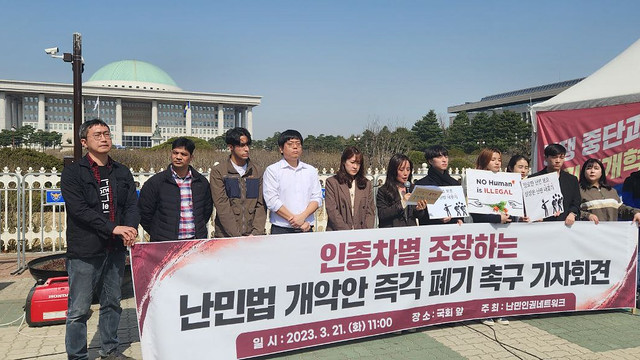
2023.3.21.(화) 오전 11시, 국회 앞, 난민법 개악안 즉각 폐기 촉구 기자회견 (사진=난민인권네트워크)

정부가 지난 2021년 12월 17일 발의한 『난민법 일부개정법률안(의안번호 제13939호)』은 ‘심사기능의 내실화 및 효율화’, ‘난민 신청자의 생존 보장’이라는 제도 개선의 핵심을 외면한 개악안으로, 국가인권위원회, 대한변호사협회, 유엔난민기구에서 모두 우려의 의견을 표해 왔습니다.

법안의 핵심 규정인 ‘난민심사 부적격 결정제도’는 대부분의 난민 신청자를 남용적 신청자로 취급하고, 난민의 심사 기회를 심각하게 제한하는 법안입니다. 법안은 난민 불인정 결정을 받거나 난민인정 결정이 취소된 사람 등이 다시 난민인정 신청을 하는 경우 원칙적으로 21일 이내에 난민인정 재심사 적격 여부에 대한 심사를 먼저 받도록 하고 있고, 심사 결과 중대한 사정 변경이 있는 경우 적격 결정을 하고, 적격 결정을 받은 사람에 대해서만 난민인정 심사 절차를 진행하도록 하고 있습니다.

이미 난민 지위 인정을 통한 난민 보호가 어려운 한국의 현실에서 이 제도가 그대로 도입될 경우, 난민일 가능성이 높은 난민 신청자가 심사의 기회조차 잃고 위험한 본국으로 강제송환되는 등의 피해를 입을 수 있습니다. 한국은 난민인정률이 OECD 가입국 중 최하위로 매년 난민인정률이 1%를 넘지 못하고 있습니다. 이런 상황에서 박해를 피해 도망쳐 오느라 물증을 취득하기 어려운 난민의 경우 진술만으로 사정변경의 중대성을 입증하는 데 한계가 있고, 21일 내 담당 조사관이 국가정황정보를 조사하면서 사정변경의 중대성을 충분히 파악하는 것은 기대하기 어렵습니다. 또한 부적격 결정에 대해서는 행정소송을 통해서만 구제를 받을 수 있기 때문에 대다수의 난민은 법원에서 다툴 기회조차 얻지 못하고 본국으로 내몰리게 될 것입니다.

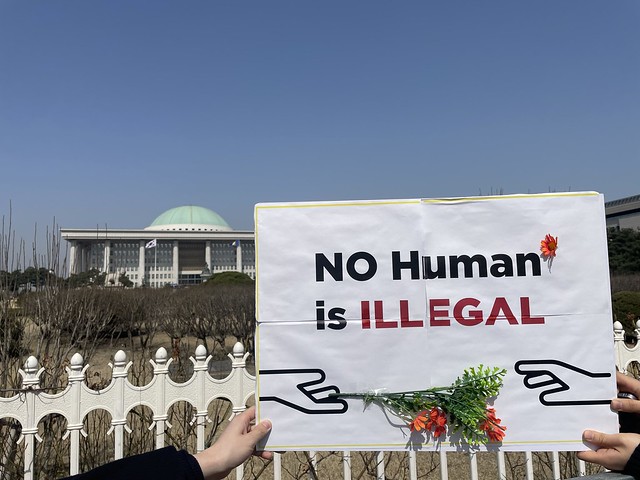
난민의 권리를 옹호하는 80여개의 인권시민사회단체들은 대부분의 난민신청자를 남용적인 신청자로 낙인찍고 신속히 난민들을 추방하려는 것을 주된 목적으로 하고 있는 난민법 개정안에 대한 폐기를 촉구하며 3월 21일(화) 오전 11시, 국회 앞에서 <인종차별 조장하는 난민법 개악안 즉각 폐기 촉구> 기자회견을 개최했습니다.
20230321_난민법개악안폐기촉구 기자회견3

개요

  • 제목 : 인종차별 조장하는 난민법 개악안 즉각 폐기 촉구 기자회견
  • 일시·장소 : 2023년 3월 21일(화) 오전 11시, 국회 앞
  • 주최 : 난민인권네트워크 및 80개 인권시민사회단체
  • 프로그램
    • 사회_김연주/ 난민인권센터
    • 발언1_ 김민혁 / 난민 당사자
    • 발언2_ 야쿱 샤자드 / 난민 당사자
    • 발언3_ 이상현 / 대한변호사협회 이주난민특위 위원, 사단법인 두루
    • 발언4_ 김 진 / 민변 국제연대위원회 위원장, 사단법인 두루
    • 기자회견문 낭독_ 전은경 / 참여연대 활동가

기자회견문(국문)

인종차별 조장하는 난민법 개악안 즉각 폐기하라

법무부는 지난 2021년 12월 17일 밀행적으로 난민법 개정법률안을 발의하였다. 2018년 예멘 난민들의 피난에 낯설어하는 일부 혐오의 정서에 기대어 시작된 법무부의 난민법 개정법률안은 시민사회단체들과 난민당사자들은 물론, 국가인권위원회, 유엔난민기구, 법률전문가들의 모임인 대한변호사협회와 민주사회를 위한 변호사모임에서도 반대해왔다. 법무부는 이를 무릅쓰고 발의하더니, 이제는 국회 통과를 강행하려 하고 있다.

법무부의 난민법 개정법률안은 대부분의 난민신청자를 남용적인 신청자로 낙인찍고 거부해온 기존의 행정관행에 법적근거를 마련하며, 신속히 난민들을 추방하려는 것을 주된 목적으로 하고있다. 법안의 핵심규정은 난민재신청자가 심사를 받을 수 없게 하는 ‘부적격 결정’ 제도다. 이것이 통과될 경우 난민임에도 불구하고 조력을 받지 못해 난민임을 입증하지 못한 사람들은 결굴 정상적인 심사기회도 다시 제공받지 못한 채 모두 추방되는 결과를 가져올 것이 자명하다.

한국은 난민인정률이 OECD 가입국 중 최저로 매년 난민인정률이 1%를 넘지 못하고 있다. 대부분의 난민신청자는 난민신청과 심사과정에서 아무 조력을 받지 못하며, 통·번역 지원도 받지 못하고 있다. 난민이 혼자의 힘으로 필요한 설명을 하고, 증거를 낼 수 있는 기회조차 제대로 보장받지 못하고 있어 한국 난민심사절차 개선의 필요성이 국내외에서 꾸준히 제기되고 있다. 그럼에도 난민심사제도와 구제절차를 개선하기 위한 노력은 뒤로 한 채, 재신청을 막는 것부터 제도를 바꾼다면 난민인정을 받지 못한 약 99%의 난민신청자가 더 이상의 심사기회를 얻지 못하고 송환당할 수 밖에 없다.

정부는 난민법 시행 이후, 난민의 권리를 보장하는데 기울여야 할 노력을 온통 난민신청의 기회를 제한하고 장벽을 만드는데 혈안이 되어 왔다. 전국적으로 부실한 심사를 조직적으로 강요하는 지침을 내렸고, 그 과정에서 공정하고 전문적으로 이뤄져야 할 난민심사가 심각하게 오염되고 조작되는 사건까지 발생하였다. 부족한 심사의 피해자들에게 남용적인 신청자의 낙인을 찍어 체류자격을 박탈하고 생존을 위협해 출국을 압박하고 있다. 그리고 난민법 시행 10주년을 맞이한 올해, 정부는 어떻게든 재신청의 장벽을 세우기 위해 난민법 개정법률안 통과에 박차를 가하고 있다.

한국의 난민법이 어떠한 법인가. 정부와 국회가 앞다투어 아시아 최초의 독립된 난민협약 이행법률이라고 자부해왔던 인권법이다. 한국의 경제적 위상에도 불구하고 미흡한 난민정책과 부족한 해외 난민에 대한 지원으로 대외적으로 내세울만한 성과가 많지 않았던 상황에서, 난민법의 제정 및 시행은 부족하나마 한국정부가 아시아에서도 어느 정도 앞선 제도를 갖고 있는 것처럼 홍보해왔던 최후의 보루였다. 그런데 정부는 난민법 개정법률안으로 그나마 이어왔던 난민법의 근간을 뒤흔들려 하고 있다. 난민법이 더 이상 인권법이 아닌, 난민을 추방하기 위한 법으로 전락하는 것이다.

국회는 2012년 당시 난민법을 제정하였던 의지와 가치가 훼손되지 않도록 역할을 다하라. 인권법으로서의 난민법은 더 이상 후퇴해서는 안되며, 난민의 권리를 보호하는 법으로, 앞으로 더 나아가야 한다.
난민혐오를 막고 제도를 발전시켜 가야할 정부가 앞장서서 혐오를 선동, 이용하여 입법을 추진하는 것을 강력히 규탄한다. 한국 시민사회는 연대하여 난민을 추방시키는 난민법 개정법률안의 통과를 좌시하지 않을 것이다. 정부는 인종차별 조장하는 난민법 개악안 즉각 폐기하라.

2023년 3월 21일
140개 인권시민사회단체 일동

가족구성권연구소, 가톨릭노동상담소, 경동건설 고 정순규 유가족모임, 공공교통네트워크, 국제민주연대, 난민인권네트워크 [TFC(The First Contact for Refugee) 공익법센터 어필, 공익변호사와 함께하는 동행, 공익사단법인 정, 공익인권법재단 공감, 공익인권센터 드림(DREAM), 국제난민지원단체 피난처, 글로벌호프, 난민인권센터, 동두천난민공동체, 동작FM, 민주사회를위한변호사모임 국제연대위원회, 사단법인 두루, 서울온드림교육센터, 수원글로벌드림센터, 순천이주민지원센터, 아시아의 친구들, 아시아평화를향한이주MAP, 이주여성을위한문화경제공동체 에코팜므, 이주민지원공익센터 감동, 의정부 EXODUS, 이주민지원센터친구, 참여연대, 천주교 제주교구 이주사목센터 나오미, 재단법인 동천, 재단법인 화우 공익재단, 제주평화인권연구소 왓, 파주 EXODUS, 한국이주인권센터], 다른세상을향한연대, 대안문화연대, 문화다양성연구소 딛다, 생명안전 시민넷, 성공회대학교 인권위원회, 성적권리와 재생산정의를 위한 센터 셰어SHARE, 소수자난민인권네트워크, 예술행동 한뼘, 외국인보호소고문사건대응공동대책위원회 (AFI온누리 사회사도직, 공익법센터 어필, 공익인권법재단 공감, 난민인권센터, 다산인권센터, 사단법인 두루, 생각나무BB센터, 서울이주여성상담센터, 소수자난민인권네트워크, 외국인보호소폐지를위한물결 International Waters31, 외국인이주·노동운동협의회((사)모두를 위한 이주인권문화센터, 아산이주노동자센터, 부천이주노동복지센터, 인천외국인노동자센터, (사)한국이주민건강협회 희망의친구들, 남양주시외국인복지센터, 성공회파주이주노동자센터 샬롬의집, 포천나눔의집, 서울외국인노동자센터, 아시아인권문화연대, 순천이주민지원센터, 외국인이주노동자인권을위한모임, 의정부EXODUS, (사)함께 하는 공동체, (사)한국이주여성인권센터, 원불교 서울외국인센터, 한삶의집, 이주민센터 동행), 이주노동자평등연대(건강권 실현을 위한 보건의료단체연합(건강권 실현을 위한 행동하는 간호사회, 건강사회를 위한 약사회, 건강사회를 위한 치과의사회, 노동건강연대, 인도주의실천의사협의회, 참의료실현청년한의사회), 공공운수노조사회복지지부 이주여성조합원모임, 노동당, 노동사회과학연구소, 노동전선, 녹색당, 대한불교조계종사회노동위원회, 성공회 용산나눔의집, 민변노동위원회, 사회진보연대, 이주노동자노동조합(MTU), (사)이주노동희망센터, 이주노동자운동후원회, 이주민센터 친구, 전국민주노동조합총연맹, 전국불안정노동철폐연대, 전국학생행진, 지구인의정류장, 천주교인권위원회, 필리핀공동체카사마코, 한국비정규노동센터), 이주민 인권을 위한 부산울산경남 공대위, (사)이주민과 함께, 이주여성인권포럼, 장애여성공감, 천주교인권위원회, 한국이주인권센터, 화성외국인보호소방문시민모임 <마중>), 외국인보호소폐지를위한물결 International Waters 31, 외국인이주노동운동협의회(남양주시외국인복지센터, 모두를위한이주인권문화센터, 부천이주노동복지센터, 서울외국인노동자센터, 순천이주민지원센터, 아산이주노동자센터, 아시아인권문화연대, 외국인이주노동자인권을위한모임, 원불교서울외국인센터, 의정부EXODUS, 이주민센터동행, 인천외국인노동자센터, 파주샬롬의집, 포천나눔의집이주민지원센터, (사)한국이주민건강협회희망의친구들, (사)한국이주여성인권센터, 한삶의집, 함께하는공동체), 이주노동자평등연대(건강권 실현을 위한 보건의료단체연합(건강권 실현을 위한 행동하는 간호사회, 건강사회를 위한 약사회, 건강사회를 위한 치과의사회, 노동건강연대, 인도주의실천의사협의회, 참의료실현청년한의사회), 공공운수노조사회복지지부이주여성조합원모임, 노동당, 노동사회과학연구소, 노동전선, 녹색당, 대한불교조계종사회노동위원회, 성공회 용산나눔의집, 민변노동위원회, 사회진보연대, 이주노동자노동조합(MTU), (사)이주노동희망센터, 이주노동자운동후원회, 이주민센터 친구, 전국민주노동조합총연맹, 전국불안정노동철폐연대, 지구인의정류장, 천주교인권위원회, 필리핀공동체카사마코, 한국비정규노동센터), 이주민노동인권센터, 이주여성인권포럼, 이주인권연대 (경산이주노동자센터, 경주이주노동자센터, 이주민과 함께, 아시아의 창, 울산이주민센터, 이주민노동인권센터, 이주와 인권연구소, 지구인의 정류장, 충남이주여성상담소, 한국이주인권센터), 인권운동사랑방, 차별금지법제정부산연대(가톨릭노동상담소, 건강사회를위한치과의사회, 부산성폭력상담소, 대안문화연대, 진보당부산시당, 부산경남울산열사정신계승사업회, 부산녹색당, 부산반빈곤센터, 부산성소수자인권모임QIP, 부산여성단체연합, 부산장애인차별철폐연대, 부산참여연대, 부산퀴어문화축제기획단, 부산학부모연대, 노동당부산시당, 열린네트워크부산지부, 이주민과함께, 참교육을위한전국학부모회부산지부, 민주사회를위한변호사모임부산지부, 민주노총부산지역본부, 노동인권연대, 부산인권플랫폼파랑, 청소년인권행동아수나로부산지부, 동아대퀴어동아리동그라미, 어린이책시민연대부산지회, 부산문화다양성연구소딛다, 부산민주언론시민연합, 부산민주항쟁기념사업회, 부산민예총, 남영란, 송진희, 메밀), 창작21작가회, 천주교인권위원회, 충남인권교육활동가모임 부뜰, 프로그레시브 코리아, 한국여성민우회, 행동하는 난민(Active Refugee Korea), 화성외국인보호소방문 시민모임 마중

기자회견문(영문)

The Korean government should immediately abolish the Refugee Amendment Bill that promotes racism

On December 17, 2021, the Ministry of Justice introduced the Bill to amend the current Refugee Act. The Bill which was initiated in 2018 as an answer to the xenophobic sentiments made by those who were unfamiliar with Yemeni refugees, has been opposed by refugees and civil society organizations, as well as the National Human Rights Commission of Korea, UNHCR, and lawyers’ groups, including the Korean Bar Association and the Lawyers for a Democratic Society. The Ministry of Justice went ahead with the proposal despite such opposition and is now trying to force it through the National Assembly.

The Refugee Amendment Bill is aimed at providing a legal basis for the deportation of refugees which is already prevalent and stigmatizing the asylum-seekers as “abusive applicants” to reject their applications. The key provision of the Bill is the introduction of the “inadmissibility determination” procedure, which prevents asylum-seekers from being properly reviewed and interviewed. If passed, it is likely to result in the deportation of all refugees who failed to prove themselves because they had not been subject to any assistance.

The Republic of Korea is the country with one of the lowest refugee recognition rates among OECD countries, with less than 1% of refugees being recognized each year. Most asylum-seekers are not able to get any assistance during the refugee status determination procedure, nor do they receive translation and interpretation support. The need for improvement of the refugee status determination procedure has been consistently raised both nationally and internationally, as refugees are not given proper opportunities to present evidence, express themselves, and explain their situation. Instead of making efforts to improve the current system, however, the government is trying to worsen the situation by preventing re-applications. With the Bill, approximately 99% of failed asylum-seekers without any assistance will be repatriated without any further opportunities for review.

Since the enactment of the Refugee Act, the government has made efforts to limit opportunities and create barriers for refugees, rather than ensure the rights of refugees and asylum-seekers. The Ministry of Justice has issued and spread the guidelines that systematically deteriorate the refugee status determination procedure, resulting in the tainted and manipulated procedure what should be a fair, transparent, and professional. Victims of inadequate procedure were stigmatized as abusive applicants, deprived of their right to stay, and pressured to leave by threatening their survival. And in 2023, on the 10th anniversary of the Refugee Act, the government is rushing to pass the Refugee Amendment Bill to erect barriers by preventing re-application.

The Korean government and the National Assembly have proudly introduced the Refugee Act as the first independent refugee law implementing the Refugee Convention in Asia. Without any proper refugee policies, and with insufficient support for overseas refugees, the enactment and implementation of the Refugee Act was the only achievement made by the Korean government that it can at least pretend that it has somewhat advanced system. With the Refugee Amendment Bill, however, the government is trying to shake up the very foundation of the Refugee Act. If passed, the Act is no longer a human rights law, but the law repatriating refugees.

Now, the National Assembly should do its part to ensure that the values of the Refugee Act are undermined or ruined. The Refugee Act as a human rights law must not go backward, but must move forward to protect the rights of refugees.

We strongly condemn the Korean government’s incitement and use of hate speech when it is supposed to prevent xenophobia and make efforts to improve the system. Standing in solidarity, civil society will not allow the enactment of the Refugee Amendment Bill that repatriates refugees. The Korean government should immediately withdraw and abolish the Refugee Amendment Bill that promotes racism.

보도자료[원문보기/다운로드]

The post 법무부는 인종차별 조장하는 난민법 개악안 즉각 철회하라 appeared first on 참여연대.

시민들의 의견

댓글 달기

Plain text

  • 웹 페이지 주소 및 이메일 주소는 자동으로 링크로 전환됩니다.
  • 줄과 단락은 자동으로 분리됩니다.
  • 사용할 수 있는 HTML 태그: <a href hreflang> <em> <strong> <cite> <blockquote cite> <code> <ul type> <ol start type> <li> <dl> <dt> <dd>
이미지
무제한 수의 파일을 이 필드에 업로드할 수 있습니다.
50 MB 한계입니다.
허용된 유형: png gif jpg jpeg.
Enter the YouTube URL. Valid URL formats include: http://www.youtube.com/watch?v=1SqBdS0XkV4 and http://youtu.be/1SqBdS0XkV4.
CAPTCHA
스펨 사용자 차단 질문
러시아 군이 폭격한 지역에 서 있는 소녀©REUTERS/Bassam Khabieh

러시아 군이 폭격한 지역에 서 있는 소녀 ©REUTERS/Bassam Khabieh

5년 전 발사르 알 아사드(Bashar al-Assad) 정부는 2011년 3월 15일에 시작한 대규모 시위를 난폭하게 진압했다. 그러한 폭력적인 대응은 최악의 무력 충돌을 일으켰다.

1. 유엔에 따르면 25만명 이상의 사람들이 죽었다. 전쟁범죄와 인도주의에 반하는 범죄가 만연하다.

2. 그 이후로 시리아 내에 있는 7백만명의 사람들과 터키, 레바논, 요르단 등 해외에 있는 4백만명의 난민을 포함하여 1,100만명 이상의 사람들이 집을 잃고 떠돌아다니게 됐다. 수만명의 시리아 난민들은 생명의 위험을 무릎쓰고 유럽으로 피난을 갔다.

전쟁을 피하고자 국경을 넘는 시리아 사람들©BULENT KILIC/AFP/Getty Images

전쟁을 피하고자 국경을 넘는 시리아 사람들©BULENT KILIC/AFP/Getty Images

3. 정부군은 반복적으로 ‘드럼통 폭탄(barrel bomb)’ 등의 무차별적 무기를 사용해 민간인 지역을 공격하고 폭격했다. 정부군은 음식과 의약품 및 다른 필수품들을 약탈하기 위해 병원을 폭격하고, 의료진들을 겨냥하는가 하면, 반대진영에 대한 장시간의 포위를 감행했다. 인권의사회(Physicians for Human Rights)에 따르면 2015년 한 해 동안 112개의 의료 시설이 공격받았는데, 대부분이 정부군의 소행이었다.

“그 친구가 사라졌다는 것이 아직도 믿기지 않아요. 제 자신과 제 영혼의 일부를 잃은 것 같아요. 그의 생사를 아는 것은 우리의 권리입니다.”
– 2011년 11월 이후 실종된 의사이자 활동가인 무하마드 바시르 아랍(Mohamed Bachir Arab)의 친구

폭격을 피해 도망치는 사람들 ©AFP/Getty Images

폭격을 피해 도망치는 사람들 ©AFP/Getty Images

4. 시리아인권네트워크(Syrian Network for Human Rights)에 따르면 대략 6만 5천 명의 사람들이 정부 보안군에게 체포되고 비공식적 수용소에서 실종된다. 전쟁 때문에 집을 잃은 사람들을 도와주는 활동이나 시리아의 상황을 공개적으로 알리는 활동을 하는 사람들이 투옥되기도 했다. 변호사, 의사, 기자들은 자신의 역할을 한다는 이유만으로 구금되었다.

5. 정보국과 정부군은 광대한 범위에서 고문을 자행했다. 2011년 이후, 수천명이 식량 및 의료 접근에 대한 결핍 등의 이유로 감옥에서 죽었다.

6. 자칭 이슬람국가(IS)인 무장단체는 민간인 지역을 폭격했고 많은 수의 민간인과 포로를 살해했다. 무장단체는 기자, 평화활동가, 반대 세력으로 감지되는 사람들을 납치하고 고문하고 사형시켰다. IS는 음식과 의료 공급 및 필수품을 얻고자 고투하는 사람들이 사는 민간인 지역을 포위하기도 한다.

7. 자브하트 알누스라(Jabhat al-Nusra) 등의 다른 무장단체도 민간인 지역을 공격하고 반대 세력으로 추정되는 사람들을 납치하고 억류된 사람들을 살해했다.

8. 알 아사드 정부의 지원으로 한 러시아의 공습은 수백명의 민간인을 살해하고 의료시설을 파괴했다.

러시아군의 공습 이후 생존자를 찾고 있는 주민들 © Khalil Ashawi/REUTERS

러시아군의 공습 이후 생존자를 찾고 있는 주민들 © Khalil Ashawi/REUTERS

영어전문 보기

Syria after the ‘Arab Spring’: Eight key facts

Five years ago, Bashar al-Assad’s government brutally suppressed mass protests which began on 15 March 2011. The violent response sparked the region’s most severe armed conflict.

1. More than 250,000 people have been killed, according to the UN. War crimes and crimes against humanity are rife.

2. Since then, more than 11 million people have been forced from their homes, including around 7 million people within Syria and more than 4 million who are now refugees abroad, mostly in Turkey, Lebanon and Jordan. Tens of thousands of refugees from Syria have also fled to Europe, often risking their lives in the process.

3. Government forces have repeatedly shelled and bombed civilian areas using indiscriminate weapons, including barrel bombs. They’ve also bombed hospitals, targeted medical workers and mounted long-running sieges of opposition-held areas, depriving people of food, medicines and other necessities. According to Physicians for Human Rights, 112 medical facilities were attacked in 2015 alone, the majority by government forces.

4. According to the Syrian Network for Human Rights, approximately 65,000 people have been arrested by government security forces and are now missing in a network of unofficial detention centres. Others have been jailed for helping people forced from their homes by the fighting, or for speaking out about the situation in Syria. Lawyers, doctors and journalists have been locked up just for doing their jobs.

5. Intelligence agencies and other government forces continue to use torture on a massive scale. Thousands have died in custody since 2011 due to torture and other factors, including lack of food and medical access.

6. The armed group calling itself the Islamic State (IS) has shelled civilian areas and killed scores of civilians and prisoners. The group has abducted, tortured and executed journalists, peaceful activists and other perceived opponents. IS also besieges civilian areas, which means people struggle to get food, medical supplies and other necessities.

7. Other armed groups including Jabhat al-Nusra have also attacked civilian areas, abducted suspected opponents and killed captives.

8. Russian air strikes in support of the al-Assad government have killed hundreds of civilians and struck medical facilities.


화, 2016/03/15- 16:11
381
0
© Amnesty International/Olga Stefatou

© Amnesty International/Olga Stefatou

그리스 레스보스 섬에 상륙한 시리아 난민이 터키로의 강제 송환 판결에 항소를 제기하고 이에 승소한 것은, 지난 3월 유럽연합(EU)과 터키 간에 체결한 난민송환합의가 근본적인 결함을 강조하는 것이라고 국제앰네스티가 밝혔다.

아테네 항소위원회는 EU-터키간 합의 이후 처음으로 터키를 안전한 제3국이라고 판단한 원심을 번복했는데, 이는 터키가 난민협약에서 명시하고 있는 난민 보호를 충분히 제공하지 못하고 있다고 판단했기 때문이다. 항소위원회는 또한 터키가 심각한 인권침해 위험이 있는 국가로의 강제송환을 금지하는 농르풀망 원칙도 보장하지 않고 있다고 판결했다.

“항소위원회의 이번 판결은 EU-터키간 합의의 문제 핵심을 정확히 찌르고 있다. 터키는 난민에게 안전한 국가가 아니다.”
– 가우리 판 굴리크(Gauri van Gulik), 국제앰네스티 유럽 부국장

가우리 판 굴리크(Gauri van Gulik) 국제앰네스티 유럽 부국장은 “항소위원회의 이번 판결은 EU-터키간 합의의 문제 핵심을 정확히 찌르고 있다”며 “터키는 난민에게 안전한 국가가 아니다. 난민에게 충분한 보호를 제공하지 않고, 서류상으로 약속하는 것만으로는 부족하다. 현지의 실상에 대해서는 익히 알려져 있다. 터키가 난민에 대한 인권침해를 모두 중단하고 충분한 보호를 보장하지 않는다면, 누구도 난민송환합의에 따라 강제로 터키에 보내져서는 안 된다. 대신 유럽은 합의 내용 중 터키에서 난민을 받아들여 재정착시킨다는 부분을 충실히 이행해야 한다. 더불어 그리스에 상륙한 난민들의 체류환경도 시급히 개선해야 한다”고 말했다.

항소를 제기한 시리아 난민은 EU-터키간 합의가 시행된 이후 망명을 신청했다. 항소위원회의 결정은 다시 항소할 수 있지만, 원고는 터키로 강제 송환되는 급박한 위험에서는 벗어났다. 그리스 정부 관계자는 현재 항소위원회의 판결을 기다리고 있는 사건만 100여건에 이른다고 했다.

국제앰네스티는 앞서 EU-터키간 난민송환합의가 시행된 이후 터키 정부가 아프가니스탄, 시리아 난민들을 강제 송환하는 등 국제법을 위반하고 있는 사실에 대해 기록한 보고서를 발표했다. 국제앰네스티와 휴먼라이츠워치(Human Rights Watch)는 시리아 망명신청자들이 터키 보안군에 폭행과 총격을 당한 정황을 공개하기도 했다.

그리고 국제앰네스티는 현재 그리스 섬 지역에서 망명 신청 순서나 신청 결과를 기다리며 발이 묶여 있는 8,500명이 넘는 사람들의 열악한 환경에 대해서도 기록한 바 있다.

영어전문 보기

EU-Turkey deal: Greek decision highlights fundamental flaws

A Syrian national who arrived on the Greek island of Lesvos has won an appeal against a decision that would have led to his forcible return to Turkey, underscoring the fundamental flaws in the migration deal agreed in March between the European Union and Turkey, Amnesty International said.

In the first such decision Amnesty International has seen since the deal, an appeals committee in Athens overturned an initial decision considering Turkey a safe third country on the grounds that Turkey does not afford refugees the full protection required under the Refugee Convention. The committee also ruled that Turkey does not guarantee the principle of non-refoulement, which forbids returning someone to a country where he or she is at risk of serious human rights violations.

“This decision goes to the heart of why the EU-Turkey deal was so deeply flawed to begin with,” said Gauri van Gulik, Deputy Europe Director at Amnesty International.

“Turkey is not safe for refugees, it does not offer them full protection, and assurances on paper are simply not good enough. We’ve seen the reality on the ground: until Turkey ends all violations against refugees and guarantees them full protection, nobody else should be sent back under this deal. Instead Europe should focus on its part of the deal by accepting refugees for resettlement from Turkey. It should also urgently improve conditions for refugees in Greece.”

The Syrian national applied for asylum after the EU-Turkey deal came into force. While the committee’s decision can be appealed, it removes the imminent risk of him being forcibly returned to Turkey. A Greek official confirmed to Amnesty International that about 100 cases are still pending before the appeals committee.

Amnesty International has previously documented how Turkish authorities have been violating international law, for instance by forcibly returning groups of Afghan and Syrian refugees since the EU-Turkey deal was struck. Amnesty International and Human Rights Watch have published accounts of Syrian asylum-seekers being beaten and shot at by Turkish security forces.

Amnesty International has also documented dire conditions on the Greek islands where more than 8,500 people are currently stranded while they wait to apply for asylum or receive news of their applications.


금, 2016/05/27- 17:22
380
0
 

터키 정부가 쿠르드족 거주지역에 대해 24시간 통행을 금지하고 공공서비스를 차단하는 등의 공세를 펼치면서 20만 명에 이르는 사람들의 생명을 위태롭게 하고 있으며, 이는 집단 처벌에 해당하는 것이라고 국제앰네스티가 21일 밝혔다.

국제앰네스티가 통행금지 지역을 조사하고 외부사찰단 출입 금지 지역 주민들의 제보를 수집한 결과, 이처럼 가혹하고 임의적인 조치로 인해 이 지역 주민들은 현재 극심한 곤란에 처해 있다는 사실이 드러났다. 또한, 보안군이 환자 치료조차 하지 못하도록 구급차의 통행금지 지역 진입을 막고 있다는 제보도 쏟아지고 있다.

“공격이 진행되는 중에 수도와 전기 공급까지 차단되어 주민들은 참담한 현실에 놓여있으며, 이는 사실상 인근을 완전히 봉쇄한 것이나 다름없다. ”
– 존 달후이센(John Dalhuisen), 국제앰네스티 유럽중앙아시아국장

존 달후이센(John Dalhuisen) 국제앰네스티 유럽중앙아시아국장은 “공격이 진행되는 중이라 식량과 의료 지원을 구하기도 위험한 상황에 수도와 전기 공급까지 차단되어 주민들은 참담한 현실에 놓여있다. 이 문제가 해결되지 않는다면 상황은 더욱 빠르게 악화될 가능성이 크다”며 “일부 지역에서는 아예 집 밖으로 나오는 것도 불허할 만큼의 강력한 통행금지 조치가 한 달 이상 지속하고 있어, 사실상 인근을 완전히 봉쇄한 것이나 다름없다. 터키 정부는 반드시 해당 지역 주민들이 식량을 얻고 필수적인 공공서비스를 받을 수 있도록 보장해야 한다”고 말했다.

한 주민은 실로피(Silopi)에서 벌어진 무력충돌로 친척이 자택에서 목숨을 잃었다고 했다. 가족들은 집 안에서 방치된 채 부패하는 시신을 수습하기까지 12일을 기다려야만 했다.

실로피에 거주하는 또 다른 주민은 지난달 수도는 20일, 전기는 15일간 차단되었다고 말했다. 이 때문에 2주 동안 샤워도 할 수 없었다. 이후로도 이런 일은 간간이 벌어지고 있다.

경찰의 작전수행을 이유로 부과되는 통행금지령은 정부와 쿠르드노동자당(Kurdistan Workers Party, PKK) 간의 휴전협정이 깨진 2015년 7월 이후, 터키 동부와 남동부 지역에서 군에 의해 내려지는 일이 부쩍 늘었다. 쿠르드노동자당의 청년 무장조직인 애국혁명청년운동(Patriotic Revolutionary Youth Movement, YDG-H)과 정부군 간의 충돌로 통행금지 지역의 주민 최소 150명 이상이 숨진 것으로 알려졌다. 사망자 중에는 여성과 어린이, 노인도 포함되어 있었다.

1월 13일에는 쿠르드노동자당이 디야르바카르(Diyarbakır) 주 츠나르(Çınar) 경찰청에 차량 폭탄 테러를 감행하면서 어린이 2명을 포함해 민간인 2명과 경찰관 1명이 목숨을 잃었다. 이 명백하고 무차별적인 공격으로 39명이 부상을 입었고, 대부분이 민간인이었다.

군과 경찰이 주거지역에서 수행하는 군사작전은 중무장한 무기와 저격수를 동원하는 것이 특징으로, 보안군에게 아무런 위협도 되지 않는 평범한 주민들의 생명을 위험에 빠뜨리고 있다.

앞서 지난해 9월 통행금지령이 내렸던 지즈레(Cizre)를 방문해 현장조사를 진행하는 과정에서, 국제앰네스티는 사망자 중 다수가 무력충돌이 벌어진 지역으로부터 멀리 떨어진 곳에서 저격을 당해 숨졌을 가능성이 있다는 증거를 확보했다. 사망자 중에는 보안군과의 교전에 참여했을 가능성이 거의 없는 어린이와 여성, 노인들도 포함되어 있었다.

이보다 더욱 최근 보고된 사례의 사망자들 역시 이와 같은 패턴을 보였다. 사망자들에 대한 조사는 아무런 진전을 보이지 못하고 있다.

“현재 24시간 통행금지 지역에서 이루어지고 있는 군사작전은 수만 명의 생명을 위태롭게 하고 있으며 집단 처벌과 유사해”
-존 달후이센, 국장

존 달후이센 국장은 “터키 정부가 안보 강화와 용의자 체포를 위해 정당한 조치를 취할 수는 있지만, 인권 의무는 반드시 따라야 한다. 현재 24시간 통행금지 지역에서 이루어지고 있는 군사작전은 수만 명의 생명을 위태롭게 하고 있으며 집단 처벌과 유사해지고 있다”고 말했다.

터키 정부는 변호사협회와 인권단체의 독립적 사찰단이 통행금지 지역에 출입하는 것을 막아, 현지 상황을 정확히 파악하기 어렵게 하고 있다. 인권침해행위에 반대하는 뜻을 공개적으로 밝힌 사람들은 위협을 당하거나 범죄 수사 등 괴롭힘의 대상이 되었다.

1월 9일에는 토크쇼 ‘베야즈 쇼(Beyaz show)’에서 한 시청자가 전화연결을 통해 터키 남동부에서 목숨을 잃은 여성들에 대해 침묵해서는 안 된다고 주장하자, 주 검찰이 “테러조직을 옹호하는 선동”을 했다는 이유로 이 토크쇼 진행자와 관계자에 대해 형사 수사에 착수하는 사건도 있었다.

존 달후이센 국장은 “터키 정부가 국내 비판 세력을 잠재우려 하는 듯한 가운데 국제사회로부터는 거의 아무런 비판도 받지 않고 있다. 시리아 분쟁에 대한 전략적인 고려와 유럽으로 몰려드는 난민 문제 해결을 위해 터키의 도움을 요청하려는 노력 때문에 심각한 인권침해 의혹이 가려져서는 안 된다. 국제사회는 더는 모른 체해서는 안 된다”고 말했다.

영어전문 보기

Turkey: Onslaught on Kurdish areas putting tens of thousands of lives at risk

The Turkish government’s onslaught on Kurdish towns and neighbourhoods, which includes round-the-clock curfews and cuts to services, is putting the lives of up to 200,000 people at risk and amounts to collective punishment, Amnesty International said today.

Research carried out by Amnesty International in areas under curfew and reports from residents in areas that are currently inaccessible to external observers, reveal the extreme hardships they are currently facing as a result of harsh and arbitrary measures.

There have also been numerous reports of security forces preventing ambulances from entering areas under curfew and providing treatment to the sick..

“Cuts to water and electricity supplies combined with the dangers of accessing food and medical care while under fire are having a devastating effect on residents, and the situation is likely to get worse, fast, if this isn’t addressed,” said John Dalhuisen, Amnesty International’s Director for Europe and Central Asia.

“In some areas, crippling curfews that don’t allow people to leave their houses at all have been in place for more than a month, effectively laying siege to entire neighbourhoods. It is imperative that the Turkish authorities ensure that affected residents are able to access food and essential services.”

One person told Amnesty International that his relative, a resident of Silopi, was killed in his own home while clashes took place in the neighbourhood. The family had to wait 12 days with the decomposing body in their home before it could be collected for burial.

Another resident of Silopi told Amnesty International that he and his family had no water for 20 days and no electricity for 15 days last month. He said that they had not been able to shower for two weeks and were rationing their drinking water before the supply unexpectedly returned last week. It has been intermittent since.

The curfews have been imposed in the context of operations by police, and increasingly by the military, in towns and cities in the east and south-east of Turkey since July 2015, when the peace process between the government and the Kurdistan Workers Party (PKK) broke down. More than 150 residents have reportedly been killed in areas under curfew as state forces battle the armed Patriotic Revolutionary Youth Movement (YDG-H), the youth wing of the PKK. The dead include women, young children and the elderly.

On 13 January an attack by the PKK left one police officer and five civilians, including two young children, dead when they planted a car bomb outside the Çınar police headquarters in Diyarbakır province. Thirty nine people, mostly civilians, were reported injured in what was clearly an indiscriminate attack.

Operations by police and military in residential areas have been characterised by the use of heavy weaponry and sniper fire, endangering the lives of ordinary residents posing no threat to security forces or others.

In the course of on the ground research following an earlier curfew in Cizre in September last year, Amnesty International found evidence that several deaths may have been caused by snipers at locations far from where clashes were taking place. Among those killed were young children, women and elderly people, who are very unlikely to have been involved in clashes with security forces.

More recently reported deaths have also followed this same troubling pattern. Investigations into the deaths have failed to show any sign of progress.

“While the Turkish authorities can take legitimate measures to ensure security and arrest suspects, they must comply with their human rights obligations. The operations currently being conducted under round-the-clock curfews are putting the lives of tens of thousands of people at risk and are beginning to resemble collective punishment,” said John Dalhuisen.

Turkish authorities have prevented independent observers from bar associations and human rights organizations from entering areas under curfew, making it difficult to form an accurate picture of what is going on. People speaking out against the abuses have been subjected to threats, criminal investigation and other forms of harassment.

In one incident on 9 January, state prosecutors launched a criminal investigation against a chat show host and another staff member for “making propaganda for a terrorist organization” after a caller to the “Beyaz show” chat show urged people not to stay silent about the deaths of women and girls in the south east of the country.

“While the Turkish authorities appear determined to silence internal criticism, they have faced very little from the international community. Strategic considerations relating to the conflict in Syria and determined efforts to enlist Turkey’s help in stemming the flow of refugees to Europe must not overshadow allegations of gross human rights violations. The international community must not look the other way,” said John Dalhuisen


월, 2016/01/25- 13:49
377
0

01425_SEA_Graphics_FB1

  • 인신매매와 청부살인 및 폭행의 대상이 되거나, 참혹한 환경에 갇혀 있어야 하는 성인 남녀와 어린이들
  • 당초 예상보다 수백 혹은 수천 명 이상의 해상 난민과 이주민이 익사했을 우려
  • 다시 “항해기”가 시작되며 벵골 만과 안다만 해의 난민 위기 재발 가능성 커져

올해 초 미얀마에서 박해를 피하기 위해 난민이 된 로힝야족 성인 남녀와 어린이들이 몸값을 지불하지 못한 경우 인신매매업자들에게 살해되거나 심한 폭행을 당했고, 참혹하고 비인도적인 환경에 갇혀 있었다고 국제앰네스티가 21일 발표한 신규 보고서를 통해 밝혔다.

보고서 <죽음의 여정: 동남아시아의 난민과 인신매매 위기(영문)>는 로힝야족 난민 100명 이상과 나눈 인터뷰 내용을 바탕으로 하고 있다. 미얀마와 방글라데시에서 안다만 해를 건너 인도네시아에 도착한 이들 난민 중 다수가 어린이였으며, 대부분이 인신매매 피해자였다.

우기가 끝나고 이미 “항해기”가 시작된 가운데, 수천여 명 이상이 또다시 뱃길에 오를 것으로 예상된다. 국제앰네스티는 동남아시아 지역 국가에 난민 위기 대책을 시급히 마련할 것을 촉구한다.

안나 시어(Anna Shea) 국제앰네스티 난민 조사관은 “벵골 만과 안다만 해상에서 배 안에 갇힌 로힝야족 난민들이 매일같이 당하는 신체적 폭행은 말로 표현하기조차 끔찍한 수준이다. 이들은 미얀마는 탈출했지만, 또 다른 악몽과 맞바꾼 것에 불과했다. 어린이들조차 이러한 폭행의 예외는 아니었다”며 “충격적인 점은 인터뷰를 나눈 난민들이 그 중 그나마 해안에 상륙할 수 있었던 ‘운이 좋은’ 경우였으며, 그렇지 못한 수많은 다른 사람들은 바다에서 익사하거나 인신매매를 통해 강제 노역 현장으로 보내졌다는 사실이다. 각국 정부는 이와 같은 인도적 비극이 되풀이되지 않도록 더욱 철저히 대비해야 한다”고 말했다.

2015년 5월, 태국 정부가 인신매매 타도에 나서자 인신매매 업자들이 사람들을 바다 위에 버려두고 떠나면서 수천 명의 난민과 이주민들이 식량과 물, 치료가 절실히 필요한 상태로 수 주 동안 해상에 좌초되는 끔찍한 사건이 벌어졌다.

유엔은 2015년 1월과 6월 사이 최소 370명 이상이 숨진 것으로 추정하고 있으나, 국제앰네스티는 실제 사망자 수가 이보다 훨씬 많을 것으로 보고 있다. 국제앰네스티와 인터뷰를 나눈 목격자들은 난민과 이주민을 가득 실은 채 비슷한 상황에 처했던 배가 수십 척 더 있었다고 증언했지만, 유엔 관계자에 따르면 인도네시아와 말레이시아에 상륙한 배는 다섯 척에 불과했다. 수백, 혹은 수천 명은 여전히 행방을 알 수 없는 상태로, 바다를 건너던 도중 사망했거나 강제노역 현장으로 보내졌을 가능성이 있다.

돈을 노린 폭행과 살인

다수의 로힝야족 사람들은 선원들이 몸값을 지불하지 못한 사람을 살해하는 모습을 목격한 적 있다고 말했다. 인신매매 업자에게 사살되기도 했고, 바다에 던져져 익사하도록 방치되기도 했다. 식량과 물이 부족해서, 또는 질병으로 사망하는 사람들도 있었다.

난민들은 아주 큰 배 안에서 수 개월 동안 갇혀 지내며, 인신매매 업자들이 가족에게 연락해 몸값을 요구하면서 심하게 폭행했다고 증언했다. 한 15세 난민 소녀는 선원들이 방글라데시에 있는 아버지에게 전화를 걸고, 그녀를 폭행하면서 비명소리를 들려준 후, 몸값으로 미화 1,700달러를 지불하게 했다고 말했다.

사실상 모든 로힝야족 성인 남녀와 어린이들이 본인이 구타를 당한 적이 있거나, 다른 사람들이 심각한 신체적 폭행을 당하는 것을 목격한 적이 있다고 증언했다. 사람들은 식량을 구걸하거나, 움직이거나, 화장실 사용을 요청했다는 이유만으로 철봉이나 플라스틱 곤봉으로 몇 시간에 걸쳐 구타를 당했으며, 대부분 그로 인해 장기적인 신체적, 정신적 상처가 남았다.

이러한 폭행은 주로 놀랍게도 규칙적이고 조직적인 방법으로 이루어졌다. 15세 로힝야족 소년은 “아침에는 3번, 오후에는 3번, 밤에는 9번을 때렸다”고 말했다.

본국에서의 박해

로힝야족이 이처럼 절박하게 떠나려 하는 것은 미얀마에서 수십 년 동안 계속되고 있는 로힝야족에 대한 박해와 차별 때문이다. 미얀마는 사실상 로힝야족의 국적을 법적으로 인정하지 않고 있다. 가장 최근에는 2012년에도 벌어진 로힝야족에 대한 폭력적인 탄압으로 인해 수만 명이 좁은 수용소에 몰려 절박한 환경 속에서 살아갈 수밖에 없게 되었다.

미얀마 또는 방글라데시의 인신매매 업자에게 납치되었다는 사람들이 있는 반면, 싼 값에 말레이시아로 가는 안전한 경로를 알려주겠다는 말에 속은 사람들도 있었다. 업자들이 강제노역으로 팔아 넘길 대상을 찾기 위해 흔하게 사용하는 수법이다.

안나 시어 조사관은 “로힝야족이 처한 현 상황이 너무나 절박하기 때문에 난민 위기의 근본적인 원인이 해결되지 않는 한 이들은 계속해서 목숨을 걸고 바다를 건너려 할 것이다. 미얀마 정부는 즉시 로힝야족에 대한 박해를 중단해야 할 것”이라고 말했다.

01425_SEA_Graphics_FB2

참혹한 환경

로힝야족 난민들은 바다를 건너는 동안 비인도적이고 굴욕적인 환경에 갇혀 지내야 한다. 좁은 배에 지나치게 많은 난민을 태운 탓에 사람들은 극도로 비좁은 공간에서, 때로는 수 개월 동안을 앉은 채로 보낼 수밖에 없다. 인도네시아 아체 만에서 난민 구조 작업을 도왔던 한 지역 주민은 악취가 너무나 심해 구조대가 배에 탈 수 없을 정도였다고 전했다.

식량과 물도 턱없이 부족해, 하루에 배급 받는 식량은 보통 쌀 한 컵에 불과했다. 인도네시아에 상륙한 로힝야족 대부분이 극도로 쇠약한 상태였고, 오랜 시간 비좁은 공간에 앉아 있었던 탓에 걷기가 힘들었으며, 탈수와 영양실조, 기관지염, 독감에 시달리고 있었다.

인도네시아의 환경

2015년 5월, 인도네시아, 말레이시아, 태국은 난민을 가득 태운 배가 상륙하지 못하도록 돌려보내고, 수만 명의 절박한 난민들이 배에서 내리지 못하게 했다. 이에 대해 국제적인 비난이 잇따르자 인도네시아와 말레이시아는 결국 2016년 5월까지 다른 국가들도 난민을 수용한다는 조건하에 다수의 난민을 받아들이기로 합의했다.

인도네시아는 아체 지역에 수백여 명의 취약한 난민들이 정착할 수 있도록 자원을 투자하고, 지역 시민사회 및 국제기구와 공조해 난민들의 기본생활요건을 충족시킬 수 있도록 노력하고 있는 점에 대해서는 인정받아야 할 것이다. 그러나 정부가 2016년 5월 이후에도 난민 거주를 허용할 것인지에 대해 확인한 바가 없는 만큼, 장기적인 해결 방안에 대해서는 여전히 심각한 문제가 남아 있다.

권고사항

안나 시어 조사관은 “인신매매를 타도하기 위한 동남아시아 지역 국가간의 공조협력 없이는 이 지역에서 가장 취약하고 절박한 상태에 놓인 사람들은 또다시 중대한 인권침해행위의 피해자가 될 것”이라며 “각국 정부는 인신매매업자들이 지난 2015년 5월과 같이 사람의 생명이나 인권을 위험에 빠뜨리지 못하도록 대책 마련에 나서야 하고, 또한 해상 수색구조작전 시행을 위해 신속히 행동해야 한다”고 말했다.

국제앰네스티는 동남아시아 지역 국가들에게, 또 다른 해상의 인권 재앙이 벌어질 때까지 기다리지 말고 지금 바로 행동에 나설 것을 촉구한다.
영어전문 보기

Southeast Asia: Persecuted Rohingya refugees from Myanmar suffer horrific abuses at sea

Women, men and children trafficked, held in hellish conditions, beaten or killed for ransom
Fears that hundreds, maybe thousands, more refugees and migrants have perished at sea than first estimated
New “sailing season” crisis looms in Bay of Bengal and Andaman Sea

Rohingya women, men and children attempting to flee persecution in Myanmar by boat earlier this year were killed or severely beaten by human traffickers if their families failed to pay ransoms, and kept in hellish, inhuman conditions, Amnesty International reveals in a new report today.

Deadly journeys: The refugee and trafficking crisis in Southeast Asia is based on interviews with more than 100 Rohingya refugees – mainly victims of human trafficking, and many of them children – who reached Indonesia after fleeing Myanmar or Bangladesh across the Andaman Sea.

With the monsoon over and a new “sailing season” already underway, thousands more could be taking to boats. Amnesty International is urging regional governments to urgently step up their response to the crisis.

“The daily physical abuse faced by Rohingya who were trapped on boats in the Bay of Bengal and Andaman Sea is almost too horrific to put into words. They had escaped Myanmar, but had only traded one nightmare for another. Even children were not spared these abuses,” said Anna Shea, Refugee Researcher at Amnesty International.

“The shocking truth is that those we spoke to are the ‘lucky’ ones who made it to shore – countless others perished at sea or were trafficked into forced labour situations. Governments must do more to prevent this human tragedy from recurring.”

The harrowing events that unfolded in May 2015 – triggered by Thailand’s crackdown on human trafficking, and the traffickers’ subsequent abandonment of people at sea – left thousands of refugees and migrants stranded for weeks in desperate need of food, water and medical care.

While the UN estimates that at least 370 people lost their lives between January and June 2015, Amnesty International believes the true figure to be much higher. Eyewitnesses who spoke to Amnesty International saw dozens of large boats full of refugees and migrants in similar circumstances, but only five boats landed in Indonesia and Malaysia according to UN sources. Hundreds – if not thousands – of people remain unaccounted for, and may have died during their journeys or been sold for forced labour.

Deaths and beatings for money

Many Rohingya said that they had seen crew members kill people when their families failed to pay ransoms. Some people were shot by the traffickers on the boats while others were thrown overboard and left to drown. Others died because of lack of food and water or disease.

Refugees described how they were kept for months on very large boats and severely beaten while traffickers contacted their family members, demanding a ransom. One 15-year-old Rohingya girl said the crew called her father in Bangladesh, made him listen to her cries while they beat her, and told him to pay them about USD 1,700.

Virtually every Rohingya woman, man and child said they had either been beaten themselves or seen others suffer serious physical abuse. People were beaten with metal or plastic batons – sometimes for several hours – simply for begging for food, moving or asking to use the toilet. Many have been left with long-term physical or psychological scars from the violence.

Beatings were often carried out in a chillingly routine and systematic way. One 15-year old Rohingya boy said: “In the morning you were hit three times. In the afternoon you were hit three times. At night you were hit nine times.”

Persecuted at home

The Rohingyas’ desperation stems from decades of persecution and discrimination in Myanmar, where they are effectively denied citizenship under national law. Waves of violence against the Rohingya, most recently erupting in 2012, have forced tens of thousands into overcrowded camps where they live in desperate conditions.

Some people said that they had been abducted by traffickers in Myanmar or Bangladesh, whereas others had been promised a safe passage to Malaysia for a nominal fee – a tactic commonly used by traffickers looking to coerce people into forced labour.

“The Rohingya are so desperate that they will continue to risk their lives at sea until the root causes of this crisis are addressed – the Myanmar government must immediately end its persecution of the Rohingya,” said Anna Shea.

Hellish conditions

The Rohingya were kept in inhuman and degrading conditions during their journeys. Boats were severely overcrowded, with people forced to sit in extremely cramped positions, sometimes for months on end. A local man who helped rescue people off the coast of Aceh in Indonesia said that the stench was so bad that rescuers could not board.

Food and water was severely lacking and rations usually consisted of a small cup of rice per day. Many of the Rohingya who reached Indonesia were emaciated, had difficulty walking after being cramped for so long, and suffered from dehydration, malnourishment, bronchitis, and flu.

Conditions in Indonesia

In May 2015, Indonesia, Malaysia and Thailand initially pushed overcrowded vessels back from their shores and prevented thousands of desperate passengers from disembarking. Following international criticism, Indonesia and Malaysia eventually agreed to admit a number of asylum-seekers, on the condition that another country accept them by May 2016.

Indonesia should be recognized for devoting resources to housing hundreds of vulnerable people in its Aceh province, and working to fulfill their basic needs in cooperation with local civil society and international agencies. But there are serious unanswered questions about a long-term solution, as the government has not clarified whether the refugees can stay beyond May 2016.

Recommendations

“Without cooperation between governments to combat human trafficking, grave human rights abuses will again be perpetrated against some of Southeast Asia’s most vulnerable and desperate people,” said Anna Shea.

“Governments must ensure that initiatives against traffickers do not put people’s lives or human rights at risk, which is what happened in May 2015. They must also act quickly to implement maritime search and rescue operations.”

Amnesty International is urging Southeast Asian states to act now, and not wait for another human rights disaster at sea.


금, 2015/10/23- 10:57
376
0
© Amnesty International

© Amnesty International

3월 8일 EU 정상들과 터키 간 회담 이후에 국제앰네스티는 난민 재정착에 무조건적인 노력을 기울이고 유럽으로 향하는 안전하고 합법적인 경로를 제공해야 하는데, 그 대신 난민과 이주민들을 터키에 돌려보내는 방법에만 계속해서 집착하는 것은 난민 위기에 충격적일 만큼 근시안적이고 비인도적인 태도를 보여주는 것이라고 밝혔다.

아흐메트 다부토울루 터키 총리와 도널드 투스크 EU 상임의장, 장 클로드 융커 유럽집행위원회(EC) 회장은 3월 17일과 18일 열리는 EU 정상회담에 앞서 EU-터키간 최종 합의를 위한 난민 대응 계획의 윤곽을 공유했다.

그리스의 시리아 난민 전원을 터키로 돌려보내고 일부의 난민만을 유럽에 수용하겠다는 이번 계획은 윤리적, 법적 문제를 초래한다. 유럽에서 제공되는 시리아 난민 재정착지는 목숨을 걸고 위험한 뱃길에 올라 그리스로 향했던 시리아 난민들을 대가로 한 것이다.

이베르나 맥고완(Iverna McGowan) 국제앰네스티 유럽국장은 “EU와 터키 정상들은 이날 회담에서 사실상 세계에서 가장 취약한 사람들의 존엄성과 인권을 거래 수단으로 팔아 넘기며 최악의 모습을 보였다. 난민과 난민을 맞교환한다는 발상은 위험하리만치 비인간적일뿐만 아니라, 당면한 인도주의적 위기에 대해 장기적으로 지속가능한 해결책이 될 수도 없다”고 말했다.

“난민과 난민을 맞교환한다는 발상은 위험하리만치 비인간적일뿐만 아니라, 당면한 인도주의적 위기에 대해 장기적으로 지속가능한 해결책이 될 수도 없다”
– 이베르나 맥고완(Iverna McGowan), 국제앰네스티 유럽국장

이번 계획이 국제법상 적법한가 하는 의혹에 대해 EU 정상들은 EU법상 터키가 ‘안전 국가’로 지정되면 가능할 것이라고 답했다.

국제앰네스티는 ‘안전한 제3국’이라는 개념에 강력히 이의를 제기한다. 충분하고 공정한 절차를 거쳐 망명 신청이 받아들여져야 할 권리를 침해함은 물론, 이후 본국으로 강제송환되는 결과로 이어져 강제송환을 금지하는 농르풀망 원칙을 위반할 수 있기 때문이다. 특히 터키는 현재 국내 상황과 이주민과 난민에 대한 처우를 봤을 때 상당한 우려를 낳고 있다.

맥고완 국장은 “터키는 시리아 난민들을 시리아로 강제송환시켰던 바 있고, 지금도 수많은 난민들이 적절한 주거지 없이 절박한 상황 속에 살아가고 있다. 난민 어린이 수만 명은 정규 교육을 받지 못하는 상태다. 유럽이 편리하게 의무를 떠넘길 수 있는 ‘안전한 제3국’으로 간주하기에는 아무리 생각해도 불가능한 일”이라고 덧붙였다.

시리아 난민이 아니더라도 국제적인 보호가 필요한 사람들은 터키로 송환하지 않겠다고 주장하고는 있으나, 대규모로 송환이 이루어지는 제도하에서 이러한 일부 개개인의 권리를 어떻게 보장할 것인가에 대해서는 분명한 설명이 부족한 상태다. 모든 난민들이 시리아 출신이 아니라는 것과, 터키의 난민 제도는 제대로 기능하지 않고 있다는 것이 현재 닥친 현실이다.

이번 계획은 망명 신청이 가능하게 해야 할 EU의 의무를 완전히 웃음거리로 만들었다. 누구든 공정하고 강력한 망명 신청 절차를 밟을 권리가 있다는 원칙에 기반하지 않은 송환 제도는 매우 큰 문제의 소지가 있다.

맥고완 국장은 “이라크와 아프가니스탄 난민들은 시리아 난민과 함께 그리스에 도착하는 난민들 중 약 90%를 차지한다. 이들이 국제적인 보호를 강력히 요구한다는 것을 알면서도 터키로 돌려보낸다면 난민 인권을 존중하겠다는 EU의 주장이 허황됨을 드러낼 뿐”이라고 말했다.

투스크 의장은 또한 서부 발칸반도 지역의 입국 경로를 폐쇄할 것이라고도 언급했다. 이 경로를 차단할 경우 수천여 명의 난민들이 추위 속에서 계획도 없이 시급한 인도적 요구와 국제적으로 보호받을 권리로부터 방치되는 결과로 이어진다.

유럽연합과 국제사회는 난민 위기를 해소하기 위해 인도적, 재정적 지원을 제공하고 더 많은 수의 난민을 수용해 재정착시키는 등 시급히 행동에 나서야 할 것이다.

영어전문 보기

EU Turkey Summit: EU and Turkish leaders deal death blow to the right to seek asylum

The persistent preoccupation with shipping people back to Turkey instead of making unconditional efforts on resettlement and offering other safe and legal ways to Europe shows an alarmingly short-sighted and inhumane attitude to handling this crisis, said Amnesty International after European Council talks with Turkey today.

Prime Minister of Turkey Ahmet Davutoğlu, President of the European Council Donald Tusk and President of the European Commission Jean Claude Juncker shared the outline of the plan for a final agreement between the EU and Turkey, in advance of the European Council meeting on 17 and 18 March.

The proposal that for every Syrian refugee returned to Turkey from Greece, a Syrian will be settled within the EU is wrought with moral and legal flaws. Unsettlingly, this plan would make every resettlement place offered to a Syrian in the EU contingent upon another Syrian risking their life by embarking on the deadly sea route to Greece.

“EU and Turkish leaders have today sunk to a new low, effectively horse trading away the rights and dignity of some of the world’s most vulnerable people. The idea of bartering refugees for refugees is not only dangerously dehumanising, but also offers no sustainable long term solution to the ongoing humanitarian crisis,” said Iverna McGowan, Head of Amnesty International’s European Institutions Office.

When questioned on the legality of this proposal under international law, EU leaders responded that this would be possible under EU law once Turkey be designated as a ‘safe country’.

Amnesty International strongly contests the concept of a ‘safe third country’ in general, as this undermines the individual right to have asylum claims fully and fairly processed and may result in individuals being subsequently deported to their country of origin – in violation of the principle of non-refoulement. In the case of Turkey in particular, there is huge cause for concern given the current situation and treatment of migrants and refugees.

“Turkey has forcibly returned refugees to Syria and many refugees in the country live in desperate conditions without adequate housing. Hundreds of thousands of refugee children cannot access formal education. By no stretch of imagination can Turkey be considered a ‘safe third country’ that the EU can cosily outsource its obligations to,” she added.

Although it was claimed that those needing international protection that are not Syrian would not be returned to Turkey, it has not been made clear how those individual rights could be guaranteed in the context of a system of mass returns. The reality is that not all asylum seekers are coming from Syria, and Turkey does not have a fully functioning asylum system.

The proposal makes a mockery of the EU’s obligation to provide access to asylum at its borders. Any returns system not built on the principle of an individual’s right to access a fair and robust asylum process is deeply problematic.

“Iraqi and Afghan nationals, along with Syrians, make up around 90 percent of arrivals to Greece. Sending them back to Turkey knowing their strong claim to international protection will most likely never be heard reveals EU claims to respect refugees’ human rights as hollow words,” said Iverna McGowan.

It was also stated by President Tusk that the Western Balkans route would be closed. Closure of this route would lead to thousands of vulnerable people being left in the cold with no clear plan on how their urgent humanitarian needs and rights to international protection would be dealt with.

It is urgent that the European Union and the international community as a whole urgently step up their commitment to solving this crisis, both in terms of humanitarian and other financial assistance and by resettling far greater numbers of refugees.


월, 2016/03/14- 14:07
372
0