주요 콘텐츠로 건너뛰기

Building and Sustaining Peace at the Regional Level

지역

Building and Sustaining Peace at the Regional Level

admin | 월, 2023/01/30- 15:02

On December 8 2022, in partnership with the Permanent Mission of Mongolia to the United Nations, the Global Partnership for the Prevention of Armed Conflict (GPPAC) organised a roundtable discussion titled Building and Sustaining Peace at the Regional Level: The Network Approach to Regional Coordination in Northeast Asia during an advocacy visit of Ulaanbaatar Process participants to New York City.

This discussion was an informal dialogue to share the learning from the Ulaanbaatar Process with global peacebuilding policy experts within the United Nations, Member States and regional organisations. The conversation outlined critical avenues to support regional peacebuilding coordination in policy and shared practical experiences for practical action. The discussion also outlined persistent challenges of regional peacebuilding coordination, and discussed recommendations to develop solutions to strengthen peacebuilding work in Northeast Asia.

During the roundtable, remarks were shared by Ulziibayar Vangansuren, Permanent Mission of Mongolia to the United Nations; Ambassador Enkhsaikhan Jargalsaikhan, Chair of NGO Blue Banner and former Mongolian Permanent Representative to the UN; Sonja Bachmann, Teamleader Northeast Asia and Pacific, UN Department of Peacebuilding Political Affairs (DPPA); Kajita Natsuha, learning designer and facilitator; Kim Jeongsoo, Standing Representative, Women Making Peace and Hwang Sooyoung, Manager, Centers for Peace and Disarmament and for International Solidarity, People’s Solidarity for Participatory Democracy (PSPD).

Based on the experiences from Northeast Asia, the following key elements build an effective regional peacebuilding architecture:

  • Multi-stakeholder coordination is required and must be based on complementarity among partners.
  • The network approach to peacebuilding must be at the core of regional coordination.
  • Inclusivity is key for effective regional peacebuilding networks.

The following recommendations have thus been identified for the strengthening of the regional peacebuilding mechanisms:  

  • The UN should take a more active convening role to bring together regional actors, the UN, national governments, and civil society, among others, to coordinate actions better and ensure a stronger impact of peacebuilding activities.  Where regional peacebuilding networks play an essential role in building the foundation for regional dialogue, the UN should provide technical and political accompaniment to ensure the commitment to action. 

  • Improved funding mechanisms are needed to support the civil society organizations’ network approach. A network approach creates empowering and equitable spaces for exchanging expertise for more impactful and informed action, sharing resources and access points at various levels, and enabling and supporting communities committed to peace. Donors should reflect on how to improve funding mechanisms to support better civil society organizations engaged in regional peacebuilding networks, allowing them, through effective funding, to fill the gaps in the regional peacebuilding infrastructure. It is crucial to ensure that all regions are fairly represented in the international discussion on peacebuilding and are given international attention, as this also impacts funding availability. 

  • The inclusion of women and youth is key in regional peacebuilding networks and should be supported. Although women are strongly affected by conflicts, they are often excluded from negotiations and peace processes, especially in highly patriarchal contexts. The inclusion of local women within peacebuilding initiatives is essential to ensure that their unique perspectives can have a real impact at the decision-making level. Likewise, the meaningful participation of young people in dialogue on equal terms is essential to achieve and sustain peace. Young people in all their diversities should be considered as drivers for change, and their contributions should be held as relevant and valuable. Donors should prioritise supporting regional peacebuilding dialogues that ensure the meaningful participation of women and youth at all stages of the process.  The UN and its Member States should use their influence and international platforms to  ensure that the unique perspectives of local women and youth peacebuilders are heard and taken into account in the decision-making processes.

This is an article for Global Partnership for the prevention of Armed Conflict (GPPAC) Northeast Asia News, Jan 2023

Summary Document [See/Download]

The post Building and Sustaining Peace at the Regional Level appeared first on 참여연대.

시민들의 의견

댓글 달기

Plain text

  • 웹 페이지 주소 및 이메일 주소는 자동으로 링크로 전환됩니다.
  • 줄과 단락은 자동으로 분리됩니다.
  • 사용할 수 있는 HTML 태그: <a href hreflang> <em> <strong> <cite> <blockquote cite> <code> <ul type> <ol start type> <li> <dl> <dt> <dd>
이미지
무제한 수의 파일을 이 필드에 업로드할 수 있습니다.
50 MB 한계입니다.
허용된 유형: png gif jpg jpeg.
Enter the YouTube URL. Valid URL formats include: http://www.youtube.com/watch?v=1SqBdS0XkV4 and http://youtu.be/1SqBdS0XkV4.
CAPTCHA
스펨 사용자 차단 질문

Statement by the Global Partnership for the Prevention of Armed Conflict (GPPAC)

Welcoming the Singapore Summit

A Step Towards a Peaceful, Nuclear-Free Korean Peninsula


June 12, 2018


As a global network of civil society peacebuilding organisations, the Global Partnership for the Prevention of Armed Conflict (GPPAC) welcomes today's historic summit and subsequent agreement in Singapore by President Donald Trump of the United States and Chairman Kim Jong Un of the Democratic People's Republic of Korea (DPRK). The points laid out in the agreement, relating to the establishment of new US-DPRK relations, the building of a lasting peace regime, and the complete denuclearization of the Korean Peninsula are important, positive steps forward to achieving a peaceful, nuclear-free Northeast Asia.


The lack of a peace treaty to formally end the Korean War, and the ongoing nuclear threats on the Korean Peninsula, continue to endanger the lives and human security of not only the Korean people, but also the entire Northeast Asian region and indeed the world. It is for this very reason that GPPAC and its member organisations in Northeast Asia, including in Korea, have continued for decades to undertake multilayered initiatives to promote dialogue, exchange and trust building for peace on the Korean Peninsula, including the GPPAC Northeast Asia-led Ulaanbaatar Process.


We applaud the diplomatic efforts which made today's summit possible, including the leadership demonstrated by South Korean President Moon Jae-in, supported by the civil society which brought him into power through the Candlelight Revolution. This is indeed an example of the prevention of armed conflict, with the support of civil society – vitally needed in light of the long-running tensions on the Korean Peninsula, involving even the risk of a catastrophic nuclear war.


At the same time, we recognize that today's meeting is but a first step, and that a long process must follow. Concrete steps must now be made to implement both the Sentosa Agreement and the April 27 Inter-Korean Panmunjeom Declaration. To this end, we welcome both Chairman Kim’s expressing his strong will to achieve denuclearization, and President Trump's announcement to end war games on the Korean Peninsula. We encourage all parties to cease any potential acts of provocation. Further trust must be built in order to ensure that this agreement will be upheld, and the peace process will be lasting, and we urge the international community to extend their full support to this end.


GPPAC also emphasises the importance of civil society involvement in the ongoing Korean peace process. We encourage the involved parties to develop mechanisms to ensure such meaningful engagement, and to heed the various recommendations being presented from civil society already. This includes those regarding concrete steps to create a nuclear-free Korean Peninsula, the importance of women's meaningful inclusion in the talks, private sector participation in regional and international economic cooperation, and the easing of restrictions regarding humanitarian work and civil exchange.


The “promotion of peace, prosperity, and the security of the Korean Peninsula” is indeed vital for peace globally. We call on the entire international community to join efforts to support the implementation of today's agreement and past agreements. Furthermore, this should be taken a step further, towards the establishment of a nuclear-weapons free zone in Northeast Asia, a regional mechanism for peace and security, and the comprehensive resolution of lingering Cold War structures in the region. Today's positive momentum must be sustained into the future. Based on the historic efforts of civil society, we pledge to do our utmost to work together with all relevant parties to promote further dialogue and confidence building, and to take active steps towards the creation of a peaceful, nuclear-free Korean Peninsula, Northeast Asia, and world.


금, 2018/06/15- 11:47
99
0

STATEMENT OF THE VANCOUVER WOMEN’S FORUM

ON PEACE AND SECURITY ON THE KOREAN PENINSULA

>>> Statement [Download]


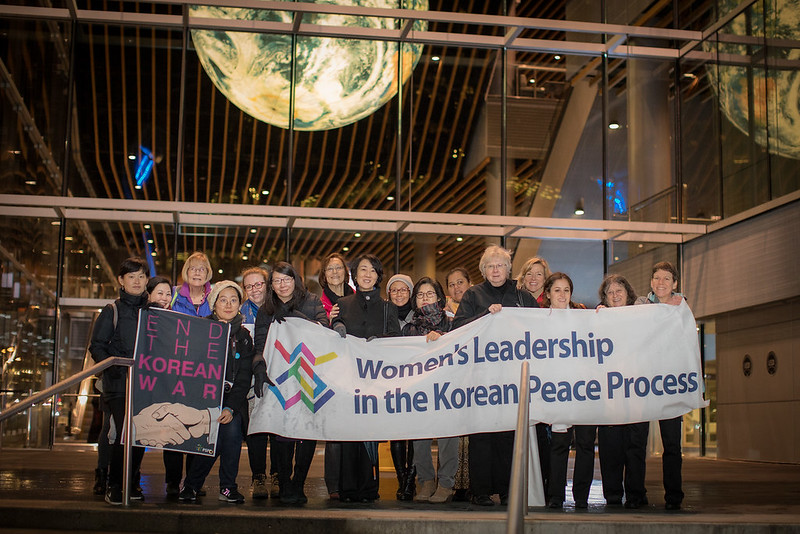
As sixteen delegates representing peace movements from all over the world, we have traveled from Asia, Pacific, Europe, and North America to convene the Vancouver Women’s Forum on Peace and Security on the Korean Peninsula, an event held in solidarity with Canada’s Feminist Foreign Policy to promote a peaceful resolution to the crisis on the Korean Peninsula. Sanctions and isolation have failed to curb North Korea’s nuclear weapons program and instead severely harm the North Korean civilian population. A Korean Peninsula free of nuclear weapons will only be achieved through genuine engagement, constructive dialogue, and mutual cooperation. We issue the following recommendations to the Foreign Ministers participating in the January 16 Summit on Security and Stability in the Korean Peninsula: 


Immediately engage all relevant parties in dialogue, without preconditions, to work toward achieving a nuclear-free Korean peninsula;


Abandon support for the strategy of maximum pressure, lift sanctions which have deleterious effects on the North Korean people, work toward the normalization of diplomatic relations, remove barriers to citizen-to-citizen engagement, and strengthen humanitarian cooperation;


Extend the spirit of the Olympic truce and affirm the resumption for inter-Korean dialogue by supporting:

i) negotiations for the continued suspension of joint US-ROK military exercises in the south, and the continued suspension of nuclear and missiles tests in the north,

ii) a pledge not to conduct a first strike, nuclear or conventional, and 

iii) a process to replace the Armistice Agreement with a Korea Peace Agreement;


Adhere to all the Security Council recommendations on Women, Peace, and Security. In particular, we urge you to implement United Nations Security Council Resolution 1325, which acknowledges that the meaningful participation of women in all stages of conflict resolution and peacebuilding strengthens peace and security for all. 


These recommendations are based on our long experience engaging with North Koreans through citizen diplomacy and humanitarian initiatives, and from our collective expertise on militarism, nuclear disarmament, economic sanctions, and the human cost of the unresolved Korean War. The Summit is a sobering reminder that the gathered nations have a historic and moral responsibility to formally end the Korean War. A pledge not to conduct a first strike can de-escalate tensions by significantly reducing the apprehension of an attack and the risk of miscalculation that could result in an intentional or an inadvertent nuclear launch. Resolving the Korean War can be the single most effective action to halt the intense militarization of Northeast Asia, which gravely threatens the peace and security of 1.5 billion people in the region. The peaceful resolution of the Korean nuclear crisis is the key step toward the total global elimination of nuclear weapons.


January 15, 2018

Vancouver Women's Forum on Peace and Security on the Korean Peninsula

Christine Ahn, Women Cross DMZ

Kozue Akibayashi, WILPF

Lisa Natividad Guahan. Coalition for Peace and Justice

Ewa Eriksson, Fortier Women Cross DMZ

Yehjung Yi, Korean Sharing Movement

Mihyeon Lee, People’s Solidarity for Participatory Democracy

Liz Bernstein, Nobel Women’s Initiative

Moon-sook Lee, National Council of Churches in Korea

Susan Bazilli, Women Peace Security Network

Nan Kim, Alliance of Scholars Concerned about Korea

Ellen Judd, Canadian Voice of Women for Peace

Ann Wright, Women Cross the DMZ & Veterans for Peace

Patti Talbot, United Church of Canada

Mary-Wynne Ashford, International Physicians for the Prevention of Nuclear War

Erica Fein, Win Without War

Lyn Adamson, Canadian Voice of Women for Peace 


Jan 16th CC (644 of 654)-X2

<사진 = 밴쿠버여성포럼>

월, 2018/01/15- 13:52
93
0

북한의 김정은 국방위원장과 미국의 트럼프 대통령 사이의 극적인 교착상태를 두고 이리저리 말들이 많다. 대체로 북미가 신속하게 북한의 비핵화와 경제발전을 위한 방법을 합의해 낼 수 있을 것임을 예측하고 있다.  반면에 두 가지 유형의 긴장이 유지되고 있는데, 트럼프와 김정은 그리고 대한민국의 문재인 대통령 등 국가정상간 긴장과, 백악관 및 각 부처 장관 그리고 의회, 즉 미국 내의 긴장이다.

칼럼_181012(1)조선일보
사진: 조선일보

이러한 긴장은 2018년 5월, 트럼프 대통령이 군사행동을 들먹이던 허풍을 버리고 김위원장과 회담에 나설 것에 합의한 이래 지속되어 왔다.  8월에 보도된 권위있는 기사는 트럼프와 김정은의 두 번째 만남을 막는 것이 백악관의 중론임을 시사했다. 미국의 대통령이 중대한 정책 결정을 두고 남북한의 지도자들과 한편이 되어, 미국의 대다수 고위관료와 워싱턴 정계에 맞선다는 것은 가히 충격적일 것이다. 그런데 작금의 워싱턴에서는 그보다 훨씬 더 놀라운 일들이 매일같이 벌어지고 있다.

그보다 더한 역설적 모순은 지난 17년간 여야를 막론하고 합의로 이루어져 왔으나 역효과만 낸 미국의 한반도 정책을 트럼프라는 개인이 묵살했다는 것이다. 이러한 트럼프의 새로운 방향은 미국에게도, 한국에게도, 동북아시아에게도 유익하다. 이 사실을 이해하는 게 어렵지 않음에도 불구하고 상당수의 정치인과 학자, 언론인은 이를 받아들이지 못하고 있다.

세 번에 걸친 남북 정상회담 그리고 이를 둘러쌓고 진행된 미국과 중국, 러시아, 남북한의 회담은 그 중요성을 아무리 강조해도 지나치지 않다. 평양에서 열린 제3차 남북 정상회담에는 군대의 철수와 분쟁위험 감축을 위한 군사분야 합의뿐 아니라, UN 제재조치 중지 시 기업 및 인프라 투자를 어떻게 할 것인지에 대한 상세계획이 포함되었다. 그 중에서도 눈에 띈 점은 두 정상간 회담에 통역사가 배석하지 않았다는 것이다. 몸짓과 표정, 가벼운 대화를 통해 다른 정상회담에서는 보지 못한 의미를 더했다. 한국의 미디어에서는 현장을 담은 짧지만 매우 의미있는 영상들이 퍼져 나갔다.

사실 이러한 변화는 한국과 북한, 미국 정부간에 벌어진 격변이라는 상황이 아니었다면 큰 의미가 없었을 것이다. 지난 몇 년간 한국과 북한 그리고 미국은 각기 다른 이유로, 그러나 모두 결정적인 이유로 지각변동 같은 변화를 겪었다.

북한의 김위원장은 선친에 비해 강한 결단력과 자신감을 갖춘 것으로 드러났다. 문대통령은 한국을 독재에서 벗어난 1990년대의 실용적이며 현대적 진보주의의 근원으로 다시 이끌고 가고 있다.  트럼프 대통령은 비록 미국 정계와 정책 시스템의 취약성을 드러내기는 했지만, 북한과 합의를 이루어 냈고 이것이 그의 유일한 외교정책 성과가 될 듯 하다.

미국은 2001년에 지난 10여 년간 조심스레 다져온 다자간협의를 파기함으로써 북한과 동북아에 영향력을 행사할 수 있는 막대한 힘을 날려버렸다. 현재로서는 남북한 사이에서 길을 비켜주는 것이 미국이 할 수 있는 최대의 기여이다. 이 시점에는 미국이 군사행동이나 경제지원 등의 약속, 심지어는 외교관계를 약속한다 해도 신뢰를 얻기 어렵다. 그리고 트럼프 대통령은 이미 어느 정도 길을 비켜주었고, 추가로 UN 제재조치를 완화하도록 한다면 추가적인 돌파구 효과를 줄 수도 있을 것이다.

이제 UN 제재조치 완화는 북한의 비핵화와 경제발전 모두를 위해 필수적인 요건이 되었다. 그리고 백악관의 한국 정책이 결국 대북 제재에 대한 미국의 입장에 달려 있음을 유추할 수 있는 데, 제재완화 문제는 제73차 UN총회에서도 큰 화제였다.

UN 제재의 중요성을 생각해보면 왜 워싱턴의 기득권층이 이토록 UN 제재를 놓치지 않으려 하는지 설명이 된다. 과거 북미합의를 파기한 정당, 그리고 현 국가안보 보좌관 존 볼튼 (John Bolton)을 비롯, 바로 그 정당에서 그러한 결정에 동조한 많은 이들이 현재 권력의 절정에 서있다. 당시 그들의 해법은 제재와 강압이었고, 그것이 현재 그들이 가진 전부다. 일부 제재가 완화되고 나면, 제재를 다시 부과하는 것은 거의 불가능해질 것이다. 거기에 북한의 무기생산능력을 제한하고 후퇴시키는 등의 진전이 이루어지면 더욱 그러할 것이다.

문제는 문대통령은, 동맹국 미국이 가장 약해진 지금, UN을 한국의 편으로 만들지 못했고, 백악관의 분열에 중요한 또 다른 원인을 제공하고 있다. 불행하게도 문대통령에게는 트럼프가 미국 내부의 다툼을 이겨낼 수 있도록 함께 도울 수 있는 미국 내 논리적 협력자가 없다. 미국이 충분한 성공과 의지를 보여줄 때, 한국은 이제 동맹국 미국의 지속적인 이익을 보호하는 동시에 더 큰 책임을 맡을 준비가 되어있다.

안토니오 구테헤스 (Antonio Guterres) UN 사무총장의 성명서로 짐작해 볼 때, 현재 그는 백악관 존 볼튼 계파의 편에 섰고 직접적인 요청이 있기 전에는 문대통령을 돕지 않을 것이다. 미국이 제재 완화를 통해 남북한을 돕기로 결정하는 것이 가장 중요한 열쇠임에도 불구, 구테헤스 사무총장은 계속 완전한 비핵화만이 열쇠라고 말하고 있다.

그는 미국 혼자서도 얼마든지 UN의 대북제재 완화를 막아낼 수 있음을 시사하는 발언을 했는데, 이는 결국 남북 경제협력과 비핵화의 진행에 장애가 될 것이다.. 한가지 기억할 것은 볼튼과 공화당이 대북제재를 이끌어 낸 당시, 그들은 북한을 도발했고  결과로 공화당 집권 전에는 없었던 핵무기를 북한이 개발하게 되었다는 점이다.

북한의 핵무기 개발 프로그램을 통제하기 위해 필요한 경제 및 안보 조치는 대부분 한국의 역할로 수행해왔다. 중국과 러시아가 가진 카드도 김정은 위원장 눈 앞을 어른거린다. 반면에 UN과 백악관이 실제로 가할 수 있는 마지막 결정타는 힘을 잃고 있다.

제재를 지지하는 목소리가 계속 힘을 얻는다면 문재인 대통령은 중대한 결정을 내려야 할 것이다. 한국정부 단독으로 북한으로부터 이끌어낼 수 있는 진전을 바탕으로 UN제재의 중단을 밀어붙일 것인가? 북한이 특정 조치를 실행하는 경우, 그 대가로 UN에서 지지세력을 모아 안보리 제재위원회의 지지의 표를 구할 것인가? 아니면 갈라지고 힘이  빠진 미국이 또다시 동북아 평화를 향한 역사적이고 과감한 움직임을 방해하도록 내버려둘 것인가?

금, 2018/10/12- 10:22
83
0

편집자 주: 최근 한국 내 유엔사령부의 존재가 회자되고 있다. 남북철도 연결공사에 대해 DMZ의 관할권이 유엔사에 있다는 구실로 제동을 걸고, DMZ내 경계초소를 줄이고 긴장을 낮추자는 남북간 군사적 합의에 대해서도 곱잖은 시선을 보내고 있다. 지난 9월 17일 유엔주재 러시아대사가 유엔 사무국에 한국주재 유엔사의 법적 지위와 역할에 대하여 답변을 요구하였을 때, 사무총장을 대신하여 Rosemary DiCarlo 사무차장은 한국전이 발발했을 당시 유엔 결의에 의해 미군이 중심이 되어 유엔참전국을 지휘하도록 결의한 바는 있으나 유엔사는 미군에 의해서 일방적으로 결성되었으며, 휴전 이후 단 한번도 미국으로부터 유엔사에 대해 보고를 받은 적도 없고, 협의를 요청받은 사실도 없다면서 자신이 파악하는 한, 유엔과 유엔사는 직접적인 관련이 없다고 언급했다.

아래의 외신기사는 미국이 한반도의 종전선언 또는 평화협정을 대비하여 대중국의 군사적 봉쇄를 강화하고 동아시아 역내국가들과 군사적 동맹을 결속하기 위하여 한국 내 유엔사의 역할을 더욱 강화할 것이라는 전망을 내놓고 있다. 이와 관련, Abrams 주한미군사령관 지명자가 지난달 미 상원 인사청문회에서 “남북대화가 계속되더라도 모든 관련 사항은 유엔사에 의해 중개·판단·감독·집행돼야 한다”고 발언했다. 최근 트럼프 대통령이 한국정부의 대북제재완화 움직임에 대하여 미국의 승인없이는 불가하다는 발언을 하면서 한국의 국가주권을 무시한 맥락과 일맥상통한다고 볼 수 있다.  다른백년은 이후 유엔사라는 주제에 대해 기회 있을 때 마다 칼럼을 게재할 계획이다.


한반도 평화를 위한 노력에 속도가 붙는 가운데, 지난 수 십년간 동북아 지정학의 주변부에 머물렀던 애매한 군사집단이 한반도 내 잠재적인 도발요인으로 떠올랐다. 주한유엔군사령부(UNC)는 최근 몇 주간 미국의 진두하에 일련의 행동에 나섰고, 이는 북한에 우호적인 태도를 선보인 한국 정부와 미국 내 강경파 사이의 균열을 내비치며 논란을 불러 일으켰다.

칼럼_181018

특히 유엔사령부는 일찌감치 북한과 철도를 연결하려는 한국의 노력을 차단하며 한국 외교전문가들에게 무력감을 안겼던 바 있다.  한국의 문재인 대통령이 방북 후 군사 긴장 완화를 위한 구체적인 안을 가지고 돌아온 지 며칠 지나지 않아 사령부는 다시 한번 그 존재를 과시했다.

“[남북한]은 대화를 지속할 수 있지만, 모든 대화는 유엔사령부에 의해 중개, 판단, 감독, 집행되어야 한다.” 유엔사령부와 한국에 주둔한 3만여 미군을 이끄는 사령관으로 내정된 로버트 에이브람스(Robert Abrams) 육군대장의 말이다. 그의 이런 단호한 어조는 유엔사령부를 “강화”시켜 동북아 안보체계 내 확고한 플레이어로 거듭나겠다는 유엔사의 오랜 캠페인과 딱 맞아 떨어진다. 지난 수 십년간 유엔사는 1953년 한국전쟁을 끝낸 종전협정을 감시하는 역할을 했을 뿐이었다.

그런데 유엔사령부에 몸을 담았던 장교들과 군사전문가들에게 이 “강화”라는 것은 단순히 북한으로부터 동북아를 보호하는 것을 넘어 더욱 심오한 목적을 의미한다. 중국이 부상하고 한반도 정세가 급변할 때, 동북아 내 미국의 입지를 강화하고 향상시키는 것이다.

익명을 요구한 한 퇴역 장교는 “유엔사 강화를 향한 미국은 노력은 북한의 위협보다도 동북아내 미국의 전략적 이해관계에 더 크게 기인한다”라면서, “미국은 유엔사를 기존의 정전 감시용 목적과 함께 전투용으로도 활용할 생각이 있는 것 같다”고 말했다.

유엔사령부의 3개년 “강화”운동은 주로 유엔사에 전념할 수 있는 구성원, 즉 주한미군 등 다른 군사조직에서도 임무를 수행하지 않는 장교들을 배치하는 것에 주로 집중해왔다. 그런데 한편으로는 이러한 운동이 유엔사 내 미국의 협력자를 늘리고, 한반도 내 군사훈련을 용이하게 하도록 했다. 최근 개최된 군사훈련에는 호주와 뉴질랜드, 캐나다의 군대가 참여하기도 했다.

지난 7월에는 캐나다 3성 육군 장군인 웨인 에어(Wayne Eyre)가 유엔사령부 부사령관으로 임명되며 이러한 노력에 새로운 힘을 실었다. 그는 유엔사 부사령관에 임명된 최초의 비(非)미국인이다. 곧 한국을 떠날 예정인 빈센트 브룩스 (Vincent Brooks) 유엔사사령관 겸 주한미군사령관은 “유엔사 사령관으로서 나의 우선순위 중 하나는 유엔사를 활력 넘치고, 실질적인 조직으로 만드는 것”이라고 밝혔다. 그의 이러한 발언 뒤에는 워싱턴의 현실적인 계획이 자리하고 있다. 한국은 한반도 내 전시작전권을 되찾으려 하고 있고, 그렇게 되면 주한미군은 중심에서 밀려날 수 있다. 미국은 한국전쟁 이후 “작전권”을 유지해왔으나 최근 주권에 대한 우려가 한국의 의욕을 가속화하고 있고, 이달 말 한국 국방부는 전시작전권 이양을 위한 로드맵을 제시할 예정이다. 김창수 전 국방부장관 정책고문은 “유엔사 부흥을 위한 노력의 기저에는 2023년 즈음에는 미국이 한국에 전시작전권을 이양해야 한다는 사실이 있다”며 이것을 한반도 내 희망의 근거이자 회의론의 근거로 들었다.

“전작권 이양이 실현되면 한미연합사령부의 역할과 기능이 크게 약화되고 망가질 수 있다. 그런데 미국이 한반도 내에 남아있기 위해서는 유엔사의 존재가 매우 중요할 것으로 보인다.”

중국이 동북아와 동남아에서 세력을 키우고 있고, 점점 더 독단적으로 행동하는 것 역시 유엔사의 강화를 이끄는 요인이다. “미국은 한반도 내 영향력을 유지하면서 계속 중국을 견제하고자 한다.” 전 해군사령관으로 현재 경남대학교 극동문제연구소에 재직 중인 김동엽 교수의 말이다.

한국전 직후에는 유엔사의 지휘 하에 있는 군사가 백만명에 달했다. 멀리는 콜롬비아와 이디오피아에서 파견된 군대도 있었다. 이후 수 십년이 지나며 북한의 공격을 막는 방어벽으로서의 역할은 주한미군이 대체했고, 오늘날 유엔사령부 내 몇 명 되지 않는 장교들은 남한과 북한 사이 정전협정을 감독하는 역할에 집중하고 있다. 그러나 유엔사 조직의 강화전략은 한국 내 저항의 목소리에 부딪혔다. 지난 7월 미 육군 숀 크리머(Shawn Creamer) 중령은 국제한국학저널(International Journal of Korean Studies)에 다음과 같이 썼다. “한국의 미온적인 대응은 결국 국권침해에 대한 우려의 팽배, 사령부의 무익함에 대한 인식, ‘강화’라는 용어의 부정적 작용 등으로 이어질 수 있다.” 이어 그는 “revitalization (강화)”이라는 말은 한국어로 하면 유신이라는 뜻으로도 번역될 수 있는데, 한국에서 이는 독재자 박정희의 “유신개혁”에 대한 기억을 끌어내기 때문에 경멸의 대상이 되기 쉽다고 헸다. 한편 로위 국제문제연구소(Lowy Institute) 유안 그레이엄 (Euan Graham) 선임연구원은 “문재인 정부는 호주, 영국, 캐나다 등 광범위한 안보파트너를 찾고자 하는 외교적 노력에 맞춰 유엔사령부에 대응해야 한다”면서 “유엔사 강화도 광범위한 외교적, 전략적 목표와 함께 한국에 적용되어야 한다. 중국 역시 그와 비슷한 이유로 유엔사 역할 확대를 반대하고 나설 것”이라고 주장했다.


브라이언 해리스 (Bryan Harris)

목, 2018/10/18- 13:47
82
0

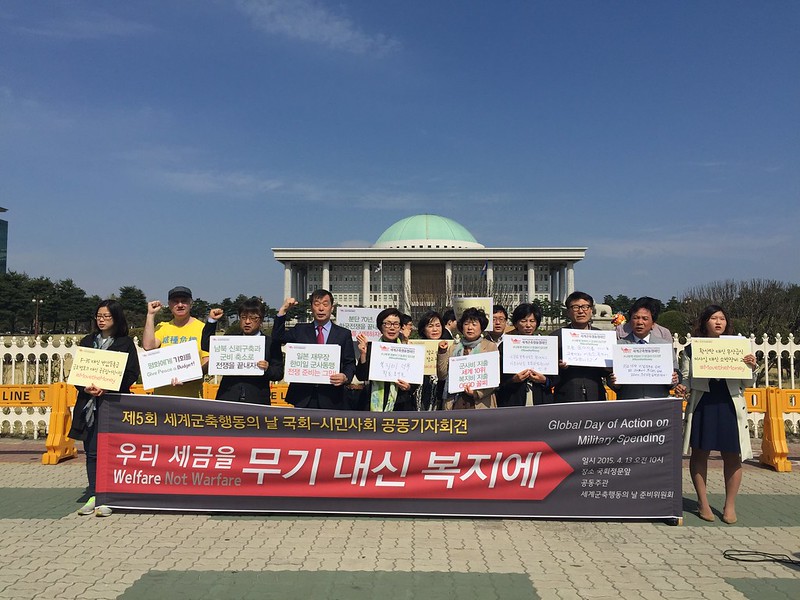
20150413_세계군축행동의날


Joint Statement of the National Assembly and the Civil Society for the 5th Global Day of Action on Military Spending

Our Taxes on Social Welfare instead of on Weaponry


Today on the Global Day of Action on Military Spending, we stand here to be with about 320 organizations from about 70 nations around the world. We should reflect on our reality that peace and safety of citizens worldwide are far from being established even when an astronomical amount of money is spent on military. We demand that our taxes be spent on restoring social justice and building a sustainable and peaceful world. This year, marking the one-year anniversary of the Sewol-ferry tragedy, voices desiring a safe nation have grown louder than ever, and the criticism of the ineffective investment in defense industry in the name of 'national security' is also growing stronger. It is time to change the priorities of the national policy and shift the focus from materialistic national security and military buildup to safety of people and peaceful cooperation.


According to 'Trends in World Military Expenditure, 2014' published by Stockholm International Peace Research Institute (SIPRI), the worldwide military spending last year amounted to 1.8 trillion dollars (about 1,968 trillion won), a little less than the last year's. Korea entered the top 10 for the first time last year and ranked 10th this year. 


Korea's military spending in 2015 amounts to 37.456 trillion won, increased by about 4.9% or 1.7504 trillion won from last year. This is excessive, taking up 14.5% of the government budget. 


While a large sum of military spending is being spent, our society is becoming more extremely socially polarized. Uneasiness from everyday life caused by issues in education, child care, health care, and housing encroaches on our lives, but welfare budget to expand social safety net is not nearly enough. The total amount of university student loan is now over 10 trillion won. The university tuition could be subsidized and cut by half if we decide not to use 7 trillion won of budget on purchasing 40 fighter aircrafts, F-35's, which are the most ineffective and unreasonable among the military weapons to be purchased from the U.S. by the Korean army. 1,400 public daycare centers, which President Park Geun-hye promised to provide during her presidential campaign but failed to fulfill, could be built with 880 billion won of budget set aside for 4 unmanned aerial reconnaissance drones called 'Global Hawk'. Also the budget deficit of 65.5 billion won in 34 local medical centers could be covered for the next 90 years if we do not spend 6 trillion won on operating and maintaining Global Hawk's. Students in South Gyeongsang Province, who had to put up with such remark "a school is not the place you come to eat", could have school lunches for free for the next 30 years if 3.3415 trillion won of budget is not spent on the cluster bomb units and the multiple launch rocket systems, both of which indiscriminate murder weapons banned by international law. All the firefighting equipment which is old to such an extent as to threaten the lives of firefighters could be replaced if we do not spend 1.5233 trillion won on purchasing interceptor missiles such as PAC-3. In retrospect, what we lack is not the budget. Where we allocate finances is important. We should face the threat to our lives, and reprioritize the budget.


How about the Sewol-ferry tragedy? We had to witness 304 people being buried at sea because the country, which spends about 35 trillion won every year to protect citizens from outside threat and ranks 10th in military spending, did not have basic rescue equipment. The Blue House National Security Office denied being the so-called "control tower" for the Sewol-ferry disaster. If so, for whom is the national security if the disaster which could have resulted in deaths of 470 citizens is not a matter of national security? Moreover, the Tongyeong naval rescue ship which proved to be utterly useless at the time of Sewol-ferry disaster showed rampant corruption in the nation's defense industry. If we were to talk about society after the Sewol-ferry tragedy, we should start by dealing with this glaring contradiction.


Someone might raise a question about decreasing the military expenditure when there is a serious threat from North Korea. South Korea spends an amount, almost equal to North Korea's GDP, on military. This amount does not even include the military spending by the United States Forces Korea. North Korea is obsessed with weapons of mass destruction such as nuclear weapons because it knows its military spending is no match for South Korea's. Thus it is not a matter of amount of military expenditure, but a matter of trust.


In the East Asian region, there is a fierce competition on military spending among countries such as the United States, China, Russia and Japan. Some claim that South Korea should increase the military spending in order not to fall behind these nations. However, South Korea, as a middle power country responsible for initiating a peaceful unification on the Korean peninsula, should avoid confrontation based on South Korea-the U.S.-Japan military alliance but should demonstrate leadership for peace, cooperation, coexistence and common security. The recent controversy over the U.S. deploying a Terminal High-Altitude Area Defense (THAAD) missile defenses in South Korea directly shows 'Asian paradox', the disconnect between deep economic interdependence and a serious conflict in military diplomacy. 


There are 20 nations worldwide whose military expenditures take up over 4% of their GDP's in 2014. This number is greater than that in the early 1990's right after the Cold War. If the world had spent even 5% of its military spending on combatting poverty, we could have realized the United Nations Millennium Development Goals (MDGs) that promised to halve global poverty rates by the year 2015. However as the world went through two great wars in Iraq and Afghanistan, the promise could not be kept. Korean government also promised to provide 0.25% of its GNI as Official Development Assistance (ODA) by the year 2015 to eradicate poverty but it allocated vastly insufficient amount and ended up breaking its promise to the international society. The new Sustainable Development Goals (SDGs) which is to be proposed in September, 2015 cannot be achieved without fundamental changes and reflection on military expenditure in each country.


The 5th Global Day of Action on Military Spending should not be the anniversary full of empty promises but should be a milestone to change. Thus, to the government and citizens of Korea which ranks 10th in military spending in the world and ranks last in welfare spending among 28 OECD countries, we suggest the following:


1. We demand that the military spending be reduced to alleviate social bipolarization, to expand social safety net, and to build safe society without disasters. Increasing military spending means taking away other opportunities under a limited government budget. Finances obtained by decreasing military expenditure should be used to remove any urgent threats that citizens face in their daily life.


1. This year, the 70th anniversary of the division of Korea, we demand that the efforts be put to end the Korean war and create a peace regime. The Korean government should reflect on the large amount of direct and indirect expenses spent to keep the unstable armistice regime during the past years. The nuclear threat in the Korean peninsula, which is the main reason behind the increase in the military spending, is also the result of this armistice regime and arms race. We should devise measures to recover mutual trust and start conversations instead of purchasing offensive weapons and increasing military expenditure every year. The first step towards achieving this is to lift the May 24th measures which stands between the inter-Korean relations. 


1. We express our deep concerns over the situation where the preparation for war comes before peace and where military alliance comes before cooperation in the Asia-Pacific region. We demand that Korea put efforts to change relations based on various disputes and military conflicts into cooperative ones. Appealing to the military means or strengthening military alliances to antagonize a specific country cannot resolve the conflicts. We should protect the Japanese pacific constitution, a bastion of peace in East Asia, and should not allow the right of collective self-defense. We should not allow the deployment of the U.S. missile defense system in South Korea and break away from the South Korea-U.S.-Japan military ties.


1. In order to establish peace we need participation of citizens and solidarity of people across borders. A mature sense of citizenship is more effective than any weapons to protect the community. Understanding each other and cooperation across borders are  faster ways to solve conflicts than using fighter aircrafts and missiles. We should not stand by and watch the government make decisions on whether a nation exaggerates an outside threat it claims to exist, and on whether our taxes should be used for purchasing military weapons or for building a sustainable society. Decisions on and execution processes of national security matters, including conclusion of various security treaties, development of military cooperation, execution of military exercises, and purchase of expensive and offensive weapons, must be transparent and controlled democratically, considering their enormous effects on society. Priorities in foreign policies and national security policies should be determined by citizens as it is done in other fields. 


Disarmament is not a story of a distant future but an imminent and real issue. We demand that the government, the national assembly and all the citizens show wisdom to establish peace together. 


April 13, 2015
Participants of the 5th Global Day of Action on Military Spending


For more information


The GDAMS website http://demilitarize.org

The GDAMS Korea website http://gdams.or.kr
The GDAMS Preparatory Committee of Seoul
People’s Solidarity for Participatory Democracy +82-2-723-4250, [email protected]

월, 2015/04/13- 20:50
78
0