주요 콘텐츠로 건너뛰기

Building and Sustaining Peace at the Regional Level

지역

Building and Sustaining Peace at the Regional Level

admin | 월, 2023/01/30- 15:02

On December 8 2022, in partnership with the Permanent Mission of Mongolia to the United Nations, the Global Partnership for the Prevention of Armed Conflict (GPPAC) organised a roundtable discussion titled Building and Sustaining Peace at the Regional Level: The Network Approach to Regional Coordination in Northeast Asia during an advocacy visit of Ulaanbaatar Process participants to New York City.

This discussion was an informal dialogue to share the learning from the Ulaanbaatar Process with global peacebuilding policy experts within the United Nations, Member States and regional organisations. The conversation outlined critical avenues to support regional peacebuilding coordination in policy and shared practical experiences for practical action. The discussion also outlined persistent challenges of regional peacebuilding coordination, and discussed recommendations to develop solutions to strengthen peacebuilding work in Northeast Asia.

During the roundtable, remarks were shared by Ulziibayar Vangansuren, Permanent Mission of Mongolia to the United Nations; Ambassador Enkhsaikhan Jargalsaikhan, Chair of NGO Blue Banner and former Mongolian Permanent Representative to the UN; Sonja Bachmann, Teamleader Northeast Asia and Pacific, UN Department of Peacebuilding Political Affairs (DPPA); Kajita Natsuha, learning designer and facilitator; Kim Jeongsoo, Standing Representative, Women Making Peace and Hwang Sooyoung, Manager, Centers for Peace and Disarmament and for International Solidarity, People’s Solidarity for Participatory Democracy (PSPD).

Based on the experiences from Northeast Asia, the following key elements build an effective regional peacebuilding architecture:

  • Multi-stakeholder coordination is required and must be based on complementarity among partners.
  • The network approach to peacebuilding must be at the core of regional coordination.
  • Inclusivity is key for effective regional peacebuilding networks.

The following recommendations have thus been identified for the strengthening of the regional peacebuilding mechanisms:  

  • The UN should take a more active convening role to bring together regional actors, the UN, national governments, and civil society, among others, to coordinate actions better and ensure a stronger impact of peacebuilding activities.  Where regional peacebuilding networks play an essential role in building the foundation for regional dialogue, the UN should provide technical and political accompaniment to ensure the commitment to action. 

  • Improved funding mechanisms are needed to support the civil society organizations’ network approach. A network approach creates empowering and equitable spaces for exchanging expertise for more impactful and informed action, sharing resources and access points at various levels, and enabling and supporting communities committed to peace. Donors should reflect on how to improve funding mechanisms to support better civil society organizations engaged in regional peacebuilding networks, allowing them, through effective funding, to fill the gaps in the regional peacebuilding infrastructure. It is crucial to ensure that all regions are fairly represented in the international discussion on peacebuilding and are given international attention, as this also impacts funding availability. 

  • The inclusion of women and youth is key in regional peacebuilding networks and should be supported. Although women are strongly affected by conflicts, they are often excluded from negotiations and peace processes, especially in highly patriarchal contexts. The inclusion of local women within peacebuilding initiatives is essential to ensure that their unique perspectives can have a real impact at the decision-making level. Likewise, the meaningful participation of young people in dialogue on equal terms is essential to achieve and sustain peace. Young people in all their diversities should be considered as drivers for change, and their contributions should be held as relevant and valuable. Donors should prioritise supporting regional peacebuilding dialogues that ensure the meaningful participation of women and youth at all stages of the process.  The UN and its Member States should use their influence and international platforms to  ensure that the unique perspectives of local women and youth peacebuilders are heard and taken into account in the decision-making processes.

This is an article for Global Partnership for the prevention of Armed Conflict (GPPAC) Northeast Asia News, Jan 2023

Summary Document [See/Download]

The post Building and Sustaining Peace at the Regional Level appeared first on 참여연대.

시민들의 의견

댓글 달기

Plain text

  • 웹 페이지 주소 및 이메일 주소는 자동으로 링크로 전환됩니다.
  • 줄과 단락은 자동으로 분리됩니다.
  • 사용할 수 있는 HTML 태그: <a href hreflang> <em> <strong> <cite> <blockquote cite> <code> <ul type> <ol start type> <li> <dl> <dt> <dd>
이미지
무제한 수의 파일을 이 필드에 업로드할 수 있습니다.
50 MB 한계입니다.
허용된 유형: png gif jpg jpeg.
Enter the YouTube URL. Valid URL formats include: http://www.youtube.com/watch?v=1SqBdS0XkV4 and http://youtu.be/1SqBdS0XkV4.
CAPTCHA
스펨 사용자 차단 질문

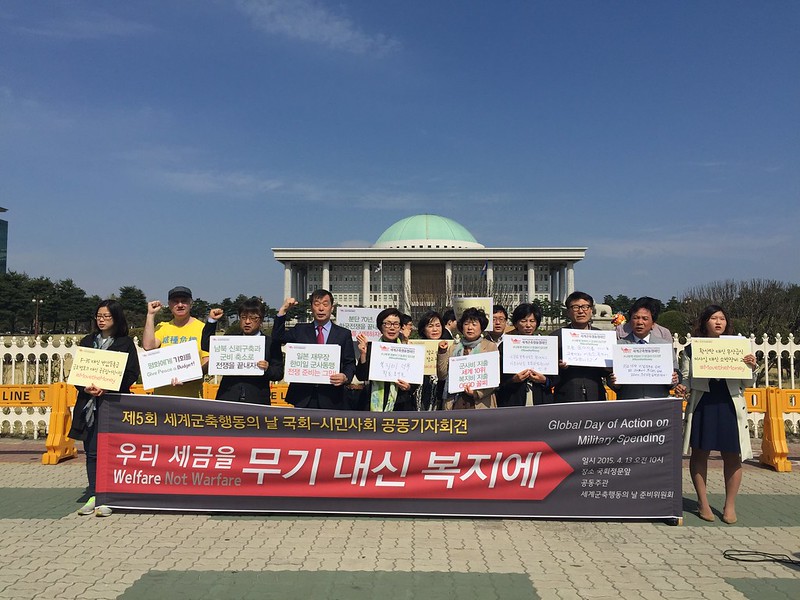
20150413_세계군축행동의날


Joint Statement of the National Assembly and the Civil Society for the 5th Global Day of Action on Military Spending

Our Taxes on Social Welfare instead of on Weaponry


Today on the Global Day of Action on Military Spending, we stand here to be with about 320 organizations from about 70 nations around the world. We should reflect on our reality that peace and safety of citizens worldwide are far from being established even when an astronomical amount of money is spent on military. We demand that our taxes be spent on restoring social justice and building a sustainable and peaceful world. This year, marking the one-year anniversary of the Sewol-ferry tragedy, voices desiring a safe nation have grown louder than ever, and the criticism of the ineffective investment in defense industry in the name of 'national security' is also growing stronger. It is time to change the priorities of the national policy and shift the focus from materialistic national security and military buildup to safety of people and peaceful cooperation.


According to 'Trends in World Military Expenditure, 2014' published by Stockholm International Peace Research Institute (SIPRI), the worldwide military spending last year amounted to 1.8 trillion dollars (about 1,968 trillion won), a little less than the last year's. Korea entered the top 10 for the first time last year and ranked 10th this year. 


Korea's military spending in 2015 amounts to 37.456 trillion won, increased by about 4.9% or 1.7504 trillion won from last year. This is excessive, taking up 14.5% of the government budget. 


While a large sum of military spending is being spent, our society is becoming more extremely socially polarized. Uneasiness from everyday life caused by issues in education, child care, health care, and housing encroaches on our lives, but welfare budget to expand social safety net is not nearly enough. The total amount of university student loan is now over 10 trillion won. The university tuition could be subsidized and cut by half if we decide not to use 7 trillion won of budget on purchasing 40 fighter aircrafts, F-35's, which are the most ineffective and unreasonable among the military weapons to be purchased from the U.S. by the Korean army. 1,400 public daycare centers, which President Park Geun-hye promised to provide during her presidential campaign but failed to fulfill, could be built with 880 billion won of budget set aside for 4 unmanned aerial reconnaissance drones called 'Global Hawk'. Also the budget deficit of 65.5 billion won in 34 local medical centers could be covered for the next 90 years if we do not spend 6 trillion won on operating and maintaining Global Hawk's. Students in South Gyeongsang Province, who had to put up with such remark "a school is not the place you come to eat", could have school lunches for free for the next 30 years if 3.3415 trillion won of budget is not spent on the cluster bomb units and the multiple launch rocket systems, both of which indiscriminate murder weapons banned by international law. All the firefighting equipment which is old to such an extent as to threaten the lives of firefighters could be replaced if we do not spend 1.5233 trillion won on purchasing interceptor missiles such as PAC-3. In retrospect, what we lack is not the budget. Where we allocate finances is important. We should face the threat to our lives, and reprioritize the budget.


How about the Sewol-ferry tragedy? We had to witness 304 people being buried at sea because the country, which spends about 35 trillion won every year to protect citizens from outside threat and ranks 10th in military spending, did not have basic rescue equipment. The Blue House National Security Office denied being the so-called "control tower" for the Sewol-ferry disaster. If so, for whom is the national security if the disaster which could have resulted in deaths of 470 citizens is not a matter of national security? Moreover, the Tongyeong naval rescue ship which proved to be utterly useless at the time of Sewol-ferry disaster showed rampant corruption in the nation's defense industry. If we were to talk about society after the Sewol-ferry tragedy, we should start by dealing with this glaring contradiction.


Someone might raise a question about decreasing the military expenditure when there is a serious threat from North Korea. South Korea spends an amount, almost equal to North Korea's GDP, on military. This amount does not even include the military spending by the United States Forces Korea. North Korea is obsessed with weapons of mass destruction such as nuclear weapons because it knows its military spending is no match for South Korea's. Thus it is not a matter of amount of military expenditure, but a matter of trust.


In the East Asian region, there is a fierce competition on military spending among countries such as the United States, China, Russia and Japan. Some claim that South Korea should increase the military spending in order not to fall behind these nations. However, South Korea, as a middle power country responsible for initiating a peaceful unification on the Korean peninsula, should avoid confrontation based on South Korea-the U.S.-Japan military alliance but should demonstrate leadership for peace, cooperation, coexistence and common security. The recent controversy over the U.S. deploying a Terminal High-Altitude Area Defense (THAAD) missile defenses in South Korea directly shows 'Asian paradox', the disconnect between deep economic interdependence and a serious conflict in military diplomacy. 


There are 20 nations worldwide whose military expenditures take up over 4% of their GDP's in 2014. This number is greater than that in the early 1990's right after the Cold War. If the world had spent even 5% of its military spending on combatting poverty, we could have realized the United Nations Millennium Development Goals (MDGs) that promised to halve global poverty rates by the year 2015. However as the world went through two great wars in Iraq and Afghanistan, the promise could not be kept. Korean government also promised to provide 0.25% of its GNI as Official Development Assistance (ODA) by the year 2015 to eradicate poverty but it allocated vastly insufficient amount and ended up breaking its promise to the international society. The new Sustainable Development Goals (SDGs) which is to be proposed in September, 2015 cannot be achieved without fundamental changes and reflection on military expenditure in each country.


The 5th Global Day of Action on Military Spending should not be the anniversary full of empty promises but should be a milestone to change. Thus, to the government and citizens of Korea which ranks 10th in military spending in the world and ranks last in welfare spending among 28 OECD countries, we suggest the following:


1. We demand that the military spending be reduced to alleviate social bipolarization, to expand social safety net, and to build safe society without disasters. Increasing military spending means taking away other opportunities under a limited government budget. Finances obtained by decreasing military expenditure should be used to remove any urgent threats that citizens face in their daily life.


1. This year, the 70th anniversary of the division of Korea, we demand that the efforts be put to end the Korean war and create a peace regime. The Korean government should reflect on the large amount of direct and indirect expenses spent to keep the unstable armistice regime during the past years. The nuclear threat in the Korean peninsula, which is the main reason behind the increase in the military spending, is also the result of this armistice regime and arms race. We should devise measures to recover mutual trust and start conversations instead of purchasing offensive weapons and increasing military expenditure every year. The first step towards achieving this is to lift the May 24th measures which stands between the inter-Korean relations. 


1. We express our deep concerns over the situation where the preparation for war comes before peace and where military alliance comes before cooperation in the Asia-Pacific region. We demand that Korea put efforts to change relations based on various disputes and military conflicts into cooperative ones. Appealing to the military means or strengthening military alliances to antagonize a specific country cannot resolve the conflicts. We should protect the Japanese pacific constitution, a bastion of peace in East Asia, and should not allow the right of collective self-defense. We should not allow the deployment of the U.S. missile defense system in South Korea and break away from the South Korea-U.S.-Japan military ties.


1. In order to establish peace we need participation of citizens and solidarity of people across borders. A mature sense of citizenship is more effective than any weapons to protect the community. Understanding each other and cooperation across borders are  faster ways to solve conflicts than using fighter aircrafts and missiles. We should not stand by and watch the government make decisions on whether a nation exaggerates an outside threat it claims to exist, and on whether our taxes should be used for purchasing military weapons or for building a sustainable society. Decisions on and execution processes of national security matters, including conclusion of various security treaties, development of military cooperation, execution of military exercises, and purchase of expensive and offensive weapons, must be transparent and controlled democratically, considering their enormous effects on society. Priorities in foreign policies and national security policies should be determined by citizens as it is done in other fields. 


Disarmament is not a story of a distant future but an imminent and real issue. We demand that the government, the national assembly and all the citizens show wisdom to establish peace together. 


April 13, 2015
Participants of the 5th Global Day of Action on Military Spending


For more information


The GDAMS website http://demilitarize.org

The GDAMS Korea website http://gdams.or.kr
The GDAMS Preparatory Committee of Seoul
People’s Solidarity for Participatory Democracy +82-2-723-4250, [email protected]

월, 2015/04/13- 20:50
78
0

시민사회단체, 유엔 특별보고관에

정부의 양심적 병역거부 대체복무제안(案)에 대한 우려 전달

유엔 종교·신념의 자유 & 표현의 자유 특보,

한국 정부에 국제 인권 기준에 부합하는 대체복무제 도입 촉구


오늘(11/14) 국제앰네스티 한국지부, 군인권센터, 민주사회를위한변호사모임, 전쟁없는세상, 참여연대는 Ahmed Shaheed 종교·신념의 자유 특별보고관(Special Rapporteur on freedom of religion or belief)과 David Kaye 표현의 자유 특별보고관(Special Rapporteur on the promotion and protection of the right to freedom of opinion and expression)에게 한국 정부가 논의 중인 양심적 병역거부 대체복무제안(案)에 대한 우려를 전달했다. 


정부가 논의 중인 대체복무제안은 헌법재판소, 대법원의 판결 취지와 국제인권기준에 부합하지 않는 사실상 ‘징벌적 대체복무제’인 것으로 확인되고 있다. 현역 육군 복무기간 기준 2배인 3년의 복무기간, 복무 영역은 교정시설에서 합숙 복무로 단일화, 심사기구는 국방부 산하에 설치, 현역 복무 중에는 대체복무를 신청할 수 없는 것이 골자이다. 


시민사회단체는 특별보고관들에게 전달한 서한을 통해 한국의 양심적 병역거부 상황과 한국 정부 대체복무제안의 문제점을 자세히 설명하고, 지난 수십 년 동안 발표된 유엔 자유권위원회 권고들과 유엔 인권위원회 결의안 등에 근거하여 다음의 5가지를 한국 정부에 권고해달라고 요청했다. ▷비전투적이고 민간(civillian) 성격이며 징벌적인 성격이 아닌, 유엔 인권기구의 권고에 부합하는 대체복무제를 도입할 것 ▷대체복무 기간은 군 복무 기간과 비슷해야 하며 그보다 길게 설정하려면 합리적이고 객관적인 이유에 근거할 것. 유엔 자유권위원회 등의 권고에 따라 대체복무 기간은 군 복무기간의 최대 1.5배를 넘어서는 안 됨 ▷대체복무 신청과 심사는 군 당국의 통제 하에 있어서는 안 되며 군과 완전히 분리된 민간 행정의 관할로 할 것 ▷다양한 형태의 대체복무를 마련할 것 ▷양심적 병역거부는 군 복무 전과 복무 중, 복무 이후 언제든 이뤄질 수 있다는 점을 인식하여 군 복무 중 병역거부권을 인정할 것 등이다.  


앞서 지난 11월 7일(수) 유엔 종교·신념의 자유 특별보고관과 표현의 자유 특별보고관은 한국 정부에 양심적 병역거부에 대한 서한을 보냈다고 밝혔다. 특별보고관들은 서한을 통해 11월 1일 대법원의 무죄 판결과 한국에서 대체복무제 입법 과정이 시작된 것을 환영했다. 이어 한국이 대법원의 판결 취지와 국제 인권법에 맞는 대체복무제를 도입해야 한다고 강력하게 권고하며, 이를 위한 기술적 지원을 제공하겠다고 제안했다.


그동안 유엔 자유권위원회 등 인권기구들은 한국 정부가 국제 인권 기준에 따라 양심적 병역거부자들에게 대체복무를 제공할 의무가 있으며, 이러한 대체복무는 군으로부터 독립된 민간(civilian) 성격이어야 하고, 기간 등에 있어 차별적이거나 징벌적이지 않아야 한다고 꾸준히 권고해왔다. 시민사회단체들은 이에 따라 한국 정부가 국제 인권 기준과 헌법재판소, 대법원의 판결 취지에 부합하는 대체복무제를 도입할 것을 촉구했다.


* 보도자료 [원문보기/다운로드]


South Korea Must Introduce Alternative Service that is Compatible with International Human Rights Standards

Submitted by Amnesty International Korea, Lawyers for a Democratic Society – Minbyun, Military Human Rights Center Korea, People’s Solidarity for Participatory Democracy and World Without War


We are submitting this communication to inform the UN Special Rapporteurs on the current discussion on introducing alternative service for conscientious objectors in the Republic of Korea (South Korea). After the recent ruling at the Constitutional Court which ask the South Korean government to introduce alternative services until 31 December 2019, the Government formed a working group to draft a bill for alternative service. However, the draft bill proposed by the Government working group does not conform to international human rights standards due to its punitive elements according to media reports and informed sources. This clearly goes against the recommendations given to the Government by several UN human rights mechanisms on introducing alternative service for conscientious objectors. The Government plans to announce the bill for the introduction of alternative service in the next few weeks and it is imperative that this bill is in line with international human rights standards.


1. Background


South Korea operates a system of military conscription under which all male citizens should serve in the military for 21 months. Unfortunately, there is no alternative service for conscientious objectors even though recommendations have been repeatedly made to South Korean government by various UN human rights mechanisms to introduce such service. Every year, hundreds of men have been to prison for exercising their freedom of thought, conscience or religion or belief in the South Korea) (see Table 1. According to Jehovah’s Witnesses, more than 19,300 conscientious objectors have been imprisoned in the country over the last 68 years, an accumulative total of 36,800 years of confinement.


            <Table 1 : Conscientious Objectors in South Korea Since 2009>


                                                       (Unit : persons)

Type

No.

-July 2018

2017

2016

2015

2014

2013

2012

2011

2010

2009

No.

5,450

71

461

557

493

565

623

598

633

721

728

Jehovah’s Witness

5,413

67

460

555

490

564

615

597

627

715

723

Other Personal belief

37

4

1

2

3

1

8

1

6

6

5


2. Current situation at the Courts


The Constitutional Court ruled on 28 June 2018 that Article 5(1) of the Military Service Act did not conform to the Constitution as it did not include provisions for alternative service for conscientious objectors to military service. This ruling gives the South Korean government until 31 December 2019 to introduce alternative service. This ruling was followed by a Supreme Court ruling on 1 November 2018 in which it ruled in a full bench decision by 9-4 that a Jehovah’s Witness objecting to military service for reasons of conscience could not be punished under Article 88(1) of the Military Service Act. The ruling deems conscientious objection a “justifiable ground” for failing to enlist or comply with a call up within a prescribed period after receiving notification.


At the time of the Supreme Court ruling, approximately 100 individuals remained imprisoned. This ruling also followed a total of 118 acquittals of conscientious objectors at lower courts since 2004 and is expected to have an influence on over 966 cases pending at courts of all levels including over 200 pending at the Supreme Court. It is unclear at the time of writing what steps the government intends to take to address their release and provide remedy for all of those affected such as through pardon, expunging criminal records and/or compensation.


Importantly, in a supplementary opinion submitted to the majority opinion by Justices Park Jung-hwa, Kim Seon- soo and Noh Jeong-hee they write that: “the International Covenant on Civil and Political Rights ratified by South Korea has the same force as domestic law according to Article 6, Clause 1, of the Constitution and can serve directly as a norm for adjudication.”


3. Problems of the Government Draft’s Bill


Following the 28 June Constitutional Court ruling, the Ministry of National Defense (MND) formed a working group to draft a bill for alternative service. The working group was composed of staff from the MND, Military Manpower Administration (MMA) (which sits under the MND) and the Ministry of Justice (MoJ). In addition, a consultative committee of civilian experts was formed composed of academics, civil society organization representatives and a representative from the National Human Rights Commission of Korea (NHRCK). The work of this consultative committee was coordinated by a representative from the MoJ and a representative from the MMA.


A total of seven bills for the establishment of alternative service have been submitted by lawmakers to date, including four bills submitted by Democracy and Peace Party, Bareun Mirae Party and Liberty Korea Party lawmakers following the 28 June Constitutional Court ruling which were far more punitive in nature than previous bills in particular in terms of the nature of work (i.e. mine removal) and length (i.e. 2 times the length of military service or longer) 


A public consultation hearing was held jointly by the MND, MoJ and MMA on 4 October in which possible options for alternative service were presented. In particular, it focused on three aspects: 1) length of service, 2) form of service (whether or not those performing alternative service would be housed on site or be able to commute), and 3) field of service Press reports and communication with advisory committee members indicate that the bill when proposed to the National Assembly will have the following elements that fall of short of international human rights standards and law and are likely to be punitive and discriminatory:


1. Length of alternative service set at twice that of military service with on-site shared accommodation; 

2. Service limited to work within correctional facilities; 

3. Evaluation committee for assessment of applications to be established under the Ministry of National

Defense. 

4. Applications for conscientious objection will not be accepted during military service.


4. Suggested Recommendations


  • South Korea should introduce forms of alternative service for conscientious objectors that are of a non-combatant or civilian character and not of a punitive nature, and compatible with the reasons for objection as recommended by the UN human rights bodies. 
  • Alternative service should be of a comparable length to military service and any additional length must be based on reasonable and objective criteria. The proposal by the Government to set the length at twice that of military service would make this the longest alternative service in the world. At its longest,alternative service should not exceed 1.5 times the length of military service consistent with recommendations from the Human Rights Committee. 
  • The decision regarding the recognition of the right of conscientious objection should be taken by an administrative civilian authority entirely separate from the military authorities and its composition should guarantee maximum independence and impartiality. 
  • South Korea should introduce various forms of alternative service for conscientious objectors which are compatible with the reasons for conscientious objection as recommended by the Commission on Human Rights. 
  • Recognizing that a conscientious objection can arise at any time including before, during and after military service, if there is no complete exemption, the authorities should make alternative service accessible to all those with a genuine objection at any time including during military service.


5. Contact Details


  • Tom Rainey-Smith, Campaigns Team, Amnesty International Korea / Email: [email protected] Phone: +82-10-6379-2273
  • Yong-Suk Lee, Conscientious Objection Team, World Without War / Email: [email protected] Phone: +82-10-2878-0851


<유엔 종교·신념의 자유, 표현의 자유 특별보고관에게 전달한 한국 시민사회단체 서한>


<유엔 종교·신념의 자유, 표현의 자유 특별보고관이 한국 정부에 전달한 양심적 병역거부에 대한 서한>


수, 2018/11/14- 11:37
62
0
<div class="xe_content"><h2>양심적 병역거부 대체복무제 도입을 위한</h2> <p> </p> <h1>「대체역의 편입 및 복무 등에 관한 법률 제정(안)」에 대한 의견</h1> <p> </p> <p> </p> <h3><span style="color:#3498db;">제출 취지 및 목적</span></h3> <p> </p> <ul><li>정부는 2018년 12월 28일 양심적 병역거부 대체복무 도입을 위해 「대체역의 편입 및 복무 등에 관한 법률 제정(안)」과 「병역법 일부개정법률(안)」을 입법예고 하였음. 이는 작년 6월 28일 헌법재판소가 양심적 병역거부를 헌법상 기본권인 ‘양심의 자유’의 실현으로 인정하고, 2019년 12월 31일까지 양심적 병역거부자들을 위한 대체복무제를 도입하라고 결정한 것에 따른 것임.</li> <li>정부안은 ▷복무 기간 현역 육군의 2배인 36개월 ▷복무 분야와 형태는 교정시설 단일 및 합숙 근무 ▷심사 기구 국방부 설치를 골자로 하고 있음. 이는 그동안 시민사회단체가 지속적으로 우려를 표명해온 내용들이 그대로 담긴 ‘징벌적인’ 대체복무제로, 사실상 양심적 병역거부자를 또 다시 처벌하겠다는 것과 다름없음. 헌법재판소와 대법원 판결 취지, 그리고  국제 인권 기준에도 전혀 부합하지 않는 안임. </li> <li>앞서 2018년 7월 19일 국제앰네스티 한국지부, 군인권센터, 민주사회를위한변호사모임, 전쟁없는 세상, 참여연대 등 양심적 병역거부 인정과 대체복무 도입을 위해 활동해 온 시민사회단체들은 <a href="http://www.peoplepower21.org/Peace/1574551&quot; rel="nofollow">양심적 병역거부 대체복무제 시민사회안(案)</a>을 발표하고 헌재 결정 취지와 국제 인권 기준에 부합하는 대체복무제 도입을 촉구한 바 있음. </li> <li>그동안의 정부안 논의 과정에서도 구체적인 근거 없이 <a href="http://www.peoplepower21.org/Peace/1591920&quot; rel="nofollow">징벌적인 대체복무제를 추진하는 것에 대한 반대 의견</a>이 제기되었고 <a href="http://www.peoplepower21.org/Peace/1603139&quot; rel="nofollow">국제 단체들의 우려 표명</a>도 이어졌음. 그럼에도 불구하고 정부는 가장 나쁜 형태의 징벌적인 대체복무제 안을 발표했음.  </li> <li>이에 ‘국방부 대체복무제 도입 자문위원회’ 위원으로 활동했던 5명의 전문가들은 정부안 발표 직후 이에 대한 <a href="http://www.peoplepower21.org/Peace/1604351&quot; rel="nofollow">비판 입장을 발표</a>하고 수정을 촉구하기도 했음.</li> <li>참여연대는 현재 입법 예고되어 있는 정부안에 심각한 우려를 표하며 정부가 지금이라도 헌법재판소 결정과 대법원 판결 취지, 국제 인권 기준에 부합하도록 법안을 수정할 것을 강력히 촉구함. </li> </ul><p> </p> <h3><span style="color:#3498db;">법안의 주요 내용에 대한 의견</span></h3> <p> </p> <h4><strong>1. 대체복무 기간 단축 필요</strong></h4> <ul><li>정부가 입법 예고한 「대체역의 편입 및 복무 등에 관한 법률 제정(안)」(이하 ‘정부안’)은 양심적 병역거부자의 대체복무 기간을 현역 육군 복무 기간의 2배인 36개월로 정하고 있음. 그러나 대체역의 복무 기간, 복무 분야 및 형태를 종합적으로 고려했을 때 3년의 복무 기간은 매우 과도하여 단축이 필요함. </li> <li>한국의 군 복무 기간은 징병제 국가 중에서도 매우 긴 편이며, 이대로 대체복무제가 도입될 경우 한국은 아르메니아와 함께 전 세계에서 가장 긴 대체복무를 시행하는 국가가 됨. </li> <li>가장 큰 문제는 이렇게 과도한 대체복무 기간의 산출 근거가 전혀 객관적이지 않다는 점임. 국방부는 36개월 대체복무 기간에 대한 근거로 공중보건의사 등 다른 대체복무자(34~36개월)의 복무기간을 예로 들고 있으나, 공중보건의사는 최소 중위 1호봉의 기본급과 관사가 지급되며 출퇴근으로 업무를 수행하고 있음. 이들이 현역에 비해 더 긴 기간을 복무하는 이유는 일반 병사들과 현저하게 다른 복무 여건 때문임. 반면 현재 정부안에 따른다면, 양심적 병역거부자들은 교도소, 구치소 내에서 합숙 근무를 하게 되며 급여 조건도 상이함. </li> <li>국방부는 정부안에 대한 보도자료를 통해 “취사 등 교정시설 운영에 필요한 강도 높은 노동을 수행하게 되며, 관계부처 실무추진단 및 자문위원이 서울구치소 등 현장을 방문하여 복무 강도가 통상의 현역병에 비해 높은 수준임을 확인”했다고 밝히고 있음. 현역병보다 강도 높은 일을, 현역 복무 기간의 2배에 달하는 기간 동안 수행하도록 하는 것은 국방부가 내세우는 ‘형평성’에 오히려 어긋나는 것임.</li> <li>더욱이 정부안은 국제 인권 기준에도 부합하지 않음. 유엔 등 국제사회는 양심적 병역거부는 기본권인 양심의 자유의 실현이기 때문에, 대체복무는 징벌적이거나 차별적이어서는 안 된다는 원칙을 확립해왔음. 대체복무 기간은 군 복무기간과 비슷해야 하고, 만약 그보다 더 길거나 어렵게 한다면 합리적이고 객관적인 근거가 있어야 한다는 것임. </li> <li>국제기구들은 현역 복무기간의 1.5배 이상의 대체복무는 징벌적 성격이라고 일관되게 판단하고 있음. 오랫동안 양심적 병역거부 대체복무제를 운용해온 유럽의 유럽평의회 사회권위원회는 “대체복무 기간은 군 복무 기간의 1.5배를 초과해서는 안 된다”고 명시적으로 선언한 바 있음. 유럽 의회는 일찍이 1990년대부터 대체복무 기간은 군 복무 기간과 동일해야 한다고 강조해왔음. 유엔 자유권위원회에서도 사실상 이러한 기준이 통용되고 있으며, 이에 자유권위원회는 대체복무 기간이 현역 군 복무 기간의 1.5배를 넘는 국가들 (오스트리아, 러시아, 에스토니아, 그리스, 프랑스 등)에 지속적으로 징벌적이라는 권고를 해왔음. 이러한 국제 인권 기준은 이미 여러 국가들이 양심적 병역거부 대체복무제를 도입하며 드러난 문제점들을 개선하기 위해 확립된 것이기 때문에 중요하며, 뒤늦게 대체복무제를 도입하는 한국이 국제 인권 기준을 무시하여 이러한 시행착오를 반복할 이유가 전혀 없음. </li> <li>결국 정부안대로 양심적 병역거부자의 대체복무 기간이 36개월로 정해질 경우, 이는 합리적인 기준이나 객관적인 근거가 없는 과도한 기간으로 국가가 양심적 병역거부자들을 또다시 처벌하는 것이 될 수밖에 없음. 또한 한국의 대체복무제는 또다시 국제 인권 기구와 국제 단체의 비판 대상이 될 것이며, 특히 유엔 자유권위원회의 권고를 다시 받게 될 가능성이 매우 큼. </li> </ul><div> </div> <h4><strong>2. 복무 분야 및 형태 다양화</strong> </h4> <div> <ul><li>정부안은 양심적 병역거부의 대체복무 분야를 합숙을 전제로 교도소, 구치소 및 지소 등 교정시설로 단일화했음. 국방부는 지난 두 차례의 공청회에서 ‘교정시설 단일화 안’과 ‘교정 이외에 소방 등 복수 영역 안’을 제시했으나 결국 교정시설 단일화를 선택했는데, 그 근거는 정확히 밝히지 않고 있음.  </li> <li>다만 정부안은 교정시설 외 “기타 대통령령으로 정하는 공공 및 공익 관련 시설”을 대체복무 기관으로 지정할 수 있도록 하여 이후 복무 분야가 확대될 가능성이 있는 것으로 보이며, 국방부 역시 정부안에 대한 보도자료에서 “초기에는 교정시설로 단일화하되, 추후 제도 정착시 복무 분야를 다양화할 수 있도록 법률안을 마련하였다”고 밝힌 바 있음. </li> <li>대체복무는 양심적 병역거부자의 양심을 보장하기 위한 제도이기도 하지만 우리 사회의 공공성을 높일 수 있는 기회이기도 함. 그러나 현재의 정부 정책은 복무 분야를 교정시설에만 국한하여, 공익적인 영역에서 대체복무가 다양한 역할을 할 수 있는 기회를 제한하고 있음. 대체복무 분야를 교정시설로만 한정하지 않고, 다양한 분야로 확대해야 함. </li> <li>대만 등 다른 국가에서 안정적으로 시행 중이며 한국에서도 이미 전환 복무로 시행 중인 소방 분야를 비롯해 중증장애인 활동 보조나 치매노인 간병 등 ‘합숙 시설’에 집착하지 않는다면 고안할 수 있는 다양한 복무 분야가 있음. 그동안 시민사회단체뿐만 아니라 국가인권위원회와 여러 전문가들 역시 대체복무제의 복무 분야를 다양화해야 한다고 강조해왔음. </li> <li>국방부는 보도자료를 통해 교정시설 대체복무가 “취사 등 교정시설 운영에 필요한 강도 높은 노동”이라고 밝혔고, 기자 브리핑에서는 ‘물품 보급’ 등을 언급했음. 이는 양심적 병역거부자들이 지금까지 형사 처벌을 받고 감옥에 수감되어 해왔던 업무와 사실상 동일한 것임.  </li> <li>여러 실무적인 사정으로 제도 도입 초기 교정시설 단일화가 불가피하다면, 복무 기간은 더욱더 현역 복무와 동일하게 설계되어야 함. 고립된 교정시설에서 사회와 단절되어 합숙 복무를 하며, 그 난이도나 위험성이 현역 복무와 충분히 동일하다고 볼 수 있기 때문임. </li> </ul><div> </div> <h4><strong>3. 심사 기구의 독립성 확보</strong></h4> <div> <ul><li>정부안은 국방부 장관 소속으로 대체역 심사위원회를 두고 대체복무 신청을 받아 심의·의결하도록 설계되어 있음. 심사 기구의 독립성 보장을 위해 국무총리실 아래 두는 안이 검토된 것으로 알려졌으나 결국 국방부에 설치하는 안으로 결정됨. 그러나 이는 국제 인권 기준에 반하는 것으로 심사 기구의 공정성과 독립성을 확보할 수 있도록 수정되어야 함. </li> <li>유엔 인권이사회와 자유권위원회는 대체복무 신청과 심사가 ‘독립적이고 공정한 의사결정기관’에서 이루어져야 하며, 군 당국의 통제 하에 있어서는 안 되고 군과 완전히 분리된 민간 행정의 관할이어야 한다고 강조하고 있음. </li> <li>유럽평의회(Parliamentary Assembly of the Council of Europe)는 심사 절차에 관한 기본원칙을 구체적으로 제시한 바 있음. 병역거부권의 인정 여부는 행정당국에 의해 1차로 결정되는데, 이때 결정기구는 군 당국과 완전히 분리되어 있어야 하며, 독립성 및 공정성을 최대한 보장하도록 구성되어야 한다는 것임.  </li> <li>유엔 자유권규약위원회(UN Human Rights Committee) 역시 2005년 그리스에 대한 국가 검토에서 대체복무 신청 절차가 오직 국방부의 관할 하에 있다는 점에 대해 우려를 표하며, 병역거부 신청에 대한 심사를 민간 행정의 관할로 옮기는 방안을 검토하라고 권고했음. 한국 국가인권위원회도 심사의 공정성과 독립성을 위해 징집 또는 군 복무와 직접 관련이 없는 기관이 심사를 담당해야 한다고 권고한 바 있음. </li> <li>정부안에 따라 교정시설에서 대체복무를 할 경우, 대체복무자들에 대한 관리·감독 권한은 법무부에 있는데 심사만 국방부에서 한다는 것은 제도적으로도 불합리함. 전환복무인 의무소방관의 경우 소방청장이, 의무경찰의 경우 경찰청장이 선발부터 관리·감독까지 모두 담당하고 있는 점에 비춰볼 때 더욱 그러함.   </li> <li>대체복무 신청에 대한 심사가 양심의 자유에 대한 침해로 이어지지 않기 위해서는 기관의 ‘독립성’이 무엇보다 중요함. 히로카 쇼지 국제앰네스티 동아시아 조사관은 지난해 11월 7일 국회에서 열린 <합리적인 양심적 병역거부 대체복무제 도입 방향> 토론회 발제를 통해 “다른 인권과 마찬가지로 양심적 병역거부권은 모든 개인이 가진 권리이며, 빼앗을 수 없다”라며 “나쁜 의도를 가진 사람들이 새로운 제도를 이용하는 것을 어떻게 방지할 것인가가 아니라 국가가 병역거부권의 진정한 행사를 어떻게 보장할 것인가에 맞춰져야 한다”고 강조한 바 있음. </li> </ul></div> </div> <div> </div> <h3><span style="color:#3498db;">결론</span> </h3> <div> <p> </p> <ul><li>현재의 정부안은 복무 기간, 분야, 심사기구 등 총체적으로 수정이 필요함. 양심적 병역거부를 ‘양심의 자유’라는 헌법상 기본권의 실현으로 이해한다면, 현재의 정부안과 같은 징벌적인 대체복무제를 도입해서는 안 됨.  </li> <li>헌법재판소 결정의 핵심 취지는 양심적 병역거부가 권리이기 때문에 처벌해서는 안 된다는 것임. 그러나 정부안은 결국 양심적 병역거부자들을 다시 처벌하고 차별하겠다는 것으로 헌법재판소의 결정 취지에 반하는 것임. 헌법재판소는 결정문에서 “대체복무의 기간이나 고역의 정도가 과도하여 양심적 병역거부자라 하더라도 도저히 이를 선택하기 어렵게 만드는 것은, 대체복무제를 유명무실하게 하거나 징벌로 기능하게 할 수 있으며 또 다른 기본권 침해 문제를 발생시킬 수 있다는 점에 유의할 필요가 있다”며 대체복무제가 징벌로 기능할 경우 또다시 위헌 판단을 내릴 여지가 있다고 밝혔음. </li> <li>대체복무제는 면제나 특혜가 아니며, 양심적 병역거부자의 양심을 존중하면서 현역 복무와 형평성이 맞는 복무를 부과하여 공동체에 기여하도록 하는 것임. 이에 국제사회는 대체복무제가 또 다른 처벌이나 차별 수단으로 사용되지 않도록 일련의 원칙을 확립해왔음. 오랜 시간 양심적 병역거부자의 인권침해 문제로 국내외의 비판을 받아 온 한국 정부는 이러한 원칙에 충실히 부합하는 대체복무제를 만들어야 할 책임이 있음. </li> <li>2018년 11월 유엔 종교·신념의 자유 특별보고관과 표현의 자유 특별보고관은 한국 정부에 서한을 보내 대법원의 판결 취지와 국제 인권법에 맞는 대체복무제를 도입해야 한다고 강력하게 권고하며, 이를 위한 기술적 지원을 제공하겠다고까지 밝힌 바 있음. 하지만 이러한 제안은 무시되었음. 쿠미 나이두 국제앰네스티 사무총장, 국제화해단체(International Fellowship Of Reconciliation), 퀘이커 유엔 사무국(Quaker United Nations Office) 등은 한국 정부가 국제 인권 기준에 부합하는 대체복무제를 도입할 것을 강력히 촉구했음. 한국 국가인권위원회는 복무 기간, 분야 등이 인권 기준에 부합하는 대체복무제의 요건에 대해 국방부에 권고한 바 있음. 국방부 대체복무 도입 자문위원들과 시민사회단체 역시 정부안에 대해 지속적으로 우려를 표해왔음. 그러나 정부는 이러한 목소리를 사실상 무시했음. </li> <li>양심에 따른 병역거부권 인정은 한국 사회가 다양한 사람의 서로 다른 양심을 존중하고 양심을 이유로 처벌하지 않는 민주적인 사회로 거듭날 수 있는 소중한 기회임. 해방 후 1만 9천여 명의 양심적 병역거부자를 감옥에 보낸 후에야 만들어지는 대체복무제가 이렇게 도입되어서는 안 됨. 정부는 합리적이고 객관적인 근거와 국제 인권 기준에 따라 양심적 병역거부 대체복무 기간을 조정하고, 복무 분야를 다양화해야 함. 또한 심사 기구의 독립성 확보를 위해 국방부 관할이 아닌 기관으로 수정해야 함. </li> </ul></div> <div> </div> <div><strong>* 의견서 [<a href="https://docs.google.com/document/d/1MXIj_1DUbIPDPmOqWt6GpeH0_qFA0Jc7h-e…; rel="nofollow"><span style="color:#e74c3c;">원문보기 / 다운로드</span></a>] </strong></div></div>
금, 2019/02/15- 15:51
51
0

더 인권적인 양심적 병역거부 대체복무제 도입 촉구 행동

인권을 더하는 대체복무제 도입 ACTION


국방부가 양심적 병역거부 대체복무제안(案)을 곧 발표할 예정입니다. 

알려진바로는 복무기간이 현역의 2배(=36개월), 복무영역은 교정시설로 단일화,

심사기관도 국방부 산하로 두는 안이 유력하다고 합니다. 

그러나 양심적 병역거부 대체복무제도는 또 하나의 사회복무제도일뿐, 처벌을 위한 제도가 되어서는 안됩니다. 

이에 국방부가 안을 발표하기 전까지, 보다 인권적이고 국제 기준에 부합하는

양심적 병역거부 대체복무제를 만들도록 촉구하는 전화 행동을 진행합니다. 

국방부에 전화해주세요. 카드뉴스와 동영상을 널리 알려주세요. 


타일에서 영상/이미지로 보기


#0. 인권을 더하는 대체복무제 도입 ACTION


#1. 헌법재판소 "양심적 병역거부 대체복무제 도입해야" - 2018.6.28


#2. 감옥에 갇혔던 양심적 병역거부자들이


#3. 사회를 위한 일을 할 수 있게 된 것


#4. 하지만 국방부가 만들고 있는 대체복무제안(案)은 


#5. 현역 복무기간 2배(=36개월)

교정시설 업무만 가능

심사기구 국방부 산하


#6. 2007년 국방부안(案) 보다 후퇴한 것


#7. 양심적 병역거부 대체복무제 = 새로운 사회복무제도 

처벌이 되어서는 안됩니다


#8. 국제 사회는 기간이

현역 1.5배 이상이면

징벌적이라 판단


#9. 더구나 우리 군 복무 기간은 

징병제 국가 중 최고 수준


#10. 대체복무는 

"징벌적 성격이 아닌 것이어야 한다"

- 유엔 인권위원회 결의


#11. 교정업무도 OK! 

다만, 소방, 복지 등 

사회적 필요 분야로 확대


#12. 심사와 관할은 

군으로부터 

독립된 기구에서


#13. "대체복무는 

군 관할 지역 밖의 것이고 

군 지휘 하에 있지 않아야"

- 유엔 자유권규약위원회


#14. 군 복무자, 병역거부자 

모두가 소중한 젊은이들

더 이상 불행 경쟁은 NO!


#15. 모두에게 

좋은 

대체복무제가 필요해요


#16. "양심적 병역거부 

국제 인권 원칙에 따른 

기준과 대안 제시"

- 문재인 대통령


#17. 처벌보다는 

인권적 대체복무제가 

병역거부자의 권리를 보장하고, 

군 복무 여건을 개선할 수 있습니다!


#18. 인권을 더하는 

대체복무제 도입 

ACTION


#19. 인권적인 대체복무제를 

도입하도록 

국방부에 전화해주세요!


#20. 국방부 인력정책과 

02-748-5130

대표전화 02-748-1111

금, 2018/11/16- 11:29
47
0

편집자 주:

“UN내 인도주의 원조조정국 북한 담당관이 3월 06일자로 북한실태의 긴박함을 호소하는 성명서를 아래처럼 발표하였습니다. 아직도 UN이 요청한 지원할당금의 이행을 유보하고 있는.문재인 정부와 동포인 북한에 대한 일체의 인도적 지원행위를 취하지 않고 있는 대한적십자에게 일대의 각성과 결행을 요구하면서 시의적인 것을 감안하여 원문을 그대로 게재합니다.”


The Humanitarian Country Team in the Democratic People’s Republic of Korea (DPRK) is today releasing the 2019 Needs and Priorities Plan which calls for US$120 million to urgently provide life-saving aid to 3.8 million people in need of humanitarian assistance.

Humanitarian operations in DPRK are a critical lifeline for millions of people who are in a protracted cycle of humanitarian need. Women, children, the elderly, and people with disabilities are particularly vulnerable and are prioritized in this plan. For example, in the nutrition sector, 90 per cent of assistance goes to children under five and women. In the health sector, 92 per cent of assistance is directed to children under five and women. Their plight must not be forgotten.

An estimated 11 million people in DPRK lack sufficient nutritious food, clean drinking water or access to basic services like health and sanitation. Widespread undernutrition threatens an entire generation of children, with one in five children stunted due to chronic undernutrition. Coupled with limited healthcare and a lack of access to safe water and sanitation and hygiene services, children are also at risk of dying from curable diseases.

Most concerning is that the overall food production in 2018 was more than 9 per cent lower than 2017 and wasthe lowest production in more than a decade. This has resulted in a significant food gap. Without adequatefunding for life-saving activities as outlined in the Needs and Priorities Plan, we open the door to a potential deterioration of the humanitarian situation in DPRK and to increased malnutrition and illness. If we are to address and mitigate the impact of food insecurity on the most vulnerable in the country, including women and children, the time to act is now.

Despite these alarming facts, humanitarian activities in DPRK are critically underfunded and the needs of millions of mostly women and children have not been met. Last year’s Needs and Priorities Plan was only funded at 24 per cent, making it one of the lowest funded humanitarian plans in the world. A number of agencies have already been forced to scale back their programmes. Without adequate funding this year, the only option left for some agencies will be to close projects that serve as a life-line for millions of people.

Although Security Council sanctions clearly exempt humanitarian activities, life-saving programmes continue to face serious challenges and delays. While unintended consequences of sanctions persist, these delays have a real and tangible impact on the aid that we are able to provide to people who desperately need it. We must collectively fulfil our commitment under the Sustainable Development Goals to “leave no one behind.”

Last year, we were only able reach one third of the people to whom we planned to provide humanitarian assistance. An estimated 1.4 million people didn’t get food assistance. Just under 800,000 people were not able to access essential health services. An estimated 190,000 kindergarten children and 85,000 acutely malnourished children did not get the nutrition support they needed. Beyond the numbers, the human cost of our inability to respond is unmeasurable.

In spite of these challenges, and thanks to the generosity of donors, the UN and International Non-Governmental Organisations (INGOs) were able to reach two million people with humanitarian aid. I have never failed to be impressed by the commitment and work of the humanitarian organisations in the country.

I have seen the impact of their programmes on the lives of ordinary people who they have supported by providing nutritious food, ensuring children are vaccinated, treating malnutrition and diseases, providing access to clean water, and supporting farmers to grow food despite the risk of natural disasters. I have also seen progress being made on the ground. We have made great strides in improving access and monitoring for humanitarian agencies in DPRK through continued, principled, and robust engagement with the Government. Humanitarian agencies rigorously monitor their programmes throughout the country to ensure assistance is reaching the most vulnerable. In 2018, 1,855 project site visits were conducted during 854 monitoring days by UN agencies and INGOs, covering all 11 provinces in the country.

Since 2012, there has also been an improvement in the child nutrition situation with rates of chronic undernutrition amongst children under five dropping from 28 per cent to 19 per cent. Yet my concern, and that of the entire humanitarian community, is that while the impact of stunting is irreversible, these overall improvements are not.

I appeal to all our potential donors and stakeholders to rise above political and security considerations, and to not allow them to get in the way of providing life-saving aid to the men, women, and children who need it the most. We simply cannot leave them behind.

목, 2019/03/07- 09:46
36
0