주요 콘텐츠로 건너뛰기

Building and Sustaining Peace at the Regional Level

지역

Building and Sustaining Peace at the Regional Level

admin | 월, 2023/01/30- 15:02

On December 8 2022, in partnership with the Permanent Mission of Mongolia to the United Nations, the Global Partnership for the Prevention of Armed Conflict (GPPAC) organised a roundtable discussion titled Building and Sustaining Peace at the Regional Level: The Network Approach to Regional Coordination in Northeast Asia during an advocacy visit of Ulaanbaatar Process participants to New York City.

This discussion was an informal dialogue to share the learning from the Ulaanbaatar Process with global peacebuilding policy experts within the United Nations, Member States and regional organisations. The conversation outlined critical avenues to support regional peacebuilding coordination in policy and shared practical experiences for practical action. The discussion also outlined persistent challenges of regional peacebuilding coordination, and discussed recommendations to develop solutions to strengthen peacebuilding work in Northeast Asia.

During the roundtable, remarks were shared by Ulziibayar Vangansuren, Permanent Mission of Mongolia to the United Nations; Ambassador Enkhsaikhan Jargalsaikhan, Chair of NGO Blue Banner and former Mongolian Permanent Representative to the UN; Sonja Bachmann, Teamleader Northeast Asia and Pacific, UN Department of Peacebuilding Political Affairs (DPPA); Kajita Natsuha, learning designer and facilitator; Kim Jeongsoo, Standing Representative, Women Making Peace and Hwang Sooyoung, Manager, Centers for Peace and Disarmament and for International Solidarity, People’s Solidarity for Participatory Democracy (PSPD).

Based on the experiences from Northeast Asia, the following key elements build an effective regional peacebuilding architecture:

  • Multi-stakeholder coordination is required and must be based on complementarity among partners.
  • The network approach to peacebuilding must be at the core of regional coordination.
  • Inclusivity is key for effective regional peacebuilding networks.

The following recommendations have thus been identified for the strengthening of the regional peacebuilding mechanisms:  

  • The UN should take a more active convening role to bring together regional actors, the UN, national governments, and civil society, among others, to coordinate actions better and ensure a stronger impact of peacebuilding activities.  Where regional peacebuilding networks play an essential role in building the foundation for regional dialogue, the UN should provide technical and political accompaniment to ensure the commitment to action. 

  • Improved funding mechanisms are needed to support the civil society organizations’ network approach. A network approach creates empowering and equitable spaces for exchanging expertise for more impactful and informed action, sharing resources and access points at various levels, and enabling and supporting communities committed to peace. Donors should reflect on how to improve funding mechanisms to support better civil society organizations engaged in regional peacebuilding networks, allowing them, through effective funding, to fill the gaps in the regional peacebuilding infrastructure. It is crucial to ensure that all regions are fairly represented in the international discussion on peacebuilding and are given international attention, as this also impacts funding availability. 

  • The inclusion of women and youth is key in regional peacebuilding networks and should be supported. Although women are strongly affected by conflicts, they are often excluded from negotiations and peace processes, especially in highly patriarchal contexts. The inclusion of local women within peacebuilding initiatives is essential to ensure that their unique perspectives can have a real impact at the decision-making level. Likewise, the meaningful participation of young people in dialogue on equal terms is essential to achieve and sustain peace. Young people in all their diversities should be considered as drivers for change, and their contributions should be held as relevant and valuable. Donors should prioritise supporting regional peacebuilding dialogues that ensure the meaningful participation of women and youth at all stages of the process.  The UN and its Member States should use their influence and international platforms to  ensure that the unique perspectives of local women and youth peacebuilders are heard and taken into account in the decision-making processes.

This is an article for Global Partnership for the prevention of Armed Conflict (GPPAC) Northeast Asia News, Jan 2023

Summary Document [See/Download]

The post Building and Sustaining Peace at the Regional Level appeared first on 참여연대.
시민들의 의견

댓글 달기

Plain text

  • 웹 페이지 주소 및 이메일 주소는 자동으로 링크로 전환됩니다.
  • 줄과 단락은 자동으로 분리됩니다.
  • 사용할 수 있는 HTML 태그: <a href hreflang> <em> <strong> <cite> <blockquote cite> <code> <ul type> <ol start type> <li> <dl> <dt> <dd>
이미지
무제한 수의 파일을 이 필드에 업로드할 수 있습니다.
50 MB 한계입니다.
허용된 유형: png gif jpg jpeg.
Enter the YouTube URL. Valid URL formats include: http://www.youtube.com/watch?v=1SqBdS0XkV4 and http://youtu.be/1SqBdS0XkV4.
CAPTCHA
스펨 사용자 차단 질문

31st Regular Session of the UN Human Rights Council


Item 3: Promotion and Protection of all Human Rights, Civil, Political, Economic, Social and Cultural Rights, including the Right to Development


Interactive Dialogue with the Special Rapporteur on the promotion and protection of human rights and fundamental freedoms while countering terrorism


Oral Statement Delivered by Ms. Gayoon Baek on Behalf of
People’s Solidarity for Participatory Democracy (PSPD) and
MINBYUN-Lawyers for a Democratic Society


Thursday, 10 March 2016


Thank you, Mr. President. People’s Solidarity for Participatory Democracy (PSPD) makes this statement jointly with MINBYUN-Lawyers for a Democratic Society, on behalf of 52 South Korean NGOs.


We welcome the report of the Special Rapporteur on the promotion and protection of human rights and fundamental freedoms while countering terrorism (A/HRC/31/65) and share the view that countering violent extremism must focus on addressing the underlying causes, while more repressive, security-based approaches would have the reverse effect. Counter-terrorism and national security measures have tightened around the world, which has resulted in undue attempts to illegally or arbitrarily limit fundamental rights and freedoms.


The Counter-Terrorism Act enacted in the Republic of Korea on 2 March 2016, is a disturbing example. The Republic of Korea already has an established system to address “terrorism” spread over various laws and instruments, including the National Security Act, Aviation Safety and Security Act, and Act on Prohibiting Against the Financing of Acts of Threats and Expansion of Weapons of Mass Destruction against General Public. While the long-standing criticisms and concerns on the National Security Act continue and remain unaddressed, as it is viewed to be a law that restrict the work of human rights defenders, the new Counter-Terrorism Act will only serve to further violate the freedom of expression and right to privacy.


The broad and vague definition of “terrorism” and “terrorist” in the Act can result in arbitrary interpretation. According to article 2(3) of the Act, a "potential terrorist" includes anyone "who is reasonably believed to have prepared, conspired, propagated, or incited terrorism.”, without a clear reference on the process of assigning and delisting a potential terrorist. This is particularly concerning, considering that the Government has many times labeled peaceful protests as "acts of terror" and a lack of a minimum safeguard for de-listing.


In addition, the Act strengthens the authority of the National Intelligence Service (NIS) to an unprecedented level. Under the Act, once listed as a potential terrorist, the NIS can extensively collect personal information, including sensitive information and location data, wiretap, tail, and even apply financial sanctions. The NIS has been well known for violating human rights even before this power is given, such as the illegal intervention to the 2012 Presidential Election and false accusation against a DPRK defector of espionage in 2014. Considering that safeguards to manage and monitor such abuse of power are highly insufficient, we note with grave concern that this new legislation will be a tool to facilitate illegal intervention to people’s private life.


Therefore, we would like to ask the Special Rapporteur:
 - What kind of consultations should the State have with relevant stakeholders before enacting the Counter-terrorism Act?


Also, we would like to recommend the Government of the Republic of Korea:
 - Immediately repeal the Counter-Terrorism Act
 - Establish strong measures to prevent abuse of power by the Government body who is in charge of counter-terrorism


Thank you.


This statement is endorsed by below 52 South Korean NGOs:


Alliance for Enactment of Anti-Discrimination Act, Ansan Labor and Human Rights Center, Buddhism Human Rights Committee, Catholic Human Rights Committee, Cheongju Labor Human Rights Center, Cultural Action, DASAN Human Rights Center, Democratic Legal Studies Association, Disability and Human Rights in Action, Disabled People’s International Daegu, Geochang Peace and Human Rights Art Festival Commission, Gwangju Human Rights Activities Center, Human Rights Education Center 'Deul', Human Rights Education Center OnDa, Human Rights Movement Space 'Hwal', Human Rights Solidarity for New Society, Incheon Human Rights Film Festival, Joint Committee with Migrants in Korea, Korea HIV/AIDS Network of Solidarity KANOS, Korea Institute of Labor Safety and Health, Korean Confederation of Trade Unions, Korean Contingent Workers' Center, Korean Council for Democratic Martyr, Korean Gay Men's Groups 'Chingusai', Korean House for International Solidarity, Korean Progressive Network 'Jinbonet', Korean Sexual-Minority Culture and Rights Center, Labor Attorneys for Labor Rights, Lesbian Counseling Center in South Korea, Migrants Human Rights Solidarity, MINBYUN-Lawyers for a Democratic Society, Minkahyup Human Rights Group, Network of Accessible Environment for All, Palestine Peace and Solidarity in South Korea, Peace and Human Rights Center in Jeju, People's Solidarity for Participatory Democracy, People's Solidarity for Social Progress, Samsung Labor Watch, SARANGBANG Group for Human Rights, Seoul Human Rights Film Festival, Solidarity against Disability Discrimination, Solidarity for HIV/AIDS Human Rights Nanuri+, Solidarity for LGBT Human Rights of Korea, Solidarity for Peace & Human Rights, Supporters for the Health And Rights of People in the Semiconductor industry, SHARPS, The Committee to Support Imprisoned Workers, The National Council of Churches in Korea Human Rights Center, The Research Institute of the Differently Abled People Rights in Korea, Ulsan Solidarity for Human Rights, Women with Disabilities Empathy, Won Buddhism Human Rights Committee, World Without War


금, 2016/03/11- 03:41
111
0


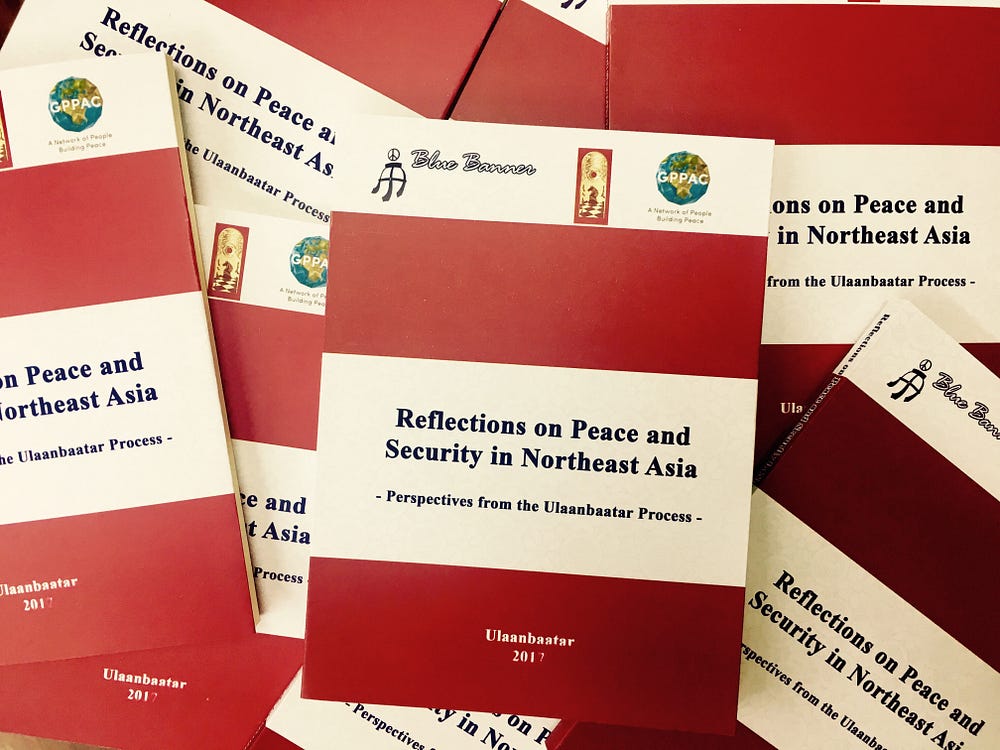
GPPAC, 동북아 평화와 안보에 대한 시민사회 시각을 담은 책자 발간

‘동북아 평화와 안보에 대한 고찰 – 울란바토르 프로세스의 관점’ 펴내

남‧북‧미‧일‧중‧러‧몽골 7개국 시민사회‧연구자 등의 입장 담겨


보도자료 [원문보기/다운로드]

 
지난 8월 29일 몽골 울란바토르에서 GPPAC(무장갈등 예방을 위한 글로벌 파트너십)은 책자 ‘동북아 평화와 안보에 대한 고찰 – 울란바토르 프로세스의 관점’을 발간했다. 울란바토르 프로세스는 동북아 평화와 안정을 위한 시민사회 주도의 대화체이다. 이번 발간물은 한반도∙동북아가 당면하고 위기와 관련해 울란바토르 프로세스에 참여하고 있는 시민사회 구성원들의 다양한 의견들, 우려와 긴장 그리고 모순 등을 담은 여러 글들을 포함하고 있다. 2017년 8월 29일부터 30일까지 열린 제3회 울란바토르 프로세스 회의를 즈음해 발행되었다. 
 
이번에 발간한 책자 ‘동북아 평화와 안보에 대한 고찰 – 울란바토르 프로세스의 관점’은 동북아의 평화구축이라는 맥락에서 비정부기구들이 당면하고 있는 성과와 과제 뿐만 아니라 역내 핵무기에 대한 논쟁적인 이슈들을, 불안정한 정전체제에 얼어버린 한반도의 최근 안보 상황도 다룬다. 남‧북미‧중‧일‧러‧몽골의 시민사회 대표들로 구성된 울란바토르 프로세스 참가자들이 쓴 글이라는 특징을 가진다. 한국에서는 참여연대 이태호 정책위원장과 평화를 만드는 여성회 안김정애 대표가 집필에 참여했다. 북한에서는 조선평화옹호전국민족위원회(KNPC)의 글이 포함됐다. 


2015년 6월GPPAC이 출범시킨 울란바토르 프로세스는 보다 많은 시민사회 대화와 상호작용을 통해 동북아의 평화와 안정을 위한 조건을 조성하도록 지원하는데 목표를 두고 있다. 이 회의는 GPPAC 동북아와 몽골 NGO인 블루배너가 몽골 외교부의 지원 하에 주관하고 있다.


이번에 열린 제 3회 울란바토르 프로세스 회의는 최근 동북아 상황 특히 한반도 위기와 관련해 시민사회 간의 열린 대화를 가능토록 기회를 제공하였다. 지난 두 차례의 회의 역시 울란바토르에서 개최되었는데 6자회담국과 몽골의 시민사회 대표들이 참석하였다.


 >>>> 발간된 글은 온라인에서 확인할 수 있다. https://medium.com/reflections-on-peace-and-security-in-northeast


‘동북아 평화와 안보에 대한 고찰 – 울란바토르 프로세스의 관점’


목차


들어가며

안젤리 나란드란 (편집자, GPPAC 동북아 사무국) - 울란바토르 프로세스, 대화의 습관 만들기


1장. 동북아 안보와 비핵지대를 향한 비전

엔자이한 잘갈사이칸 (블루배너) – 재앙을 예방하기 :비핵국가의 핵 외교 (몽골의 사례)

아나스타샤 바라니코바 (해양국립대학교) - 동북아비핵지대 그리고 한반도 핵위기의 평화로운 해결

스즈키 타츠지로 (나가사키대학교 핵무기철폐연구센터, RECNA) - 동북아비핵지대를 향한 포괄적인 접근법 : 일본의 핵에 대한 삼중 딜레마 풀기

미약마 도브친 (블루배너) - 핵없는 세계에 대한 몽골의 기여 그리고 핵 에너지 안보의 문제점


2장. 한반도 안보 이슈와 지역 안정에의 영향

이태호 (참여연대) - 남한 정권 교체와 한반도 핵‧미사일 갈등 해결 가능성

루시 로버츠 (미국친우봉사회, AFSC) - AFSC의 동북아 공동안보 비전 : 한반도의 평화와 인간안보 관련 이슈들

수 하오 (중국외교대학교) - 북한의 핵‧전략 무기 개발 관련 중국 역할의 평가와 전망

조선평화옹호전국민족위원회(KNPC) - 동북아의 맥락과 한반도에 지속되는 전쟁 


3장. 동북아 평화구축에서 시민사회 대화와 다자트랙 외교

안김정애 (평화를만드는여성회) - 한반도 안보에 대한 여성들의 관점

니암다바 라브단도르 (블루배너) - 동북아 관계의 최근 상황 : 청년 관점에서

피터 반 투이즐 (GPPAC 전 사무총장) - 동북아 안보 : 동남아의 역할은 무엇인가?

메리 조이스 (GPPAC 동북아, 피스보트) - 대화의 습관 길들이기 : 동북아 평화구축에서 시민사회의 역할 


에필로그

가와사키 아키라 (ICAN, 피스보트) - 핵무기폐기조약과 동북아


문의 참여연대 평화군축센터 02-723-4250 [email protected]


금, 2017/09/01- 19:33
108
0

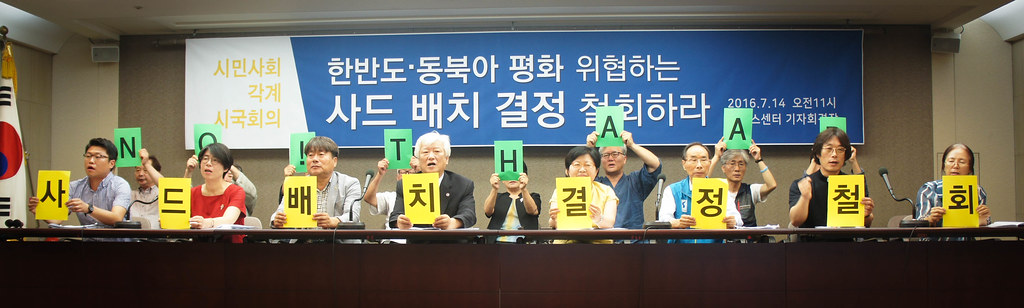
사드 배치 결정 철회 촉구 시국회의


The decision to place THAAD in South Korea, which threatens peace in the Korean Peninsula and Northeast Asia and violates the residents’ right to live peacefully, must be rescinded. 


The entire country is being shaken, and the already-dangerous political situation in the Korean Peninsula and Northeast Asia is becoming even more unpredictable because on July 8, 2016, South Korea and the U.S. announced that they are deploying THAAD to South Korea. Up until South Korea and the U.S. officials announced Seongju, North Gyeongsang Province as the location for THAAD deployment, this process had been entirely ambiguous and one-sided. Even though a plethora of concerns regarding the use, the efficiency, the military/diplomatic prices, and the side effects of THAAD were raised, the South Korean government, behind the curtains, decided to follow the request of the U.S. Now, in Seongju, the anger and the resistance of its residents, who have suddenly been notified of the deployment of THAAD, are growing rapidly. 
 
THAAD is not a weapons system for the residents of the Korean peninsula or for their defense. 

THAAD is essentially a part of the U.S. Missile Defense System (MD). It will be the U.S. military and government that will be running THAAD. MD is an aggressive weapons system, based on the “absolutely stubborn” idea, which aims to incapacitate the missile attacks of the countries against the U.S. and enable the U.S. to launch missiles whenever they want to. The South Korean government is insisting that the deployment of THAAD is to defend the Korean Peninsula from North Korean nuclear weapons and missiles. However, recently, the government has admitted that THAAD cannot defend Seoul and its metropolitan area. The South Korean government is still advertising as if THAAD can at least defend the area within its 200km radius, but this is not true. 200km is nothing but a number to describe the range of the intercept missile attached to THAAD. But, the detectable range of the radar on THAAD theoretically reaches at most a few thousand kilometers. This is why there has been criticism that the main purpose of the frontline deployment of THAAD is to detect medium- to long-range missiles flying over the Korean Peninsula and nearby skies according to the U.S. military strategy. Therefore, there is no such thing as an “adequate” location to place THAAD in this country. The decision of South Korea and the U.S. to place THAAD in Seongju must be rescinded. 


THAAD deployment is militarily and diplomatically self-destructive measure, which will threaten the safety of South Korean citizens and become a severe obstruction in peace and prosperity of the Korean Peninsula and Northeast Asia.

South Korean THAAD is closely related to the missile defense system that was introduced to Japan. Deployment of THAAD to South Korea signifies that South Korea will be sucked into the U.S.-Japan MD, which targets not only North Korea but also China, as a subsidiary partner, and that the Korea-U.S.-Japan military cooperation system will become official. No matter how much South Korean government claims that this is essential to the South Korean sovereignty, the international society and neighboring countries will not accept it. The “strategic companion” relationship with China has become a meaningless term, and the basis of economic cooperation and the friendly relationship between the citizens of both countries can be at risk. China and Russia have already announced that they will be “taking correspondent measures.” It is obvious that this will also negatively affect the international cooperation to solve the nuclear problem in the Korean Peninsula. This is why THAAD can never be a tool to protect the safety of South Korean citizens and peace in the Korean Peninsula. The decision to place THAAD, the “real danger,” which brings threats and conflicts instead of peace, in South Korea must be rescinded.   


We also protest against the undemocratic and non-transparent decision process. 

Before facilitating THAAD deployment, exhibitions, discussions, and evaluations of its use, effects, and military/diplomatic significance should have been carried out. The information about the negotiation process must have been transparently released. However, the South Korean government skipped all these procedures and simply controlled all information. There was not enough discussion even within the related organizations. They treated this important matter, which puts the future of peace in the Korean Peninsula at stake, as if they are carrying out a military strategy. The South Korean national assembly, which represents all of South Korean citizens, never received any substantial reports. The character, the content, and the discussion process of “South Korea-U.S. joint working group for the discussion of THAAD deployment” were not shared with the National Assembly. Even after the decision to deploy THAAD in South Korea, the South Korean government is insisting that this does not require the agreement of the National Assembly. In the case of Seongju, which was decided as the location for THAAD deployment, the residents and the military officials received the unexpected news without any explanation. They were not notified of the negative effects on the environment surrounding the THAAD base and health of the residents. The undemocratic and non-transparent decision of the South Korean government to place THAAD must be rescinded immediately.  


THAAD deployment must receive the consent of the representative body, which in this case, is the National Assembly.

THAAD deployment is directly related to the lives and the safety of South Korean citizens and is a critical matter, which will influence the friendly cooperative relationship with neighboring countries. It may also cost an astronomical amount of money. Therefore, this matter cannot be solely decided by the administrative body; it needs the agreement of the National Assembly. More than anything, the dangerous practice of the South Korean government, which ignores the discussion process and treats this issue like a secret military strategy to avoid the regulation of the National Assembly, cannot be left uncontrolled. If the National Assembly represents all of South Korean citizens, they must stop the one-sided push of THAAD deployment and exercise their right to consent. If the government never asks for the agreement of the National Assembly, the National Assembly must restrain the government’s abuse of its authorities through every measure, such as an investigation in relation to government, an adaptation of the resolution to oppose, and a demand for jurisdiction dispute.  


We are going to start a pan-national peace action to rescind the decision to place THAAD in South Korea. 

We are going to start a pan-national peace action that gathers people from various backgrounds and publicizes the problems of this decision to rescind the decision to place THAAD in South Korea and to stop South Korea from being sucked into the U.S.-Japan missile defense system. We are going to form solidarity to prevent Seongju, North Gyeongsang Province from becoming another victim of state violence, like Pyeongtaek Deachuri or Jeju Gangjeong village. In addition, we are going to fight with all of South Korean citizens, so that THAAD will not be placed in Seongju or any other parts of South Korea. To accomplish this, we are going to actively try to convince and pressure local governments, the National Assembly, and related government organizations and will convey our message to governments and civil societies of neighboring countries, including the U.S. and japan. We will surely punish any abuse of power that undemocratically pushes for the placement of THAAD. Moreover, we are going to form solidarity to facilitate the reconciliation and the cooperation of North and South Korea and to form a peaceful system. The Korean Peninsula should no longer become an explosive warehouse, which is swayed and used by the arms race of the neighboring powers, but should transform as the stepping stone of Northeast Asian peace and cooperation. We are going to actively spread civil resistance and actions for the withdrawal of the decision to place THAAD and for peace in the Korean Peninsula and Northeast Asia. 


July 14, 2016


번역 : 목지수 (참여연대 평화군축센터 자원활동가)

목, 2016/07/14- 23:23
105
0

[보고서] 화학물질 피해 실태 시민보고대회

2015년 10월 12일~23일 동안 UN 유해물질 및 폐기물처리 관련 인권 특별보고관이 방한하여 한국 사회의 유해물질 및 폐기물 처리 관련하여 법 제도, 정보접근권, 인권침해 사례 등 다양한 사례를 조사했습니다.

이에 인권,보건,환경 분양 시민사회단체가 UN TOXIC 특별보고관 방한을맞아 한국사회에서 발생하고 있는 화학물질 관련 인권피해 사례를 알리고 사회적 변화를 요구하는 시민보고대회를 열고, 보고서를 발간했습니다.


월, 2015/10/26- 15:31
105
0

Situation of Freedom of Peaceful Assembly and Association in the Republic of Korea


The UN Special Rapporteur on the rights to freedom of peaceful assembly and of association, Mr. Maina Kiai, is officially visiting South Korea from 20 January to 29 January 2016. South Korean NGOs built a coalition and jointly prepared the Special Rapporteur's visit. As a part of our work, we published the English report "Situation of Freedom of Peaceful Assembly and Association in the Republic of Korea".


수, 2016/01/20- 15:12
103
0