주요 콘텐츠로 건너뛰기

인도: 바그팟 사건과 카스트 계급 및 성별에 기반한 차별

지역

인도: 바그팟 사건과 카스트 계급 및 성별에 기반한 차별

익명 (미확인) | 금, 2015/09/11- 15:38

dalitwomen_lar1

지난 8월 24일, 국제앰네스티 인도지부는 인도 북부 우타르프라데시 주 바그팟에서 마을의 비선출 위원회인 ‘캅판차얏’으로부터 강간과 나체 행진을 명령받은 달리트 계급의 두 자매를 위해 서명운동을 시작했다. 이들 자매의 오빠가 카스트 상위 계급의 유부녀와 함께 달아난 것에 대한 ‘처벌’이라는 것이 그 이유였다.

세계 각지의 국제앰네스티 지부는 이와 비슷한 서명운동을 함께 홍보하며, 전세계의 앰네스티 지지자들이 행동에 나설 수 있는 기회를 열었다. 지금까지 이러한 서명에 참여한 사람은 50만 명에 이른다.

일부 언론에서는 이번 서명운동에 의문을 제기하는 내용을 보도했다. 마을의 공식 선출위원회인 그람판차얏과 카스트 지배계급 구성원들이 앰네스티가 제기한 혐의를 부인했다는 주장도 있었고, 앰네스티가 해당 사건을 조사하지도 않았다는 주장도 있었다.

그러나 이러한 언론보도가 화제가 되면서 정작 피해자인 두 자매와 그 가족들이 함께 신변을 위협받고 있는 상황은 주목받지 못하고 있다.

국제앰네스티가 이 사건을 처음 알게 된 것은 지난 8월 16일, 두 자매 중 한 명인 미나크쉬 쿠마리가 제출한 146쪽의 청원서에 인도 대법원이 응답하면서부터였다. 카스트 계급의 최하층인 달리트 계급이 이러한 청원서를 대법원에 제출한다는 것은 극히 드문 일이다. 미나크쉬의 가족들은 인도 인권위원회와 지정카스트위원회에도 항의서를 제출했다.

국제앰네스티는 즉시 피해 가족들과 변호사에게 연락했고, 이들이 대법원에 제출한 문서를 검토해보니 그간 박해 받고 위협당한 기록이 상세히 적혀 있었다. 가족들과는 지금도 정기적으로 연락을 취하고 있다. 또한 주 단위, 전국 단위로 기자들과 접촉했지만 아무도 관련 정보를 확인해 주지 못했고, 해당 지역 경찰과 지역 정치공동체인 ‘캅’의 대표자와도 연락해 보았지만 캅판차얏은 열린 적도 없다는 대답만이 돌아왔다.

앰네스티는 계속해서 피해 가족과 연락을 취했고, 해당 마을의 자타브(달리트 계급)에 속한 5명과 전화통화 또는 직접 면담을 나누기도 했다. 이들은 캅판차얏이 그런 지시를 내렸던 것은 사실이며, 마을이 조성한 공포 분위기 때문에 달리트 계급 사람들은 함부로 말을 꺼내지 못하고 있다고 전했다.

그 중 한 명은 “사람들이 두려워서 나서지 않으려고 한다. … 이 마을에서 자타브는 몇 명 정도에 불과한 소수다. 우리 중 누군가가 입을 열거나 나섰다가는 본인을 포함해 가족 모두가 몰살당할 것”이라고 말했다.

미나크쉬 자매를 위한 ‘온라인 탄원’ 참여하기

카스트 제도에 기반한 차별

피해자 가족들이 대법원에 제출한 청원서에는 이외에도 수많은 인권침해 의혹 행위가 기록되어 있었다. 2015년 5월부터 두 자매의 아버지인 다람팔 싱이 아들의 야반도주로 위협을 받기 시작하면서, 두 자매는 마을을 벗어난 곳에서 생활해 왔다고 한다.

다람팔 싱은 “(자트 계급 사람들이) 가족들이나 나를 살해할까 봐 두려웠다”고 말했다.

대법원에 제출한 청원서에는 다음과 같은 내용이 담겨 있다.

  • 자매의 오빠와 함께 달아났던 자트 계급 여성은 5월 2일 델리 경찰서에서 친척들에게 생명의 위협을 당하고 있다고 진술했다. 진술 내용을 발췌하면 다음과 같다.
    “라비와 함께 살지 못한다면 죽을 거예요. 그 사람의 아이가 뱃속에 있고, 이 아이를 낳고 싶기 때문이에요. 우리 집으로 돌아가면 가족들이 날 죽일 것이고, 라비의 집으로 가면 그 사람의 가족들이 날 폭행할 테니 어느 쪽으로도 돌아가고 싶지 않아요. 라비와 함께 떠나고 싶어요. 떠날 수밖에 없으니 허락해 주셔야 해요.”
  • 5월 24일 녹음된 달리트 계급 여성의 아버지와 자트 계급 여성의 삼촌의 전화통화 녹취록에서, 자트 여성의 삼촌은 달리트 여성이 강간을 당할 수도 있다며, 달리트 여성의 아버지가 마을로 돌아오지 못하도록 위협했다.
  • 5월 30일 녹음된 달리트 계급 여성의 오빠와 한 경찰관의 전화통화 녹취록에서, 경찰은 달리트 여성의 가족들이 자트 여성의 친척들에게 자택 감금되어 있다고 말했다.
  • 이외에도 달리트 계급 여성을 강간할 수도 있다고 위협하는 정황들이 기록되어 있다. 여성의 아버지는 다음과 같이 진술했다.
    “2015년 4월 24일 ____(여성)의 부모와 그 오빠 ____가 친척들과 함께 우리 집으로 와서는 자신들은 자트 계급이고, 이 마을은 자트들의 소유라고 했습니다. 또 ‘이제 우리는 너희가 이 마을에 발도 못 붙이도록 무슨 짓이든 할 것이다, 이제 당신 딸에게 우리 딸의 복수를 할 것이다’라고 하며 이후로도 빈번히 우리 집을 드나들었습니다. 이제는 더욱 과격해져서 새벽 2-3시에 우리 집 대문을 마구 두드리고, 우리 가족들을 죽이고 딸들을 납치해 강간하고 또 죽일 거라고 협박하기 시작했습니다. 또 ‘감히 우리를 거역한 너희의 업보를 누가 구해주고 누가 감싸줄지 두고 볼 것이다, 우리에게 불리한 증언을 하는 사람도 가만두지 않을 것이다’라고 말하기 시작했습니다.”

경찰의 역할

피해자 가족들은 청원서와 국제앰네스티 인도지부와의 면담에서, 지역 경찰 역시 이러한 괴롭힘과 위협에 연관되어 있다고 했다. 경찰은 지난 5월 미나크쉬 쿠마리의 조카를 3일간 불법 구금하고, 달아난 남녀의 행방을 알아내기 위해 고문을 가했다고 한다. 미나크쉬의 삼촌 역시 불법 구금된 것으로 알려졌다.

미나크쉬의 오빠 라비는 5월 함께 달아났던 자트 여성과 같이 경찰에 넘겨진 다음 날 마약 소지 혐의로 체포되었다. 라비의 남자 형제와 경찰의 전화통화에서 경찰은 라비가 날조된 혐의로 체포된 것임을 인정했으며, 더 심각한 죄목일 수도 있었다고 말했다.

가족들은 지역 경찰이 공정하고 독립적으로 조사할 가능성이 낮다고 여겨 대법원에 직접 청원하기로 결정했다고 말했다.

캅판차얏의 성격

이번 서명운동에서 언급되는 ‘캅판차얏’은 전원 남성으로 구성된 마을의 비선출 위원회다. 일부 언론에서는 이러한 표현에 대해, 바그팟의 산크로드에는 여성도 다수 포함된 마을 위원회가 있으며, 이 위원회의 대표는 달리트 계급 여성이라는 점을 지적하기도 했다.

캅판차얏은 공식적으로 선출되는 행정기구인 그람판차얏과는 전혀 다른 것으로, 거의 항상 카스트 지배계급 남성들이 대부분인 비선출 기구다. 캅판차얏 회의는 같은 계급의 구성원들만이 참여할 수 있으며, 회의 내용에 대한 기록을 남기지 않는 것이 보통이다.

캅판차얏 구성원들은 막대한 권력을 휘두르며 거의 아무런 책임 없이 명령을 내린다. 우타르 프라데시, 하랴나, 펀자브, 라자스탄 지역에서는 허위 사건으로 소송을 걸거나 폭력적인 처벌을 가하고, 심지어는 두 남녀가 카스트 규범을 위반하고 결혼하거나 달아나기로 결정했을 경우 자신들의 ‘명예’를 지키기 위해 살인을 저지르기도 하는 것으로 알려져 있다.

2011년 인도 대법원은 캅판차얏을 ‘인민재판’이라고 표현하며 다음과 같이 판결했다.

“최근 수년 간 ‘캅판차얏(타밀 남두 지역에서는 카타판차얏)’ 이라는 단체가 서로 다른 카스트 계급이거나 종교 출신인 남녀가 결혼하고자 하거나 결혼한 경우 제도화된 방법으로 명예살인 또는 그 외의 잔혹행위를 명하거나 조장하고, 사람들의 사생활에 개입하고 있는 사례를 접했다. 법원은 이것이 전적으로 불법이며, 철저히 뿌리 뽑아야 할 것으로 본다.”

2012년 인도 법률위원회가 발표한 보고서는 캅판차얏이 ‘도덕적 자경주의’를 실행하고 있다며, 다음과 같이 언급했다.

캅판차얏의 악의적인 관행과, 자의적으로 법을 해석하고 카스트 계급간 결혼의 무효함과 부적절성을 주장하며 이러한 남녀에게 처벌을 지시하는 경향성은 법치주의에 대한 명백한 위반이며 개인의 자유를 침해하는 것이다.

이처럼 캅판차얏의 성격이 불법이라는 판결을 해당 구성원들이 인정할 가능성은 높지 않다. 그럴 경우 형사기소 대상이 될 수 있기 때문이다. 마을의 한 달리트 계급 남성은 캅판차얏의 명령을 알게 된 경위에 대해, “자트들이 판차얏을 소집할 때는 우리 달리트들도 부른다는 것은 전혀 생각조차 하지 않는다. 아무도 우리가 그 자리에 참석하도록 내버려두지 않을 것이다. 그(자트) 사람들 중 일부 좋은 사람들이 ‘모든 일이 당신들에게 불리하게 벌어지고 있다’고 전해 주었다”고 말했다.

이번 사건에 대한 언론의 지대한 관심이 분산되지 않고, 인도에 여전히 존재하는 카스트 계급별 차별 및 성차별의 실태와, 이러한 불문율을 어겼을 경우 심각한 상황에 처하게 되는 문제에 집중되는 것이 무엇보다 중요하다.

국제앰네스티는 자매들에게 내려진 명령에 대해 즉시 전면적이고 공정한 조사를 시행할 것과, 자매들 및 그 가족들의 안전을 보장할 것을 촉구한다. 이러한 요구사항이 실현될 때까지 국제앰네스티는 이 사건에 대한 캠페인을 멈추지 않을 것이다.

영어전문 보기

Baghpat and caste & gender discrimination in India

On 24 August, Amnesty International India launched a petition regarding two Dalit sisters who had been told they had been ordered to be raped and paraded naked by a khap panchayat – an unelected village council – in Baghpat, Uttar Pradesh in northern India, as ‘punishment’ because their brother had eloped with a married woman from a dominant caste.

Amnesty offices around the world circulated similar petitions, so that our supporters globally would have an opportunity to take action. Over 500,000 people have so far signed these petitions.

It is crucial that the enormous amount of media attention on this case does not distract from the issues it has raised – the realities of caste and gender discrimination that exist in India, and the serious consequences that those who violate these unwritten codes of conduct must face.
Gopika Bashi, Amnesty International India’s Women’s Rights Researcher
Some media organizations have subsequently released reports which have questioned the petition. Some have said that members of the gram panchayat – the elected village council – and members of the dominant caste have denied the allegations. Others have claimed that Amnesty did not investigate the case.

Unfortunately, these reports have taken the attention away from the situation of the sisters themselves, who along with their family still fear for their safety.

We first took notice of the case when the Supreme Court provided a response on 18 August to a 146-page writ petition filed by Meenakshi Kumari, one of the sisters, seeking protection and investigation. It is highly unusual for a Dalit family to approach the Supreme Court with such a petition. The family has also submitted complaints to the National Human Rights Commission and the National Commission for Scheduled Castes.

We immediately got in touch with the lawyer and the family (with whom we remain in regular contact), and reviewed the documentation submitted to the Supreme Court, which detailed a history of harassment and intimidation. We also contacted journalists at the national and state level, who were unable to substantiate the information. We also spoke to local police officials and a khap leader, who said that the khap panchayat had not taken place.

We have remained in touch with the family, and have spoken over the telephone or in person to five members of the Jatav (Dalit) community in the village who have told us that the khap panchayat had issued the order, and have spoken about the atmosphere of fear in the village which is now preventing members of the Dalit community from speaking out.

One member of the community told us, “People are afraid. They don’t want to come forward… Jatavs are a minority here, there are only a few of us. If they speak or they come forward, they and their family members will be finished off.”

Caste-based discrimination

The family’s petition to the Supreme Court also contains several other allegations of human rights abuses. The sisters had been living away from the village since May 2015, when their father Dharampal Singh allegedly began receiving threats to the family, following the elopement of his son with the woman from the dominant caste.

Dharampal Singh told us, “I was fearful that they [members of the Jat community] would kill me or my family”.

The petition to the Supreme Court includes:

- A statement made by the Jat woman to the Delhi Police on 2 May after her elopement, in which she said that she faces threats to her life from her relatives. An excerpt reads:
“I will live with Ravi, otherwise I will die because I want to give birth to the child of Ravi. Ravi’s child is in my womb. I do not want to go to my home as I’m in danger from my family members as they will kill me, and I don’t want to go to the home into which I was married also because those people beat me. I want to go with Ravi. I should be allowed to go with Ravi.”

- A transcript of a recorded telephone conversation on 24 May, allegedly between the Dalit woman’s father and the Jat woman’s uncle, in which the latter suggests that the Dalit woman could be raped, and threatens the father against returning to the village.

- A transcript of a recorded telephone conversation on 30 May allegedly between the Dalit woman’s brother and a police official who says that the Dalit family’s house has been locked up by relatives of the Jat woman.

- Details of other situations in which threats are allegedly made that the Dalit women could be raped. A statement by the father reads:
“On 24.4.2015 the parents of girl _____ and her brother _____ along with their other relatives came to my home and started saying that we are from Jat community and this village is of Jats and now see we will do whatever with you as we will not allow you to live in this village and we will take revenge of the girl with the girl of your family and then they started frequently visiting at my house. And now their acts have so much increased that they have now started beating the doors of my house at village at 2-3 O’clock in the night and they started giving threat to kill us and kidnap and commit rape of my daughters and kill them also and they also started saying that now we will see that who will save you and who will speak to your Chamars against our wishes, and we will not leave him also who will speak regarding us.”

Role of the Police

In their petition and in conversations with Amnesty International India, the family says that the local police have also been involved in harassment and intimidation. The family says that the police had illegally detained one of Meenakshi Kumari’s cousins in May for three days and tortured him to try to learn the whereabouts of the couple who had eloped. An uncle was also allegedly illegally detained.

Meenakshi’s brother Ravi was arrested in May for alleged drug possession a day after he and the Jat woman were handed over to the police. In a recorded telephone conversation allegedly between Ravi’s brother and a local police official, the official admits that Ravi had been falsely implicated, and could have faced an even more serious charge.

The family says that they chose to approach the Supreme Court because they felt that the likelihood of an impartial and independent investigation by the local police was low.

Nature of Khap Panchayats

Our petition mentions the khap panchayat, an unelected all-male village council. Some media reports have questioned this statement, pointing out that the ‘village council’ in Sankrod, Baghpat included several women, and was headed by a Dalit woman.

Khap panchayats are distinct from gram panchayats, which are formally elected administrative bodies. Khap panchayats, in contrast, are unelected bodies that are almost always dominated by dominant caste men. Their meetings are usually held only between members of one caste and there are usually no written records of their proceedings.

Khap panchayats wield immense power and hand down orders with little accountability. In states such as Uttar Pradesh, Haryana, Punjab and Rajasthan, families have been known to file false cases, inflict violent punishments and even carry out killings to protect their ‘honour’ when couples choose to elope or marry in violation of caste norms.

In 2011, the Supreme Court of India described khap panchayats as kangaroo courts, and observed:

“We have in recent years heard of Khap Panchayats’ (known as katta panchayats in Tamil Nadu) which often decree or encourage honour killings or other atrocities in an institutionalized way on boys and girls of different castes and religion, who wish to get married or have been married, or interfere with the personal lives of people. We are of the opinion that this is wholly illegal and has to be ruthlessly stamped out.”

A 2012 Law Commission Report refers to khap panchayats as practicing ‘moral vigilantism’. It said:

The pernicious practice of Khap Panchayats and the like taking law into their own hands and pronouncing on the invalidity and impropriety of…inter-caste marriages and handing over punishment to the couple …amounts to flagrant violation of rule of law and invasion of personal liberty of the persons affected.

It is unlikely that members of a khap panchayat will admit to passing an illegal order of this nature, as they could be subjected to criminal prosecution. A Dalit man from the village told us how he came to know about the khap panchayat order, “When the Jat community calls a panchayat, there is no question of them calling us … No one would allow us to go there…There are a few good people from their [Jat] community who tell us, ‘All of this is happening against you’”.

It is crucial that the enormous amount of media attention on this case does not distract from the issues it has raised – the realities of caste and gender discrimination that exist in India, and the serious consequences that those who violate these unwritten codes of conduct must face.

We have called for a swift, full and impartial investigation into the orders issued against the sisters, and for their safety and that of their family to be ensured. We have no plans to stop campaigning on this case until this has happened.

시민들의 의견

댓글 달기

Plain text

  • 웹 페이지 주소 및 이메일 주소는 자동으로 링크로 전환됩니다.
  • 줄과 단락은 자동으로 분리됩니다.
  • 사용할 수 있는 HTML 태그: <a href hreflang> <em> <strong> <cite> <blockquote cite> <code> <ul type> <ol start type> <li> <dl> <dt> <dd>
이미지
무제한 수의 파일을 이 필드에 업로드할 수 있습니다.
50 MB 한계입니다.
허용된 유형: png gif jpg jpeg.
Enter the YouTube URL. Valid URL formats include: http://www.youtube.com/watch?v=1SqBdS0XkV4 and http://youtu.be/1SqBdS0XkV4.
CAPTCHA
스펨 사용자 차단 질문

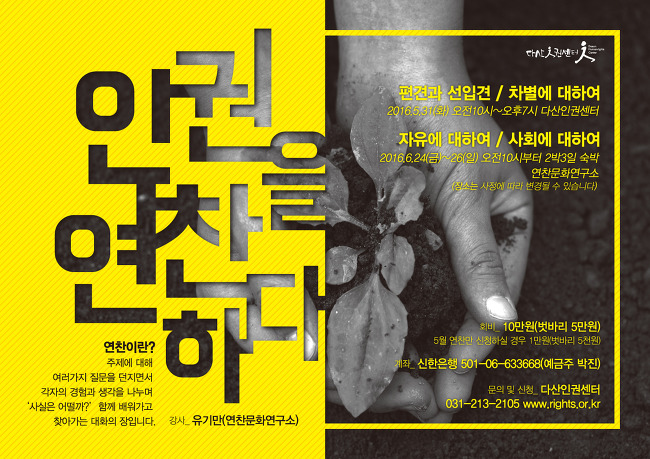
'인권을 연찬하다' 


인권 문제는 일상적이지만 이것을 각자의 삶과 연결시키기는 쉽지 않습니다. 인권 교육이 좀 더 보편화되고는 있지만 그것 조차 도덕 수업처럼 피교육자가 수동적으로 받아들이는 경우가 많습니다. 


도덕 시간에 인권에 대한 주제들을 배우고 학습하지만 그것이 삶과 연결되기는 쉽지 않은 것 같습니다. 그렇게 되는 것에는 여러 가지가 원인이 있겠지만 도덕적이고 윤리적 주제라도 그것이 자신의 것으로 스스로 형성되지 않는다면 도덕과 윤리가 삶과 연결되는 것은 어려운 일일 것입니다.


도덕 교과서에는 “인간은 자유의지에 의해 당위를 따름으로써 인간다움을 실현하고, 도덕적인 삶을 살 수 있다.”고 소개하고 있습니다. 여기서 자유의지는 자신의 욕구를 어떻게 충족시킬지 스스로 선택하여 결정하고, 충동과 욕구를 스스로 조절하고 통제하는 의지를 말합니다. 하지만 자유의지라 하더라도 자신의 행동에 대해 그렇게 결정한 이유가 처벌을 받거나 비난을 받는 것이 두려워서라면 진정한 자유의지라고 볼 수 있을까요? 


자기 스스로 생각하기 전에 ‘옳다, 그르다’의 이분법으로 정답을 외우듯이 행해진다면 인성·인권에 대해 내적 동기는 형성되기 힘들 것입니다. 본 사업은 다양한 인권에 대한 주제들에 대해 스스로가 자신의 내적 동기를 발견할 수 있도록 돕기 위하여 기획되었습니다. 


인권활동가와 시민들을 대상으로 “자신과 사회”에 대한 다양한 주제를 스스로 생각해 볼 수 있는 기회를 제공하여 생각하는 힘을 키웁니다.  인권성에 대한 별도의 이론을 학습하는 것이 아닙니다. 주제에 대해 여러 가지 질문을 통해 각자의 경험과 생각을 나누며 함께 배워가는 대화의 장입니다. 강의식 진행이 아니라 자유롭게 자신의 생각을 내어놓고 ‘사실은 어떨까?’하고 함께 찾아가는 세미나 형식입니다.


지난 2월에는 '차이란 무엇인가' 라는 주제로 한 차례 연찬이 진행되었습니다. 

5월 31일에는 '편견과 선입견, 차별에 대하여'이라는 주제에 대해 논의할 예정이고, 

6월에는 '자유에 대하여, 사회에 대하여'라는 주제에 대해 2박 3일간 좀 더 심도 깊은 논의를 진행할 예정입니다. 


관심 있는 분들의 많은 참여 바랍니다. 


인권연찬 신청하기 


저작자 표시 비영리 변경 금지
화, 2016/05/24- 17:04
432
0

세계 각국은 난민들에게 필수적인 인도적 지원을 제공하지 않음으로써 수백만 명의 난민을 견딜 수 없는 생활고 속으로 몰아넣고, 수천 명을 사망에 이르게 하고 있다고 국제앰네스티가 밝혔다.

  • 2차대전 이래 최악의 난민 위기
  • 1백만 명의 난민이 이주가 절실히 필요한 상태
  • 4백만 명의 시리아 난민이 터키, 레바논, 요르단, 이라크, 이집트 등지에서 살아남고자 분투
  • 아프리카 사하라 이남 지역의 난민은 3백만 명 이상으로, 이 중 2013년부터 재정착 기회가 주어진 난민은 극소수에 불과
  • 3,500명이 2014년 지중해를 건너려다 익사 – 2015년 현재까지 1,865명
  • 300명이 2015년 1월부터 3월까지 안다만 해에서 기아와 탈수, 선원들의 폭행으로 숨져


국제앰네스티는 6월 20일 세계 난민의 날을 앞두고 15일 레바논 베이루트에서 신규 브리핑을 발표했다. <세계 난민 위기: 방관의 모의>는 레바논에서 케냐, 안다만 해, 지중해 등에서 수백만 명의 난민이 처한 충격적인 고통에 대해 알아보고, 국제사회의 난민 문제에 대한 접근 방식을 근본적으로 바꾸어야 한다고 촉구하고 있다.

살릴 셰티(Salil Shetty) 국제앰네스티 사무총장은 “현재 우리는 당대 최악의 난민 위기를 목도하고 있다. 수백만 명의 남녀와 어린이들이 잔혹한 전쟁과 인신매매, 기본적인 인간에 대한 연민을 보이기보다 이기적으로 정치적 이익만을 추구하는 정부 사이에서 고통받고 있다”며 “현재의 난민 위기는 21세기의 대표적인 도전 과제지만 이에 대한 국제사회의 대처는 부끄러운 실패에 그치고 있다. 일관성 있고 포괄적인 국제적 전략 마련을 위해 관련 정책과 관행을 근본적으로 재검토해야 한다”고 말했다.

국제앰네스티는 난민 보호 제도의 활성화 방안을 제시하면서, 각국 정부에 각자의 법적 의무를 이행할 것과 국제적 책임 공유에 전념할 것을 확고히 결의해야 한다고 촉구했다. 국제앰네스티가 세계 정부에 촉구하는 행동은 다음과 같다.

  • 향후 4년 안에 재정착이 시급한 난민 1백만 명에 대해 일괄적으로 재정착 사업에 착수하겠다고 약속할 것
  • 난민 위기에 대한 유엔의 인도주의적 요청을 모두 충당할 수 있는 국제 난민 기금을 마련하고, 대규모의 난민을 수용하고 있는 국가에 대해 재정적으로 지원할 것
  • 유엔 난민 협약을 비준할 것
  • 난민의 요구사항을 반영하고, 난민 역시 교육 및 병원과 같은 기본적인 복지 서비스를 이용할 수 있도록 보장하는 공정한 국내적 제도를 마련할 것

살릴 셰티 사무총장은 “국제사회는 더 이상 레바논, 터키 등의 국가들이 이처럼 막대한 부담을 지고 있는 현실을 가만히 앉아서 지켜만 봐서는 안 된다. 그 어떤 국가도 이렇게 엄청난 인도주의적 위기상황을 단지 분쟁국가와 우연히 국경을 맞대고 있다는 이유만으로 주변의 도움도 없이 스스로 해결하도록 방치될 수는 없다”고 말했다.

또한 “세계 각국은 사람들이 안전한 곳을 찾으려다 목숨을 잃지 않도록 보장해야 하는 의무가 있다. 국가정부가 절박한 난민들을 위해 안전한 피난처를 제공하고, 국제난민기금을 마련하고, 인신매매단을 기소해 실질적인 행동에 나서는 것이 무엇보다 중요하다. 이제는 난민 보호를 위해 더욱 박차를 가해야 할 때로, 그렇지 않으면 세계는 충분히 막을 수 있었던 이번 비극의 공범이 될 것”이라고 말했다.

시리아: 세계 최대의 난민 위기

시리아를 떠난 난민은 400만 명 이상으로, 이 중 95%가 터키, 레바논, 요르단, 이라크, 이집트 등의 불과 5개 국가에 수용되어 있다.

이들 국가 역시 이제는 한계에 이르렀다. 국제사회는 이들 5개국과 난민을 지원하는 인도주의 단체에 충분한 자원을 제공하지 않고 있다. 유엔난민기구(UNHCR)가 여러 차례 요청했음에도 불구하고 시리아 난민에게 제공된 재정착 장소는 턱없이 부족하다.

너무나 어려운 상황인 나머지 시리아의 일부 인접국들은 국경을 넘어오려는 절박한 사람들을 거부하고 분쟁지역으로 돌려보내는 등의 매우 걱정스러운 방법에 의존하고 있다.

2015년에 들어서면서 레바논은 시리아 난민들의 입국을 매우 엄격히 제한하고 있다. 레바논 정부는 시리아 국민이 입국하려면 특정 조건을 만족해야 하는 새로운 입국 기준을 발표했다. 이러한 기준이 시행된 이후로 시리아 난민의 등록 역시 큰 폭으로 감소해, 2015년 3월까지 UNHCR에 등록된 시리아 난민의 수는 2014년 같은 기간에 비해 80% 적은 수치였다.

지중해: 가장 위험한 해상 경로

지중해는 난민과 이주민에게 가장 위험한 해상 경로다. 2014년에는 극도로 위험한 환경에서도 지중해를 건넌 사람이 21만 9,000명에 달했으며 3,500명이 도해를 시도하다 목숨을 잃었다.

2014년 한 해 동안 이탈리아 정부가 구조한 사람은 17만 명이 넘는다. 그러나 2014년 10월, 다른 EU 회원국들의 압박으로 이탈리아는 결국 ‘마레 노스트룸’ 구조 작전을 취소하고, 대신 EU 국경기관 프론텍스(Frontex)가 마련한 훨씬 제한적인 수준의 ‘트리톤’ 작전을 채택했다.

트리톤 작전은 수색구조 권한이 충분히 넓지 않고, 동원 가능한 선박 수도 적으며 작전 지역 역시 상당히 축소되었다. 이 때문에 지중해에서의 사망자 수가 급격히 증가하는 원인이 됐다. 국제이주기구(IOM)에 따르면 2015년 5월 31일 현재까지 지중해를 건너려다 목숨을 잃은 사람의 수는 1,865명이며 이는 2014년 같은 기간 425명이 사망했던 것과 비교되는 수치다.

지중해에서의 끔찍한 희생 사건을 여러 차례 겪은 후인 4월 말, 유럽 각국 정상들은 마침내 수색구조 자원을 확충하기로 결정했다. 트리톤 작전의 자원과 작전 지역은 마레 노스트룸 작전과 같은 수준으로 확대됐다. 또한 독일, 아일랜드, 영국 등의 유럽 국가들이 트리톤 작전의 해상 지원역량을 강화하기 위해 추가적으로 선박과 비행기를 배치했다. 국제앰네스티가 오랫동안 추진해 왔던 이러한 조치들이 취해진 것은 난민과 이주민의 해상 안전을 강화하는 데 있어 환영할만한 진전이다.

유럽위원회 역시 EU 이외 국가의 난민들에게 재정착 장소 20,000곳을 추가적으로 제공할 것을 EU 회원국들에 제안했다. 이러한 제안이 한 걸음 내디딘 것이기는 하나, 국제적인 책임 공유에 충분히 기여하기에는 20,000곳은 턱없이 부족하다.

예를 들어, 가까운 시일 내로 고향에 돌아갈 가망이 전혀 없는 처지에서 주요 난민 수용국으로부터 인도적 지원까지 삭감되는 처지에 놓인 시리아 난민들은 유럽으로 가기 위해 계속해서 지중해를 건너려고 시도할 가능성이 높다. 난민뿐만 아니라 이주민에게도 안전하고 합법적인 대체 경로가 충분히 마련되지 않는다면 사람들은 목숨을 건 도해를 계속하게 될 것이다.

아프리카: 잊혀진 위기

아프리카 사하라 이남 지역의 난민 수는 300만 명 이상에 이른다. 남수단과 중앙아프리카공화국(CAR) 등의 국가에서 발발한 전쟁으로, 분쟁과 기소를 피해 떠나는 사람들의 수가 더욱 증가하게 되었다. 세계에서 가장 많은 난민이 빠져 나오는 상위 10개국 중 5개국이 아프리카 사하라 이남 지역의 국가다. 가장 많은 난민을 수용하고 있는 상위 10개국 중 4개국 역시 마찬가지다.

아프리카 사하라 이남 지역의 분쟁과 위기로 인해 난민들은 주변국으로 몰려들게 되었다. 이들 국가 중 많은 수가 이미 소말리아, 수단, 에리트레아, 에티오피아 등에서 온 난민 수만 명을 장기적으로 수용하고 있는 상태다.

남수단과 수단의 경우와 같이, 자국의 분쟁에 시달리고 있는 국가조차도 난민을 수용하는 경우도 있다.

아프리카 지역의 난민 위기는 지역적, 세계적 정치 토론에서 거의, 또는 전혀 관심을 받지 못한다. 2013년 재정착이 이루어진 아프리카 지역 난민은 15,000명 이하에 불과했으며 유엔의 인도주의적 요청은 심각한 자금 부족을 겪고 있다. 예를 들면, 2013년 12월 남수단에서 무력 분쟁이 시작된 결과 55만 명 이상이 난민이 되었고, 이들 중 대다수는 현재 에티오피아, 수단, 케냐, 우간다에 수용되어 있다. 유엔의 남수단 지역 난민 대응 계획에 대한 자금 투자율은 2015년 6월 3일 현재 불과 11%에 그치고 있다.

동남아시아: 절박한 사람들을 돌려보내다

UNHCR은 2015년 1분기 동안 약 25,000명이 벵골 만을 건너려 시도했다고 발표했다. 이는 2014년 같은 기간에 비해 약 2배로 증가한 숫자다. 벵골 만을 통한 경로는 미얀마의 이슬람계인 로힝야족과 방글라데시인들이 주로 이용하는 길이다.

5월 11일, 국제이주기구(IOM)는 태국 연안에서 좌초된 배에 8,000명이 타고 있었을 것으로 추정했다. 이들 중 대부분은 미얀마에서 국가가 조장하는 박해를 피해 떠난 로힝야족이었을 것으로 추정된다.

5월 인도네시아, 말레이시아, 태국은 도움이 절실한 상태의 난민과 이주민 수백 명이 처한 위험에도 불구하고 이들이 탄 배를 다시 돌려보냈다. UNHCR는 2015년 들어 3월까지 300명이 “기아와 탈수, 선원들의 폭행”으로 바다 위에서 숨졌을 것으로 추정하고 있다.

5월 20일 인도네시아와 말레이시아는 정책 노선을 변경해, 여전히 바다 위에 표류하고 있는 난민과 이주민에게 최대 7,000명까지 “임시 쉼터”를 제공하겠다고 밝혔다. 그러나 이러한 임시적 보호는 최대 1년에 그치고, 난민들의 본국 송환 또는 재정착을 국제사회가 돕는다는 조건 하에서만 가능하다. 인도네시아, 말레이시아, 태국 등은 유엔 난민협약을 아직 비준하지 않았다.

이외에도, 호주 정부는 배로 들어오려는 난민 신청자들에게 강경 대응하면서, 생명을 구한다는 명목으로 난민법과 인권법적 의무를 위반하며 해당 지역에 충격적인 전례를 만들었다.

살릴 셰티 총장은 “안다만 해에서 지중해까지 사람들은 필사적으로 안전한 피난처를 찾으려다 목숨을 잃고 있다. 작금의 난민 위기는 각국이 국제적 협력을 크게 확대해야 하는 세계적인 문제라는 것을 국제사회가 인식하지 않는 이상 해결되지 않을 것이다. 이번 주말 UNHCR은 연간 난민 통계 수치를 발표할 예정인데, 난민 위기가 더욱 악화되고 있다는 사실만을 알게 될 가능성이 높다. 이제는 행동할 때다”라고 말했다.

영어전문 보기

World leaders’ neglect of refugees condemns millions to death and despair

  • Worst refugee crisis since World War II.
  • One million refugees desperately in need of resettlement.
  • Four million Syrian refugees struggling to survive in Turkey, Lebanon, Jordan, Iraq and Egypt.
  • More than three million refugees in sub-Saharan Africa, and only a small fraction offered resettlement since 2013.
  • 3,500 people drowned while trying to cross the Mediterranean Sea in 2014 — 1,865 so far in 2015.
  • 300 people died in the Andaman Sea in the first three months of 2015 due to starvation, dehydration and abuse by boat crews.

World leaders are condemning millions of refugees to an unbearable existence and thousands to death by failing to provide essential humanitarian protection, said Amnesty International as it published a new briefing in Beirut today, ahead of World Refugee Day on 20 June.

The Global Refugee Crisis: A conspiracy of neglect explores the startling suffering of millions of refugees, from Lebanon to Kenya, the Andaman Sea to the Mediterranean Sea, and calls for a radical change in the way the world deals with refugees.

“We are witnessing the worst refugee crisis of our era, with millions of women, men and children struggling to survive amidst brutal wars, networks of people traffickers and governments who pursue selfish political interests instead of showing basic human compassion,” said Salil Shetty, Amnesty International’s Secretary General.

We are witnessing the worst refugee crisis of our era, with millions of women, men and children struggling to survive amidst brutal wars, networks of people traffickers and governments who pursue selfish political interests instead of showing basic human compassion.
Salil Shetty, Amnesty International’s Secretary General.

“The refugee crisis is one of the defining challenges of the 21st century, but the response of the international community has been a shameful failure. We need a radical overhaul of policy and practice to create a coherent and comprehensive global strategy.”

Amnesty International is setting out a proposal to reinvigorate the system for refugee protection and urging states to make firm commitments to live up to their individual legal obligations and renew their commitment to international responsibility-sharing. Amongst the actions Amnesty International is urging governments to take are:

  • A commitment to collectively resettle the one million refugees who currently need resettlement over the next four years.
  • To establish a global refugee fund that will fulfil all UN humanitarian appeals for refugee crises and provide financial support to countries hosting large numbers of refugees.
  • The global ratification of the UN Refugee Convention.
  • To develop fair domestic systems to assess refugee claims and guarantee that refugees have access to basic services such as education and healthcare.

“The world can no longer sit and watch while countries like Lebanon and Turkey take on such huge burdens. No country should be left to deal with a massive humanitarian emergency with so little help from others, just because it happens to share a border with a country in conflict,” said Salil Shetty.

The world can no longer sit and watch while countries like Lebanon and Turkey take on such huge burdens. No country should be left to deal with a massive humanitarian emergency with so little help from others, just because it happens to share a border with a country in conflict.
Salil Shetty.
“Governments across the world have the duty to ensure people do not die while trying to reach safety. It is essential that they offer a safe haven for desperate refugees, establish a global refugee fund and take effective action to prosecute trafficking gangs. Now is the time to step up protection for refugees, anything less will make world leaders accomplices in this preventable tragedy.”

Syria: World’s largest refugee crisis

More than four million refugees have fled Syria, 95% of them are in just five main host countries: Turkey, Lebanon, Jordan, Iraq and Egypt.

These countries are now struggling to cope. The international community has failed to provide them, or the humanitarian agencies supporting refugees with sufficient resources. Despite calls from the UNHCR, the UN Refugee Agency, far too few resettlement places have been offered to Syrian refugees.

The situation is so desperate that some of Syria’s neighbours have resorted to deeply troubling measures, including denying desperate people entry to their territory and pushing people back into the conflict.

Since the beginning of 2015, Lebanon has severely restricted entry to people fleeing Syria. The Lebanese authorities issued new guidelines whereby Syrian nationals are required to fulfil specific criteria in order to enter. Since these criteria were imposed, there has been a significant drop in registration of Syrian refugees – in the first three months of 2015 UNHCR registered 80% fewer Syrian refugees than in the same period in 2014.

Mediterranean: The most dangerous sea route

The Mediterranean is the most dangerous sea route for refugees and migrants. In 2014, 219,000 people made the crossing under extremely dangerous conditions and 3,500 died attempting it.

In 2014, the Italian authorities rescued over 170,000 people. However in October 2014, Italy, under pressure from other EU member states, cancelled the rescue operation, Mare Nostrum, which was replaced by the much more limited Operation Triton (by the EU border agency, Frontex).

Operation Triton did not have a sufficiently broad search and rescue mandate, had fewer vessels and a significantly smaller area of operation. This contributed to a dramatic increase in the number of lives lost in the Mediterranean. As of 31 May 2015, 1,865 people had died attempting the Mediterranean crossing, compared to 425 during the same period in 2014 (according to the IOM).

Follow several horrific cases of loss of life in the Mediterranean, at the end of April, European leaders finally increased resources for search and rescue. Triton’s resources and area of operation were increased to match Mare Nostrum’s. In addition European states such as Germany, Ireland and the UK have deployed ships and aircrafts, additional to Operation Triton resources to further boost capacity for assisting people at sea. These measures, which had long been advocated for by Amnesty International, are a welcome step towards increasing safety at sea for refugees and migrants.

The European Commission also proposed that EU states offer 20,000 additional resettlement places to refugees from outside the EU. While this proposal is a step forward, 20,000 is too small a number to adequately contribute to international responsibility-sharing.

For example, Syrian refugees faced with reduced humanitarian assistance in the main host countries and with no prospect of returning home in the near future, are likely to continue to attempt to cross the Mediterranean to reach Europe. Without sufficient safe and legal alternative routes for refugees – but also for migrants – people will continue to risk their lives.

Africa: Forgotten crises

There are more than three million refugees in sub-Saharan Africa. Outbreaks of fighting in countries including South Sudan and the Central African Republic (CAR), have led to an increasing number of people on the move – fleeing conflict and persecution. Of the top 10 countries globally from which people are fleeing as refugees, five are in are in sub-Saharan Africa. Four of the top ten refugee-hosting countries are in sub-Saharan Africa

The conflicts and crises in the region have led to an influx of refugees to neighbouring countries, many of which already host tens of thousands of long-standing refugee populations from countries such as Somalia, Sudan, Eritrea and Ethiopia, among others.

In some of these situations, as in the case of South Sudan and Sudan, refugees are hosted by countries that are themselves beset by conflict.

The refugee crises in Africa receive little or no attention in regional or global political forums. In 2013 fewer than 15,000 refugees from African countries were resettled and UN humanitarian appeals have been severely underfunded. For example, as a result of the conflict which broke out in South Sudan in December 2013, more than 550,000 people became refugees, the majority of whom are now in Ethiopia, Sudan, Kenya and Uganda. Only 11% of the UN’s South Sudan regional refugee response plan was funded as of 3 June 2015.

South East Asia: Turning away the desperate

In the first quarter of 2015, UNHCR reported that some 25,000 people attempted to cross the Bay of Bengal. This is approximately double the figure for the same period in 2014. This Bay of Bengal sea route is predominantly used by Muslim Rohingya from Myanmar and Bangladeshi nationals.

On 11 May, the International Organization for Migration estimated that there were 8,000 people stranded on boats close to Thailand. Many of those aboard were believed to be Rohingya fleeing state-sponsored persecution in Myanmar.

During May, Indonesia, Malaysia and Thailand turned back boats carrying hundreds of refugees and migrants desperate for help, despite the dangers they faced. UNHCR estimates that 300 people died at sea in the first three months of 2015 due to “starvation, dehydration and abuse by boat crews”.

On 20 May Indonesia and Malaysia changed course, announcing that they would provide “temporary shelter” for up to 7,000 people still at sea. However, this temporary protection would only last for up to a year, and on condition that the international community would help with repatriation or resettlement of the people. Indonesia, Malaysia and Thailand have not ratified the UN Refugee Convention.

Elsewhere, a terrible precedent has been set in the region by the Australian government whose hard-line approach to asylum-seekers attempting to arrive by boat has, under the guise of saving lives, violated its responsibilities under refugee and human rights law.

“From the Andaman to the Mediterranean people are losing their lives as they desperately seek safe haven. The current refugee crisis will not be solved unless the international community recognizes that it is a global problem that requires states to significantly step up international cooperation. Later this week UNHCR will release their annual statistics on refugees and we will likely find that the crisis is getting worse. It is time for action,” said Salil Shetty.


수, 2015/06/17- 09:19
430
0

An Amnesty International supporter takes part in events around the annual Write for Rights campaign in 2014. Female activist, dressed as an angel is holding a placard which reads: Chelsea Manning USA Whistleblower in Prison. Chelsea Manning was one of the cases featured in the 2014 Write for Rights campaign which saw over 3 million actions being taken worldwide.

미국 오바마 대통령이 임기 일주일을 채 남기지 않은 오늘, 첼시 매닝(Chelsea Manning)의 구금 기간을 35년형에서 7년형으로 감형했다. 이로써 2045년까지 복역해야 했던 매닝은 오는 5월 17일 석방될 예정이다.

당시 미군 소속 일병이었던 첼시 매닝은 미군이 “대 테러 전쟁”의 명목으로 이라크와 아프가니스탄에서 벌인 전쟁에서 저지른 범죄에 대한 정보를 공개한 ‘공익제보자’이다. 미국은 그를 구식 스파이 법으로 기소하고, ‘이적혐의’까지 씌워 징역 35년형을 선고했다.

저는 기밀문서들을 처음 발견했을 때, 미군이 저지른 인권침해에서 인간성이란 전혀 찾아볼 수 없었습니다. 저는 사람들이 이 내용을 알아야 한다는 의무감에서 기밀 정보를 폭로하게 되었습니다.

-첼시 매닝(Chelsea Manning)

마가렛 후앙(Margaret Huang) 국제앰네스티 미국지부 사무국장 대행은 “첼시 매닝은 심각한 인권침해에 노출됐고, 결과적으로 수 년 동안 미국 정부에 의해 인권 침해를 당했다. 오바마 대통령은 그녀의 형기를 감형해줄 권리가 있었음에도 이를 너무 지체시켰다”고 전했다.

그가 정보 공개를 통해 의혹을 제기한 것들은 아직도 재판에 회부조차 되지 않은 반면, 그는 수년동안 감옥에서 지내야 했던 것은 터무니 없다.

-마가렛 후앙(Margaret Huang) 국제앰네스티 미국지부 사무국장 대행

이어 마가렛 후앙 사무국장은 미국 정부가 첼시 매닝의 정보 공개를 통해 드러난 인권침해를 조사하고, 공정한 재판을 통한 정의를 구현하기 위해 형사적 책임이 있는 용의자들을 소환할 것을 촉구했다.

국제앰네스티는 수년 동안 첼시 매닝의 석방을 위한 캠페인을 진행했다. ( 온라인탄원 보기)오늘 오바마 대통령의 감형은 오랜기간 지체되기는 했지만 인권을 위한 긍정적인 행보로 평가한다. 나아가 국제앰네스티는 오바마가 얼마남지 않은 임기 동안 또다른 공익제보자 에드워드 스노든의 사면할 것을 촉구하는 바이다. (▶온라인탄원: 미국의 대량감시 고발, 스노든을 사면하라!)

수, 2017/01/18- 18:35
428
0

보코하람이 학생들을 납치한 치복(Chibok) 중학교 모습

보코하람이 학생들을 납치한 치복(Chibok) 중학교 모습©Private


나이지리아의 무장단체 보코하람이 치복 여자학교 270명 이상을 납치한 지 2년째를 맞는 가운데, 국제앰네스티는 보코하람에 납치된 학생들이 전원이 석방돼야 하고, 무장단체로 인해 비참한 삶을 살게 된 피해자들은 정당한 대우와 지원을 받아야 한다고 밝혔다.

“2년 동안 딸의 생사도 확인하지 못한 부모의 고통을 이해할 수 있는 사람은 거의 없을 것”
– M.K.이브라힘, 국제앰네스티 나이지리아 국장

국제앰네스티 활동가들은 사건 발생 2년째를 맞아 세계 각지의 캠페이너들과 함께 아부자에서 열리는 #BringBackOurGirls 시위에 참여하고, 보코하람에 의해 쫓겨나거나 납치, 살해된 피해자들을 기억했다.

M.K.이브라힘(M.K. Ibrahim) 국제앰네스티 나이지리아 국장은 “2년 동안 딸의 생사도 확인하지 못한 부모의 고통을 이해할 수 있는 사람은 거의 없을 것”이라며 “치복 소녀들뿐만 아니라 보코하람에 납치되고, 살해되고, 쫓겨난 모든 피해자들을 함께 기억하고자 한다. 2년이 지난 지금, 치복 소녀들은 보코하람에 의해 삶이 황폐화된 민간인들을 상징하는 존재가 됐다”고 말했다.

당시 치복 중학교에서 납치된 여학생 276명 중 219명의 생사 여부는 여전히 알려지지 않았다. 보코하람에 납치된 다른 소년, 소녀들과 남녀 젊은이 수천 명의 행방 역시 마찬가지다.

국제앰네스티는 보코하람에 민간인을 표적으로 삼고 살해하기를 중단하라고 촉구하는 한편, 나이지리아 정부에는 민간인을 보호하고 북동부 지역의 치안을 회복하기 위해 가능한 모든 합법적인 조치를 취할 것을 요청한다. 마찬가지로 국제사회 역시 나이지리아 정부가 보코하람의 위협에 대응할 수 있도록 지원을 계속해야 한다.

“치복 소녀들뿐만 아니라 보코하람에 납치되고, 살해되고, 쫓겨난 모든 피해자들을 함께 기억하고자 한다. 2년이 지난 지금, 치복 소녀들은 보코하람에 의해 삶이 황폐화된 민간인들을 상징하는 존재가 됐다”
– M.K.이브라힘

이브라힘 국장은 “무하마두 부하리 나이지리아 대통령은 납치된 치복 소녀들과 피해자 부모들의 고통을 끝낼 수 있도록 가능한 한 모든 합법적인 조치를 취해야 한다. 정부는 우리 소녀들을 되찾고, 나이지리아 북동부 지역 주민들의 안전과 이 지역 어린이들의 교육권을 보장하기 위해 더욱 나서야 한다”고 말했다.

배경

최근 언론에서는 보코하람이 납치한 치복 소녀들을 석방하는 대가로 몸값을 요구했다는 보도가 있었다. 국제앰네스티는 인질 석방을 조건으로 한 협상에는 어떠한 입장도 취하지 않는다. 어떠한 경우에든 정부는 자국의 사법권 내에서 개인의 인권을 보호할 의무에 따라 판단하고 신중하게 조치해야 한다.

한편 나이지리아 정부가 “뉘우친” 보코하람 조직원을 대상으로 재활 센터를 운영할 예정이라는 내용이 보도되기도 했다. 국제앰네스티는 이에 대해 어떤 입장도 취하지 않으나, 재활 과정이 국제법상 범죄를 면죄해줄 수 있는 것은 아니다. 그럴 경우 보코하람에 희생당한 피해자 수천 명과 그 가족은 정당한 대우와 보상을 받을 권리를 잃게 된다. 또한 재활 과정에 참여하는 전직 보코하람 조직원들의 권리도 충분히 존중되어야 한다.

전쟁범죄, 인도주의에 반하는 범죄 등 국제법상 범죄를 저질렀다는 합리적 의심이 있는 보코하람 모든 조직원들은 조사받아야 하고, 충분한 증거가 있을 경우 공정한 재판을 거쳐 사형을 제외한 처벌을 받아야 한다.

국제앰네스티의 보코하람에 대한 최신 보고서 ‘Our job is to shoot, slaughter and kill’ 보기

영어전문 보기

Nigeria: Two years after Chibok abductions it is time to #BringBackOurGirls

All those abducted by Boko Haram must be released and those whose lives have been devastated by the armed group must receive support and justice, said Amnesty International on the second anniversary of the armed group’s abduction of more than 270 Chibok schoolgirls.

Activists from the organization will join #BringBackOurGirls demonstrations in Abuja and campaigners around the world to mark the anniversary and remember all those abducted, killed and displaced by the armed group.

“Few of us can begin to comprehend the suffering of parents who have not seen their daughters for two years,” said Country Director of Amnesty International Nigeria, M.K. Ibrahim.

“In addition to the Chibok schoolgirls, today we also remember all those abducted, killed and displaced. Two years on, the Chibok girls have come to symbolize all the civilians whose lives have been devastated by Boko Haram.”

Whilst the fate of 219 of the 276 schoolgirls taken from Chibok secondary school remains unknown, so does that of thousands of other women, girls, young men and boys abducted by Boko Haram.

Amnesty International is calling on Boko Haram to stop targeting and killing civilians and for the Nigerian government to take all possible lawful steps to ensure their protection and restore security in the north-east. The international community should also continue to assist Nigeria’s government in addressing the threat posed by Boko Haram.

“Muhammadu Buhari’s Government should do all it lawfully can to bring an end to the agony of the parents of the Chibok girls and all those abducted. They should do more to bring back our girls, guarantee the protection of civilians in the north-east of the county and ensure access to education for children in the region,” said M.K. Ibrahim.

“Those guilty of inflicting this unspeakable suffering must be brought to justice, once and for all.”

Background

Recent news reports have suggested that Boko Haram has offered to release the Chibok schoolgirls if a ransom is paid. Amnesty International does not take a position on negotiations to secure the release of hostages. The precise measures adopted in any particular case are a matter for the government to judge in compliance with their obligation to protect the rights of individuals within their jurisdiction.

Other reports have suggested that the government will set up rehabilitation centres for “repentant” Boko Haram members. While Amnesty International takes no position on the proposals, the process should not facilitate or allow amnesties for crimes under international law. To do so would deny Boko Haram’s thousands of victims and their relatives their right to justice and reparations. Further, the rights of any former Boko Haram members taking part in rehabilitation processes must be fully respected.

All Boko Haram members reasonably suspected of having committed war crimes, crimes against humanity or other crimes under international law must be investigated and, where there is sufficient evidence, brought to justice through fair trials without recourse to the death penalty.

To see Amnesty International’s most recent report on Boko Haram, ‘Our job is to shoot, slaughter and kill’: Boko Haram’s reign of Terror in North East Nigeria visit https://www.amnesty.org/en/documents/afr44/1360/2015/en/


월, 2016/04/18- 14:46
428
0

예멘의 수도 사나에서 후티 반군이 사용하는 대공무기가 인구 밀집 지역에 떨어진 후 폭발해 민간인들이 목숨을 잃거나 불구가 되는 등 수백여 명의 사상자가 발생했다고 국제앰네스티가 밝혔다.

사나로 가는 일주일간의 여정 중 국제앰네스티가 만난 9개 병원의 의료진과 주민들은 사나 지역의 사상자가 주로 대공포화로 인해 발생하고 있다고 전했다. 사우디아라비아가 주도하는 연합군 역시 주거지역에 위치한 무기고에 공습을 가해 추가로 폭발을 일으키면서, 더욱 많은 민간인 사상자를 발생시키고 있다.

라마 파키흐(Lama Fakih) 국제앰네스티 위기대응 상임고문은 “사나 주민들은 사우디 주도 연합군의 공습과 후티 반군의 대공포화라는 치명적인 십자포화 속에 갇혀 있다. 양측 모두 필수적인 민간인 보호 대책을 취하지 않으며 전쟁법을 위반했고, 그 대신 공격을 가해 참혹한 민간인 피해를 낳았다”며 “피해 주민들에게 책임 소재 여부는 중요하지 않다. 어느 쪽이든 똑 같은 희생을 치르고 있다”고 말했다.

대공포화

사나에서 가장 큰 국립병원인 알 차우라 병원의 한 의사는 전쟁 부상자 중 약 90%에 가까운 대다수가 대공포에 부상을 입고 병원에 실려 온 것이었다고 국제앰네스티에 전했다. 지난 주 5일간의 휴전이 이루어지기 전만 해도 이렇게 부상을 입은 환자들이 매일 약 17~23명씩 이송되었다고도 했다. 이 병원에서 근무하는 또 다른 의사 역시, 분쟁이 일어나고 첫 한 달 동안 이곳에서 치료받은 부상자 1,024명 중 대다수가 대공포에 다친 사람들이었다고 확인했다.

사우디 저먼 병원과 알 무야드 모던 병원의 의료진들도 이를 뒷받침하는 증언을 했다. 알 무야드 병원의 한 의사는 이곳에서 치료한 부상자 대부분이 대공포화로 파열상을 입은 여성과 어린이였다고 국제앰네스티에 전했다.

라마 파키흐 상임고문은 “사나 지역에서 대공포화로 인한 부상자 수가 급격히 증가한 것은, 분쟁 중 민간인 보호라는 국제법상 의무가 공공연히 무시된 채 공격이 이루어지고 있는 걱정스러운 양상을 보여주는 것”이라고 말했다.

또한 국제앰네스티는 대공포화로 인해 아이를 잃은 부부와, 부상을 입은 민간인 4명을 만났다. 그 중에는 다리 골절과 배, 골반, 발에 파열상을 입은 9살 소년도 있었다.

두 아이의 어머니인 파트메흐(Fatmeh)는 3월 30일 대공포탄이 집에 떨어지면서 18개월 난 아이와 함께 머리와 손, 몸 등에 수많은 파열상을 입었다.

13세 소년 카림 알리 알 사그히르 파르한의 부모는 4월 27일, 아들이 점심 기도를 위해 집을 나서 모스크로 향하던 도중 떨어진 대공포탄에 목숨을 잃었다고 전했다.

카림의 어머니는 이렇게 말했다. “아들이 ‘알라후 아크바(신이시여)’ 하고 소리를 지르고 샤하다(기도문)를 외는 걸 들었어요. 아바야(이슬람 의상)를 입고 나서니 이웃 사람들이 아들을 병원으로 옮기는 게 보였죠. … 시끄러운 소리 때문에 대공포탄이 떨어졌다는 걸 알았어요. 그 날 포격은 이루어지지 않았어요.”

13세 소년 카림 알리 알 사그히르 파르한은 4월 27일 점심 기도를 위해 집을 나서 모스크로 향하던 도중 떨어진 대공포탄에 목숨을 잃었다. 카림의 포스터  ⓒAmnesty International

13세 소년 카림 알리 알 사그히르 파르한은 4월 27일 점심 기도를 위해 집을 나서 모스크로 향하던 도중 떨어진 대공포탄에 목숨을 잃었다. 카림의 포스터 ⓒAmnesty International

후티 반군이 전투기나 땅에 접촉할 때의 충격으로 폭발하는 대공무기를 사용하거나, 공중작렬탄을 오발하면서 수많은 민간인들의 사망과 부상을 야기했고, 이는 민간인 보호를 위해 적절한 사전대책을 취하지 않은 것에 해당하므로 국제인도법 위반이다.

대공 작렬탄은 공중에서 폭발하도록 되어 있어, 민간인 사상자를 줄일 수 있다. 5월 20일 사나에서 후티 반군이 대공포화를 가하는 영상에는 적어도 일부의 경우 작렬탄을 사용하고 있는 모습이 분명히 담겨 있다.

국제앰네스티는 후티 반군에 접촉신관을 이용하는 대공무기를 사용하지 않을 것과, 작렬탄 등의 그 외 대공포를 발사할 경우에는 민간인 보호 대책을 추가로 마련할 것을 촉구한다. 또한 후티와 안사룰라 반군은 자신들의 대공포에 민간인이 피해를 입은 것으로 알려진 사건에 대해 조사하고, 피해자들에게 치료비를 지급하고 손해를 배상하는 등의 보상을 해야 한다.

무기고 공습

국제앰네스티가 방문한 병원에는 사우디아라비아 주도 연합군이 5월 11일 누쿰 산 일대의 무기고에 공습을 가하면서 벌어진 2차 폭발로 부상을 입은 추가 민간인 피해자들도 다수 있었다.

국제앰네스티는 공습 현장을 목격한 누쿰 산 주민 4명과, 어린이 4명, 여성 2명 등 공습으로 인한 2차 폭발의 부상자 7명을 만나볼 수 있었다. 피해자 여성 중 한 명은 함께 폭발에 휘말린 아들은 목숨을 잃었다고 했다. 예멘 보건부는 당시 공습으로 약 40명이 숨졌다고 발표했지만, 국제앰네스티는 이 통계 수치를 독립적으로 확인할 수 없었다. 알 사와라 병원과 쿠웨이트 병원의 기록 및 의료진들의 증언에 따르면 당시 공습으로 약 140명의 부상자가 이송됐다.

5월11일 연합군이 민간인 주거지역인 누쿰산 일대 무기고에 공습을 가하면서 2차 폭발이 일어났다 ⓒAmnesty International

5월11일 연합군이 민간인 주거지역인 누쿰산 일대 무기고에 공습을 가하면서 2차 폭발이 일어났다 ⓒAmnesty International

그보다 앞선 4월 20일에도 사나 교외의 파즈아탄에 위치한 무기고에 공습이 이루어져 주민 수백 명이 부상을 입었다.

누쿰 산과 파즈아탄 공습으로 피해를 입은 주민들은 모두 연합군으로부터 사전 경고가 충분히 가능한 상황이었으며, 알려진 무기고의 위치와 매우 가까운 곳에 사는 주민들이 2차 폭발로 부상을 입을 가능성이 있었음에도 공격이 임박했다는 경고를 전혀 받지 못했다고 진술했다. 이러한 상황에서 효과적으로 사전 경고를 하지 않는 것은 국제인도법 위반에 해당한다. 공습의 횟수에 비례해 이러한 공습으로 야기되는 엄청난 민간인 피해에 대한 우려 역시 증가하고 있다.

국제앰네스티는 사우디아라비아 및 공습에 관련된 연합 소속 국가들에 대해, 국제인권법에 명시된 대로 민간인에 대한 위험을 최소화하기 위해 가능한 모든 사전 대책을 취할 것을 촉구한다. 이러한 사전 대책은 공격 대상이 군이 아니거나, 부적절한 공격일 가능성이 명백한 경우 공격을 취소 또는 연기할 것, 정황상 불가능할 경우를 제외하고 민간인에게 영향을 줄 수 있는 공격은 사전에 효과적으로 경고할 것 등을 포함한다. 또한 후티 반군은 가능한 한 인구가 밀집된 민간 구역으로부터 멀리 떨어진 곳으로 군 거점을 옮겨야 할 것이라고 국제앰네스티는 밝혔다.

또한 예멘 내 사상자가 급증하고 있는 만큼, 사우디아라비아에 무기, 탄약, 군사훈련 또는 그 외의 군사기술/지원을 공급하고 있는 모든 국가들은 극도의 주의를 기울이고 더 이상의 민간인 사상자를 늘리는 군사적 이전은 하지 않을 것임을 보여줘야 한다.

라마 파키흐 상임고문은 “예멘 전역에서 공습과 대공포화가 재개됨과 동시에 민간인 사상자 수는 이미 증가를 보이기 시작했다”며 “지금까지 분쟁 양측은 자신들의 활동이 주민들에게 미친 치명적인 영향에 대해 냉정한 무관심을 보였다. 모든 분쟁 당사자들은 민간인 피해 위험을 최소화하기 위해 가능한 모든 조치를 취할 수 있으며, 취해야만 한다”고 말했다.

2015년 3월 25일 처음 시작된 연합군의 공습은 지금까지 수백여 명의 민간인 사망자를 발생시켰다. 국제앰네스티는 이러한 공습이 국제인도법을 위반했을 가능성이 있는 다수의 사례에 대해 기록하고 있다.

사례) 대공포에 숨지거나 다친 민간인

-3월 30일, 사나 사완 지역

24세에 두 아이를 둔 엄마인 파트메흐는 3월 30일 사나 사완에 위치한 자택에 대공포탄이 떨어지면서 18개월 난 아이와 함께 크게 다쳤다. 파트메흐는 오른손, 오른쪽 겨드랑이, 머리에, 어린 아들은 머리와 손에 파열상을 입었다. 아들은 부상 치료를 위해 2번 수술을 거쳐야 했고, 파트메흐의 집안은 그녀의 머리에 박힌 파편을 제거하는 수술의 수술비를 감당할 수 없었다. 파트메흐는 끔찍한 두통에 시달리고 있으며, 가끔은 두통 때문에 시력을 잃기까지 한다고 말했다. 국제앰네스티는 파트메흐의 집을 방문해 포탄으로 인한 피해를 살펴봤으며, 물리적 증거는 대공포화와 동일한 것이었다.

1년 6개월된 파트메흐의 아들은 3월30일 집으로 날아든 대공포탄에 의해 부상을 당했다 ⓒAmnesty International

1년 6개월된 파트메흐의 아들은 3월30일 집으로 날아든 대공포탄에 의해 부상을 당했다 ⓒAmnesty International

파트메흐의 남편 역시 아들과 함께 알 차우라 병원에 입원해 있는 며칠 동안, 대공포탄으로 인한 부상자들이 매일 10명 이상 응급실로 실려왔다고 전했다.

-4월 27일, 사나 슈마일라 지역

국제앰네스티는 4월 27일 대공포탄에 목숨을 잃은 13세 소년 카림 알리 알 사기르 파한의 부모와 만날 수 있었다. 사건 당시 집에 있었던 카림의 어머니는 오후 12시 무렵 집 앞에 대공포탄이 떨어지는 소리에 이어 아들이 울부짖는 소리를 들었다고 했다.

“아들이 ‘알라후 아크바(신이시여)’ 하고 소리를 지르고 샤하다(기도문)를 외는 걸 들었어요. 아바야(이슬람 의상)를 입고 나섰더니 이웃 사람들이 아들을 병원으로 옮기는 게 보였죠. … 시끄러운 소리 때문에 대공포탄이 떨어졌다는 걸 알았어요. 그 날 포격은 이루어지지 않았어요.”

카림의 부모는 예멘 요르단 병원으로 향했다. 이곳에서 의사와 이웃 사람들은 카림이 복부에 포탄의 파편을 맞아 부상을 입었고 수술을 해야 한다고 말했다.

“[카림은] 점심 기도를 하러 모스크에 가기 위해 대문을 나서고 있었어요. 공중에서 터지지 못한 대공포탄이 땅으로 떨어졌고, 카림은 배에 파편을 맞았어요. … 수술을 받았지만, 결국 살아나지 못했죠. 포탄이 터진 충격과, 카림이 다칠 때 현장에 있었던 사람들의 말을 듣고 이것이 대공포탄이었음을 알았어요. 폭발 소리가 온 도시에 들릴 정도였죠. 이 지역에서 공습은 일어나지 않았어요. 월요일에 두 번째 포탄이 지붕 위로 떨어졌지만 폭발하지는 않았어요.”

카림의 아버지는 국제앰네스티에 당시 지붕으로 떨어졌던 포탄을 보여주었다. 그리고 이 포탄은 후티 반군의 점령지인 자발 알 나데인에서 발사한 것이라고 했다. 또한 카림이 대공포화로 부상을 입은 것이라는 의료기록 사본도 제공했다.

-5월 5일, 사나 베이트바우스 지역

5월 5일 아침 약 11시, 퇴근한 후 집으로 돌아가던 50세의 사미르(Sameer)는 베이트바우스 지역의 총기 시장에서 대공포탄을 맞고 부상을 당했다고 친척이 국제앰네스티에 전했다. 이 공격으로 심하게 다친 사미르는 약 2주가 지난 지금도 알 차우라 병원의 중환자실에 입원해 있다. 공격 직후 사미르가 바로 이송된 에스라 병원을 찾아왔던 사미르의 친척은 같은 사건으로 부상을 당한 사람이 여러 명 더 있으며 병원에서 보기도 했다고 말했다. 또한 그 날 이 지역에는 공습이 없었고, 대신 대공포화가 가해졌다고 국제앰네스티에 진술했다.

-5월 6일, 사나의 누쿰 산 지역

국제앰네스티는 5월 6일 떨어진 대공포탄으로 부상을 입고 알 사와라 병원에 입원중인 9세 소년 살라(Salah)를 방문했다. 살라의 왼다리는 부러졌고 배, 골반, 오른발에 파열상을 입었다. 함께 병실에 있었던 살라의 삼촌은 5월 6일 살라가 사는 누쿰 산에서 부상을 당한 것으로, 당시 살라는 형제, 사촌들과 함께 거리에 있었다고 한다.

“우리는 [거리에서] 놀고 있었어요. 오후 5시였고 기도할 시간이었어요. 비행기가 나타났는데 라자(대공무기)로 비행기를 맞추려고 했어요.”

9살인 살라는 5월 6일 대공포탄으로 부상을 입고 알타우라병원에서 치료중이다 ⓒAmnesty International

9살인 살라는 5월 6일 대공포탄으로 부상을 입고 알타우라병원에서 치료중이다 ⓒAmnesty International

살라의 삼촌은 이 주변에서 대공포화는 정기적으로 이루어지는 것이라고 전했다. “[이 지역을] 항상 공격하고 있어요. 이제 파편을 보면 ‘라자(대공무기)’를 쏜 것인지 알 수 있게 됐죠. … 2주 전에도 비슷한 남자아이와 노인이 라자에 다친 적이 있어요.” 그는 살라가 한 달 이내에 다시 걸을 수 있을 것으로 기대하고 있었다.

-5월 5, 6일, 사나 다마르 알 가르 지역

국제앰네스티가 만난 아말(Amal)은 다마르 알 가르 지역에 사는 여성으로, 10~11일 전 마을에 떨어진 대공포탄으로 부상을 입고 알 차우라 병원에서 회복 중이었다. 아말은 아이들을 데리고 나서려던 차에 포탄이 떨어졌고, 동네의 학교 근처에 있었던 그녀는 큰 부상을 입었다고 했다. 또 사람들이 머리 위에서 비행기가 나는 소리를 들었지만 직접 보지는 못했으며, 그 날 이 지역에 공습이 이루어진 적은 없다고도 했다.

-5월 11일, 누쿰 산 무기고 공습

2015년 5월 11일 오후 공습이 가해질 당시 현장에 있었던 아흐마드(Ahmad)는 공습이 끝나고 4차례의 커다란 폭발음을 들었다고 국제앰네스티에 전했다. 공습으로 산 속에 있던 무기고가 피격을 당했고, 곧 연이어서 2차 폭발로 이어졌다. 아흐마드는 2차 폭발이 다음 날 아침 7시까지 끊임없이 계속됐다고 전했다. 또한 산 속에 저장되어 있던 대공무기가 이 지역에 “비 오듯” 떨어졌다고도 했다. 아흐마드는 무기고가 인구 밀집 거주 지역으로부터 약 200~250미터 떨어진 곳에 있었을 것이라고 추정했다.

5월 11일 무기고 공습 이후 누쿰산 인근 민가의 피해모습 ⓒAmnesty International

5월 11일 무기고 공습 이후 누쿰산 인근 민가의 피해모습 ⓒAmnesty International

2차 폭발 부상자인 누쿰 산 주민 바셀(16)은 공습이 시작됐을 때 해당 지역 여성들의 대피를 돕고 있었다고 한다.

“오후 6시 30분 공습이 시작되기 직전까지 여성들을 이 지역에서 대피시키려고 애쓰고 있었어요. 친척들과 함께 감단 학교 앞에 있었죠. 군인들은 아무도 없었고, 사람들이 도망치고 있었어요. 저는 걸어가다가 파편에 맞았어요. 한 남자가 차를 타고 와서 저를 병원으로 데려갔어요. 어머니 역시 파편에 맞으셨죠.”

16세인 바셀은 2차 폭발로 인해 오른쪽 다리 무릎 아래를 절단해야 했다 ⓒAmnesty International

16세인 바셀은 2차 폭발로 인해 오른쪽 다리 무릎 아래를 절단해야 했다 ⓒAmnesty International

또한 국제앰네스티는 5월 11일 누쿰 산 근처의 집에서 2차 폭발에 부상을 당한 4세 소년 피라스를 만나, 병원에 함께 있던 친척과 인터뷰를 가졌다. 피라스는 왼손과 오른다리를 파편에 맞아 크게 다친 상태였고, 피라스의 어머니 역시 얼굴에 파열상을 입었다고 전했다.

영어전문 보기

Yemen: Scores of civilians killed and injured by anti-aircraft fire and airstrikes on weapons depots

Scores of casualties in Sana’a have been caused by anti-aircraft munitions shot by the Huthi armed group which detonated after landing in populated areas killing and maiming civilians, said Amnesty International.

During a week-long trip to the Yemeni capital, the organization spoke to medical staff at nine hospitals and residents who said that anti-aircraft weapons were the leading cause of casualties in the capital. Saudi Arabian-led coalition airstrikes against weapons depots in residential areas have triggered further explosions, also killing and injuring other civilians.

“Sana’a’s residents are caught in a deadly crossfire between the Saudi Arabian-led coalition airstrikes and anti-aircraft fire from the Huthi armed group. Both sides have failed to take the necessary precautions to protect civilian lives in violation of the laws of war. Instead they have carried out attacks that have had devastating consequences for the civilian population,” said Lama Fakih, Senior Crisis Advisor at Amnesty International.
“For the civilians affected, it doesn’t matter which side is responsible. They pay the same price.”

Anti-aircraft fire

A doctor at al-Thawra hospital, one of the largest public hospitals in Sana’a, told Amnesty International that the vast majority – around 90% – of war wounded patients admitted to the hospital had been injured by anti-aircraft fire. He said that before the five-day ceasefire last week around 17-23 patients with such injuries were admitted to the hospital daily. A second doctor working at the hospital also confirmed that the majority of the 1,024 wounded patients treated there during the first month of the conflict, had also been injured by anti-aircraft fire.

This was backed up by staff at the German-Saudi hospital and al-Mu’yyad Modern Hospital, where a doctor told Amnesty International that the majority of the wounded treated there were women and children suffering from fragmentation injuries caused by anti-aircraft fire.

“The sheer number of injuries caused by anti-aircraft fire in Sana’a points to a disturbing pattern of attacks in which the obligation under international law to protect civilians during a conflict is being flouted,” said Lama Fakih.

Amnesty International also met the parents of a child killed and four civilians who were injured by anti-aircraft fire, including a nine year old boy who was left with a broken leg and fragmentation wounds in his stomach, groin and foot.

Fatmeh, a mother of two, was injured along with her one-and-a-half-year-old-baby, when an anti-aircraft projectile struck their home in Sana’a on 30 March. She was left with several fragmentation injuries to her head, hand and body.

The parents of Karim Ali al-Sagheer Farhan, 13, described to Amnesty International how their son was killed by an anti-aircraft projectile on 27 April while he was leaving his home for the mosque for the noon prayer.

“I heard him scream Allahu Akbar and he was saying the shahada. I pulled my abaya on and then saw the neighbours taking him to the hospital…I knew it was anti-aircraft weaponry from the noise. There was no shelling that day,” Karim’s mother said.

The Huthi armed group’s apparent use of anti-aircraft weaponry which detonates on impact either with an aircraft or when it has landed, known as contact fuzing, or misuse of air-burst munitions, has killed and maimed civilians, and amounts to a failure to take adequate precautions to protect the civilian population, which is a violation of international humanitarian law.

Air-burst anti-aircraft weaponry is designed to detonate in the air, potentially reducing civilian casualties. Video of Huthi anti-aircraft fire taken in Sana’a on 20 May clearly shows that at least in some instances they are using air-burst munitions.

Amnesty International calls on the Huthi armed group not to use any contact fuzed anti-aircraft weaponry and to take additional precautions to protect civilians when firing other anti-aircraft munitions, including air-burst. The Huthi armed group and the Ansarullah political wing should also investigate cases in which civilians have reportedly been harmed by their anti-aircraft weaponry and compensate those who have been harmed, including by paying for medical treatment and to repair damaged property.

Airstrikes on weapons depots

Many of the other civilian victims in the hospitals Amnesty International visited were injured by secondary explosions when attacks by Saudi Arabian-led coalition aircraft struck a weapons cache in the Mount Nuqum neighbourhood on 11 May.

Amnesty International interviewed four residents of Mount Nuqum who witnessed the attack and seven others who were injured in secondary explosions caused by the air strikes, including four children and two women. One of the women interviewed said that her son was killed in the same blast that had injured her. Around 40 people were killed in the strike according to the Ministry of Health, although Amnesty International could not independently verify this figure. Nearly 140 people injured in the attack were admitted for treatment at al-Thawra and Kuwait hospitals according to hospital staff and records.

Scores of residents were also injured in an earlier airstrike on a weapons depot in Faj ‘Attan, on the outskirts of Sana’a, on 20 April.

All of the residents affected by the Mount Nuqum or Faj ‘Attan blasts told Amnesty International that no advance warning was given by coalition forces of an impending attack despite the apparent feasibility of such warnings and the likelihood that civilians living in such close proximity to the known storage facilities would be injured by secondary blasts. Failing to give an effective advance warning under these circumstances is a violation of the rules of international humanitarian law. The extensive harm to the civilian population resulting from these attacks also raises concerns about the proportionality of these strikes.

Amnesty International calls on Saudi Arabia and other coalition states involved in the airstrikes to take all feasible precautions to minimize the risks posed to civilians, as required by international humanitarian law. This includes cancelling or suspending an attack if it becomes apparent that the target is not military or that the attack is likely disproportionate; and giving effective advance warning of attacks which may affect civilians, unless circumstances do not permit. The Huthi armed group should also move its military positions away from populated civilian areas where feasible, Amnesty International said.

Given the mounting casualties in Yemen, Amnesty International is also calling on all states supplying weapons, ammunition, training or any other military technology/assistance to Saudi Arabia to exercise extreme caution and demonstrate that any military transfers will not fuel further civilian deaths and injuries.

“As airstrikes and anti-aircraft fire resume across Yemen, the number of civilian casualties is already beginning to rise,” said Lama Fakih.

“So far both sides have displayed a chilling indifference to the deadly impact of their actions on civilians. All parties to the conflict can and should take all feasible steps to minimize the risk to civilians.”

Coalition airstrikes have caused hundreds of civilian deaths since they began on 25 March 2015. Amnesty International has documented a number of cases in which airstrikes may have violated the rules of international humanitarian law.

Cases. Civilians injured or killed by anti-aircraft fire

30 March, Sa’wan neighbourhood, Sana’a

Amnesty International spoke with Fatmeh, 24, a mother of two who was injured along with her one and a half year old child on 30 March by an anti-aircraft projectile that hit their home in Sa’wan, Sana’a. At around 9pm a projectile struck their home injuring both of them. She had fragmentation injuries in her right hand, right armpit, and head. Her son suffered from fragmentation injuries to the head and to his hand. Her son had two operations to treat his injuries, her family could not afford to cover the costs of surgery to remove the fragments lodged in her head. She told Amnesty International that she was suffering from debilitating headaches, at times causing her to lose her sight, as a result. Amnesty International visited their home and observed the damage caused by the projectile. The physical evidence was consistent with an anti-aircraft strike.

Fatmeh’s husband also told Amnesty International that in the days he spent with his son while he was recovering in the al-Thawra hospital more than 10 people came into the emergency room every day who were suffering from anti-aircraft projectile injuries.

27 April, Shumaylah neighbourhood, Sana’a

Amnesty International also spoke with the parents of Karim Ali al-Sagheer Farhan, 13, who was killed by an anti-aircraft projectile on 27 April. Karim’s mother, who was home at the time of the strike, said that at 12pm she heard an anti-aircraft projectile strike in front of the house and then heard her son cry out:

“I heard him scream Allahu Akbar and he was saying the shahada. I pulled my abaya on and then saw the neighbours taking him to the hospital…I knew it was anti-aircraft weaponry from the noise. There was no shelling that day,” she said.

Karim’s mother and father went to the Yemen Jordan hospital where they were told by doctors and neighbours that their son had a shrapnel injury to the stomach and would need to undergo an operation. Karim’s father told Amnesty International that he was certain the injury was caused by an anti-aircraft projectile. Describing what happened, he said:

“[Karim] was at the gate of the house going to the mosque for the noon prayer. The anti-aircraft projectile failed to detonate in the sky and hit the ground and his stomach was hit with shrapnel…he went into surgery, but didn’t survive. From the impact of the strike and what people said who were at the site after he was injured we knew it was an anti-aircraft weapon. The whole area heard the explosion. There were no airstrikes here… A second shell hit the roof on Monday but it didn’t detonate.”

Karim’s father showed Amnesty International the projectile that hit the roof. He said the anti-aircraft fire was coming from Jabal al-Nahdayn, a Huthi armed group stronghold. He also provided Amnesty International with a copy of Karim’s medical records which stated he was injured by anti-aircraft fire.

5 May, Beit Baws neighbourhood, Sana’a

On 5 May at around 11AM, on his walk home from work, Sameer, 50, was injured by an anti-aircraft projectile on 50 Meter Road at a qat market in the Beit Baws area, his relative told Amnesty International. Sameer, who was badly injured in the attack, was still recovering in the intensive care unit at the al-Thawra hospital nearly two weeks after the incident. His relative, who visited him in the Essra’ Hospital where he was taken directly after the attack said that several other men were injured in the same incident and that he saw them at the hospital. He told Amnesty International that that day there were no airstrikes in the area, but that there was anti-aircraft fire.

6 May, Mount Nuqum neighbourhood, Sana’a

Amnesty International visited, Salah, 9, in the al-Thawra hospital where he was recovering from injuries sustained from an anti-aircraft projectile on 6 May. His left leg was broken and he had fragmentation injuries to his stomach, groin, and right foot. Salah’s uncle, who was with him in the hospital, told Amnesty International that Salah was injured while in Mount Nuqum, where he lives, on 6 May. He said that at the time Salah was in the street with his siblings and cousins.

“We were playing [in the street]” Salah said. “It was 5PM, prayer time. The plane was there and they tried to hit it with the Raja [anti-aircraft weaponry].”

Salah’s uncle told Amnesty International that anti-aircraft fire was a regular occurrence in their neighbourhood. “They are always striking [this area],” he said. “We’ve started to know from the remnants when it is a Raja [anti-aircraft weaponry]…two weeks before another boy and an older man were also injured by a Raja.” He was optimistic that Salah would be walking again in one month

5 or 6 May, Damar al-Ghar neighbourhood, Sana’a

Amnesty International spoke to Amal, a woman from the Damar al-Ghar neighbourhood who was recovering from injuries at the al-Thawra hospital from an anti-aircraft projectile that hit the neighbourhood 10 or 11 days before. Amal said that she was getting kids from the family together to leave the area when the projectile struck, injuring her near a school in her neighbourhood. She said that they heard the plane overhead but she did not see it, and that no airstrikes struck the neighbourhood that day.

Mount Nuqum, airstrike on weapons depot on 11 May 2015

Ahmad, a resident of Mount Nuqum present during the airstrike early in the evening on 11 May 2015, told Amnesty International that he heard four large explosions following aerial attacks. The airstrikes hit a weapons cache in the mountain which then set off a series of secondary explosions and projectiles. Ahmad said that the secondary projectiles continued to go off until 7am the next day. He said that anti-aircraft weapons that had been stored in the mountain were “dropping like rain” on the neighbourhood. Ahmad estimated that the weapons cache was about 200-250 meters away from the homes in the congested residential area.

One of the residents injured in the secondary blasts was Bassel, a 16-year-old resident of Mount Nuqum who was helping to evacuate women from the area after the strikes had started. He told Amnesty International:

“I was trying to evacuate women from the area just before the strike at 6:30pm. We were in front of the Ghamdan School with our relatives. There were no fighters there. People were running away. I was walking when I was hit. One guy came in a car and took me to the hospital. My mom was also hit with shrapnel.”

Bassel’s right leg was amputated below the knee as a result of his injury.

Amnesty International also met Firas, a four year old who was injured in his home near to Mount Nuqum on 11 May from a secondary explosion, and spoke to a relative who was with him at the hospital. Firas’ left hand and right leg had been injured by shrapnel. His mother, the relative told us, also had a fragmentation injury to her face.


월, 2015/06/01- 09:53
425
0