주요 콘텐츠로 건너뛰기

[모집]나와 댕댕이, 지구가 함께 건강해지는 ‘댕댕 플로킹’ [환경운동연합+우리동생]

지역

[모집]나와 댕댕이, 지구가 함께 건강해지는 ‘댕댕 플로킹’ [환경운동연합+우리동생]

admin | 수, 2019/11/13- 01:10

매일 해야하는 산책, 끌려다니지 않고 여유롭고 평화롭게 하고싶다!
댕댕이에게 산책은 아주 중요해요. 스트레스를 해소해주고, 몸을 건강하게 만들고, 사회화에 도움이 되고.. 그래서 우리는 모두 매일 댕댕이들과 산책을 나갑니다. 하지만 이게 산책인지 달리기인지 경보 대회에 나온건지 헷갈릴 정도로 끌려다니는 산책을 하고 있는건 아닌가요? 전문 트레이너에게 걸으면서 산책할 수 있는 기본적인 방법을 배우고 평화롭게 산책 할 수 있는 연습을 함께 해보아요. 반려인의 어깨 건강도 소중하니까요.

댕댕이들의 발과 바다 동물의 목숨을 위험하게 하는 길 위의 쓰레기
산책하다보면 길위에 함부로 버려진 쓰레기를 많이 보게 되요. 그 쓰레기들에 댕댕이들의 발이 다치기도 하는데요, 이 쓰레기들이 바다로 흘러가 바다에 살고 있는 동물들의 목숨도 위험하게 만들고 있다는 사실 알고 계신가요?
특히 문제가 되는 것이 플라스틱 쓰레기들이에요. 일회용 플라스틱 음료병은 전 세계에서 1분에 100만 개가 소비될 정도로 무의식적으로 많이 쓰고 있어요. 우리나라는 1인당 플라스틱 연간 사용량이 132.7kg으로 세계에서 가장 많은 수준입니다. 그런데 우리가 분리수거를 하지 않고 길에 무심코 버리는 플라스틱 쓰레기는 바다로 흘러가게 되고 이 쓰레기들이 많은 해양생물들의 생명을 위험하게 만들고 있어요. 해양 쓰레기의 80%가 육지에서 왔다고 해요. 이러다간 2050년경엔 바다에 물고기보다 플라스틱 쓰레기가 더 많을 것이라고 과학자들이 경고하고 있습니다.


매일 산책하며 댕댕이와 나, 바다 동물의 건강을 함께 지켜요
이왕 댕댕이들과 매일 해야하는 산책, 혼자 보다는 다함께 모여 걸을 수 있는 산책 방법을 배우고 걸어가는 길위에 버려진 쓰레기를 주우면서 댕댕이와 나의 건강, 지구의 건강을 동시에 지키면 참 멋질 것 같다는 생각을 환경운동연합이 기특하게도 한 것이죠. 그리고 평소 환경에 관심이 많던 트레이너님과 우리동생(우리동물병원생명사회적협동조합)에서 흔쾌히 함께 해주기로 하셨어요. 자 이제 여러분들의 차례예요. 댕댕이와 나, 바다 동물의 건강을 함께 지킬 수 있는 댕댕 플로킹 활동에 함께 해주실꺼죠?

                                                                                     참여하기 PC ->                                                   참여하기 모바일 ->  


시민들의 의견

댓글 달기

Plain text

  • 웹 페이지 주소 및 이메일 주소는 자동으로 링크로 전환됩니다.
  • 줄과 단락은 자동으로 분리됩니다.
  • 사용할 수 있는 HTML 태그: <a href hreflang> <em> <strong> <cite> <blockquote cite> <code> <ul type> <ol start type> <li> <dl> <dt> <dd>
이미지
무제한 수의 파일을 이 필드에 업로드할 수 있습니다.
50 MB 한계입니다.
허용된 유형: png gif jpg jpeg.
Enter the YouTube URL. Valid URL formats include: http://www.youtube.com/watch?v=1SqBdS0XkV4 and http://youtu.be/1SqBdS0XkV4.
CAPTCHA
스펨 사용자 차단 질문

국내 7개 특급호텔, 비윤리적인 불법어업 조장하는 샥스핀 요리 여전히 판매 중


14일 환경운동연합은 16번째 상어의 날(Shark Awareness Day)을 맞이해서 서울 소재 25개 특급호텔 중 현재까지도 상어지느러미 요리를 판매하는 7개 호텔에 샥스핀 판매 현황 및 공개 질의결과를 발표했다. 조사 결과 롯데호텔 서울, 롯데월드 롯데호텔, 신라호텔, 워커힐호텔(구 쉐라톤그랜드워커힐호텔), 웨스턴조선호텔, 르메르디앙호텔, 코리아나호텔 등 7개 호텔에서 여전히 상어지느러미 요리를 판매하고 있는 것으로 나타났다.

상어지느러미에 담긴 불법어업
세계적으로 보고된 상어의 종류만 해도 500종에 이른다. 해양학자 보리스웜이 2013년 발표한 자료에 따르면, 500종의 상어 중 매년 1억 마리의 상어가 불법적으로 포획돼 사망한다. 샥스핀 조업은 해상에서 상어를 포획하고, 배 위에서 상어가 살아있는 상태에서 지느러미만 채취하고 몸통은 바다에 버리는 방식이다. 버려진 상어는 헤엄치지도 못하고, 숨을 쉴 수 없는 상태에 이르러 사망한다. 불법적으로 상어의 지느러미만 노리는 선박은 배 안에 상어잡이용 장대를 갖춰 놓고 바늘을 물은 상어가 줄을 끊지 못하게 낚싯줄 대신 쇠줄을 이용하는 방식으로 어구를 변형한다.

중서부태평양수산위원회(WCPFC)는 상어 보존조치 사항으로 상어지느러미가 전체 포획량의 5%를 넘지 못한다는 규정이 있다. 만약 의도치 않게 멸종위기종 상어를 포획했을 때는 선박 국적국을 통해 중서부태평양수산위원회에 보고하게 돼 있다.

해양수산부의 조치도 미흡한 것으로 드러났다. 시민환경연구소가 조사한 자료에 따르면, 항만국 검색을 담당하는 수산물품질관리원이 2018년 이후 항만국조치협정(PSMA)의 검색 대상을 주로 외국 선박으로 한정하고 있으므로 현재로서는 국적 어선의 상어 불법채취를 확인할 수 없다. 김은희 시민환경연구소 부소장은 “지난해 9월 발생한 우리 국적 선박이 멸종위기종인 미흑점상어를 불법 포획한 사실 역시 선박 내 내부고발이 아니면 밝혀지기 어려운 것이 현 실태”라고 지적했다.

샥스핀 수프에 담긴 인권유린과 노동착취
지난 5월 보도를 통해 알려진 중국어선 인도네시아 선원 수장 사건은 불법어업과 인권유린이 결합한 대표적인 사건이었다. 당시 선박에서 발생하는 인권침해와 노동착취도 국민을 경악하게 했지만, 건강 이상이 심각한 환자가 불법 샥스핀 조업 선박에 탑승하고 있었기 때문에 인근 국가에 선원을 내려 치료할 수 없었던 것이다. 결국, 선원은 무려 네 명이나 사망했고 그중 세 명의 선원은 태평양 바닷속으로 수장됐다. 바다에서 목숨을 잃은 세 명의 목숨값은 고작 45kg의 상어지느러미 16박스였다.
상어지느러미는 통상 크기와 상태에 따라 킬로그램당 200달러에서 570달러 이상의 가격으로 판매되고 있다. 우리 돈으로 킬로그램당 약 24만 원에서 68만 원에 판매되는 것이다. 중국 어선이 보유한 상어지느러미의 보존 상태가 하품이라고 가정했을 때 1억 7천만 원 수준이다. 건조 과정을 거쳐 상어지느러미를 상품(上品)으로 만들어 유통했을 경우 약 5억 원에 달하는 가액이다. 이용기 환경운동연합 활동가는 “호텔에서 고급 식자재로 홍보되는 상어지느러미 요리 안에는 사람의 목숨 값도 포함돼 있다는 점을 간과해서는 안 된다”고 강조했다.

매년 상어 1억 마리가 사라져 해양 생태계에 상어가 사라진다면
바다의 먹이사슬 중 최상위포식자인 상어는 매 1초마다 3.17마리씩 사라지고 있다. 상어는 성장 기간이 길고 다른 어종처럼 많은 양의 알을 낳아 번식하지도 않기 때문에 멸종에 매우 취약하다. 바다의 먹이사슬에 따라 큰 물고기가 작은 물고기를 먹고, 작은 물고기가 더 작은 물고기를 먹는다. 가장 작은 물고기는 동물성 플랑크톤을 섭취하고 동물성 플랑크톤은 식물성 플랑크톤을 섭취한다. 이중 가장 상위 포식자인 상어가 사라지면 다음 차순위 포식자가 늘어날 수밖에 없으며, 이 여파로 많은 종이 상대적인 영향을 받게 된다.

실제로 캘리포니아 해안에선 해달 개체 수가 많아 사람들이 무분별하게 포획하자, 수달이 줄어들면서 바다는 전복으로 가득 차게 됐고 해초류가 줄어들면서 전체적인 해양 생태계 파괴가 이루어지기도 했다. 최상위포식자의 부재는 해양 생태계에 상상을 초월하는 나비효과를 가지고 올 것이 분명하다. 샥스핀에 담긴 불법, 인권, 생태와 비윤리적 포획을 고민한다면 의심할 여지 없이 윤리적 소비와 이미지를 강조하는 특급호텔의 메뉴에서 반드시 사라져야 할 메뉴라는 것이다.

환경운동연합은 2016년부터 매년 호텔 상어지느러미 요리 판매 금지 캠페인을 진행해왔다. 이후 국민의 지지와 관심이 일자 12개 호텔에서 판매하던 상어지느러미 요리는 2020년 7개소로 줄어든 상태다. 하지만 유명한 특급호텔엔 아직도 비윤리적 상어지느러미 요리가 판매되고 있다.

수, 2020/07/15- 09:13
1
0

[해양보전] 집으로 돌아간 인도네시아 선원 소식


지난 5월 매체 보도로 시민분들의 관심을 크게 받았던 인도네시아 선원들의 소식입니다. 약 한 달 전에 선원들이 조사를 마치고 모두 귀가했다는 소식을 들었는데 이제야 소식을 전해 담당 활동가로서 더 열심히 소통하고 알려드려야 한다는 책임을 느낍니다.


[caption id="attachment_208531" align="aligncenter" width="800"] 인도네시아 선원들이 살고 있는 거주지를 나타낸 지도[/caption]

환경운동연합은 인도네시아 선원들이 귀국하기 전날 자카르타에서 집으로 갈 차비가 없다는 소식을 듣고 급하게 모금함을 열었습니다. 다음날 중계 브로커 업체의 방해에도 선원들에게 무사히 차비를 전달했습니다.
인도네시아에서 약 한 달여 간의 조사가 진행됐고 선원들은 하나둘 귀가했습니다.
시민분들의 모금이 없어 차비가 없었다면 집에 가야 할 선원들은 얼마나 망막했을까요. 생각만 해도 너무 끔찍합니다.

[caption id="attachment_208533" align="aligncenter" width="800"] 자카르타에서 가장 멀리 떨어진 선원 집과의 거리, 무려 2,400km가 넘는다.[/caption]

처음엔 환경운동연합도 가장 거리가 먼 선원이 사는 곳이 자카르타에서 약 1,600km 떨어진 곳으로 알았습니다. 나중에 받은 선원들의 주거 위치 지도를 받고 후 가장 먼 거리는 약 2,485km 떨어진 섬이라는 걸 알고 난 후에 십시일반 도움 주신 시민분들께 감사함이 더 커졌습니다. 시민분들의 모금과 시민분들의 관심으로 인도네시아 정부도 적극적으로 선원들에 대한 인권침해와 노동 착취를 조사하고 선원들이 귀가하는 데 도움을 줬다는 소식입니다.
선원들이 안전히 집으로 돌아갈 수 있도록 도움 주신 여러분께 다시 한번 감사 인사드립니다. 고맙습니다.

[caption id="attachment_208532" align="aligncenter" width="800"] 안전히 귀가해 아들과 함께 찍은 사진을 보내준 인도네시아 선원 ⓒ공익법센터어필[/caption]

인도네시아 선원 중 한 명은 아이의 아버지입니다.
한 선원의 사진을 보다 ‘이 아이가 아빠를 다시 만난 게 얼마나 다행일까?’라는 생각을 했습니다. 자신의 집에서 서너 살로 보이는 아들과 함께 찍은 사진을 보고 한편으로 마음이 시려 왔습니다. 사망한 선원 중 누군가는 아이의 아버지일 수도 있겠다는 생각이 들어서입니다.
‘적어도 사진에 있는 아이는 아버지를 잃지 않았겠구나’라는 생각에 부정적인 생각을 버렸습니다.

모두 시민분들의 관심으로 선원들이 안전하게 집으로 돌아갈 수 있었습니다.
인도네시아 유튜버가 보도에 대한 한국 시민분들의 관심을 전했고 소식이 일파만파 커져서 인도네시아 정부의 적극적인 행동도 이끌 수 있었습니다.

인도네시아 선원 수장 사건은 인권탄압과 노동 착취 문제가 크게 부각됐지만, 상어지느러미의 불법포획으로 연안국에 입항하지 못해 선원들이 사망한 정황이 추측됩니다. 환경운동연합은 모아주시는 모금으로 이런 일이 재발하지 않도록 연근해 및 원양 어업의 불법·비보고·비규제(IUU) 어업의 근절을 위해 더 열심히 현장에서 뛰겠습니다.

화, 2020/07/21- 04:25
2
0

한화 아쿠아플라넷 여수, 벨루가 루이의 죽음을 애도합니다.


[caption id="attachment_208698" align="aligncenter" width="800"] 자연계에서의 평균 수명의 반도 채우지 못하고 한화 아쿠아플라넷 여수의 좁은 수족관에서 사망한 루이를 추모하는 시민단체들 ⓒ환경운동연합[/caption]

[caption id="attachment_208699" align="aligncenter" width="800"] 수족관 동물체험 금지를 촉구하는 환경운동연합 회원들 ⓒ환경운동연합[/caption]

환경운동연합 등 시민단체는 오늘 서울 중구 한화 본사 앞에서 기자회견을 하고 한화 아쿠아플라넷 여수에서 사망한 벨루가 루이를 추모하며 남은 벨루가들의 방류를 촉구했습니다.

한화는 연구용이라는 명목으로 어린 벨루가를 납치해 전시용으로 판매해 이국땅 좁은 수족관에 감금하고 사망하게 한 책임이 있습니다. 한화는 남은 벨루가 자연 방류를 결정해야 할 때입니다.

고래는 상위포식자이자 우산종입니다. 사람처럼 출산율이 높지 않아서 쉽게 멸종될 수 있습니다. 지능이 높아 자신의 얼굴을 알아보고 수족관에 갇혀있다는 사실을 인지할 수 있는 포유류지요. 가족들과 무리를 지어 5천 킬로를 자유롭게 헤엄치고 700m에서 천 미터를 잠수하며 살아갑니다.

[caption id="attachment_208700" align="aligncenter" width="800"] 한화 아쿠아플라넷에 감금된 두마리의 방류를 촉구하는 시민단체 ⓒ환경운동연합[/caption]

우리나라 7개 수족관 시설에 남은 고래류는 이제 30마리뿐입니다. 수족관들은 시민의 기억 속에 죽을 때까지 고래를 감금한 악독한 기업으로 남길 바라지 않는다면, 지금 자연 방류를 위해 적응 계획과 방류계획을 세워야 합니다.


<기자회견문>

"한화는 죽은 벨루가에 대한 윤리적 책임을 지고 남은 벨루가들을 방류하라"

한화 아쿠아플라넷에 갇혀 살던 벨루가(흰고래) 한 마리가 폐사했다. 지난 20일 새벽, 아쿠아플라넷 여수의 벨루가 3마리 중 하나인 수컷 ‘루이’가 죽은 것. 사인은 조사 중이나 충분히 예측 가능하다. 야생 벨루가의 평균 수명은 30-50년에 이르는데, 루이는 고작 12살이었다. 또, 이틀전 울산 남구 고래생태체험관의 돌고래 ‘고아롱’도 폐사했다. 고래류가 아쿠아리움과 같은 감금 시설에서 정상적으로 삶을 영위할 수 없다는 것이 안타까운 희생들로써 다시 한번 증명되었다.

최근 10년간 국내의 돌고래 보유 수족관에서 죽은 돌고래의 비율은 무려 48%에 달한다. 루이와 고아롱의 죽음으로 폐사율은 50%를 넘었다. 돌고래 둘 중 하나가 죽어나가는 곳, 이것이 수족관이다. 바다에서 수천 km를 이주하며 수심 700미터까지 잠수하는 벨루가에게 고작 7m 깊이의 수조는 감옥과 다를 바 없다. 수족관을 방문해 표를 사고 사진을 찍고 공유하는 모든 행위는 이 잔인한 시스템에 기여하는 일이다.

수족관에서 인간이 동물과 맺는 관계는 일방적이고 폭력적이다. 동물은 가족과 무리로부터 납치되어 원래 서식 환경과 극단적으로 상이한 공간에 격리되고, 종종 원하지 않는 묘기를 부리도록 강요 당하는 등 장난감, 착취 대상, 구경거리로 전락한다. 갇힌 채 고통을 감내하며 무력해진 생명체를 눈요기 거리로 소비하는 데 익숙해지는 과정에서, 우리들의 감각은 마비되고 공감 능력은 쇠퇴한다.

벨루가나 돌고래처럼 사회성이 강하며 행동반경이 매우 넓은 고래류에게 수족관은 특히나 가혹한 환경으로 알려져 있지만, 바다코끼리, 물개, 가오리 같은 다른 동물도 본래의 행동 생태를 유지할 수 없어 고통을 겪기는 마찬가지다. 그래서 미국, 캐나다, 인도 및 유럽연합의 많은 국가는 이미 돌고래를 필두로 해 감금과 전시, 퍼포먼스를 금지하는 등 적극적인 보호정책을 속속 도입하고 있다. 중국도 아쿠아리움의 돌고래를 대체할 수 있도록 개발 중인 로보트 돌고래를 도입할 예정이다.

국내에서는 롯데 아쿠아리움이 벨루가 두 마리의 폐사 이후 방류를 선언했고 구체적인 계획도 공표했다. 반면, 한화그룹의 계열사 한화호텔앤리조트가 운영하는 아쿠아플래닛 수족관 사업은 제주, 여수에서 일산, 광교로 확대되고 있으며, 한화는 이를 신성장 동력으로 삼아 투자를 늘릴 계획인 것으로 알려졌다.

이번 벨루가 폐사 사건은 아쿠아리움 사업이 지속 가능하지도, 윤리적이지도 않음을 만천하에 드러냈다. 한국 재계 7위의 대기업으로서 사회에 대한 윤리적 책임을 지고 변화를 선택할 것인가, 아니면 새로운 시대의 윤리에 부응하지 못하는 잔인하고 비윤리적인 돈벌이에 집착할 것인가?

우리 동물권/환경 단체 연대는 강력히 촉구한다.

하나, 한화는 남은 두 마리 벨루가의 방류를 즉시 결정하고, 구체적인 계획을 마련하라!
하나, 한화는 향후 추가적인 해양포유류의 수입을 중단하라!

또, 이 자리를 빌어 해양수산부에게도 촉구한다.
계속되는 폐사를 방관하지 말라! 남은 고래류에 대한 방류 대책을 조속히 마련하라!

동물 전시 사업에 미래는 없다. 지금 변하지 않으면, 또다른 죽음이 온다.

2020년 7월 24일
동물권행동 카라, 동물복지문제연구소 어웨어, 동물자유연대, 동물을위한행동, 동물해방물결, 생명다양성재단, 시민환경연구소, 시셰퍼드 코리아, 정치하는 엄마들, 핫핑크돌핀스, 여수환경운동연합, 환경운동연합 바다위원회, 통영거제환경운동연합


토, 2020/07/25- 03:07
3
0

해수부, 수산관계법령 위반행위 행정처분 강화 환영


해양수산부는 14일 보도자료를 통해 불법 어업에 관한 수산관계법령 위반행위 행정처분을 강화한다고 밝혔다. 우리나라 연근해어업은 혼획과 남획, 수산자원 불법 어업으로 어업생산량이 마지노선인 100만 톤에서 제자리걸음 중이다. 환경운동연합은 해수부가 개정한 공조 조업, 조업구역 위반, 어구 과다사용, 금지 수산자원 포획, 총허용어획량 위반, 해기사 면허 조치 등 행정처분 강화가 연근해 불법 어업을 방지하는 시작점으로 역할을 할 것으로 기대하며 어구 관리 법규의 현실화로 해양생태계를 보전할 것을 제안한다.

정부의 연근해어업 생산량 마지노선은 100만 톤으로 2016년 90만 톤, 2017년 92만 톤의 생산량을 보이며  해양생태계 파괴와 해양생물 고갈의 문제를 직면하고 있다. 2018년 마지노선인 100만 톤의 생산량을 보였으나 연근해 자리 잡은 관습적인 불법 어업과 미약한 행정처분은 불법 어업을 부추기고 있다. 현재 총허용어획량 이외 어업은 지정된 위판장소를 거치지 않아 통계로 잡히지 않을 뿐 아니라 어린 물고기 혼획과 남획에 대한 정확한 정보도 얻을 길이 없어 어민과 해양생태계의 공존이 어렵게 예측되는 상황이다.
이번 관계 법령 개정엔 중대위반 어업뿐 아니라 해기사의 면허 처분까지 내용이 담겨있다. 동해안 오징어 자원을 싹쓸이하는 공조어업에 대한 처분을 강화해 2차 위반 시 어업허가가 취소된다. 어구 과다 사용행위에 대한 가산 처분과 일부 갑각류 암컷 포획행위에 대한 어업 정지, 총허용어획량 위반 조업에 대한 어업 정지뿐 아니라 선장에 대한 해기사 면허 처분까지 하고 있다. 기존 생태계 파괴와 불법 이득 대비 판결되는 미미한 제재는 불법행위를 조장하거나 개선할 의지가 없다는 비판을 받았던 것과 비교한다면, 해수부의 수산관계법령의 강한 개정 조치가 불법 어업 등 생태계 파괴 행위에 대한 근절 의지를 담고 있다고 평가되는 지점이다.

어구의 과다사용에 대한 처벌도 강화되지만, 현재 어선이 얼마나 많은 어구를 확인할 방법이 없어 관리방안에 대해 제도 마련도 시급하다. 한 예로 10톤 미만 연안자망 어업 선박 한 척이 사용할 수 있는 그물의 길이는 12km지만 정부는 전체 약 2~3배의 어구를 사용하는 것으로 추정하고 있다. 41개의 어업 중 연안자망 어업 단 한 종에 속한 12,880척에 허가된 그물의 길이가 약 지구 4바퀴를 감을 수 있는 길이지만 정확한 관리가 되지 않고 있다. 관리되지 않는 어구가 혼획을 부추기고 사용 후 어구 쓰레기로 해양생태계를 망가뜨리고 있다.

환경운동연합은 해양수산부의 수산관계법령 개정이 불법 어업과 해양생태계 파괴를 근절할 수 있는 시작점이라 평가하며 어민과 바다가 지속가능하도록 공존하는 방안이 되길 기대한다. 동시에 관리되지 않는 어구 정책을 보완해 혼획과 남획을 방지하고 바다에 폐기되는 사용 후 어구를 수거해 해양생물과 해양생태계 환경 보전에 적극적인 방안을 마련해야 한다.

금, 2020/08/14- 23:43
2
0


거제씨월드에서 사람들이 고래를 서핑보드처럼 타고 놀면서 즐거워 하는 사진을 보신적이 있으신가요? 8-O 혹시 화가났나요? :evil:

그렇다면 관련 문제와 개선방향에 대해 논의하는 자리에 함께 참여해보시는 건 어떨까요? 9월 22일 환경운동연합에서 유튜브 및 줌을 통해 토론회를 중계할 예정입니다!  줌 중계 링크(클릭 :arrow: ) ->  http://bit.ly/거제씨월드사태


이 외에도 환경운동연합에서 어떤 활동들을 준비하고 있는지, 관심 분야의 다음 일정은 어떤 것들이 있는지 궁금하시다구요?

일촌맺기 프로젝트 홈피에 있는 알림 페이지를 둘러봐주세요~ 환경운동연합 중앙사무처의 예정 활동을 한꺼번에 볼 수 있답니다.

너무 많은 일정에 놀라지 마세요~ 환경지킴이, 중앙사무처 활동가들의 열일의 흔적이니까요 ;-) 

색색의 색깔에 숨겨진 비밀을 풀어보는 재미는 덤!  (홈피 바로가기 GOGO :arrow: )

금, 2020/09/18- 14:20
3
0

2018년 5월 시중에서 판매되는 침대 브랜드 매트리스에서 1급 발암물질인 라돈이 기준치 이상 검출됐다던 언론사들의 보도 기억하시나요? 우리의 생활과 밀접한 침대에서 연이어 라돈이 검출되면서 소비자들도 생활 방사능에 대한 관심이 높아지기 시작했습니다.

22일 환경운동연합 마당에서 원자력안전재단 환경운동연합 협력기관인 시민방사능감시센터가 올바른 방사능 계측기 사용법 안내 영상촬영이 진행될 예정이에요. 여전히 라돈을 비롯한 생활방사선에 대한 관심이 높은 가운데, 생활방사선을 직접 측정하며 우리 주변의 생활방사선에 대해 알아보는 영상을 제작하는 것인데요, 원자력안전재단과 환경운동연합 유튜브에서 만나볼 수 있다고 하니 기대가 됩니다.


생활방사능에 대한 걱정과 궁금함이 있으시다면 자연스럽게 더 많은 방사능 물질이 있는 원전에 대해 관심이 생기실텐데요, 침대 보다 더 큰 위험이 될 원전이 궁금하지 않으신가요? 함께 차근차근 알아가봐요. 그리고 환경운동연합의 탈원전 활동을 적극적으로 응원해주세요! 일촌맺기 프로젝트 후원맺기 후원맺기에서 정기후원, 일시후원이 한 번에~ 지금 바로 GoGo~ (일촌맺기 홈피 바로가기 :arrow: 클릭

토, 2020/09/19- 09:07
4
0

일본 정부는 후쿠시마 방사능 오염수 해양 방류 계획을 즉각 포기하라


환경운동연합 바다위원회는 오늘(26일) 세종문화회관 계단 앞에서 일본 정부의 후쿠시마 오염수 해양 방류 계획을 규탄하는 기자회견을 가졌습니다. 방사성 물질이 각종 암을 유발하거나 생체에 끼치는 악영향이 과학적으로 밝혀진 지 오래입니다. 일본 정부가 비용의 문제로 후쿠시마 오염수를 바다에 방류한다면 인류 역사상 최악의 해양 파괴로 기록될 것입니다.

오늘 진행된 일본 정부 후쿠시마 방사능 오염수 해양 방류 계획 규탄 기자회견의 사진과 기자회견문을 공유드립니다.

[caption id="attachment_210735" align="aligncenter" width="800"] 일본 후쿠시마 오염수 해양방류 계획을 규탄하는 환경운동연합 바다위원회 ⓒ환경운동연합[/caption]


[caption id="attachment_210734" align="aligncenter" width="800"] 일본 후쿠시마 오염수 해양방류 계획을 규탄하는 환경운동연합 바다위원회 ⓒ환경운동연합[/caption]


[caption id="attachment_210733" align="aligncenter" width="800"] 일본 후쿠시마 오염수 해양방류 계획을 규탄하는 환경운동연합 바다위원회 ⓒ환경운동연합[/caption]


[caption id="attachment_210732" align="aligncenter" width="800"] 일본 후쿠시마 오염수 해양방류 계획을 규탄하는 환경운동연합 바다위원회 ⓒ환경운동연합[/caption]


[caption id="attachment_210731" align="aligncenter" width="800"] 일본 후쿠시마 오염수 해양방류 계획을 규탄하는 환경운동연합 바다위원회 ⓒ환경운동연합[/caption]


[기자회견문]

일본 정부는 후쿠시마 방사능 오염수 해양 방류 계획을 즉각 포기하라

일본 정부는 국제사회의 비난과 국내 여론에 부딪혀 27일 진행하려던 후쿠시마 방사능 오염수 해양 방류를 위한 내각회의를 연기했다. 환경운동연합 바다위원회는 일본 정부의 오염수 해양 방류 계획은 해양생태계에 방사능 피해를 유발하고 우리의 건강을 위협할 뿐만 아니라 국제해양법상 폐기물 해양투기가 될 수 있는 명백한 국제범죄임을 알린다. 바다위원회는 일본정부가 오염수 해양 방류 계획을 전면 포기할 것을 강력히 촉구한다.

일본 정부는 2022년 오염수 저장 탱크의 부족과 처리 비용이 많이 든다는 경제적 이유로 오염수를 바다에 버리겠다는 계획을 진행하려 시도하고 있다. 지금 보관중인 약 120만 톤의 오염수 72%에는 세슘, 스트론튬, 코발트60, 안티몬 등의 방사성 물질이 기준치의 최대 2만 배가 넘게 존재한다. 일본 정부는 다핵종제거설비(ALPS)로 2차로 정화해 방류하겠다고 하지만 삼중수소와 탄소14를 포함한 8개 방사능 핵종을 완전히 제거할 수 없어 해양생태계와 우리 건강에 대한 피해를 피할 수 없다.

방사성 물질에 노출된 인체와 질병의 연관관계는 이미 다양한 연구 결과를 통해 입증됐다. 사람의 인체가 방사성 물질에 노출됐을 때 백내장, 심혈관 질환, 선청성 기형과 종양성 질환을 유발하는 것으로 보고됐다. 러시아 야브로코브(Yablokov) 박사는 체르노빌에서 발생한 방사능이 식물, 포유류, 조류, 양서류, 어류, 무척추동물에 생물학적 영향이 있음을 확인했다.

특히, 후쿠시마 오염수에 들어있는 탄소14는 다른 방사능과는 달리 바다로 방출되면 먹이사슬을 통해 해양생태계로 신속하게 퍼지게 된다. 탄소14는 다른 원소와는 달리 영양분의 형태로 생물에게 흡수되는 성질을 지닌다. 우리 몸에 흡수된 탄소14는 세포 옆에 자리잡고 DNA를 끊임없이 공격하여 DNA 변형을 유발하고 암을 일으킨다. 5천년의 반감기를 가진 탄소14는 앞으로 수만 년에 걸쳐 우리와 우리 후손들의 세포와 DNA를 계속 공격할 것이다. 후쿠시마에 쌓인 거대한 오염수를 바다로 방류하면 인류 역사상 최악의 해양오염이 될 것이며, 바다에 살고 있는 생물은 방사능으로 오염된 채 죽어갈 것이며, 이를 섭취하는 우리나라와 일본 국민들은 암과 유전병에서 자유로울 수 없게 된다.

국제사회는 바다에 폐기물을 투기하는 것을 엄격히 금지하고 있다. 일본 역시 런던협약 가입국으로 “선박을 포함한 모든 원천으로부터 나오는 방사성 오염 물질”로부터 해양환경을 보호하겠다고 서약했다. 일본이 해상에 폐기물을 투기하는 것을 방지해야할 책임과 의무를 저버리고 후쿠시마 오염수를 방류한다면 국제사회와 세계시민에게 유엔해양법과 런던 협약을 준수하겠다는 국제 서약을 위반하는 것이다. 일본은 방사능 오염수를 희석시켜서 기준치 이하로 배출시키겠다는 꼼수를 부리지 말라. 방사능은 농도의 문제가 아니라 방사성물질의 양의 문제이다. 일본은 런던협약 비준국으로서 전 세계에 지킬 약속을 저버리는 파렴치한 선택을 해서는 안된다.

일본 정부는 방사능 오염수의 장기 저장을 위한 대책을 마련하라. 우리 정부는 일본의 방사능 오염수 해양 방류 계획을 저지하기 위해 적극적인 행동에 나서라. 런던협약 의무를 위반한 일본을 제소하고, 우리 수산물 방사능 오염에 대해 일본에 손해배상을 청구하라. 우리가 먹는 수산물의 안전을 위해 방사능 모니터링 결과를 공개하고 지금보다 훨씬 강력한 해양감시를 촉구한다.

환경운동연합 바다위원회는 일본 정부의 방사능 오염수 해양 방류 계획을 강력히 반대한다.


20201026
환경운동연합 바다위원회


화, 2020/10/27- 00:54
3
0

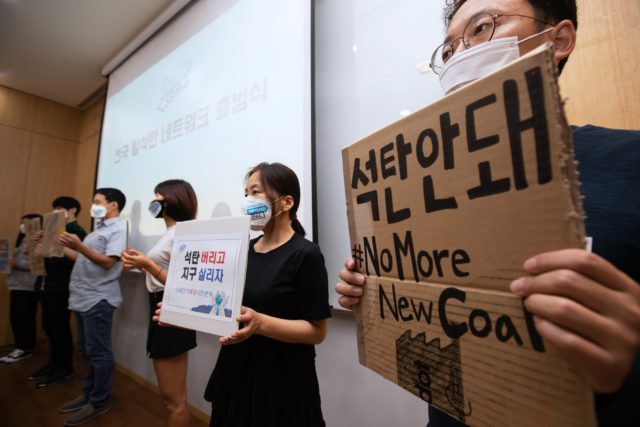
A coalition of South Korean civil society groups has launched Korea Beyond Coal to press the government and companies to phase out coal power plants by 2030. South Korea currently has 80 operating coal units, which currently provide about 40 per cent of the country’s electricity, and a further seven units are under construction. South Korea imported an estimated 99 million tonnes of thermal coal in 2019, making it the world’s fourth largest thermal coal importer.

A spokesperson for the Korea Federation for Environmental Movements, Lee Ji-eon, said the government’s current energy plan is to allow existing plants to operate for up to 30 more years. On the same day of the launch of Korea Beyond Coal, South Korea’s President, Moon Jae-in, announced a further 20 coal plants would be shut down by 2034 in addition to the 10 slated for closure by the end of 2022.

beyondcoal.kr/en/41_en/20

http://beyondcoal.kr/en/41_en/20" data-og-url="http://beyondcoal.kr/en/41_en/20" data-og-image="https://scrap.kakaocdn.net/dn/bq4eEe/hyH3ICASwY/qzQ1Kw286Al8hBJUXKhbek/…">


[Press release] World’s largest campaign to shut polluting coal power launched in S. Korea on UN Blue Skies day > [영문] New

[Press Release] World’s largest campaign to shut polluting coal power launched in S. Korea on UN Blu…

beyondcoal.kr


토, 2020/10/31- 06:36
3
0

[Goethe-Institut Korea] In times of Corona, the air in Korea has improved – but the mountains of rubbish are growing. So how can the country still make a green change? An interview with Korean environmentalist Jieon Lee.

Since the coronavirus hit Korea, the wind of change has been blowing through Korean society. Activity has declined at factories in South Korea and in China, and the air, which just last year was often thick with smog due to suspended particulate matter, is markedly cleaner. Meanwhile, however, more and more concerned citizens warn of a new refuse crisis amid growing heaps of discarded face masks and packaging waste from online shopping and food deliveries.

This scenario prompted South Korean President Moon Jae-in to announce in May 2020 that the Korean “New Deal” to revive the economy must include a “Green New Deal”. On 14 July 2020, the South Korean government announced a comprehensive roadmap for the New Deal, including a raft of specific measures for its Green New Deal. We met with Jieon Lee, Climate and Energy Coordinator at the Korea Federation for Environmental Movements, and talked about the environmental impact of COVID-19 in Korea and the Green New Deal.

(English) www.goethe.de/prj/eco/en/pol/21917565.html


“COVID-19 must be used for a green change”

In times of Corona, the air in Korea has improved – but the mountains of rubbish are growing. So how can the country still make a green change? An interview with Korean environmentalist Jieon Lee.

www.goethe.de

(German) www.goethe.de/ins/kr/de/kul/dos/nac/21917565.html

토, 2020/10/31- 06:48
2
0

스위스 제네바 현지시간으로 12월 14, WTO는 2020년까지 수산자원의 남획과 과도한 어획역량을 키우고 불법·비보고·비규제(IUU) 어업을 지원하는 유해수산보조금 폐지 협상이 합의에 이르지 못하게 되었다고 발표했다이번 협상을 주재해 온 산티아고 윌스 주WTO 콜롬비아 대사에 따르면 합의에 이르기에는 회원국들 간의 이견이 여전히 큰 상황으로 보인다는 입장이다. WTO에서의 수산보조금 폐지 문제를 논의하기 시작한 지 20여 년이 흘렀지만여전히 실질적 협상에 이르지 못한 것이다. WTO는 2020 시한을 지키지 못한 무책임한 협상을 반복하지 않도록 실질적인 전략마련에 나서야 한다.

2020년 보조금 폐지 협상은 세계 지도자들의 약속이었다. 2015년 제70차 UN 총회에서 채택된 지속가능발전목표(SDG) 중 14번 째 목표의 세부목표 중 하나는 “2020년까지 과잉어획능력 및 남획을 초래하는 유형의 수산보조금을 금지하고, IUU 어업을 초래하는 보조금을 근절하고이와 유사한 신규 보조금의 도입을 제한한다는 것이다. 2017년 제11차 WTO 각료 회의에서는 유엔 SDG를 반영하여 2020년까지 남획과 과잉어획능력을 지원하는 수산보조금을 폐지하는데 합의한다는 각료 선언까지 채택된 바 있다.

세계 정상급 지도자들의 공언이 있었음에도 불구하고 WTO는 협상 시한을 지키지 못했다. WTO의 유해수산보조금 협상이 합의에 이르지 못한 이유는 세부 사항에 대한 회원국들 간의 의견 차이가 좁혀지지 않았기 때문이다수산보조금을 원천 금지를 주장하는 국가들도 있었지만우리나라유럽연합일본 등이 예외 조항을 두어 수산보조금을 일부 유지하려는 입장을 택했다.

한국 정부는 2050 탄소중립을 선언하고기존 사회 및 경제 체제에서의 전면적인 변화의 필요성을 인정한 바 있다. 2050 탄소 중립의 핵심 축 중에 하나는 바로 생물다양성의 보전이다지속가능한 해양생태계를 위해서는 힘들지만 새로운 길을 모색해야만 한다현재 전세계 수산자원은 지속가능한 수준의 최대한으로 포획되는 양과 남획되는 양을 더하면 총 자원의 90%가 되는 심각한 자원 고갈 수준에 이르렀다이 배경에는 특히 어획 과정에서 소모되는 경비를 줄이고 어획능력을 강화시키는 각국 정부의 수산보조금 정책이 자리잡고 있다결국 개별 국가들이 나서서 자국 어업의 지속가능성을 담보하지 않는다면 이 해양생태계의 침몰을 방관하는 치킨게임이 되고 만다.

우리는 한국정부가 2021년 재개될 WTO 수산보조금 협상에서 해양 환경을 보전하고 미래세대에 책임을 다하는 태도로 임할 것을 촉구한다. 2021년 WTO 수산보조금 협상은 1월 18일 이후 재개될 것이다우리는 2021년 의미있는 합의에 도달해야만 한다.

2020. 12. 17
시민환경연구소환경운동연합


[보도자료] WTO 수산보조금 폐지 협상 시한 임박, 해수부·외교부에 협상 타결 촉구(12.14)

목, 2020/12/17- 23:19
4
0

Bioenergy a risk to equitable clean energy transition


- Bioenergy production is linked to deforestation, air pollution, land grabbing, and human rights violations ;
- Industrial-scale bioenergy increases greenhouse gas emissions, harms biodiversity, and reverses the original intent of renewable energy policies.
- risks in bioenergy supply chain must be considered in the renewable energy policy reform

[caption id="attachment_212864" align="aligncenter" width="640"](c) Conservation North[/caption]

Solutions for Our Climate, Korea Federation of Environmental Movements and Advocates for Public Interest Law held an online seminar on "Understanding Bioenergy Trade and Supply Chain Risk in Asia" on the 24th to shed light on environmental and social problems arising from the production and consumption of bioenergy feedstock. Members from the civil society based in Indonesia, Vietnam, the United States, and Europe attended the event to share their experiences and implications of each country.

Biomass and palm oil-based biofuels production is expanding, supported by governments around the world who are keen to promote renewable energy. However, bioenergy has a negative impact on climate, ecosystem, and local livelihood. Above all, industrial-scale bioenergy counters the main purpose of the renewable energy policy by increasing greenhouse gas and air pollution and threatening the ecosystem biodiversity.

The EU's renewable energy policy is also deeply dependent on bioenergy. Biomass, which accounts for up to 37% of the EU's renewable energy causes deforestation in Europe and North America. In 2016–2018, deforestation across Europe increased by 49% and biomass losses increased by 60%. In particular, imports of wood pellets from the U.S. and Canada are increasing, and they are sourced from ecologically significant forests with endangered species habitats.

"The only way to stop the massive climate, environmental and social damage caused by bioenergy is to exclude them from renewable energy and other 'green' policies," said Almuth Ernsting, a researcher at Biofuel Watch, who presented the European case.

Korea is also seeing a surge in bioenergy use with various institutional support. From 2014 to 2017, Bioenergy ranked first in the amount of renewable energy supply certificates (REC) among renewable energy support, and it still ranked second in 2018-19. In particular, biomass development has grown more than 61 times over the past six years. Meanwhile, palm oil-based bio-heavy oil production nearly tripled between 2014 and 2019.

"Though it is desirable to phase out fossil fuel and expand renewable energy to achieve the 2050 Net-zero target, shifting that volume to bioenergy is problematic. Burning biomass in large-scale power plants has no advantage in climate and environment even if biomass residues are used," said Kim Soojin, a senior researcher at Solutions for Our Climate. “In addition, the carbon footprint of imported palm oil-based fuels such as biodiesel and bio-heavy oil is even larger, but the government continues to give RECs to encourage the use of biofuels."

[caption id="attachment_212865" align="aligncenter" width="640"](c) PUSAKA[/caption]

Korea's bioenergy highly depends on imported feedstock. More than 90% of wood pellets are imported from Vietnam and more than 60% of palm Kernel Shell(PKS) bio-SRF and palm based biofuels are from Malaysia and Indonesia. Palm oil, the main raw material for biofuels, has long been criticized by civil society at home and abroad due to its massive environmental damage and human rights violations in the production process.

"To meet other countries' renewable energy target, Indonesia's rainforest is being destroyed, endangered plants and animals are disappearing," said Kurniawan Sabah, director of Indonesia's civic group Indies. "Korea and other palm oil importers should consider how it affects the environment and communities of the country of origin in the process of producing renewable energy materials and reflect them in their renewable energy policies."

"The Korean government should stop providing public financial support to companies involved in forest destruction and human rights violations in the process of bioenergy production," said Shin Young Chung, a lawyer at the Advocates for Public Interest Law, who has been raising issues in palm oil industry for years. “It is also necessary to establish a system to monitor supply chains to prevent imports of palm oil produced by environmental damage and human rights violations while increasing the rate of biodiesel mixed obligations."

The organizers of this event (Solutions for Our Climate, Korea Federation of Environmental Movements, and Advocates for Public Interest Law), issued a civil society statement on bioenergy that included demands for policy reform to consider risks of bioenergy supply chain in Korea. The full text of the statement can be found below.

You can download the presentation materials here


Korean NGOs Statement on Bioenergy


As civil society members, we are participating in the meeting on “Understanding Bioenergy Trade and Supply Chain Risks” by delivering our key messages on biomass energy and palm oil-based biofuels.

Globally, bioenergy production and consumption are on the sharp rise due to renewable energy policy support. Governments around the world are incentivizing biomass-to-power and palm oil-based biofuels to meet their renewable energy and fuel targets.

However, bioenergy developments have been criticized due to sustainability concerns on the environment, climate and local people. The increase in production and consumption of bioenergy pushes the demand for feedstock imports and exports. Bioenergy production is linked to deforestation, local air pollution, land grabbing, and human rights abuse. Industrial scale bioenergy reverses the original goal of renewable energy policy by increasing greenhouse gas emissions and threatening our ecosystem biodiversity.

Despite the sustainability risks of its supply chain, bioenergy is still regarded as green energy because of its ability to replace oil and coal in existing facilities. Carbon neutrality of bioenergy is a myth and replacing fossil fuels with bioenergy often does not help our societies to decarbonize.

Together, we demand:

  • ✔︎For forest-centered bioenergy: Governments and corporations to end deforestation for production of bioenergy and to protect biodiversity.
  • ✔︎For people-centered bioenergy: Governments and corporations to end exploitative and abusive practices in the biomass and biofuels supply chain, and to respect the rights of local communities, peasants, women, indigenous peoples and smallholders.
  • ✔︎For climate-centered bioenergy: Governments to end financial supports for industrial scale biomass and biofuels to tackle climate crisis.
  • ✔︎For sustainability-centered bioenergy: Governments to revoke the unjust policies for unsustainable bioenergy and to strengthen sustainability requirements for biomass and biofuels and enforce the adoption of international norms for bioenergy investment.
  • ✔︎For governance-centered bioenergy: Governments to stop relying on bioenergy to meet their carbon neutrality goals, and to actively engage civil society organizations throughout energy transition planning processes.


2021.2.24

Solutions for Our Climate, Korea Federation of Environmental Movements, Advocates for Public Interest Law

목, 2021/02/25- 01:20
6
0

Election of the 13th Executive of the Korea Federation for Environmental Movements and Key 2021 Resolutions


  • New Executive Committee: Kim Soo-dong, Kim Ho-cheol, Park Mi-kyung, Lee Cheol-soo, and Hong Jong-ho
  • New Secretary-General: Kim Choony
  • Vice-President: Lee Young-woong
  • The key projects in 2021 are climate crisis response and plastic free project
  • National delegates adopted a resolution calling for a great change to an ecological society

The Federation of Environmental Movements held an online delegates conference on Saturday, February 27th. 270 of the 379 registered delegates participated, electing the 13th executive who will lead the environmental movement coalition for the next three years. In addition, it adopted a resolution on key projects in 2021 and called for a major transformation of South Korea into an ecological society to overcome the climate crisis.

The new executive committee is: Kim Soo-dong, Kim Ho-cheol, Park Mi-kyung, Lee Cheol-soo, and Hong Jong-ho.

  • Kim Soo-dong is the executive of the Andong branch of KFEM and a field activist, who has led the movement to close and relocate the Youngpoong smelter, and is active in converting industrial facilities to more eco-friendly sites.
  • Kim Ho-cheol served as the chairperson of Lawyers for a Democratic Society and is currently chairperson of the Environmental Law Center. He is a leader in the field of environmental law and played a major role in lawsuits against the Saemangeum seawall and the life extension of Unit 1 at Wolseong nuclear power plant.
  • Park Mi-kyung is currently co-chair of the Gwangju Environmental Movement Association, and has been consolidating the capabilities of regional organizations across the country through long-standing field activities such as the Pollution Deportation Movement Association and the Environmental Movement Association.
  • Lee Cheol-soo, who has been reappointed for his 12th term, is a renowned printmaker who works to protect the environment, peace, and life through printmaking, and recently participated in the campaign against the construction of Jeju 2nd Airport.
  • Hong Jong-ho, who is a graduate of the Graduate School of Environmental Studies at Seoul National University, is an expert who connects field work and theory, and has played an important role in Korean society on land development, the climate crisis, and energy conversion.

President Kim Choony, has since 1995 been an activist dealing with environmental issues at home and abroad, and has been fighting to make KFEM a leading voice in civil society, an activist organization, and an organization based on solidarity and cooperation. She has played a leading role in opposing Taiwanese nuclear waste exports to North Korea, opposing the Saemangeum seawall, fighting the four major project, advocating for protection of Korea’s wetlands and the DMZ area, and promoting sustainable development goals.

Vice-President Lee Young-woong, who is also the secretary of Jeju KFEM, has been trying to capture the voices of residents whenever Jeju issues arise, such as the Songaksan development project on Jeju Island, the Jeju Naval Base, and the Jeju 2nd Airport construction.

Byun Young-cheol , who has been fighting on behalf of asbestos victims, and Lee Tae-il, secretary general of Ecopeace Asia, were elected as business auditors, while certified public accountant Park Sang-cheol is the new accounting auditor.

KFEM delegates decided that “Climate Crisis, Beyond Coal to Renewable Energy” and “2050 Plastic Free” as key projects for 2021. Delegates also adopted a resolution calling for a major transformation of South Korea into an ecological society to overcome the climate crisis.

“Climate Crisis, Beyond Coal to Renewable Energy” calls for a nationwide campaign to establish a 2030 coal-free roadmap, policy alternatives to expand renewable energy, and an associated online media campaign.

“2050 Plastic Free” was prepared as part of a strategy to achieve 2050 carbon neutrality. The goal is to gain effective reduction targets from the government and businesses and monitor their implementation. To this end, it plans to run an online campaign that citizens can easily participate in, including the Zero Plastic Challenge.

Delegates chastised the South Korean government, stating that although the government declared 2050 carbon neutrality last year and implemented a Green New Deal to overcome the COVID-19 crisis, it has been lukewarm in its push for an early exit from coal power plants. In addition, the government was criticized for legislating to allow an airport on Gadeok Island, and failing to achieve the fundamental change that will be required to avoid a bigger crisis in the future.

Awars were given to excellent branches, activists, and members.

  • Geoje KFEM in Tongyeong, which has carried out coastal waste purification activities with residents, received the Excellent Region Award.
  • Activists Kang Yun-hee (Jeju KFEM) and Moon Ji-hyeon (Jeonbuk KFEM) received the Outstanding Activist Awards
  • Park Hyeon-soo (Cheongju, Chungbuk), So Sam-young (Cheonan, Asan) and Hong Ki-hyuk (Gwangju) members each received the Excellent Member Award.
  • A special award was awarded to the late Choi Jae-suk, executive director of Eco-Saving Cooperatives.
  • A plaque of merit was awarded to executive committee members Kwon Tae-seon and Jang Jae-yeon, auditor Ji Ki-ryong, and secretary-general Choi Jun-ho, whose terms ended.


February 27, 2021

Korea Federation for Environmental Movements


Special Resolution of the KFEM Delegation Meeting


The Transformation to a Sustainable Ecological Society that can Tackle the Climate Crisis

The COVID-19 pandemic has brought crisis and change to the economy and society at large. The roots of the pandemic lie in the destruction of ecological systems. If things do not change, we are heading for a sixth major extinction event brought on by an increasingly severe climate crisis.

The South Korean government’s 2050 carbon neutrality pledge and Green New Deal, stand in contrast to the governments support for new airport construction, the construction of seven new coal power plants, and the slow speed that older coal plants are being closed. What is needed a new focus

As Covid-19 has demanded social distancing of people, we also need social distancing for nature, with the expansion of nature reserves. At present only 11.6% of the land, and 1.4% of the sea is so protected.  This buffer zone needs to be expanded.

The linear plastic economy of mass production, consumption and disposal needs to be transformed. It is also necessary that we pursue global environmental justice, by monitoring the movement of waste between countries.

In order to end environmental destruction and human rights violations caused by large-scale development projects abroad, stronger government regulation is required. Such regulation must take into account the rights of local and indigenous peoples.

Many people talk about the seriousness of the climate crisis, but change remains slow. COVID-19 may be overcome through vaccines, but there is no such readily available solution for the climate crisis. Together with those who will be most immediately affected by the climate change, and the youth who will bear the greatest burden, we will take action to fight this crisis.

In order to overcome the climate crisis, we are determined to forge a path to a sustainable ecological society. In 2021, the Korea Federation for Environmental Movements pledges to:

Expel coal power plants and accelerate the conversion to renewable energy.

Stop large-scale construction projects, including new airports.

Pursue a plastic free society.

Expand protected areas as a climate crisis buffer zone.

Join forces to solve the problem of large-scale overseas development projects that destroy the environment.


February 27, 2021

All representatives of the Korea Federation for Environmental Movements


Translated and Edited by Sam Macdonald

화, 2021/03/09- 19:46
3
0

South Korea’s Climate Pledges: Less Than Meets the Eye


Once again, the Moon administration is making bold climate pledges on the international stage, while undermining these goals at home.


By Sam Macdonald, international solidarity coordinator from KFEM


At the recent Leaders’ Summit on Climate, hosted by U.S. President Joe Biden, South Korean President Moon Jae-in was praised when he pledged to end public financing for overseas coal projects and release improved emissions targets later this year. But behind Moon’s promises is a government that obstructed legislative efforts to end coal financing, dragged its heels on new emissions targets, and looks set to log and replant 72 percent of the country’s forests in the name of carbon neutrality.

Once again, the Moon administration is making bold climate pledges on the international stage, while undermining these goals at home.

In 2020, South Korea’s national utility, KEPCO, was at the center of an international campaign to end its investments in new coal-fired power plants in Indonesia and Vietnam. In response, lawmakers from Moon’s ruling party proposed legislation to prohibit KEPCO, state banks, and the state trade insurance provider from financing overseas coal plant projects. But on September 14, behind closed doors, the administration scuttled these legislative efforts and greenlit these controversial projects.

Such projects make a mockery of South Korea’s climate commitments, locking in new emissions for the half-century life spans of these plants. This is even more apparent given South Korea’s continued construction of domestic coal plants, which will ensure emissions well beyond 2050, the date the country pledged to be carbon neutral.

The writing on the wall for South Korea’s coal plant export industry had long been clear, and Seoul’s new pledge, while welcome, was somewhat inevitable. KEPCO itself announced last year that the projects in Indonesia and Vietnam would be their last, and in early 2020 the Korean government had to bail out the country’s flagship coal plant exporter, Doosan Heavy Industries, to the eventual sum of 3.6 trillion won ($3.2 billion). Doosan Heavy will build the new plants in Indonesia and Vietnam.

South Korea’s decision to delay the release of new Nationally Determined Contributions (NDCs) stood in stark contrast to the bold commitments made at the climate summit by the U.S., the U.K., and neighboring Japan. Seoul updated its NDCs in December 2020, but despite an improvement in accounting methods, the target remained unchanged from 2016. Specifically, South Korea committed to a 24.4 percent reduction of emissions from 2017 levels by 2030. But this target needs to rise to 59 percent if South Korea hopes to meet its fair share of climate obligations.

Concerns also persist about how Seoul hopes to achieve its emissions reduction targets. In January, the Korea Forest Service announced plans that would allow 72 percent of the nation’s forests to be logged and replanted as part of its 2050 Carbon-Neutral Forestry Sector plan. The decision is based on a redefinition of “old trees” as those aged over 30 years, as well as disputed research on the lifetime carbon absorption of trees.

Rather than focus on South Korean industrial emissions, the country’s largest source of greenhouse gases, Seoul hopes to reach its NDCs through creative carbon accounting in the forestry sector. By 2030, 11 percent of South Korea’s emission reductions will come from real reductions in the industrial sector, 22 percent by cutting down and replanting trees.

South Korea continues to make bold climate statements on the world stage, but its domestic record fails to back these up. If Seoul is to release new NDCs this year they must not only be significantly higher, but they must tackle the real sources of emissions. Anything less would render Moon Jae-in’s recent pledges at the Biden summit entirely meaningless.


Originally published in The Diplomat.

목, 2021/05/06- 20:29
5
0

PRESS RELEASE – Korea Federation for Environmental Movements


・ More than 37% of forests destroyed in Korea Forest Service’s Cambodia REDD+ Pilot Project.
・ Korea Forest Service criticized of promoting the project’s success, despite poor management.
・ Immediate need for a forest restoration plan and participation from civil society in both countries.


Recently the Korea Forest Service (KFS) has come under fire for its plan to open up much of Korea’s forests to logging and replanting, in the name of 2050 carbon-neutrality. KFS hoped this would help it reach its goal of 34 million tons of GHG emission reduction by 2050. But what was overlooked in much of this criticism was the fact that 5 million tons of these reductions would be achieved overseas through REDD+ projects.

REDD+, or reducing emissions from deforestation and forest degradation, covers a variety of projects but generally involves developed countries paying developing countries not to cut down forests. Korea began pilot projects in Indonesia in 2013, and later expanding to Cambodia, Laos, and Myanmar. Cambodia’s Tumring REDD+ Pilot Project is the first project where the Korea Forest Service secured carbon credits.

At present only the host countries can count reductions in deforestation towards their emission reduction goals, or Nationally Determined Contributions (NDCs). But Korea is expecting that this will change. Korea’s Cabon Neutrality Committee said as much in its recent 2050 carbon neutrality roadmaps, where it stated that REDD+ would be used to make up shortfalls in the countries future NDCs. In the meantime, Korea can receive carbon credits from these projects, which the KFS says are being sold and the profits used to fund the pilot projects.

[caption id="attachment_218272" align="aligncenter" width="630"] Map 1. Logging in Tumring project area, 2000-2021. The solid white line is the boundary of the REDD+ pilot project, and each red pixel represents the degree of forest loss over 20 years. The brighter the red, the more recently the forest was lost. The remaining forests are becoming fragmented, turning into ecologically vulnerable islands. The yellow pixel represents GLAD Deforestation Alert showing a disturbance in the forest canopy, which indicates that trees in that area may have been lost or removed. ©Global Forest Watch[/caption]

The KFS has proudly stated that last year the Tumring project reduced 650,000 tons of GHG emissions. However, an independent three-month investigation this year conducted by Cambodian and Korean NGOs, has shown the reality on the ground is far different. The investigation which began in May, involved on-site investigations, satellite image analysis, and expert interviews. The fieldwork team was led by Ouch Leng, Goldman Environmental Prize recipient and head of the Cambodia Human Rights Task Force (CHRTF) and supported by activists of Korean Federation for Environmental Movements (KFEM) and the Biodiversity Foundation. The fieldwork team visited 13 out of 14 community forests in the Tumring REDD+ pilot project area, on several occasions.

[caption id="attachment_218273" align="aligncenter" width="425"] Map 2. Composition of satellite data, drone images, and on ground photos showing deforestation inside Tumring REDD+ pilot project © KFEM[/caption]

The investigation revealed that in the past six years since the Tumring REDD+ pilot project was established, more than 37% of the forest in the project area was damaged or lost. According to public satellite data provided by the University of Maryland, the forest area decreased from around 56,084 hectares in 2015 to about 35,544 hectares at the end of last year. This loss of 20,540 hectares is equivalent to an area twice the size of Paris. The fieldwork team contended that the damage in the area is likely greater than what was seen on satellite, estimating as high as 45% loss in overall forest cover. Even more alarming is the current rate of deforestation. In 2020 there was an 8.76% loss of forest in the project area. In the first half of 2021, forest loss has already reached 8.3%.

[caption id="attachment_218274" align="aligncenter" width="469"] Map 3. Tumring REDD+ pilot project area in red, located near the Prey Lang Wildlife Sanctuary in northern Cambodia. ©Global Forest Watch – University of Maryland; Hansen et al. 2013.[/caption]

[caption id="attachment_218275" align="aligncenter" width="605"] Table 1. Tumring REDD+ Pilot Project Zones: Percentage of deforestation by year, 2010-2020. After the REDD+ pilot project was launched in December 2014, forest loss has continued to rise. Land expropriation and logging expanded in 2016, the year Prey Lang Wildlife Sanctuary was established. © University of Maryland, Global Land Analysis and Discovery (GLAD)-Global Forest Watch 2.0b[/caption]

Most of the deforested areas are turned into large plantation farmland, mainly for rubber, cassava, and cashew nuts. According to interviews with local residents, most of the trees harvested in this process are not for local consumption. It is reported that logging companies from other regions make illegal arrangements with local officials or forest monitoring personnel, make the  local residents handle the logging operations and purchase the timber. According to Ouch Leng, “It’s not a secret that expensive timber from endangered species in Cambodia is actively traded on the black market. REDD+ project isn’t stopping that at all.”

[caption id="attachment_218411" align="aligncenter" width="640"] Photo 1. A fallen REDD+ project sign found in the Choim Smach community forest within the Tumring REDD+ pilot project area. Photo taken by Ouch Leng, 24 June 2021. © KFEM[/caption]

[caption id="attachment_218277" align="aligncenter" width="640"] Photo 2. Illegal logging, on-site processing of rubber trees, and transportation by tractor (locally called "Koyun") in the Ou Daskor community forest north of the Tumring project site. Photo taken by Ouch Leng, July 2, 2021. © KFEM[/caption]

Land grabbing within the REDD+ project forests is yet another issue. According to Mr. Chhem Sopheak, head of the Sochet community forest, located in the southeast of the Tumring REDD+ pilot project, outsiders were recently caught by police for trying to grab land. He also reported cases of people attempting to forge residents or indigenous peoples to gain land titles.

Forest patrol by the local community is one of the core empowering activities of the REDD+ projects, in order to monitor deforestation and logging. However, an allowance of around $50 per 5-person team was barely enough to cover fuel and food costs for patrolling. In fact, the teams interviewed by the investigation team were only receiving an average of $38 per patrol. “It takes 10 people to properly patrol a large forest,” said a representative of the O Dauntey community forest, and a proper patrol may cost “five times the current allowance.” The result is that in many cases, patrol is performed only once or twice a month, utterly insufficient to prevent illegal logging.

[caption id="attachment_218279" align="aligncenter" width="640"] Photo 3. Deforestation in O Dauntey community forest inside Tumring REDD+ pilot project. Photo taken by Ouch Leng, July 2021. (Latitude: 13.130759, Longitude: 105.391645). © KFEM[/caption]

After this investigation report was released, the Korea Forest Service has stated that “there has been no large-scale illegal logging at the Cambodian project site”, without providing any counterevidence. Kim Han-min, a Korean activist who participated in the investigation responded, “If the loss of more than 3,500 hectares of forest every year is NOT a large scale for the Korean Forest Service, we are doomed for a completely destroyed forest within 10 years. Rather than denying hard visual evidence, drone footages and facts found in publicly available satellite data, the KFS must better embrace the reality and grant active participation of the civil society in both countries to right the ship before it’s too late.”

For Kim Hye-lyn, International Solidarity Director for the Korea Federation for Environmental Movements, “This incident once again lowers the reputation of the Korea Forest Service, which has been criticized as the ‘Forest Destruction Agency’.” She continued, “The Korea Forest Service’s plan to become carbon-neutral by securing 5 million tons of REDD+, when it cannot properly manage a pilot project, is deceptive. We need a more thorough investigation of illegal logging at the site and conflict with residents.”

Kim San-ha, managing director of the Biodiversity Foundation, stated, “There are too many loopholes in the current structure of REDD+ that relies on monitoring from private carbon emission certification institutions. Carbon credits can be certified even when forests are destroyed like this case.”

[caption id="attachment_218278" align="aligncenter" width="640"] Photo 4. Deforestation in the Santuk district, in the south of the Tumring REDD+ pilot project. Photo taken by Ouch Leng ,July 1, 2021. (Latitude: 12.676208, Longitude: 105.479763). © KFEM[/caption]

Courtney Work, anthropologist and assistant professor of National Chengchi University, who has been working in Cambodia for seventeen years, also added that “many indigenous people around the world are not protecting the forest just because they are paid (money). Market-driven solutions like REDD+ can maybe bring some outcome in the short run to change the ways that businesses and governments think about valuing the forest. In the long run, however, it changes the traditional community values towards the forest toward monetary compensation rather than protecting livelihoods through forest health. With these new values, we will not be able to expect the next generation to do the same (conservation) actions”.

[caption id="attachment_218283" align="aligncenter" width="640"] Photo 5. Deforestation in Choimsmak community forest, in the south of the Tumring REDD+ pilot project. Photo taken by Ouch Leng , June 24, 2021. (Latitude: 12.799951, Longitude: 105.449644). © KFEM[/caption]

화, 2021/08/31- 20:00
4
0

국가기후환경회의 1차 국민정책제안, 미세먼지 저감 상시 대책 없어 우려


석탄발전소 가동 중단 확대 정책제안은 환영
일상적 미세먼지와 기후위기 해결을 위한 내연기관차, 석탄발전 퇴출 등 정책은 미뤄져
고농도 미세먼지 계절뿐 아니라 전기요금 개편 등 상시적 대책 수반돼야 효과 발휘

[caption id="attachment_202203" align="aligncenter" width="541"] (사진=연합뉴스)[/caption]

9월 30일 대통령 직속 미세먼지 문제해결을 위한 국가기후환경회의는 미세먼지 저감에 대한 제1차 국민 정책제안을 발표했다. 국가기후환경회의에서는 미세먼지가 심해지는 12월부터 3월을 ‘고농도 미세먼지 계절’로 지정하고 그 기간 동안 ▲석탄발전소 가동 중단 확대, ▲배출가스 5등급 차량 운행 전면 제한 ▲민관합동점검단 구성 및 사업장 감시 강화 등을 통해 약 2만 4천여 톤의 미세먼지를 감축할 수 있다고 발표했다. 이번 정책제안이 미세먼지 배출원 전반에 걸쳐 선제적이고 강화된 정책이라는 점은 긍정적이나, 요금과 세제 개편을 포함한 상시적 대책이 수반되지 않으면 정책 효과는 제한적일 것으로 우려된다.

우선 국가기후환경회의는 12~3월간 석탄발전소 가동 중단 기수를 14~22기까지 확대할 것을 제안했다. 올해 봄철 가동 중단된 석탄발전소가 60기 중 4기였다는 점에 비하면 대상이 크게 확대되는 셈이다. 환경운동연합은 겨울과 봄철 미세먼지 대책으로 석탄발전소의 절반에 대한 중단을 요구한 만큼, 석탄발전소 중단의 확대 방향에 대해 환영한다. 하지만 미세먼지에 대한 사회적 우려와 기후위기 상황을 고려하면, 더 과감한 석탄발전 퇴출 정책이 요구된다. 국민참여단 대다수도 석탄발전소 중단과 전기요금 추가 부담에 대해 높은 지지를 나타낸 만큼, 전기요금의 합리적 개편과 석탄발전 폐쇄 로드맵을 조속히 마련해야 한다.

수송 부문 미세먼지 저감을 위해서는 고농도 계절에 배출가스 5등급 차량 운행을 수도권 외 대도시에서도 실시하겠다고 밝혔다. 수도권에 국한되던 공해차량 운행제한을 전국적으로 확대하는 방향은 바람직하다. 하지만 이 대책이 제안에 그치지 않고 집행력을 갖추려면 지자체의 공해차량 단속과 대중교통 활성화를 위한 기반 마련이 선행돼야 한다. 충분한 예산 투자를 통해 한시적 계절을 넘어서 상시적 대책으로 시행돼야 하는 것이다. 게다가 경유세 조정과 유가 보조금 개편, 친환경차 의무 판매제와 같은 핵심 정책이 계속 미뤄지면서 급증하는 경유차의 배출 감축 효과는 반감될 것으로 우려된다.

사각지대가 가장 큰 사업장 미세먼지 저감 대책은 불확실하다. 미세먼지 고농도 계절 동안 산업단지과 사업장 밀집지역을 대상으로 1천 명 이상의 민관합동점검단을 운영해 원격감시를 강화하겠다는 방안이지만, 여수산단에서 벌어진 오염물질 배출조작 사태와 같은 사업장 관리 미흡 문제 재발을 방지하기엔 역부족이다. 재발을 방지하려면, 상시적으로 감독 당국의 인력과 역량을 확충해 현장 집행력을 높이고 주민 참여를 보장하는 거버넌스를 강화해야 한다.

국가기후환경회의가 제안한 대책은 고농도 미세먼지 현상을 한시적으로 완화하는 데 일정 정도 기여할 수 있지만, 일상적인 미세먼지와 기후위기 문제에 대한 해법으로는 한참 부족하다. 정부는 단기 미세먼지 대책에 매달리는 수준을 넘어 상시적이고 과감한 대책을 마련해야 할 것이다.

화, 2019/10/01- 19:50
2
0