주요 콘텐츠로 건너뛰기

[구두발언] 2015 핵확산금지조약(NPT) 시민사회 구두발언

[구두발언] 2015 핵확산금지조약(NPT) 시민사회 구두발언

익명 (미확인) | 금, 2015/05/01- 14:36

참여연대 평화군축센터는 뉴욕 유엔 본부에서 열리는 2015 핵확산금지조약 검토회의(NPT Review Conference)에 참가해 시민사회 단체들이 각국 대표부에게 공식적으로 의견을 개진할 수 있는 구두발언 자리에서 아래와 같은 구두발언문을 발표했습니다. (2015년 5월 1일)

영문 구두발언 바로가기 >> http://bit.ly/1AGR3M0 


2015 핵확산금지조약 검토회의 (NPT Review Conference)

참여연대 백가윤 간사 시민사회 구두발언

2015년 5월 1일(금)


의장님, 각국 대표님들, 그리고 시민사회 여러분 

저는 대한민국 서울에 있는 참여연대 백가윤 간사입니다. 이 발언문은 참여연대와 평화와통일을여는사람들(평통사)가 공동으로 작성하고 전세계 300여명이 넘는 개인들과 100여개가 넘는 단체들이 연명한 공동 선언문을 요약한 것입니다. 

참여연대는 현재 한반도에서 지속되고 있는 정전체제에 깊은 우려를 표하며 관련 정부들에게 핵없는 동북아시아를 실현하기 위해 한국 전쟁을 끝낼 것을 촉구합니다. 

지난 20여년간 한반도 핵문제를 평화롭게 해결하기 위한 다양한 추가적인 합의가 있었지만 제대로 이행되지 않았습니다. 결과적으로 북한은 3차례의 핵실험을 강행하였습니다. 한반도 핵 위기는, 적어도 어느 일방이 아니라 미국과 북한, 남한과 북한, 주변국과 북한 사이의 누적된 불신에 의해 악화되어 왔다고 볼 수 있습니다. 이는 단순히 한 국가의 문제가 아닙니다. 모든 국가들이 책임을 져야 합니다. 

지난 20여년간 미국의 동맹국과 파트너들이 주로 동원해온 압박과 봉쇄, 핵우산과 재래식 군비의 강화 같은 일방적 대북정책 수단들은 북한 핵문제를 둘러싼 갈등의 해결에 전혀 효과적으로 작동하지 않았습니다. 적어도 협상과 대화가 진행되는 동안은 북한의 핵무기 개발이 중단되었습니다. 반면, 적대적인 정책과 제재가 가해지는 동안에는 북한은 핵 능력을 키워갔습니다. 특히 체제 붕괴 혹은 전환 같은 주관적인 기대를 품은 채 대화를 배제하는 정책은 사태를 크게 악화시켰습니다.

북한으로부터 긍정적인 답변을 이끌어내기 위해서는 양쪽 모두가 동의할 수 있는 새로운 형태의 대화, 대담하고도 건설적인 제안이 이뤄져야 합니다. 이 새롭고 포괄적인 해결책은 한반도의 평화 체제 구축, 북미‧북일 관계의 정상화, 그리고 동아시아의 핵위협을 제거하는 것에 바탕을 두어야 합니다. 

이에 저희는 다음과 같이 제안합니다.

  • 한반도 핵 위기 해결을 위하여 2005년 9.19합의에 입각한 6자회담을 조속히 재개해야 한다.
  • 정전체제 종식과 새로운 평화협정 체결을 위한 남‧북‧미‧중 등 관련당사국간의 회담을 6자회담과 동시에 혹은 선제적으로 추진해야 한다.
  • 북미, 북일 관계의 포괄적 관계 개선을 위한 양자대화를 6자회담과 동시에 혹은 선제적으로 추진해야 한다.
  • 남과 북은 대화와 협력을 확대하고 주변국은 이를 적극 지원해야 한다.
  • 한반도와 동아시아의 군비경쟁을 촉발하는 미사일 방어 협력을 비롯한 한미일 군사협력/동맹 추진을 중단해야 한다.
  • 동아시아 평화의 보루인 일본 평화헌법을 무력화하는 일본의 집단적 자위권 추구를 허용하지 말아야 한다.
  • 한반도 비핵화 논의는 한반도 혹은 동북아시아 차원의 비핵지대 건설의 전망 속에 이루어져야 한다. 
  • 한반도 평화협정 체결과 병행하여 남북이 각각 맺은 상호적대적인 군사동맹을 단계적으로 해소하고, 한반도와 동아시아의 공동안보에 기여하는 호혜적이고 평화적인 관계로 전환해야 한다.

이제는 한국전쟁을 끝내고 핵무기 없는 동북아시아로 한걸음 나아가야 할 때입니다. 우리는 여기 계신 여러분 모두가 핵무기 없는 동북아시아를 만들기 위해 우리의 제안에 동의하고 연의 마음으로 함께 해 주시기를 촉구합니다.

감사합니다. 

시민들의 의견

댓글 달기

Plain text

  • 웹 페이지 주소 및 이메일 주소는 자동으로 링크로 전환됩니다.
  • 줄과 단락은 자동으로 분리됩니다.
  • 사용할 수 있는 HTML 태그: <a href hreflang> <em> <strong> <cite> <blockquote cite> <code> <ul type> <ol start type> <li> <dl> <dt> <dd>
이미지
무제한 수의 파일을 이 필드에 업로드할 수 있습니다.
50 MB 한계입니다.
허용된 유형: png gif jpg jpeg.
Enter the YouTube URL. Valid URL formats include: http://www.youtube.com/watch?v=1SqBdS0XkV4 and http://youtu.be/1SqBdS0XkV4.
CAPTCHA
스펨 사용자 차단 질문
24살, 녹색연합에 힘을 더해 주세요!  (지금부터 ~ 11월 30일까지) 녹색연합에 힘 모아주는 방법 하나,   5,000원 회비 증액하기 녹색연합에...
화, 2015/10/27- 11:15
117
0

STATEMENT OF THE VANCOUVER WOMEN’S FORUM

ON PEACE AND SECURITY ON THE KOREAN PENINSULA

>>> Statement [Download]


As sixteen delegates representing peace movements from all over the world, we have traveled from Asia, Pacific, Europe, and North America to convene the Vancouver Women’s Forum on Peace and Security on the Korean Peninsula, an event held in solidarity with Canada’s Feminist Foreign Policy to promote a peaceful resolution to the crisis on the Korean Peninsula. Sanctions and isolation have failed to curb North Korea’s nuclear weapons program and instead severely harm the North Korean civilian population. A Korean Peninsula free of nuclear weapons will only be achieved through genuine engagement, constructive dialogue, and mutual cooperation. We issue the following recommendations to the Foreign Ministers participating in the January 16 Summit on Security and Stability in the Korean Peninsula: 


Immediately engage all relevant parties in dialogue, without preconditions, to work toward achieving a nuclear-free Korean peninsula;


Abandon support for the strategy of maximum pressure, lift sanctions which have deleterious effects on the North Korean people, work toward the normalization of diplomatic relations, remove barriers to citizen-to-citizen engagement, and strengthen humanitarian cooperation;


Extend the spirit of the Olympic truce and affirm the resumption for inter-Korean dialogue by supporting:

i) negotiations for the continued suspension of joint US-ROK military exercises in the south, and the continued suspension of nuclear and missiles tests in the north,

ii) a pledge not to conduct a first strike, nuclear or conventional, and 

iii) a process to replace the Armistice Agreement with a Korea Peace Agreement;


Adhere to all the Security Council recommendations on Women, Peace, and Security. In particular, we urge you to implement United Nations Security Council Resolution 1325, which acknowledges that the meaningful participation of women in all stages of conflict resolution and peacebuilding strengthens peace and security for all. 


These recommendations are based on our long experience engaging with North Koreans through citizen diplomacy and humanitarian initiatives, and from our collective expertise on militarism, nuclear disarmament, economic sanctions, and the human cost of the unresolved Korean War. The Summit is a sobering reminder that the gathered nations have a historic and moral responsibility to formally end the Korean War. A pledge not to conduct a first strike can de-escalate tensions by significantly reducing the apprehension of an attack and the risk of miscalculation that could result in an intentional or an inadvertent nuclear launch. Resolving the Korean War can be the single most effective action to halt the intense militarization of Northeast Asia, which gravely threatens the peace and security of 1.5 billion people in the region. The peaceful resolution of the Korean nuclear crisis is the key step toward the total global elimination of nuclear weapons.


January 15, 2018

Vancouver Women's Forum on Peace and Security on the Korean Peninsula

Christine Ahn, Women Cross DMZ

Kozue Akibayashi, WILPF

Lisa Natividad Guahan. Coalition for Peace and Justice

Ewa Eriksson, Fortier Women Cross DMZ

Yehjung Yi, Korean Sharing Movement

Mihyeon Lee, People’s Solidarity for Participatory Democracy

Liz Bernstein, Nobel Women’s Initiative

Moon-sook Lee, National Council of Churches in Korea

Susan Bazilli, Women Peace Security Network

Nan Kim, Alliance of Scholars Concerned about Korea

Ellen Judd, Canadian Voice of Women for Peace

Ann Wright, Women Cross the DMZ & Veterans for Peace

Patti Talbot, United Church of Canada

Mary-Wynne Ashford, International Physicians for the Prevention of Nuclear War

Erica Fein, Win Without War

Lyn Adamson, Canadian Voice of Women for Peace 
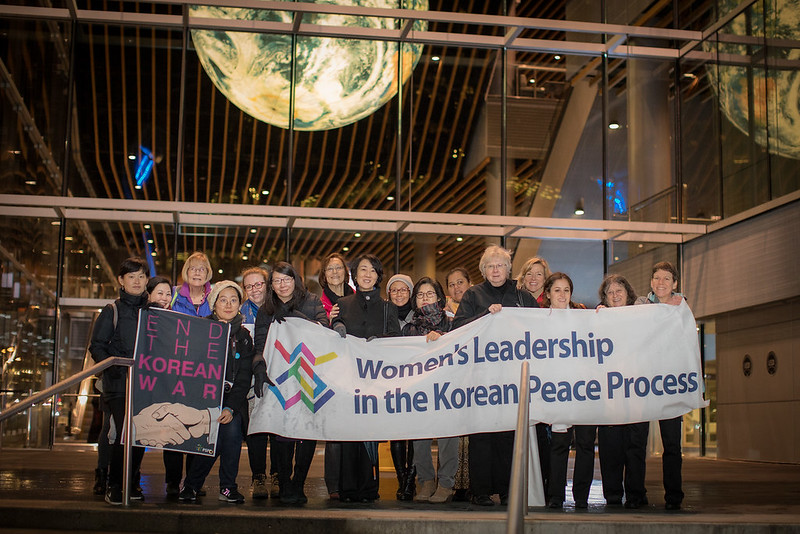


Jan 16th CC (644 of 654)-X2

<사진 = 밴쿠버여성포럼>

월, 2018/01/15- 13:52
93
0

Vancouver Women’s Forum

on Peace and Security on the Korean Peninsula

>>> Statement [Download]


The Vancouver Summit on Korea missed a critical opportunity for peace. Instead of supporting the reduction of tensions in the Korean peninsula that began with the inter-Korean dialogue and the Olympics truce, the Foreign Ministers chose to further isolate and threaten North Korea.  


We urged Foreign Ministers to prepare the table for dialogue with North Korea.  Instead, they chose to obstruct the path for peace being laid by North and South Korea.   


The US-led “maximum pressure” approach has utterly failed to halt North Korea’s nuclear and missile program. Seventy years of sanctions and isolation of North Korea have only furthered the DPRK’s resolve to develop its nuclear arsenal.  


A maximum pressure campaign is not diplomacy that will lead to peace. Increased sanctions hurt ordinary people.


Secretary Tillerson’s depiction today of commercial airline flights as potential targets of North Korea’s missile tests is reminiscent of Colin Powell’s UN presentation about Iraq’s “so-called” weapons of mass destruction. This provocative effort to demonize North Korea sets up justification for even more extreme measures against DPRK, such as a naval blockade, which will be viewed by North Koreans as a war-like action. 


We are profoundly disappointed by the Foreign Ministers representing countries with a commitment to peaceful diplomacy and feminist foreign policies. At a time of great global instability, we looked to them for leadership for true global peace and security.


We are resolved to build a global campaign to challenge sanctions that we know have cruel and punishing effects on ordinary North Koreans, to strengthen our feminist peace movements to challenge the drive for war, and to work towards the formal resolution of the Korean War. 


Our commitment to peace is unshaken.


January 16, 2018

Vancouver Women's Forum on Peace and Security on the Korean Peninsula

Christine Ahn, Women Cross DMZ

Kozue Akibayashi, WILPF

Lisa Natividad Guahan, Coalition for Peace and Justice

Ewa Eriksson, Fortier Women Cross DMZ

Yehjung Yi, Korean Sharing Movement

Mihyeon Lee, People’s Solidarity for Participatory Democracy

Liz Bernstein, Nobel Women’s Initiative

Moon-sook Lee, National Council of Churches in Korea

Susan Bazilli, Women Peace Security Network

Nan Kim, Alliance of Scholars Concerned about Korea

Ellen Judd, Canadian Voice of Women for Peace

Ann Wright, Women Cross the DMZ & Veterans for Peace

Patti Talbot, United Church of Canada

Mary-Wynne Ashford, International Physicians for the Prevention of Nuclear War

Erica Fein, Win Without War

Lyn Adamson, Canadian Voice of Women for Peace 


화, 2018/01/16- 14:08
91
0
<div class="xe_content"><h1>GPPAC Northeast Asia Response to</h1> <h1>DPRK-US Hanoi Summit Outcome</h1> <p> </p> <p style="text-align:right;">4 March 2019</p> <p> </p> <p>The second DPRK-US Summit came to an end in the Vietnamese Capital of Hanoi on February 28. It is regretful that this summit did not produce any concrete agreement, and many were disappointed that it did not result in a long-awaited declaration of the end of the Korean War. Yet, GPPAC believes that the Hanoi Summit should not be prematurely judged as a failure. Rather, we must recognise that the path towards realising a peaceful, nuclear-free Korean Peninsula will require a great deal more work, on all levels of society.</p> <p> </p> <p>It is extremely significant that both the DPRK and the United States have clearly expressed their willingness to continue dialogue and negotiations. The Hanoi Summit was one step as part of a long-term process. It is vital that the international community focuses not only on the lack of an agreement, but rather on the next steps required to further develop constructive dialogue. We encourage not only the DPRK and the US, but also other regional actors including China, Japan, Russia and the Republic of Korea, to play an active role in supporting this process, ensuring that talks will continue. These efforts should also include discussion on a concrete roadmap and timeframe, recognising the increased role of both nuclear umbrella and non-nuclear-weapon states, and include sincere consideration of possible multilateral frameworks.</p> <p> </p> <p>Importantly, this broad support for the Korea peace process must also include the involvement of civil society. As a global network of peacebuilding organisations, GPPAC pledges to work together with its members in both Koreas as well as around the world to promote dialogue and cooperation for the Korean Peninsula. Concretely, we will continue this through the regular convening of the Ulaanbaatar Process, with participation of regional civil society and experts. This is vital not only for the Korean Peninsula, but also as steps towards the establishment of regional mechanisms for sustainable peace and denuclearisation in the broader Northeast Asian region.</p> <p> </p> <p>>> Download</p> <p> </p> <p> </p></div>
월, 2019/03/04- 00:19
13
0