주요 콘텐츠로 건너뛰기

[GDAMS] [Statement] How long should South Korea stay as an international loser?
지역

[GDAMS] [Statement] How long should South Korea stay as an international loser?

익명 (미확인) | 화, 2016/04/05- 22:56

2016 GDAMS 캠페인


Global Day of  Action on Military Spending (GDAMS)
How long  should South Korea stay as an international loser?

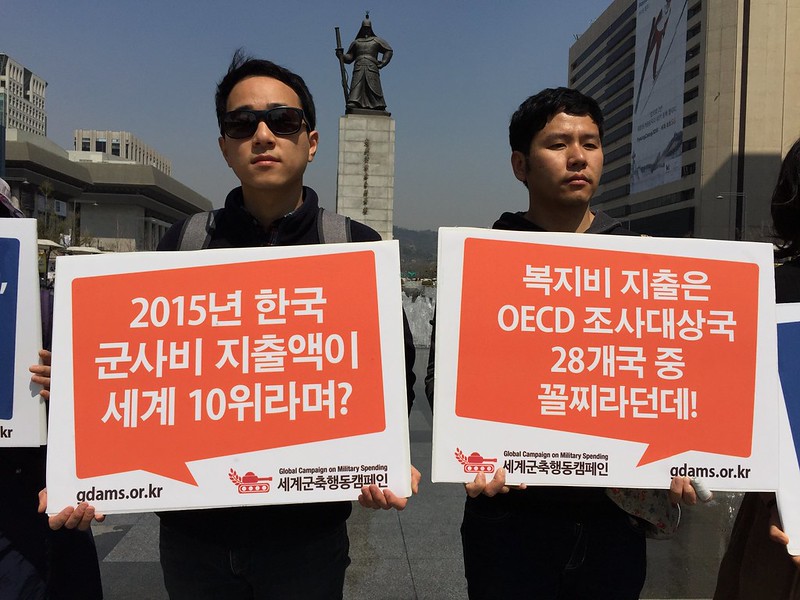
With the lowest welfare spending and highest suicide rate among OECD members, 
South Korea was ranked as the world's No. 10 military spender this year and No. 1 arms importer in 2014.


The Stockholm International Peace Research Institute (SIPRI) has released the 2015 annual world military expenditure figures today (4 May). There is a country which has been once again ranked as the world No. 10. It is, while being the tenth biggest global military spender, also recorded as the lowest welfare spender with the highest suicide rate among the 28 OECD countries. That nation is South Korea. The South Korean government has been spending 15% of its budget on military expenditure, which is 2.5 times bigger than the OECD average. The South Korean government has been pouring in 6 billion dollars over its acquisition of 40 F-35 fighter jets, the center of controversies over cost and technical problems. This is the reality of our nation, 'Hell Chosun', an infernal feudal kingdom.


Korea, breaking its usual record of world's top 10 arms importer became the world's biggest arms importer. The annual CRS (Congressional Research Service) report on Arms Transfers, published in December 2015, shows that the South Korean government bought arms and defense equipment worth 7.8 billion dollars in 2014, making it the number 1 weaponry importer in the world. About $7 billion of South Korea's contracts were made with the United States. Now South Korea has become the most lucrative client of the world's largest defense company, Lockheed Martin. This has been attributed to the South Korean government's decision to buy the fighters whose capabilities haven't yet been verified, even after the US refusal to allow core technologies' transfer to South Korea. Also, there's more good news for Lockheed Martin, which is that the US has reportedly agreed to deploy THAAD to South Korea.


Is the huge military expenditure justified? The nation, with an annual defence budget of $9.6 billion, has so far been discovered to have spent $876 million in defence industry corruption by a joint investigative team which was launched in 2014. According to the joint investigative team, there has been a continuous flow of bribes, the falsifying of public documents, shady arms acquisition processes etc. throughout the Army, Air force, and Navy. The 2014 National Defence Annual Reports says that within 10 years defence spending doubled from $4 billion to $8 billion. Anyone can guess that this figure is not healthy at all. 


Then have our 630 thousand soldiers been benefiting from this military spending? The biggest item in South Korea's military budget is labour costs, most of which has been spent on commissioned officers. Only 9% of the military labour cost budget has been allocated to enlisted soldiers, who make up 70% of the entire military force, while the commissioned officers, who only make up 11% of the military force, take 42% of the entire labour costs. The enlisted soldiers are on less than one seventh of the nation minimum income. Is this treatment fair and just?


Some may say that "we can't possibly reduce military spending while facing the North Korean threat". The fact that South Korea's military power is far superior to that of North Korea has already been acknowledged by the government. South Korea has been spending on its military budget an amount almost equivalent to North Korea's national GDP, without even factoring in expenditure on American army bases in South Korea. Unable to match that amount, North Korea may have had to focus on weapons of mass-destruction. The key to solving the inter-Korean tension is trust-building, not military spending increases. The recent news on North Korea's 4th nuclear test caused many South Korean politicians to propose developing our own nuclear weapons. Without stopping this vicious competition of military spending and force increases on the Korean peninsula,  the necessary dialogue cannot be initiated, hence peace will remain unreachable.


The world of arms, of which American President Eisenhower once said "Every gun that is made, every warship launched, every rocket fired signifies, in the final sense, a theft from those who hunger and are not fed, those who are cold and are not clothed." still persists now. This year the United Nations Office for the Coordination of Humanitarian Affairs (OCHA) will issue an estimated $20.1 billion needed to provide humanitarian assistance to countries around the globe, including Syria, Afghanistan, and Iraq. We need to remind ourselves that last year alone the world spent $1.8 trillion on defence. Just 1% of the total international military spend would make so much difference if it were to be spent on humanitarian purposes and the eradication of poverty. 


More military spending will never bring in peace and safety to the world, but rather causes neighboring countries to increase their own military funding, therefore ending up enriching arms companies. Now is the time for us to rethink our priorities. The change we are hoping for will be brought forward by those who cry out "tax money for our lives, not for weapons" and the national assembly, which reviews and votes for bills based on our nation's voice. The 20th national assembly will have to allocate taxes to help its citizens facing hardship from cradle to grave. On the 5th of April  2016, celebrating the 6th Global Day of  Action on Military Spending, we propose to enter into such a paradigm shift in our escape from 'Hell Chosun'.


April 5, 2016

The GDAMS Preparatory Committee of Korea


For more information


The GDAMS website http://demilitarize.org

The GDAMS Korea website http://gdams.or.kr
The GDAMS Preparatory Committee of Seoul
People’s Solidarity for Participatory Democracy +82-2-723-4250, [email protected]


번역 : 윤현희 (참여연대 평화군축센터 자원활동가)

시민들의 의견

댓글 달기

Plain text

  • 웹 페이지 주소 및 이메일 주소는 자동으로 링크로 전환됩니다.
  • 줄과 단락은 자동으로 분리됩니다.
  • 사용할 수 있는 HTML 태그: <a href hreflang> <em> <strong> <cite> <blockquote cite> <code> <ul type> <ol start type> <li> <dl> <dt> <dd>
이미지
무제한 수의 파일을 이 필드에 업로드할 수 있습니다.
50 MB 한계입니다.
허용된 유형: png gif jpg jpeg.
Enter the YouTube URL. Valid URL formats include: http://www.youtube.com/watch?v=1SqBdS0XkV4 and http://youtu.be/1SqBdS0XkV4.
CAPTCHA
스펨 사용자 차단 질문

2015 International Conference for Peace in East Asia


Program of 2015 International Conference for Peace in East Asia


2015 East Asia Peace Declaration


The year 2015 marks the 70th anniversary of the world’s liberation from the military aggression and colonialism of Nazi Germany and imperial Japan. The 2015 also marks the 70th year since the horrors of the atomic bomb inflicted devastation on humanity for the first time. 


Although East Asia endured continuous warfare and the Cold War tensions over the past seven decades, East Asia as a region went through a most dramatic transformation and achieved unprecedented development and prosperity in history. In spite of these accomplishments, however, potentials and possibilities of East Asia now face critical challenges—an ongoing war in the Cold War standoff, and reinforced arms race. In particular, unsolved North Korea’s nuclear problems not only destabilize the Korean armistice, but accelerate the regional nuclear and conventional arms race. Furthermore, despite the fact that Japan was the principal aggressor in East Asia throughout the early 20thcentury, its recent attempts to reemerge as a military power without making clear amends to the past, further destabilizing East Asia’s volatile peace. As Japan attempts to revise its Peace Constitution that has been the cornerstone for peace in the postwar East Asia, we cannot help but be concerned.


Increasingly fractious hegemonic competition in the East Asia–Pacific region today are also worsening wounds of the past. If we continue to resort to militarism and nationalism without a reliable regional peace mechanism that can resolve such sensitive regional issues in a nonviolent and mutually-beneficial manner, East Asia may degenerate from its mutual prosperity into a melee for hegemony. We must learn from our past—two World Wars stemmed from our inability to control such hegemonic rivalry.


Furthermore, the East Asia–Pacific region has directly suffered from massive casualties incurred by a series of nuclear catastrophes: atomic bombs dropped on Hiroshima and Nagasaki, nuclear tests conducted in places such as the Bikini Atoll, and the recent Fukushima nuclear disaster. As demonstrated by the 2011 Fukushima nuclear disaster caused by an earthquake along Japan’s east coast, nuclear catastrophes do not exclusively result from the weapons of foreign countries, but can be triggered by nuclear facilities any country in the region. Forging a world without nuclear weapons, that is, building a world free of nuclear threats, has become the earnest desire and sincere hope of all East Asians. As is clear from the seriousness of the Fukushima nuclear disaster, nuclear power is the energy of the past and therefore, each country should suggest a goal to create a nuclear phase-out society. 


East Asia has become a tangled intersection of superpowers and home to a fierce arms race, making it one of the world’s most volatile regions. It is also the region most vulnerable to potential human and ecological disasters inflicted by nuclear weapons and accidents. Europe has been the center of the global movement to create, maintain and consolidate peace in the post-World War II era, and it is now East Asia’s turn to do the same. In this vein, to forge a lasting peace in East Asia and contribute to peace for all humanity, we of this conference declare the following.


Article 9 of the Japanese Constitution is the Cornerstone for Peace in East Asia
Article 9 of the Japanese Constitution is the cornerstone for peace in East Asia and a failsafe that prevents us from repeating past mistakes. We believe the biggest contribution Japan can make to regional peace and prosperity is to adhere to its commitment to global peace as stated in its constitution and flourish as an exemplar for peaceful development. For a long time, a number of Japanese intellectuals strived to uphold the peace provision outlined in the Japanese Constitution. Civil society organizations across Japan and East Asia proposed and supported the movement to award the Nobel Peace Prize to the Japanese Peace Constitution. This movement also has received international attention and support. Along with those who represent Japan’s voice of conscience, we solemnly state Article 9 of the Japanese Constitution must be upheld as an expression of humanity’s noblest goal—world peace. Nuclear threats and ecological crisis threats future of human beings. Now, it is time to expand our international peace movement to reflect universal pacifism which is stipulated in the Japanese Peace Constitution to other countries' constitutions.


Peace in East Asia Cannot be achieved without Ending the Korean War
The existing armistice and division of the Korean Peninsula are the unfortunate outcome of the World War II and the Cold War. The armistice system of the Korean peninsula not only caused pains of the Koreans but also is a fundamental cause of unstable peace in the region. The divided Korean peninsula is the world’s most heavily militarized zone and the powder keg in East Asia where the world’s largest military exercises are conducted. North Korea’s recent nuclear developments have exacerbated vicious cycle of an arms race in and surrounding of the Korean peninsula. The Korean War needs to end for peace in the Korean peninsula and East Asia. The four key parties—the United States, China, North and South Korea—must immediately convene a peace talk to replace the current armistice treaty with a peace treaty. The recent normalization of the U.S.-Cuba relations can serve as a benchmark for the future normalization of the U.S.–North Korea relations.


Denuclearization of the Korean Peninsula and ‘Nuclear Safety’ will create a Nuclear-Free World 
North Korea’s development and sophistication of its nuclear weapons programs can no longer be ignored. The Six-Party Talks, which aim to denuclearize the Korean Peninsula and establish peace, must be resumed at the earliest possible time. To this end, the threshold for resuming dialogue and negotiation must be lowered. To weaken North Korea’s motives to develop its nuclear weapons and to minimize the threat of another Korean conflict, the United States, South Korea, and Japan, that enjoy asymmetric military advantages over North Korea, should take the initiative in relieving tensions in Korea. First and foremost, transforming the unstable armistice system into a peace system, normalizing the US-North Korea, Japan-North Korea relations, denuclearizing the Korean peninsula and negative security assurance on North Korea should be discussed with a bolder and more comprehensive approach. To expedite this process, the contribution of the United State is crucial in normalizing its relations with North Korea and signing the Peace Treaty to denuclearize North Korea and reduce arms in both countries. In response, both North and South Korea must abide by the promises made in the 1992 Joint Declaration on the Denuclearization of the Korean Peninsula. 


To be truly free from all nuclear threats, it is also imperative to respond and provide alternative measures for the threats posed by the “peaceful” use of nuclear energy. Establishing joint safety measures for nuclear power plants in Japan, China, and North and South Korea—in operation, under construction, and scheduled for construction—has become a pressing matter. Full cooperation among concerned countries is one of the most urgent tasks. 


The Roles of Women and Civil Societies should be emphasized for Peace and Cooperation 
We cannot blame governments only for all the threats to peace in East Asia. Political parties, legislatures, and civil societies too are responsible and should work together to influence public opinion and advise the governments to make laws and policies that promote peace. For a harmonious and sustainable future, we must strive to bolster and facilitate understanding and cooperation between people beyond our borders, and build solidarity for peace and justice, so that we do not repeat the unfortunate history of our past. In particular, as rightfully advised by the United Nations Security Council Resolution 1325, the importance of expanding the role and participation of women in redefining security and establishing a lasting peace should be emphasized.
 
Solidarity for peace towards a new East Asia has already begun to form. Until this solidarity becomes an ‘East Asian Peace Community of Nations’, let us never stop our march for peace. 


13 August 2015
Participants, 2015 International Conference for Peace in East Asia


수, 2015/08/19- 21:21
151
0

People Power!
This Month of the PSPD


PSPD is putting more efforts on many activities that it has been carrying out this year. More than 500 citizens have come to the PSPD anniversary on 6 September to give support. PSPD will always be within and with the citizens.


Victory for a public interest lawsuit against the police for interfering with the march, order of disperse and excessive evidence collecting 

PSPD has won a lawsuit for public interest again. At the first memorial of Sewol Ferry disaster on 16 April last year, PSPD and its members marched from PSPD secretariat office building to Seoul Square cherishing the deceased. When the march tried to meet bereaved families of Sewol Ferry disaster near Sejong government complex in the course, the police blocked, unreasonably ordered disperse and illegally took photos of the scene. Hence, Ha Tae-hoon, co-president and full time activists of PSPD sued the police for public interest to compensate ₩ 500,000 per person and the Judge Yim Jong-hyo of the Seoul Central Court decided to pay ₩ 300,000 based on following grounds.  


△ The course of the march was partly changed but it was small and the reason coincided with the purpose of the march △ There seemed no direct danger on the public order and security so that the disperse order of the police was not justified △ Despite of unlawful order of disperse, the police encouraged taking photos of the scene unnecessarily to pressurize the participants. Police of the Republic of Korea, please have some respects for citizens!  


Fear on continuous earthquakes, special measure is required for nuclear power plants
Continuous earthquakes have brought the fear in Korean peninsula. PSPD seriously concerns about the fear of earthquakes and the safety of nuclear power plants. Especially, the ‘Joint Action for nuclear free society’ in which PSPD participates held an emergency press conference “The outbreak of the biggest earthquake, nuclear power plants are dangerous” on 13 September. It said the risks are high because the earthquake on 12 September broke out in Kyeongju where nuclear power plants were densely located. It stressed out that Korea is no longer safe from earthquakes and thus we have to accept the danger signal, establish safety measures and break away from nuclear centered power policy. When another earthquake hit Kyeongju on 19 September, PSPD held an urgent press conference and released a joint statement “Continuous earthquakes, we demand the right to security” criticizing the government for failing to predict and prevent disasters, and urged to prepare a special measure for the safety of the people.  


Growing suspicions on corruptions of the Mir and K-Sports Foundation
Unbelievable corruption scandal has broken out. The Jeon Du-hwan administration established an absurd foundation “Ilhae” to forcibly collect contributions and regular bribes from large corporations abusing its power. Circumstances exposed on Mir and K-Sports Foundation are showing similarities with Ilhae. Growing suspicions are the involvement of close aides of the president Park Geun-hye, and breach of trust and bribery of Chaebols. Particularly, it is one of the serious scandals that Choi Soon-sil, a closest aide behind the curtain of the President Park and Ahn Jong-beom, senior secretary for policy coordination have deeply involved in establishment and management of Mir and K-Sports foundation. The investigation has to find the facts and bring the responsible to justice.
If it is found to be true that Ahn pressurized the Federation of Korean Industries to make contributions to fund-raising, it is obviously abusing the power of the government and that is, misfeasance. The acts of forced contribution of corporations are highly regarded as a breach of trust and bribery. If Choi truly intervened in human resources and management in general having the authority of the president on her back, it is misusing the authority for personal interest so that it should be treated strictly. As PSPD has devoted to the State power watch and Chaebol surveillance, it will do its best to find the truth of the case.    


Problems are found in both procedures and contents of ‘Dismissal based on performance’ system 


참여사회 2016년 10월호 (통권 239호)


Park Geun-hye government constantly attempts to retrograde the labor law during the term. Recently, it made two guidelines to enable dismissal of low performers and ease criteria for changing rules of employment (working conditions). It is additionally pushing for applying ‘Annual salary based on performance’ system to the public sector. In doing so, it has violated restrictions on dismissal described in the Constitution and the Labor Standard Act, and procedures for preparation and amendment of employment rules. Problems are found not only the procedures but also in contents itself. ‘Annual salary based on performance’ system is in fact, dismissal based on performance since the performance in the public service area can’t be scored. It is to facilitate to classify low performers and eventually to fire them for making labor unions of the public sector and basic labor rights lose their powers. If public service collapses, damages will be all on citizens. The people should be able to use public service safely and at reasonable cost but the situation will come out the opposite. Hence, public sector unions resisted with general strikes at the end of September, and PSPD and the civil society have supported and worked together with them.      


Finally, Oxy Reckitt Benckiser officially apologized 


참여사회 2016년 10월호 (통권 239호)


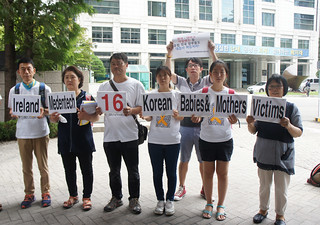
On 20-23 September, the Special Committee of State Administration Investigation for Oxy disaster and victims of humidifier disinfectant have carried out protests internationally. They visited the headquarter of Oxy Reckitt Benckiser in the UK to appeal and held a rally in front of the residence of British Prime Minister. They also went to the Serious Fraud Office to report Oxy for criminal charges and had a meeting with the Consumers International, an international consumer alliance in order to seek cooperation. Just then, Rakesh Kapoor CEO of Oxy Reckitt Benckiser officially apologized on 23 September. Therefore, the responsibility of the British headquarter is admitted and clear that Korean prosecutors should promptly summon, indict and bring them to justice. The National Assembly needs to extend the state administration investigation period because the Special Committee hasn’t even completed finding the truth phase. Including outcomes of activities in the UK, it has to complete its initial objectives; finding the truth, measures for compensation and specific measure to prevent reoccurrences. PSPD will closely work with the National Network for Humidifier Disinfectant Disaster in order for Punitive Damages Compensation, Collective Action Lawsuit, Punishing Corporation for serious disasters and revision of Chemical agents related legislations.


The baton passed from the movement for half tuition fee to abolishment of entrance fee 


참여사회 2016년 10월호 (통권 239호)


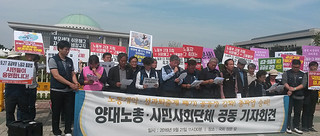
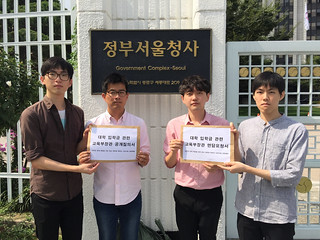
The movement has commenced to abolish entrance fee of approx. one million won which is levied to new university students without any ground. PSPD held a press conference on 12 September in front of Sejong government complex for requesting a meeting with an Education Minister with open inquiry in respect to entrance fee. On 22 September, another press conference was held at the National Assembly to inform that entrance fee issue was reported to the Fair Trade Commission and it urged to pass the revision of the Higher Education Act. Educational foundations including Korea, Dongkuk, Hongik, Hanyang and Kyunghee University were reported respectively for abusing market dominance and unfair conduct (forced provision of benefits) of levying university entrance fee. On the other hand, the Youth PSPD reported Choi Kyung-hwan, a former deputy prime minister (current lawmaker of Saenuri Party) eight months ago charging him for illegally and unfairly provided a job for his close aide at the Small and Medium Business Corporation. It was proved that the Youth PSPD was right. The president of the Small and Medium Business Corporation testified at a court that Choi directly pressurized and asked for the position. The prosecutors must investigate Choi right away and punish him with strict standard.


Prosecutors started to summon General Election Net


참여사회 2016년 10월호 (통권 239호)


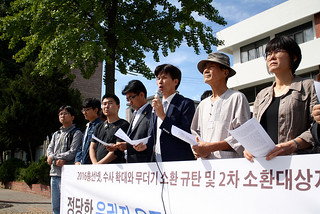
There are ceaseless oppressions against the 2016 General Election Network of citizens (General Election Net).The police briefed an investigation report on 13 September concerning 22 activists of the General Election Net and forwarded the case to the prosecutors with an opinion of indictment. With no delay, the prosecutors summoned four main activists. Ahn Jin-geol, co-secretary-general of PSPD (co-chairman of the General Election Net) and Lee Gwang-ho, a secretary-general of the Incheon Peace and Welfare Solidarity appeared at the prosecutor’s office on 22 September and held a press briefing insisting ‘Why the General Election Net is innocent’. They protested with silence during interrogation of the police and prosecutors. On 28 September, Lee Jae-geun, a head of Policy Committee of PSPD and Lee Seung-hoon, a secretary-general of the Civil Society Organizations Network in Korea also appeared at the prosecutors. The General Election Net and PSPD will get a decision of innocent so that oppression and harassments of the power against voters’ movements do not repeat. 
 
  
Sewol Ferry Special Act must be revised


참여사회 2016년 10월호 (통권 239호)


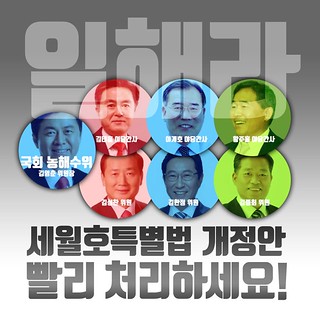
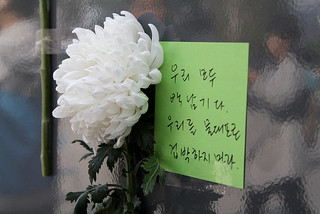
PSPD and civil organizations sincerely wish the victims of the Sewol Ferry disaster rest in peace and hope for those were on board but haven’t found yet to come back to their family; Danwon high school students (Jo Eun-hwa, Heo Da-yoon, Nam Hyun-cheol and Park Young-in), Danwon high school teachers (Yang Seung-jin and Ko Chang-seok) and other passengers (Kwon Jae-geun, Kwon Hyuck-soo and Lee Young-sook). 
PSPD is working hard with no pause for finding the truth of the Sewol Ferry disaster and preparing measures to prevent other disasters. On 21 September, it joined in a press conference announcing intensive activities for revision of the Sewol Ferry Special Act in front of the main gate of the National Assembly. It hasn’t stopped taking a part in the rally at Gwanghwamun Sewol Ferry Square. Now, the President Park Geun-hye and the Saenuri Party attempt to terminate the process of finding the truth and activities of the Sewol Ferry Special Committee as of the end of September. However, the National Assembly composed of bigger opposition parties does not seem to take any clear action to stop it. In order to secure enough time for the Special Investigation Committee to find the truth and appoint a special prosecutor for the disaster, the Sewol Ferry Special Act must be revised. 

토, 2016/10/22- 20:06
149
0

People Power 2017
This month of PSPD
 

PSPD’s 23rd Anniversary reception was held on 14 September and more than 400 members and citizens have come to celebrate. Once more, it was the time to bear in mind what PSPD as a civil organization exists for. ‘What citizen’s dream will come true’ as the motto of the anniversary reception says, PSPD will work hard to make members and citizens dream for the better society and the more peaceful world. The first anniversary of the candle revolution is around the corner. PSPD will do the best for the candle revolution started with the first action of the people on 29 October last year in Cheonggye square to advance democracy and improve real daily life of ordinary people. We hope you have fruitful and great Chuseok holiday and autumn.  


The facts of Beak Nam-ki, a deceased farmer case must be investigated this time

백남기

On behalf of the government, a Prime Minister Lee Nak-yeon made a formal apology on 19 September in respect to the case of Beak Nam-ki, a deceased farmer who was stroke and dead by water cannon shot by the police. Lee defined the case as abusing entrusted power given by the people and took a life and said to conduct complete investigation and ask legal responsibility. Furthermore, he promised to reform system and culture to prevent same kinds of unfortunate accidents. It seems late but what has to be done. PSPD released comments right after the apology and urged to find the truth, punish the responsible and improve the system to prevent further cases. No one should become a victim of government’s violence any more.  


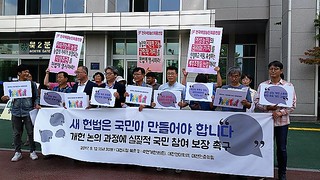
‘National Network for people to lead constitutional revision (provisional)’ established

개헌넷

While special committee for constitutional revision in the National Assembly is touring across the nation to hold discussions on revision of the constitution, civil societies have established preparation committee <National Network for people to lead constitutional revision> after having discussions for two months. What the network emphasizes is to secure actual participation of ordinary citizens in revision process and the contents should be oriented to increase not only basic rights but also social and economic rights. PSPD will try to respond well to constitutional revision issue which could seriously affect the future of Korea.


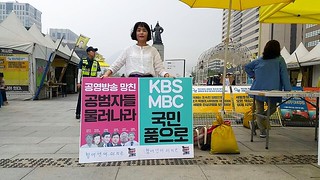
Allies with KBS and MBC union to straighten up public broadcasting

공영방송

From midnight 4 September onwards, KBS and MBC unions have gone on strike urging to straighten up public broadcasting and overnight rally is being held every Friday. From hundreds to thousands of people participate in rallies shouting ‘MBC, KBS! Please come back’. PSPD also released a statement supporting actions of unions and is joining in Friday rallies. The strikes of two major broadcasters sparked empathy of the people that various fields of our society said to support and fight together demanding to return public broadcasting service back to normal which have been destroyed by Lee Myung-bak and Park Geun-hye administration. Civil Candle Revolution can be completed by rooting out corruptions and malpractices. Most of all, the press which have deceived and disguised the eyes and ears of the people must be cleaned off. Wish for the victory of ‘MBC, KBS! Please come back’


Court rules to disclose special activity expenses of the National Assembly 

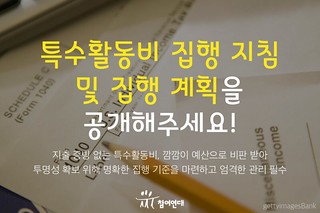
특수활동비

PSPD won another important lawsuit for public interest. Seoul Administrative Court ruled that “special activity expenses of the National Assembly needs to be disclosed in terms of satisfying people’s right to know and securing transparency and legitimacy of lawmakers’ activities. Rejecting an argument of secretariat office of the National Assembly that disclosing special activity expense account would harm important benefit of the state, the court pointed out there is no check and control over from budget allocation to execution that it needs to open the expenditure to the people in principle.


Hence, PSPD urges the secretariat office to accept the court’s decision and transparently disclose it. In relation to this, there is ‘Committee to promote giving up lawmakers’ privileges’ under speaker of National Assembly and PSPD also requested the speaker in October 2016 to prepare measures to decrease special activity costs and increase transparency of execution. The secretariat office should try to abolish special activity account or clearly open how it is spent if truly necessary to execute.


Condolence to Cho Young-sam, an advocate of peace who opposed THAAD and the war


Cho Young-sam set fire to himself and died on 20 September. He left a letter protesting against THAAD deployment for US Army in Korea and appealed to realize the peace in Korean peninsula and proper reform. Together with National Action to stop THAAD deployment in Korea, Seongju residents Committee for THAAD withdrawal from Sosung, Kimcheon citizens Committee for No THAAD deployment, Won Buddhism emergency Committee for protecting Seongju, Daeju and Gyeongbuk Committee for No THAAD deployment, Busan Ulsan and Kyungnam Committee, Seongju Struggle Committee for THAAD withdrawal, Won Buddhism Civil Society Network, PSPD presented a condolence statement on 20 September expressing deep sorrow for such a mournful incident. They also held a press conference and demanded to withdraw THAAD deployment to both Korea and US governments.


On the other hand, it was the 400th day on 24 September since Kimcheon residents started candle rally against THAAD. PSPD activists and members also held a candle rally in Seoul on the same day. THAAD threatens the peace in Korean Peninsula and Northeast Asia and there is no benefit but harm. Hence, PSPD will continue fighting to withdraw THAAD deployment. Once more, we would like to pay condolence to Cho Young-sam who tried to be priming water for THAAD withdrawal and the peace.


Request to investigate corrupted recruitment of public organizations and punish the responsible


A scandal frustrating the young Korean occurred again. The Board of Audit and Inspection announced the result of inspecting governance and human resource management of public organizations on 5 September and said more than 100 people have been unjustly hired to public organizations. Especially 493 out of 518 got a job at Gangwon Land by improper solicitation and the Hankyoreh Daily exposed it on 11 September. It has been found that secretaries of Kwon Seon-dong, a lawmaker of Liberty Korea Party have been recruited at Gangwon Land and Mine Reclamation Corporation and a suspicion rose for a niece of Lee Jeong-hyun, a former president of Saenuri Party for getting a job at Korea Aviation Industry by the backdoor.


While thousands of young people are having trouble in finding a job, young job seekers would deeply feel lost and deprived. Hence, Youth PSPD urged to investigate it strictly and punish people involved in requesting and accepting recruitment favor including Kwon Seon-dong and Lee Jeong-hyun, and reported them to the prosecutors jointly with Youth Union and other youth organizations on 25 September. The Youth PSPD has reported Choi Kyung-hwan, a lawmaker of Liberty Party Korea last year who illegally requested pubic corporation to hire his interns. Corrupted recruitment solicitation must be rooted out.


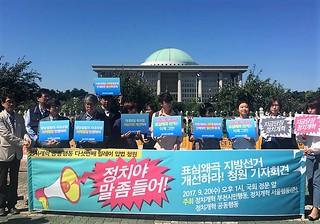
Joint Action for Political Reform submitted a petition to appeal three agenda and eleven tasks regarding to politic relation law

정치개혁

“Politic! Please listen to what people say!” <Joint Action for Political Reform> consisted of 422 labor, civil and social organizations nationwide presented three agenda and eleven tasks on 12 September and submitted a petition accordingly to the National Assembly Law. In the petition, the Joint Action argued that impeachment of a president proved that political system needs to improve fundamentally. Keys of representative democracy are election law and political party law associated with that election law that democracy cannot be realized without having the right system. In addition, it suggested three agenda including reforming the election law as people demand, diversity and increasing female participation and expanding the right to participate making everyone’s politic possible.

In terms of reforming the election law as people demand, it suggests followings △ Adopt mixed member proportional voting △ Increase number of seats of lawmakers without budget increase △Secure proportionality for local government council △ Adopt runoff for presidential and local governor elections. Regarding to diversity and expanding female participation, proposals are as below. △Mitigate political party establishment conditions and acknowledge local political party △strengthen female proportion system, △ Abolish numbering party, and lower down deposit of candidates and election costs conservation level. In respect to ‘Expand the right to vote to make everyone’s politic possible, followings are recommended △Secure the right to vote and eligibility for election to age 18 or older, and guarantee political activities of the youth, △Secure the right to expression of voters including abolition of Article 93 of the Election Law, △Guarantee basic political rights for teachers and public servants, △ Secure the right to vote including extending voting hours.
 

월, 2017/10/16- 11:20
145
0

스톡홀름평화연구소(SIPRI)에서 2015년 4월 13일 발표한 <2014년 세계 군사비 지출 경향> 보고서 한국어 번역본입니다.


화, 2016/04/05- 02:53
142
0

스톡홀름평화연구소(SIPRI)에서 2016년 4월 5일 발표한 <2015 세계 군사비 지출 경향> 보고서입니다. 첨부 파일을 확인해주세요.


☮ 보도자료(국문) : 클릭
☮ 원문 출처 : 클릭


SIPRI, 전세계 군비 지출 증가 추세 재개를 발표


(2016 년 4 월 5 일, 스톡홀름) 오늘 스톡홀름 국제 평화 연구소(Stockholm International Peace Research Institute, SIPRI)에서 발표된 데이터에 의하면 전세계 국가들의 2015 년 군비 지출 총액은 1 조 7 천억 달러에 달했으며, 이는 2014 년 대비 1%의 실질 증가율을 나타내는 수치이다. 이 데이터는 안보 및 개발에 대한 스톡홀름 포럼(Stockholm Forum on Security and Development) 개최에 맞추어 배포되었다. 매년 발표되는 전체 SIPRI 군비 데이터는 현시간 이후로 www.sipri.org 에서 확인 가능하다.


전세계 군비 지출액은 2015 년에 들어서 전년 대비 1% 증가하였으며, 이는 2011 년 이후 처음으로 나타난 군비 증가 현상이다.* 이러한 변화는 아시아 및 오세아니아, 동유럽, 그리고 일부 중동 국가들의 지속적인 군비 지출 증가를 반영하고 있다. 한편 서방 국가들의 군비 감소 추세는 예년에 비해 주춤하는 양상을 보였다. 아프리카와 라틴 아메리카 및 카리브해 연안 국가들의 군비 지출액은 전반적으로 감소하여, 전세계 국가들의 군비 지출 현황은 다소 혼합된 양상을 보이고 있다.


미국의 군비 지출액은 총 5,960 억 달러로, 전년도 대비 2.4% 감소한 수치에도 불구하고 최대 군비 지출국의 지위를 유지했다. 그 뒤를 이어 중국이 7.4% 증가한 2,150 억 달러, 사우디 아라비아가 5.7% 증가한 842 억 달러, 러시아가 7.5% 증가한 664 억 달러의 지출을 기록하였으며, 2015 년 기준 사우디 아라비아의 군비 지출 규모는 세계 3 위 수준으로 상승하였다.


유가 하락, 군비 절감의 신호


지난 수십년 간 높은 유가와 새로운 유전의 발견 및 시추는 전세계 많은 국가의 군비 지출을 큰 폭으로 확대시키는 데에 기여한 바 있다. 하지만 2014 년 말 시작된 유가 폭락으로 원유 수출국들의 군비 지출이 감소세로 돌아섰으며, 현재와 같은 상황은 2016 년에도 지속될 것으로 보인다.


2015 년에 원유 수입과 관련하여 가장 극적인 군비 지출 감소를 보인 국가는 베네수엘라(전년도 대비 총 64% 감소)와 앙골라(전년도 대비 총 42% 감소)였다. 마찬가지로 바레인, 브루나이, 차드, 에콰도르, 카자흐스탄, 오만, 남수단 등에서도 유사한 군비 절감 현상이 나타났다.


그러나 일부 다른 원유 수출국들은 원유 수출을 통한 수익 감소에도 불구하고 2015 년 군비 지출이 지속적으로 증가하였다. 이들은 대부분 분쟁이나 주요 지역적 갈등에 연루되어 있는 국가들로, 알제리, 아제르바이잔, 러시아, 사우디 아라비아, 베트남 등이 이에 해당된다. 한편 러시아는 기존에 편성했던 예산안보다 군비를 오히려 적게 지출한 것으로 나타났으며, 사우디 아라비아의 경우 예멘의 내전 개입 비용으로 53 억 달러의 추가 지출이 발생했음에도 불구하고 전반적인 군비 지출 규모는 감소하였다. 러시아와 사우디 아라비아는 모두 2016 년 군비 절감을 목표로 하고 있다.


서구의 군비 지출 축소 추세는 끝날 것인가


전세계적 경제 위기, 그리고 이라크와 아프가니스탄에서의 미군 및 연합군의 철수로 인해 북아메리카와 중서부 유럽 국가들의 군비 지출은 2009 년 이후 지속적으로 감소하는 추세가 나타났다. 하지만 2015 년에 들어서 이러한 추세가 종결될 것이라는 조짐이 보이고 있다.


미국의 군비 지출은 2015 년에 전년도 대비 2.4% 감소하였는데, 이는 최근 몇 년 간의 감소폭에 비하면 상당히 낮은 수치였다. 이는 미 국회가 기존에 합의된 정부지출 적자 감소 법안에서 군비 지출 사안을 일부 제외시키는 법안을 통과시킨 결과로 볼 수 있으며, 2016 년 미국의 군비 지출액은 실질 금액 기준으로 예년과 비슷한 수준을 유지할 것으로 예측된다.


전체적으로 2015 년 중서부 유럽 국가들의 군비 지출액은 전년 대비 겨우 0.2% 감소하였다. 그러나 중부 유럽 국가들의 경우만 보면 이들의 총 군비 지출은 오히려 13%가 상승한 것을 볼 수 있다. 특히 러시아 및 우크라이나와 국경을 맞대고 있는 에스토니아, 라트비아, 리투아니아, 폴란드, 루마니아, 슬로바키아의 군비 지출 상승폭이 높았으며, 이들 국가는 모두 우크라이나 사태 이후 러시아의 움직임을 크게 경계하고 있는 것으로 나타났다. 반대로 서부 유럽 국가들의 군비 지출은 전체적으로 1.5%가 감소하였으나, 이는 2010 년 군비 지출액이 감소하기 시작한 이래로 가장 낮은 감소폭이었다. 영국, 프랑스, 독일 등은 모두 러시아에 대한 우려 및 IS 에 의한 테러 위협의 대응을 이유로 향후 수 년 동안 군비 예산을 일부 확대 편성할 계획을 발표한 바 있다.


SIPRI 군비 지출 프로젝트 책임자 Sam Perlo-Freeman 박사는 ‘2015 년의 군비 지출 경향은 모순적인 양상을 보이고 있다. 한편으로는 군비 지출 추세가 전세계 각지에서 가속화되고 있는 갈등 및 긴장 상태를 반영하고 있으며, 다른 한편으로는 오일머니를 기반으로 한 지난 10 여 년 간의 군비 지출 확장 추세가 중단될 조짐을 보이고 있다. 이처럼 변동적인 정치, 경제 상황은 (관련 문제에 대한) 향후 전망을 불확실하게 만들고 있다.’ 고 밝혔다.


기타 괄목할 만한 변화


  • 아시아 및 오세아니아 지역의 군비 지출은 5.4% 증가하였고, 중국이 역내에서 이러한 현상을 주도하고 있는 것으로 나타났다. 중국과 여타 인접국들 사이에 긴장이 고조됨에 따라 인도네시아, 필리핀, 베트남 등이 상당 수준으로 군비 지출을 증강하였으며, 오랜 기간 동안 군비를 삭감해 온 일본 역시 동일한 이유로 군비를 확대하기 시작하였다.
  • SIPRI 는 일부 주요 국가들의 군비 관련 데이터 부재로 인해 2015 년 중동 국가들의 군비 추정치를 발표하지 않고 있다. 데이터가 존재하는 국가들의 경우 2015 년 군비 지출액은 전년 대비 4.1% 증가한 양상을 보였다. 이라크의 군비 지출액은 2006 년에서 2015 년 사이 536%가 증가하여, 동기간내 전세계 최대 증가폭을 나타냈다.
  • 라틴 아메리카 및 카리브해 연안 국가들의 군비 지출은 2.9% 감소하였으며, 베네수엘라의 대규모 군비 삭감이 이러한 현상의 가장 큰 요인으로 작용하였다. 브라질 역시 경제 위기를 맞으며 군비 지출 규모를 축소하였다. 중앙 아메리카 국가들은 마약과의 전쟁으로 인한 군사화를 지속적으로 추진하고 있어, 이들 국가의 군비 지출은 현재까지 증가하는 추세이다.
  • 아프리카의 군비 지출은 지난 11 년 간 지속적으로 증가하였으나, 2015 년에 들어서 전년 대비 5.3% 감소하였다. 이러한 현상은 사하라 이남 아프리카 지역에서 가장 군비 지출이 큰 국가인 앙골라가 유가 급락으로 인해 군비를 대폭 축소한 것에 기인하고 있다.


* 모든 수치 변화는 (2014 년 고정환율 기준) 실질 금액에 기반하여 표기하였다.


SIPRI 군비 지출 데이터


SIPRI 는 전세계의 군비 지출 현황을 감시하며, 이에 대해 가장 광범위하고 종합적이며, 지속적인 데이터를 확보하고 있다. 군비 지출은 현재 군사력 및 군사 활동에 쓰이는 모든 정부 지출을 의미하며, 여기에는 군인들의 급료와 보조금, 작전 수행 비용, 무기 및 관련 설비 구입 비용, 군사 시설 건축 비용, 연구 개발 비용, 중앙 관리, 지휘, 지원 부서에 투입되는 비용 등이 포함된다. 이처럼 전체 군비 지출에서 무기 구입에 사용되는 비용은 일부에 불과하므로, SIPRI 는 군비를 언급하는 경우에서의 ‘무기 지출’이라는 용어의 사용을 권장하지 않고 있다. 모든 변화 수치는 2014 년 고정환율 기준 실질 금액에 기반하여 표기되었다.


본 자료는 6 월 발행 예정인 SIPRI 세계 원자력 수치, 그리고 9 월 발행 예정인 SIPRI 연감 2016 이전에 공개되는 주요 데이터 보도자료 중 세 번째에 해당한다.


수, 2016/04/06- 16:35
131
0