How can we remove financial support from fossil fuel project?

This coming Saturday July 2nd (11:30 GMT+8, find your local time here), we are organizing a webinar to explore how our local communities and grassroots leaders investigate the fossil fuel industry and project story on Vietnam and South Korea in the region.
Join us on this webinar, so we can:
- Understand the initial regional divestment movement’s current status, including what is divestment, why divest and how to call for divestment via some examples and work led by local groups in the region.
- Understand how was the global break free from fossil fuel action in East Asia region in May, and any follow up plans for that;
- Learn more about how other countries team tackle climate crisit through fossil fuel project in 350.org East Asia network;
- Understand various political trends and possibilities of policy changes in different country context, while we are working on climate change campaigns.
- Explore potential possibilities, strategies, ideas on campaign work including how can we share learnings between different campaigns like, divestment, anti-coal, air-pollution...etc
- Examine opportunities and solutions work that we might can take on further for climate crisis.
The webinar will draw on recent plan from the East Asia Climate Leadership Program and align with East Asia Climate Leadership Camp in August.
To do that you can easily register and get further information or ask a question on Facebook Event page or 350 East Asia Twitter. The best way to interact with us is via Web workshop platform and for the 1st web Workshop we have invited 2 guest speakers:
Climate change Coordinator, 350.org Vietnam
Jieon Lee, Climate and Energy Campaigner, KFEM (FoE - South Korea)
Jieon Lee, Climate and Energy Campaigner, KFEM (FoE - South Korea)
Hello everyone. My name’s Jieon, and I work with Korea Federation for Environmental Movements (KFEM) as climate and energy coordinator. I’d like to thank you 350.org to invite me to this wonderful workshop and hope we can share our experience and better understand each other.
I was one of team who had a field trip to Vinh Tan, in Southern part of Vietnam two months ago. As other might explain already, Vinh Tan coal power plants has four projects and one is being constructed by Korean companies, [Doosan Heavy Industries & Construction] and financed by Korea Exim bank. There are many media stories in Korea about exporting coal power plants to other countries, mostly developing countries in Asia. But when we see the news, we can only hear all the good words, like how big scale the project has and expected to raise the market value of the company.
When we visited the community around Vinh Tan and met people there, I heard different stories which the Korean media never told. My first surprising impression was that the community is living so closely with and just next to the power plants. We saw people having a pleasant time there, making a conversation outside the house, people playing volleyball and swimming just near the power plants. I worried that people living near the power plants can be more exposed to the harmful effect and pollutants.
We met many people and could hear that they are so concerned about impacts on health and their living. People relying on fishery and salt farm are already impacted by pollutants from the coal-fired power plants and many others expressed big concerns and anxieties over any potential impacts from the operation of power plants.
Most worrying is that we can already see serious impacts on the health and environment with only 2 coal-fired power plant units operational in Vinh Tan and what if it expands to 10 units under the proposed plant and making it one of the world’s largest coal-fired power plant complex? I think this gives us a basis why we should resist the expansion plan of coal projects.
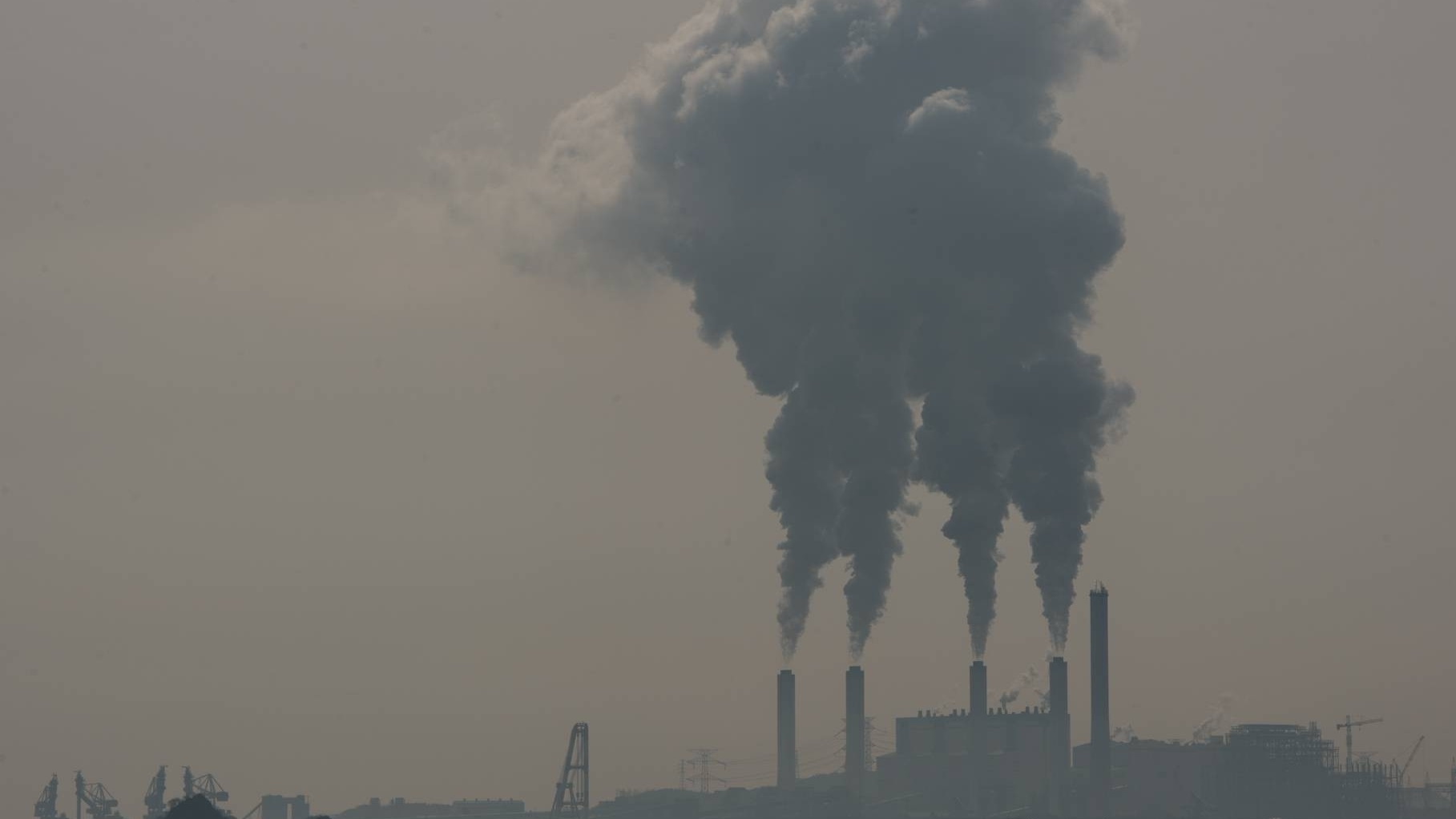
I’d like to give you our situation on coal in Korea. There are 53 units of coal-fired power plants and produce about 40 percent of electricity in Korea. They are operated by state-owned power companies, Korea Electric Power Corporation or KEPCO’s five subsidiaries. Under the government’s plant, additional 20 units would come into operation by 2022, 11 under construction and 9 in the planning stage which owned by big private companies like POSCO and SK.
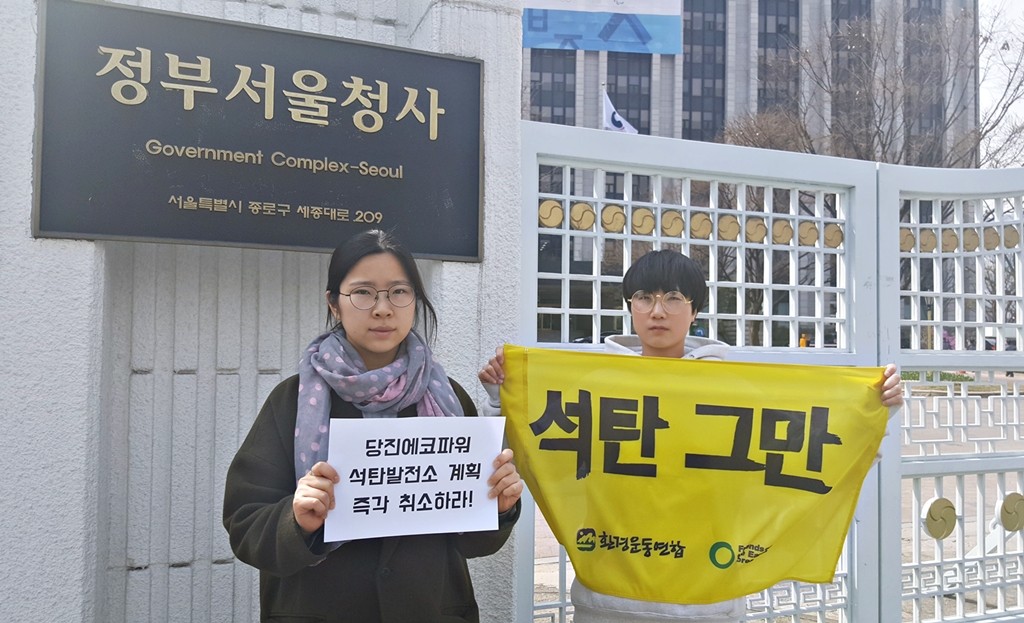
Recently public concerns over air pollution and local opposition against to new coal-fired power plants has increased and this has made big pressure on the government to draft a plan to stop or switch the fuel of the 10 old coal-fired power plant units just last month. But our top campaign priority is to stop the new power plant construction. We have many research that shows coal-fired power plants increase the premature death over some a thousand people a year, people living near the plants suffering from toxic heavy chemicals in their body and severe stress and anxiety and even death or illness by cancer. So there is big opposition to the new power plants, and we are going to have a rally with local people next week to resist it in front of the governmental building.
Anyway we might not accept any additional coal-fired power plants in Korea, that became a kind of a social agreement and government’s official policy. But the problem is that Korean companies now seek business opportunity in other countries to export coal-fired power plants. The Korean government support this through its export credit agency like Korea Export-Import bank (KEXIM).
So Korea Exim bank provided 3.8 billion USD for overseas coal-fired power plant projects from 2007 to 2014, which makes it is the world 5th largest financial institution in public finance for coal. The bank provide financial support for the coal-fired power plant projects including Naga, in Cebu, the Philippines, Cirebon, Indonesia, two Mong Doung, Thai Binh2, and Vinh Tan 4, Vietnam.
Korea has been praised internationally as a model on climate change and green growth as it announced the ‘low carbon and green growth’ as a national vision in 2008 and hosted Green Climate Fund headquarter in Songdo.
One of funny thing is that Korea Exim bank applied to be accredited as Implementing Entity of GCF last year. Implementing Entity are institutions allowed to access to GCF funds and disburse them.
There has been big concerns over Korea Exim bank’s involvement in GCF as the bank has the long record of providing financing support for coal projects. GCF was launched as the operating entity of the financial mechanism of the UNFCCC. The objective of GCF is “to promote the paradigm shift towards low emission and climate-resilient development pathways by providing support to developing countries.”
The thirteenth meeting of the Board of the Green Climate Fund (GCF) was held this week, from 28 June to 30 June 2016 in Songdo, Korea. KFEM organized an action in front GCF with foreign civil society groups to demand Korea Exim bank to end coal financing. In result, the board of GCF decided to delay decision on the accreditation of KEXIM until the next meeting in October. We had a success in raising awareness over KEXIM’s record and policy on coal financing when it wanted to look green.
Behind each and every new coal-fired power plant, there are investors. It’s shameful to use public money for helping this dirty industry like coal rather than transition to low carbon and renewable energy. As now we have climate fund operational and as we could learn there is big renewable potential in many countries like Vietnam, so public financing on coal cannot be justified at any reasons.
We will keep campaigning on KEXIM and case of Vihn Tan case would be a very powerful evidence for our work. So more works to be done and hope we can work together. Thank you.


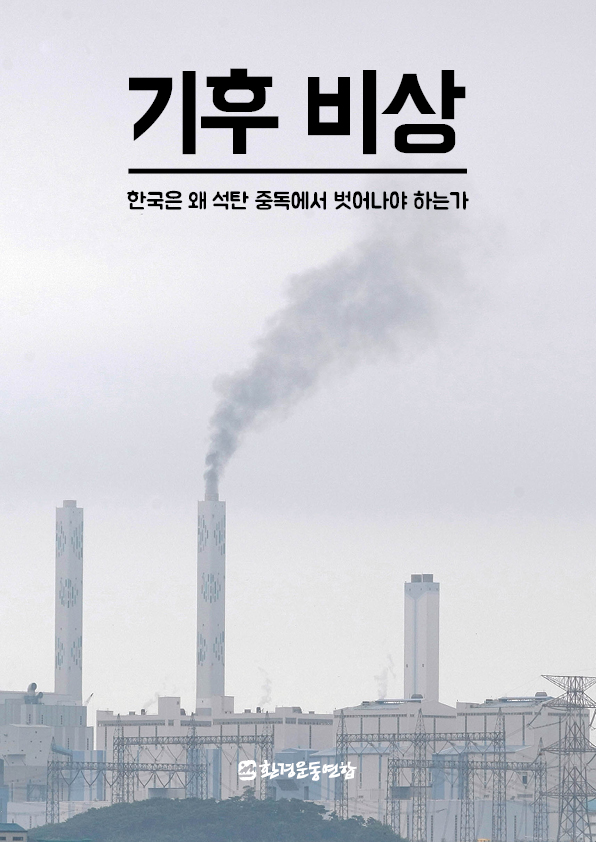
 Climate_Emergency_KFEM_2015.pdf
시민들의 의견
댓글 달기