주요 콘텐츠로 건너뛰기

[Statement] The decision to place THAAD in South Korea must be rescinded
지역

[Statement] The decision to place THAAD in South Korea must be rescinded

익명 (미확인) | 목, 2016/07/14- 23:23

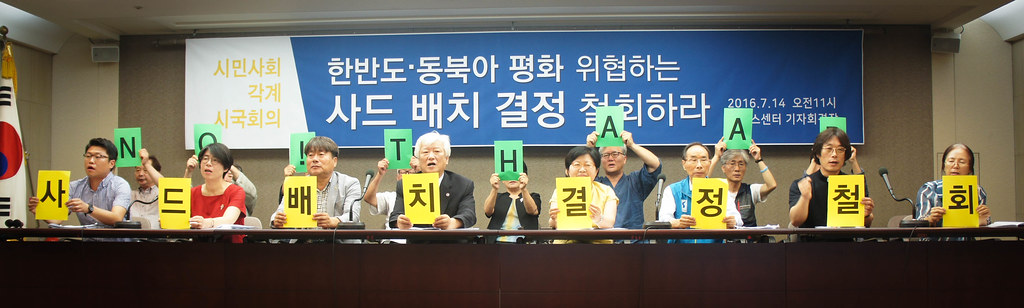
사드 배치 결정 철회 촉구 시국회의


The decision to place THAAD in South Korea, which threatens peace in the Korean Peninsula and Northeast Asia and violates the residents’ right to live peacefully, must be rescinded. 


The entire country is being shaken, and the already-dangerous political situation in the Korean Peninsula and Northeast Asia is becoming even more unpredictable because on July 8, 2016, South Korea and the U.S. announced that they are deploying THAAD to South Korea. Up until South Korea and the U.S. officials announced Seongju, North Gyeongsang Province as the location for THAAD deployment, this process had been entirely ambiguous and one-sided. Even though a plethora of concerns regarding the use, the efficiency, the military/diplomatic prices, and the side effects of THAAD were raised, the South Korean government, behind the curtains, decided to follow the request of the U.S. Now, in Seongju, the anger and the resistance of its residents, who have suddenly been notified of the deployment of THAAD, are growing rapidly. 
 
THAAD is not a weapons system for the residents of the Korean peninsula or for their defense. 

THAAD is essentially a part of the U.S. Missile Defense System (MD). It will be the U.S. military and government that will be running THAAD. MD is an aggressive weapons system, based on the “absolutely stubborn” idea, which aims to incapacitate the missile attacks of the countries against the U.S. and enable the U.S. to launch missiles whenever they want to. The South Korean government is insisting that the deployment of THAAD is to defend the Korean Peninsula from North Korean nuclear weapons and missiles. However, recently, the government has admitted that THAAD cannot defend Seoul and its metropolitan area. The South Korean government is still advertising as if THAAD can at least defend the area within its 200km radius, but this is not true. 200km is nothing but a number to describe the range of the intercept missile attached to THAAD. But, the detectable range of the radar on THAAD theoretically reaches at most a few thousand kilometers. This is why there has been criticism that the main purpose of the frontline deployment of THAAD is to detect medium- to long-range missiles flying over the Korean Peninsula and nearby skies according to the U.S. military strategy. Therefore, there is no such thing as an “adequate” location to place THAAD in this country. The decision of South Korea and the U.S. to place THAAD in Seongju must be rescinded. 


THAAD deployment is militarily and diplomatically self-destructive measure, which will threaten the safety of South Korean citizens and become a severe obstruction in peace and prosperity of the Korean Peninsula and Northeast Asia.

South Korean THAAD is closely related to the missile defense system that was introduced to Japan. Deployment of THAAD to South Korea signifies that South Korea will be sucked into the U.S.-Japan MD, which targets not only North Korea but also China, as a subsidiary partner, and that the Korea-U.S.-Japan military cooperation system will become official. No matter how much South Korean government claims that this is essential to the South Korean sovereignty, the international society and neighboring countries will not accept it. The “strategic companion” relationship with China has become a meaningless term, and the basis of economic cooperation and the friendly relationship between the citizens of both countries can be at risk. China and Russia have already announced that they will be “taking correspondent measures.” It is obvious that this will also negatively affect the international cooperation to solve the nuclear problem in the Korean Peninsula. This is why THAAD can never be a tool to protect the safety of South Korean citizens and peace in the Korean Peninsula. The decision to place THAAD, the “real danger,” which brings threats and conflicts instead of peace, in South Korea must be rescinded.   


We also protest against the undemocratic and non-transparent decision process. 

Before facilitating THAAD deployment, exhibitions, discussions, and evaluations of its use, effects, and military/diplomatic significance should have been carried out. The information about the negotiation process must have been transparently released. However, the South Korean government skipped all these procedures and simply controlled all information. There was not enough discussion even within the related organizations. They treated this important matter, which puts the future of peace in the Korean Peninsula at stake, as if they are carrying out a military strategy. The South Korean national assembly, which represents all of South Korean citizens, never received any substantial reports. The character, the content, and the discussion process of “South Korea-U.S. joint working group for the discussion of THAAD deployment” were not shared with the National Assembly. Even after the decision to deploy THAAD in South Korea, the South Korean government is insisting that this does not require the agreement of the National Assembly. In the case of Seongju, which was decided as the location for THAAD deployment, the residents and the military officials received the unexpected news without any explanation. They were not notified of the negative effects on the environment surrounding the THAAD base and health of the residents. The undemocratic and non-transparent decision of the South Korean government to place THAAD must be rescinded immediately.  


THAAD deployment must receive the consent of the representative body, which in this case, is the National Assembly.

THAAD deployment is directly related to the lives and the safety of South Korean citizens and is a critical matter, which will influence the friendly cooperative relationship with neighboring countries. It may also cost an astronomical amount of money. Therefore, this matter cannot be solely decided by the administrative body; it needs the agreement of the National Assembly. More than anything, the dangerous practice of the South Korean government, which ignores the discussion process and treats this issue like a secret military strategy to avoid the regulation of the National Assembly, cannot be left uncontrolled. If the National Assembly represents all of South Korean citizens, they must stop the one-sided push of THAAD deployment and exercise their right to consent. If the government never asks for the agreement of the National Assembly, the National Assembly must restrain the government’s abuse of its authorities through every measure, such as an investigation in relation to government, an adaptation of the resolution to oppose, and a demand for jurisdiction dispute.  


We are going to start a pan-national peace action to rescind the decision to place THAAD in South Korea. 

We are going to start a pan-national peace action that gathers people from various backgrounds and publicizes the problems of this decision to rescind the decision to place THAAD in South Korea and to stop South Korea from being sucked into the U.S.-Japan missile defense system. We are going to form solidarity to prevent Seongju, North Gyeongsang Province from becoming another victim of state violence, like Pyeongtaek Deachuri or Jeju Gangjeong village. In addition, we are going to fight with all of South Korean citizens, so that THAAD will not be placed in Seongju or any other parts of South Korea. To accomplish this, we are going to actively try to convince and pressure local governments, the National Assembly, and related government organizations and will convey our message to governments and civil societies of neighboring countries, including the U.S. and japan. We will surely punish any abuse of power that undemocratically pushes for the placement of THAAD. Moreover, we are going to form solidarity to facilitate the reconciliation and the cooperation of North and South Korea and to form a peaceful system. The Korean Peninsula should no longer become an explosive warehouse, which is swayed and used by the arms race of the neighboring powers, but should transform as the stepping stone of Northeast Asian peace and cooperation. We are going to actively spread civil resistance and actions for the withdrawal of the decision to place THAAD and for peace in the Korean Peninsula and Northeast Asia. 


July 14, 2016


번역 : 목지수 (참여연대 평화군축센터 자원활동가)

시민들의 의견

댓글 달기

Plain text

  • 웹 페이지 주소 및 이메일 주소는 자동으로 링크로 전환됩니다.
  • 줄과 단락은 자동으로 분리됩니다.
  • 사용할 수 있는 HTML 태그: <a href hreflang> <em> <strong> <cite> <blockquote cite> <code> <ul type> <ol start type> <li> <dl> <dt> <dd>
이미지
무제한 수의 파일을 이 필드에 업로드할 수 있습니다.
50 MB 한계입니다.
허용된 유형: png gif jpg jpeg.
Enter the YouTube URL. Valid URL formats include: http://www.youtube.com/watch?v=1SqBdS0XkV4 and http://youtu.be/1SqBdS0XkV4.
CAPTCHA
스펨 사용자 차단 질문

현실화된 사드 보복 논평 이미지


현실화된 사드 보복, 과연 잃을 것보다 얻을 것이 많은가?

사드 배치 절차 지금이라도 중단하라


“쉽게 경제 보복을 할 수 있는 구조가 아니다, 우려의 소지는 크지 않다(황교안 국무총리)”, “예단할 필요는 없다. 중국 언론의 보도나 발언에 일희일비할 필요는 없다(윤병세 외교부 장관)”, “경제는 경제고 정치는 정치다, 경제에는 큰 영향이 없을 것이다(유일호 경제부총리)”, “사드 배치는 한중 관계에 영향을 미칠 문제가 아니다(주형환 산업통상부 장관)”. 작년 사드 배치 결정 이후 제기된 중국의 보복 우려에 대해 각 부처 장관들은 이렇게 일축했다. 정부가 근거 없는 낙관을 할 때 그것은 때로 걷잡을 수 없는 결과를 불러온다. 


경제 보복이 현실로 나타나고 있다. 그동안 사드 배치에 대해 일종의 보복성으로 해석되는 조치들을 해왔던 중국 정부는 부지 교환 계약이 체결되자 자국 여행사들의 한국 여행상품 판매 중단을 지시한 것으로 알려졌다. 롯데는 사실상 타깃이 되어버렸다. 중국 현지 롯데 사업장에 대한 전방위 소방·위생 점검, 안전 점검, 세무조사 등을 실시한 것과 롯데월드 타운 공사 중단이 대표적 사례다. 앞으론 무엇이 더 있을지 모른다. 황교안 권한대행은 오늘 당정협의회에서 “중국의 반발이 거세질 것으로 예상되는 만큼 필요한 대책을 적시에 마련하겠다”고 발표했다. 고위급 면담 및 FTA 실무협의 채널 등을 통해 적극적으로 문제를 제기하겠다고 한다. 안일한 태도로 일관하다 적시는 이미 지났다. 실효적인 대책은 사드 배치 중단뿐이다. 


근본적인 문제는 한국이 아무리 아니라고 주장해도 미국, 일본, 중국, 러시아 주변국 모두가 이번 사드 배치는 한국의 미국 MD 참여를 공식화하는 것이라고 본다는 것이다. 가장 최근에는 트럼프 미국 대통령 역시 여러 가지 할 수 있는 일 중 하나로 “일본과 한국 MD 구축 가속화”를 언급했다. 중국이나 러시아의 괜한 오해가 아니라는 의미다. ‘전략적 우호 협력자’ 관계였던 한국과 중국 간의 핫라인과 군사적 교류는 사드 배치 결정 이후 모두 중단되었다. 중국은 사드에 대한 군사적 대응도 경고하고 있다. 한국과 중국은 그동안 한반도 핵 위기 해결을 위한 동반자였다. 앞으로는 적대적 관계가 심화될 것이다. 


진정 사드 배치로 잃을 것보다 얻을 것이 더 많은가? 중국의 경제 보복을 피해 갈 실효적인 대책을 내놓을 수 있는가? 한미 동맹을 맹신하고 군사력을 강화하는 것만으로 한반도 핵 문제를 해결할 수 있다고 믿는가? 지금 모든 상황이 그것은 아니라고 말하고 있다. 이에 대해 책임 있는 답변을 내놓을 수 있는 사람이 이 정부에 없다면, 지금 강행하는 사드 배치 절차는 중단되어야 한다. 


금, 2017/03/03- 17:34
99
0

사드 관련 한·중 협의 결과에 대한 논평


10월 31일 한중 당국은 ‘한중 관계 개선 관련 양국 간 협의 결과’를 발표했다. 사드 문제에 관한 협의 결과의 요지는 ▷양국의 기본 입장(한국 : 북핵 미사일 방어 및 제3국 겨냥 부인, 중국 : 사드 한국 배치 반대)을 확인하고 ▷중국 측은 한국 입장 표명 유의 및 적절한 처리를 희망하며 양국 군사 당국 간 채널을 통해 사드 문제를 소통할 것과 ▷중국의 (미국) MD 구축, 사드 추가 배치, 한미일 군사협력 등에 대한 우려를 천명하고 한국 측의 입장을 설명한 것이다. 이와 관련하여 강경화 외교부 장관은 10월 30일, 한미일 안보협력이 군사동맹으로 발전하지 않고, 현재 사드 추가 배치를 검토하고 있지 않으며, 미국의 미사일 방어체제에 참여하지 않을 것이라고 밝혔다.


우리는 이 같은 협의 결과가, 사드 배치를 굳히려는 미국의 요구와 사드 한국 배치로 미국이 MD에 참여하여 한미일 동맹으로 나아가는 것을 반대하는 중국의 요구를 봉합한 것이라고 본다. 이 같은 결과는 당장 사드 배치로 인한 한중 간의 갈등을 덮을 수는 있어도, 사드 배치를 통해 한미일 MD 및 동맹 구축으로 나아가려는 미국의 입장과 이를 자국의 안보에 대한 중대한 위협으로 받아들이는 중국의 입장 변화를 의미하지 않기 때문이다. 이번 한미연례안보협의회의(SCM) 공동성명에서 확인되었듯이 한미일은 미사일 방어 훈련을 정례화하기로 했고, 작전, 정보, 군수 등 분야에서의 군사협력도 보다 강화되고 있다. 미국 MD 참여의 결정판이라 할 SM-3 도입도 한미 양국 사이에서 논의되고 있다. 이처럼 한미일 군사협력과 MD 참여 등으로 인한 갈등은 언제든지 수면 위로 올라올 수 있고, 그 경우 한국에 더 큰 부담이 되어 돌아올 것이 분명하다.


사드 배치 문제는 일시적인 봉합으로 해결될 사안이 아니다. 무엇보다 사드는 군사적 효용성이 없는 반면 한반도와 동북아의 핵 군비 대결을 격화시키고, 우리의 평화·안보·주권을 위협한다. 배치 결정과 이후 추진 과정의 절차적 정당성 결여는 두말할 나위도 없다. 박근혜 정권의 최악의 적폐인 사드 철회에 대한 주민과 국민의 요구는 한결같다. 한미 당국이 SCM을 통해 사드가 ‘임시 배치’된 것임을 확인한 만큼, 사드 가동과 공사부터 중단하는 것이 마땅하다. 그런 다음 전략 환경영향평가 등을 통해 사드의 군사적 효용성과 평화와 안보에 대한 영향, 절차적 정당성, 주민 및 환경 피해 등에 대해 원천 재검토해야만 한다.


따라서 우리는 한중 간의 협의 결과와 상관없이, 임시 배치된 사드의 가동 중단과 철거를 위해 투쟁해 나갈 것이다. 아울러 우리는 사드 철거 평화 정세의 조성을 위해서도 적극 노력할 것이다. 그것이 한반도의 평화와 주민의 평화적 생존을 위한 길이며, 동북아의 대립 구도를 막아내는 데 기여할 것이라고 믿기 때문이다.


2017년 11월 2일


소성리사드철회 성주주민대책위원회, 사드배치반대 김천시민대책위원회, 원불교 성주성지수호비상대책위원회, 사드배치반대 대구경북대책위원회,사드배치저지 부울경대책위원회(가), 사드한국배치저지전국행동


논평 [원문보기 / 다운로드] 


목, 2017/11/02- 22:02
96
0

11/12 사드 집회


국정농단 사드농단 사드 배치 무효

평화행동


11월 12일(토) 오후 1시 ~ 4시


13:00 평화기도(원불교) / 국방부 앞

13:20 평화행진 / 국방부 앞 ~ 서울역 광장

14:00 평화행동 / 서울역 광장

15:20 평화거리행진 / 서울역 광장 ~ 시청 광장

16:00 서울시청광장


공동주최

원불교 성주성지수호비상대책위원회

사드배치반대 성주군민투쟁위원회

사드배치반대 김천시민대책위원회


금, 2016/11/11- 13:43
96
0


[전문가 라운드테이블] 한미 사드 배치 결정과 한반도 평화

사드 배치 결정의 배경과 문제점, 대외관계와 한반도 정세 전망 토론


일시 및 장소 : 7월 13일(수) 오전 10시, 참여연대 아름드리홀(2층)
공동주최 : 참여사회연구소, 코리아연구원, 한국정치연구회


취지와 목적

지난 7월 8일 한-미 양국 정부가 사드를 배치하기로 결정했다고 전격 발표했습니다. 배치 예정지에 대한 논란이 계속되는 가운데, 이번 결정의 배경과 절차, 그 영향력에 대한 문제점이 연일 지적되고 있습니다. 특히 사드 배치에 따른 중국, 러시아 등 주변국과의 대외관계 그리고 남북관계에 미칠 악영향에 대한 우려의 목소리가 높습니다.
이번 [전문가 라운드테이블]을 통해 한미 사드 배치 결정의 배경과 문제점을 짚어보고, 대외관계와 한반도 정세에 대해 전망해보고자 합니다. 


개요

○ 제목 : [전문가 라운드테이블] 한미 사드 배치 결정과 한반도 평화
○ 일시와 장소 : 2016년 7월 13일(수) 오전 10시, 참여연대 아름드리홀(2층)
○ 주최 : 참여사회연구소, 코리아연구원, 한국정치연구회
○ 참가자
  - 사회 : 서보혁 (코리아연구원)
  - 발표
  • 한미 사드 배치 결정의 배경과 그 의미 – 김준형(한동대)
  • 정부 사드배치 근거와 주장에 대한 반박 – 정욱식(평화네트워크)
  • 중국과 일본 등 동북아 정세 전망 – 이남주(성공회대), 이경주(인하대)
  • 남북관계 등 한반도 정세 전망 – 김창수(코리아연구원), 김용현(동국대)

  - 발표 후 종합 토론

○ 문의 : 참여사회연구소/참여연대평화군축센터 (02-723-4250, [email protected])


FACT TV 생중계 영상 보기 >>

프레시안 기사 보기 >>


* 오디오로 듣기

<object data="http://www.podbbang.com/player/aHR0cDovL2NoLnBvZGJiYW5nLmNvbS94bWwvY2gv…" height="147" id="oplayer22017094" name="playerMain22017094" type="application/x-shockwave-flash" width="600"><param name="Movie" value="http://www.podbbang.com/player/aHR0cDovL2NoLnBvZGJiYW5nLmNvbS94bWwvY2gv…" />

플레이어가 보이지 않는 경우 : http://www.podbbang.com/ch/8005?e=22017094 


수, 2016/07/13- 18:50
95
0

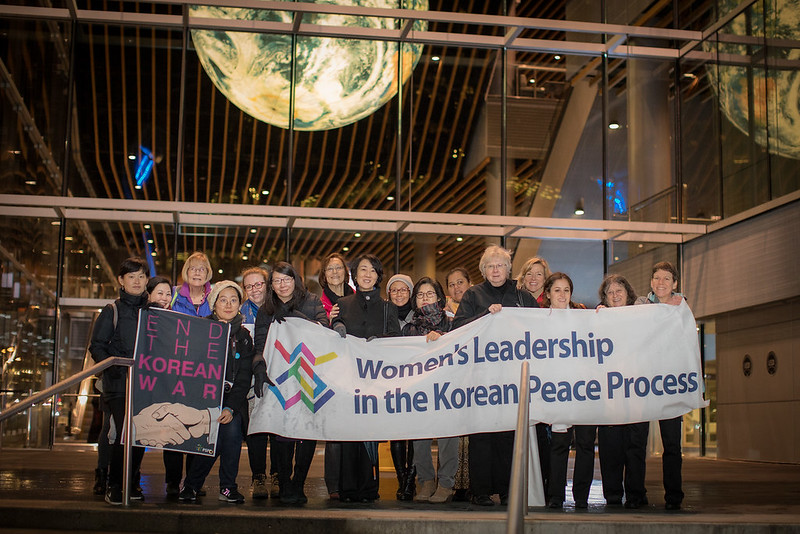
STATEMENT OF THE VANCOUVER WOMEN’S FORUM

ON PEACE AND SECURITY ON THE KOREAN PENINSULA

>>> Statement [Download]


As sixteen delegates representing peace movements from all over the world, we have traveled from Asia, Pacific, Europe, and North America to convene the Vancouver Women’s Forum on Peace and Security on the Korean Peninsula, an event held in solidarity with Canada’s Feminist Foreign Policy to promote a peaceful resolution to the crisis on the Korean Peninsula. Sanctions and isolation have failed to curb North Korea’s nuclear weapons program and instead severely harm the North Korean civilian population. A Korean Peninsula free of nuclear weapons will only be achieved through genuine engagement, constructive dialogue, and mutual cooperation. We issue the following recommendations to the Foreign Ministers participating in the January 16 Summit on Security and Stability in the Korean Peninsula: 


Immediately engage all relevant parties in dialogue, without preconditions, to work toward achieving a nuclear-free Korean peninsula;


Abandon support for the strategy of maximum pressure, lift sanctions which have deleterious effects on the North Korean people, work toward the normalization of diplomatic relations, remove barriers to citizen-to-citizen engagement, and strengthen humanitarian cooperation;


Extend the spirit of the Olympic truce and affirm the resumption for inter-Korean dialogue by supporting:

i) negotiations for the continued suspension of joint US-ROK military exercises in the south, and the continued suspension of nuclear and missiles tests in the north,

ii) a pledge not to conduct a first strike, nuclear or conventional, and 

iii) a process to replace the Armistice Agreement with a Korea Peace Agreement;


Adhere to all the Security Council recommendations on Women, Peace, and Security. In particular, we urge you to implement United Nations Security Council Resolution 1325, which acknowledges that the meaningful participation of women in all stages of conflict resolution and peacebuilding strengthens peace and security for all. 


These recommendations are based on our long experience engaging with North Koreans through citizen diplomacy and humanitarian initiatives, and from our collective expertise on militarism, nuclear disarmament, economic sanctions, and the human cost of the unresolved Korean War. The Summit is a sobering reminder that the gathered nations have a historic and moral responsibility to formally end the Korean War. A pledge not to conduct a first strike can de-escalate tensions by significantly reducing the apprehension of an attack and the risk of miscalculation that could result in an intentional or an inadvertent nuclear launch. Resolving the Korean War can be the single most effective action to halt the intense militarization of Northeast Asia, which gravely threatens the peace and security of 1.5 billion people in the region. The peaceful resolution of the Korean nuclear crisis is the key step toward the total global elimination of nuclear weapons.


January 15, 2018

Vancouver Women's Forum on Peace and Security on the Korean Peninsula

Christine Ahn, Women Cross DMZ

Kozue Akibayashi, WILPF

Lisa Natividad Guahan. Coalition for Peace and Justice

Ewa Eriksson, Fortier Women Cross DMZ

Yehjung Yi, Korean Sharing Movement

Mihyeon Lee, People’s Solidarity for Participatory Democracy

Liz Bernstein, Nobel Women’s Initiative

Moon-sook Lee, National Council of Churches in Korea

Susan Bazilli, Women Peace Security Network

Nan Kim, Alliance of Scholars Concerned about Korea

Ellen Judd, Canadian Voice of Women for Peace

Ann Wright, Women Cross the DMZ & Veterans for Peace

Patti Talbot, United Church of Canada

Mary-Wynne Ashford, International Physicians for the Prevention of Nuclear War

Erica Fein, Win Without War

Lyn Adamson, Canadian Voice of Women for Peace 


Jan 16th CC (644 of 654)-X2

<사진 = 밴쿠버여성포럼>

월, 2018/01/15- 13:52
93
0