주요 콘텐츠로 건너뛰기

미얀마 군부 쿠데타 2년, 저항과 혁명의 행진

지역

미얀마 군부 쿠데타 2년, 저항과 혁명의 행진

admin | 일, 2023/01/29- 20:43

일시⋅ 장소: 1.29(일) 12:00~16:00, 미얀마대사관 무관부(옥수동) ⇒ 대사관(한남동)

20230129_미얀마쿠데타2년행진5
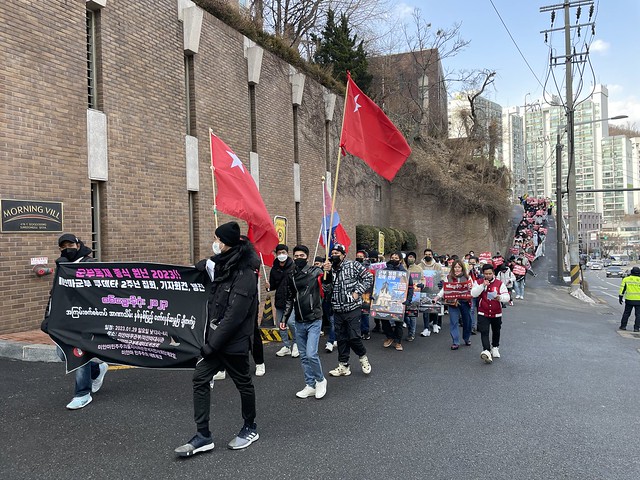
2023.1.29. 미얀마 대사관 무관부 인근, 재한 미얀마인들과 한국시민사회가 쿠데타 2년을 맞아 군부를 규탄하는 집회를 개최했다(사진=미얀마지지시민모임)

2월 1일이면 미얀마 군부 쿠데타가 일어난지 2년입니다. 미얀마인권단체인 정치범지원협회(AAPP)에 따르면 군·경의 폭력으로 인한 사망자만 최소 2,894명에 달합니다. 이 같은 쿠데타 세력의 무차별적인 폭격과 방화, 체포에도 미얀마 시민들은 민주주의를 외치며 저항을 이어가고 있습니다.

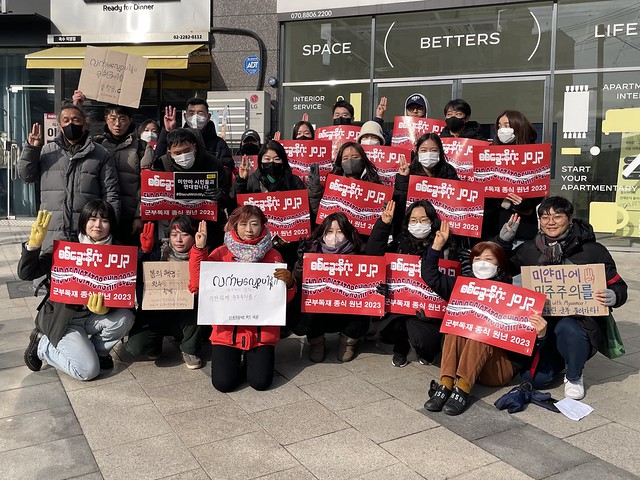
미얀마의 평화와 민주주의를 염원하며 미얀마 민주주의를 지지하는 한국시민사회단체모임(106개 단체)은 오늘(1/29) 낮 12시부터 재한 미얀마 공동체와 함께 기자회견과 집회, ‘미얀마 군부 쿠데타 2년 : 저항과 혁명의 행진’을 진행했습니다. 쿠데타가 일어난 2월 1일에도 미얀마 대사관 무관부 앞에서 기자회견을 개최할 예정입니다. 군부독재가 종식되고, 미얀마에 봄이 올 때까지 한국시민사회는 미얀마 시민들과 함께하겠습니다.

20230129_미얀마쿠데타2년행진1
20230129_미얀마쿠데타2년행진2
20230129_미얀마쿠데타2년행진3
20230129_미얀마쿠데타2년행진4
2023.1.29. ‘미얀마 쿠데타 2년, 저항과 혁명의 행진’에 참가한 참가자들 (사진=미얀마지지시민모임)

보도협조[원문보기/다운로드]

The post 미얀마 군부 쿠데타 2년, 저항과 혁명의 행진 appeared first on 참여연대.

시민들의 의견

댓글 달기

Plain text

  • 웹 페이지 주소 및 이메일 주소는 자동으로 링크로 전환됩니다.
  • 줄과 단락은 자동으로 분리됩니다.
  • 사용할 수 있는 HTML 태그: <a href hreflang> <em> <strong> <cite> <blockquote cite> <code> <ul type> <ol start type> <li> <dl> <dt> <dd>
이미지
무제한 수의 파일을 이 필드에 업로드할 수 있습니다.
50 MB 한계입니다.
허용된 유형: png gif jpg jpeg.
Enter the YouTube URL. Valid URL formats include: http://www.youtube.com/watch?v=1SqBdS0XkV4 and http://youtu.be/1SqBdS0XkV4.
CAPTCHA
스펨 사용자 차단 질문

테러의 어두운 그림자를 뒤로 하고 11월 30일 프랑스 파리에 실사판 어벤져스가 창립했다는 소식이 들려왔다. 테러국의 소탕을 위한 초국적 연합을 말하는 것일까. 다행(?)스럽게도 아니다…

미국, 영국, 프랑스, 중국, 인도, 사우디아라비아, UAE등을 비롯한 전 세계 주요 19개국과 마크 주커버그 페이스북 CEO, 맥 휘트먼 HP CEO, 라탄 타타 인도 타타그룹 명예회장, 마윈 중국 알리바바 회장, 억만장자 투자자 조지 소로스, 레이 달리오 브리지워터 헤지펀드 설립자 등 내노라 하는 세계인들이 ‘손에 손잡고’ 모였다. 온실가스 배출량을 줄이고 대체 에너지를 개발하는 ‘전환에너지연합(BEC: Breakthrough Energy Coalition)’ 이라는 혁신적인 연대의 이름아래.


빌 게이츠가 소개하는 Breakthrough Energy Coalition

다양한 목적으로 모인 이 ‘대단한’ 기금은 수력, 풍력 에너지, 친환경 자동차 개발 등 관련 분야에 골고루 투자된다. 그런데 투자 위험이 크고 자본 분배에도 어려운 ‘환경’이라는 주제에 왜 전세계가 앞다투어 동참했을까? 답은 간단하다. 연대 없이는 해결할 수 없는 문제이기 때문이다. 연대는 ‘사회혁신’의 핵심이다. 정부, 민간, 시민사회 모두가 힘을 합쳐 해결하지 않으면 안 되는 문제, 기존의 패러다임으로 해결할 수 없는 문제, 문제들이 악화되어 시스템이 작동하지 않는 문제, 사회의 시각이 현재의 문제보다는 과거에 맞춰져 있는 문제, 바로 이런 문제에서 ‘사회혁신’은 태동한다.

‘사회혁신’이란 무엇인가. 기존의 시스템으로 해결하기 힘들지만 분명히 풀어 내야 하며 그 목표가 ‘사회적 성격’을 띠고 있으면서 그런 조직들이 주도적으로 개발하고 확산시키는 혁신적인 행동과 서비스를 말한다. 사회혁신의 분야로는 앞서 언급한 환경 이외에도 고령화, 불평등, 건강 등 현재의 제도나 시스템으로 풀기 어렵고 그만큼 창조적 해결책이 나타날 가능성이 많은 이슈들이다.

사회혁신은 20세기 말 유럽과 북미의 여러 국가 정부가 복잡하고 풀기 어려운 사회문제를 해결하려는 시도에서 발전되었다. 이러한 시도들은 시간이 지나면서 사회적 기업(마이크로금융과 노숙인을 위한 잡지), 정부(국민건강의 새로운 모델), 시장(오픈 소스 소프트웨어나 유기농 식품), 사회운동(공정무역), 교육계(아동 교육을 위한 교육학적 모델)분야로 발전되었고 여러 가지 모델이 확산되면서 자연스럽게 정부 정책의 중요한 이슈로 자리잡았다. 이를 계기로 EU와 UN과 같은 정부 연합 기관 이외에도 유수의 대학, 연구기관들을 중심으로 사회혁신에 대한 폭넓은 연구와 실행, 교육이 이뤄지고 있다. 이처럼 유럽과 북미에서 사회혁신은 ‘인터넷/전화 건강 진단’ 같은 대안적 서비스나 ‘학교 밖 배움터’ 같은 공공정책에 이르기까지 사회를 아우르는 하나의 큰 흐름으로 매우 중요한 역할을 하고 있다.

이에 비해 아시아의 경우 ‘사회혁신’은 실생활이나 정책, 연구 등에서 아직 시작하는 걸음마 단계라고 볼 수 있다. 아시아 지역의 사회혁신은 유럽과 북미와는 다른 환경과 배경 속에서 서서히 발전하고 있으며 그 방식 역시 조금씩 다르다. 또한 아시아의 경우 2000년대 이르러 고령화, 도농 갈등, 불평등이 급속도로 진행되고 있어 사회혁신과 변화에 대한 욕구와 필요가 그 어느 때보다 절실하다. 특히 한국, 중국, 일본의 경우 환경적, 지리적으로 유사한 시스템을 가지고 있어 다양한 사회혁신 모델을 만들어 적용하고 비교 분석을 통해 확산시키기 좋은 조건을 가지고 있다. 유럽과 북미에서도 사회혁신 연구와 정책 등 다양한 시도와 경험을 통해 국가 간 혹은 대륙 간 사회혁신이 넓게 확산될 수 있었다. 그렇기 때문에 바로 지금이 한중일 삼국의 사회혁신 모델에 대한 분석과 연구가 시작되어야 하는 시점이다. 이런 연대를 통해 ‘아시아 사회혁신’을 확장시킬 발판과 방법을 마련하는 것이 매우 중요하다.

easii_1-400-274 easii_2-400-274 easii_3-400-274

사진출처: Nippon Foundation, Leping Social Entrepreneur Foundation

이러한 배경으로 희망제작소는 아시아 사회혁신 확장을 위해 2010년부터 2014년까지 5년간 Asia NGO Innovation Summit(이하 ANIS)을 개최했다. ANIS를 통해 아시아 시민사회의 사회혁신 저변을 넓히고 혁신적 NGO와 시민사회의 역량 강화를 위한 컨퍼런스를 매년 개최하였다. ‘정부나 기업이 주도하는 혁신에는 한계가 있으며 사회혁신의 뿌리는 시민사회에 있다’는 전제 아래 진행된 ANIS는 2015년 3월 다시 한 번 진화를 시도했다. 사회혁신 네트워크 구축을 넘어 민간차원의 동아시아 사회혁신 연구협의체(East Asia Social Innovation Initiative, 이하 EASII)를 구성해 아시아 사회혁신 연구의 발판을 마련하고자 한 것이다. EASII는 한국, 중국, 일본 삼국의 연대를 통해 효과적이고 영향력 있는 사례를 공유하고 공통적으로 적용 가능한 모델을 찾고 연구 결과에 기초해 각국 정서에 맞는 사회혁신 정책을 제안하고자 한다.

연대를 통한 가능성을 확인하고자 도쿄에서 개최된 1차 워크숍에서는 삼국의 역할을 정하고 합의 사항을 선포하였다. 1차 워크숍의 내용을 토대로 지난 11월 4일 서울에서 2차 워크숍을 개최하게 되었다. 특히 이번 워크숍은 서울시가 개최하는 국제 사회적경제 협의체(GSEF: Global Social Economy Forum) 포럼의 정식 세션으로 진행되어 북미, 유럽 지역의 사회혁신가들과 동아시아의 사례를 공유할 수 있는 의미 있는 자리가 마련되었다. 특히 서울시는 박원순 시장의 취임을 계기로, 시정 기조를 사회혁신으로 삼고 서울을 아시아뿐 아니라 세계적인 사회혁신도시로서 성장시키고 있다. 서울시의 이러한 특징을 워크숍에 참석한 중국, 일본 참가자가 사회혁신 관점에서 풀어낼 수 있도록 현장탐방을 진행했다. 현장탐방 프로그램은 참가자들이 ‘서울’이라는 도시가 가진 환경을 이해하고 다른 도시와의 공통점과 차이점을 논의할 수 있는 기회를 마련했다. 이를 통해 서울의 사회혁신을 어떤 방식으로 자국의 도시에 적용가능한지에 대한 질문과 토론이 내내 끊이지 않았다. 사회혁신을 바라는 동아시아 연대는 은평구의 오래된 질병관리본부 건물에서, 성수동의 작은 골목에서 그렇게 한 걸음을 내딛기 시작했다.

easii_9-400-274 easii_8-400-274 easii_7-400-274 easii_6-400-274 easii_5-400-274 easii_4-400-274

사회혁신 도시 투어: 은평 사회혁신파크, 성수 사회혁신 밸리 (루트 임팩트, 아시아 공정무역 연합, 성수IT지원센터)

<아시아, 연대로 혁신하라> 2편으로 이어집니다.

글_ 최호진(연구조정실 선임연구원 / [email protected])

화, 2015/12/08- 18:43
598
0

11304207_10206724849103664_1284100308_n

동남아시아 지역에서 수개월에 걸쳐 난민 수천여 명이 탄 배가 좌초되는 참사가 벌어지며 이러한 난민 위기를 해결하고자 정상회담을 개최한 지 한 달이 지났으나, 이 지역 국가들은 지금까지 난민과 이주민을 보호하기 위해 충분한 조치를 취하지 않고 있다고 국제앰네스티가 1일 공개서한을 통해 밝혔다.

지난 5월 29일 방콕에서 열린 ‘인도양 지역의 미등록 이민에 관한 특별회의’에서는 17개국이 참석해 안다만 해와 벵골 만 지역에서 벌어지고 있는 인도적 위기에 관해 논의하는 시간을 가졌다.

리처드 베넷(Richard Bennett) 국제앰네스티 아시아태평양 국장은 “방콕 회담이 열린 지 한 달이 지났지만, 각국 정부가 난민과 이주민의 절박한 상황을 타개하는 데 필요한 조치를 취할 기미는 거의 보이지 않는다. 수색구조 작전에 대한 협력도 여전히 충분히 이루어지지 않고 있고, 연안에 상륙한 사람들에 대한 보호조치도 분명하게 마련되지 않았다”고 말했다.

지난 5월 국제이주기구(IOM)는 주로 미얀마와 방글라데시에서 온 난민과 이주민 약 8,000명이 태국 연안에서 표류하고 있을 것으로 추정했다.

인도네시아와 말레이시아는 그 후로 제3국에 재정착하거나 본국에 송환하는 조건으로 난민 7,000명에 대해 최대 1년까지 임시 보호를 제공하겠다고 약속했다.

해상의 기후가 안정적인 다음 ‘항해 시즌’은 10월에 시작될 것으로 보이며, 이 시기에 난민과 이주민들은 자국을 떠나기 위해 다시 배에 오를 것이다.

리처드 베넷 국장은 “현재의 무대응은 향후 재난을 부르는 지름길이 될 수 있다. 당장 직면한 최악의 해상 위기는 모면한 것처럼 보일지 모르나, ‘항해 시즌’이 시작되면 상황은 다시 악화될 가능성이 높다. 본국에서 기소될 위험에 처한 사람들은 망명을 신청하기 위해 계속해서 해외로 빠져나올 것이다. 동남아 지역의 각국 정부가 더 많은 생명이 희생되지 않도록 적절한 조치를 취하고, 망명 신청자 또는 이주민들이 안전하고 합법적인 수단을 취할 수 있도록 보장하는 것이 무엇보다 중요하다”고 말했다.

국제앰네스티는 공개서한을 통해, 동남아시아 국가연합(ASEAN)과 호주, 방글라데시 정부에 난민 위기를 해결하기 위해 긴급 조치에 나설 것을 촉구한다. ASEAN 외무장관 회담이 2015년 8월 1일부터 6일까지 말레이시아 콸라룸푸르에서 개최될 예정이다.

이러한 조치에는 수색구조 작전의 공조협력 강화, 난민과 이주민 인권의 보호와 존중, 특히 미얀마 정부에 소수민족 로힝야족에 대한 제도적 차별 중단을 촉구하는 등의 현 난민위기의 근본적인 원인 해결이 반드시 포함되어야 한다.

리처드 베넷 국장은 “지금은 한숨을 돌릴 것이 아니라, 바다에서 위험천만한 항해를 경험했거나 곧 경험하게 될 난민과 이주민들의 상황을 타개하기 위해 더욱 노력해야 할 때다. 오랫동안 계속되고 있는 작금의 난민 위기는 무슨 일이 있어도 종식되어야 하며, 이 지역 국가들의 최우선 과제가 되어야 한다. 다가오는 ASEAN 외무장관 회담은 지역수준의 행동을 위한 포괄적 조치를 시행할 또 한 번의 기회”라고 말했다.

공개서한서 원문(국제앰네스티 16개지부 사무국장 서명 포함)

영어전문 보기

South East Asia: Inaction paves theway for future refugee disaster

South East Asian governments have so far failed to take sufficient action to protect refugees and migrants one month after a key summit to address the crisis that saw thousands of people stranded on boats over the past months, Amnesty International said in an open letter today.

The SpecialMeeting on Irregular Migration in the Indian Ocean in Bangkok on 29 May brought 17 countries together to discuss the humanitarian crisis unfolding in the Andaman Sea and the Bay of Bengal.

“One monthafter the Bangkok summit, there are few signs that governments are doing what is necessary to address the desperate plight of migrants and refugees. There’s still inadequate coordination on search and rescue operations, and a lack of clear protection measures for people who have landed on their shores,” said Richard Bennett, Amnesty International’s Asia Pacific Director.

TheInternational Organization for Migration at one point in May estimated that there were as many as 8,000 people – refugees and migrants mainly from Myanmar and Bangladesh – stranded on boats close to Thailand.

Indonesia and Malaysia have since committed to providing temporary protection for up to a year for 7,000 people on the condition that third governments resettle or repatriate them.

The nextsailing season will likely start in October when seas are calmer and refugees and migrants will again take to boats to leave their home countries.

“Inactionnow could pave the way for disaster later. Although it might look like the worst of the immediate crisis at sea is over, it is likely to escalate again once the sailing season starts. Those facing persecutions in their home countries will continue to flee to seek asylum. It is crucial that regional governments put measures in place to ensure that more lives are not lost, and ensure there are safe and legal means for seeking asylum or migrating,” said Richard Bennett.

In the openletter, Amnesty International urges the governments of the Association of South East Asian Nations (ASEAN), Australia and Bangladesh to take urgent measures to address the crisis. ASEAN foreign ministers are scheduled to meet in Kuala Lumpur, Malaysia from 1-6 August 2015.
Measuresmust include stepping up coordinated search and rescue efforts, ensuring that human rights of migrants and refugees are protected and respected, and addressing the root causes of the current crisis, in particular by calling on thegovernment of Myanmar to end systematic discrimination against the Rohingya minority.

“Now is the time not to relax but to intensify efforts to address he situation of refugees and migrants who have or are likely to undergo dangerous journeys at sea. This latest episode in a long-standing crisis is by no means over and should be at the top of the agenda for regional governments. The upcoming ASEAN meeting is another opportunity to put in place comprehensive measures for regional action,” said Richard Bennett.


목, 2015/07/02- 09:53
435
0

동남아시아 지역 국가들은 생명을 구하고, 동남아시아 난민 위기의 근본적 원인을 해결하기 위해 즉시 행동에 나서야 할 것이라고 국제앰네스티가 5월 29일 태국에서 열린 특별회의를 앞두고 밝혔다.

리처드 베넷(Rechard Bennett) 국제앰네스티 아시아태평양 국장은 “이번 방콕 특별회의는 난민위기를 모든 차원에서 국제인권법에 따라 해결할 수 있도록 지역적으로 진정성 있는 노력을 기울일 기회이자, 놓쳐서는 안 될 기회”라며 “배 안에 들어찬 난민 수천 명이 식량이나 마실 물도 거의 없이 방치되는 동안 정부는 거처 마련이나 그 외 기초적인 인도적 지원 제공에 늑장을 부렸던 사례를 이미 지켜본 바 있다. 즉각적인 대책이 필요하다는 점은 명백하다”고 말했다.

인도네시아, 태국, 말레이시아는 긴급 인도적 지원을 제공하고, 배를 강제 송환시키는 냉혹한 정책을 폐지하는 등 중요한 첫걸음을 내디뎠다. 그러나 이러한 노력은 인권을 존중하는 동시에 모든 이민 방식에 적용될 수 있도록 확대되어야 한다. 국가 정부는 합법적이고 안전한 이민 경로를 보장해야 할 책임을 지닌다.

리처드 베넷 국장은 “동남아시아 국가들은 기소를 피해 온 사람들을 비롯한 난민과 이주민을 보호하고, 불법 이민자로 간주되거나 그저 방치되지 않도록 공통 정책을 수립해야 한다”고 말했다.

국제앰네스티는 이번 주 공개서한을 통해 각국 정부에 현재의 위기뿐만 아니라, 이를 야기한 근본적인 상황 역시 해결하기 위해 즉시 조치를 취할 것을 촉구했다.

리처드 베넷 국장은 “말레이시아와 인도네시아에 도착한 수천 명에게는 임시 거처와 식량, 물, 옷, 의료적 지원 및 필요한 보호 조치를 제공하는 등 안전과 존엄이 보장되어야 한다. 난민 신청은 공정하게 처리되어야 하고, 어떠한 경우에도 이들이 본국 또는 생명을 위협받는 다른 나라로 보내져서는 안 된다”며 “누구도 단지 입국 방법만을 이유로 구금해서는 안 된다. 장기 구금과 불확실성은 난민들의 정신적 건강에 심각한 영향을 끼치며, 이러한 사실은 호주의 잔혹한 난민 정책을 통해서 지켜본 바 있다. 동남아시아 국가들은 이와 같은 실수를 반복하지 말아야 할 것”이라고 말했다.

국제앰네스티는 난민 위기의 근본적인 원인, 즉 처음부터 이들이 자국을 떠나게 만든 원인을 해결할 수 있도록 즉시 행동에 나설 것을 모든 국가에 촉구한다.

배로 이주를 결행한 사람들 중 대다수가 이슬람계 로힝야족으로, 이들은 미얀마에서 수십 년에 걸쳐 제도화된 차별을 겪고 있는 소수민족이다. 지난 2012년 당시 이슬람계와 불교계 사이에서 빚어진 폭력사태로 인해 주로 로힝야족으로 이루어진 수만 명은 아라칸 주로 강제 이주되어, 불결한 환경의 캠프에서 생활하고 있다. 또다른 수만 명은 2012년 폭력사태 이후 배를 타고 벵골 만으로 건너간 것으로 추정된다.

리처드 베넷 국장은 “미얀마의 로힝야족 수천 명은 자국의 힘든 상황에서 벗어나고자 목숨을 걸고 위험천만한 뱃길로 나설 만큼 절박한 처지에 있다. 이에 대해 지금까지 미얀마는 부인으로 일관하고 있으며, 심지어는 로힝야족의 존재조차 부정하고 있다. 이러한 상황을 기반으로는 진전이 이루어질 수 없다”고 말했다.

또한 “국제사회는 미얀마에 로힝야족에 대한 제도적 차별을 중단할 것을 촉구해야 한다. 로힝야족에게 시민권을 부여하고 모든 차별적인 법을 철폐하는 것에서부터 시작해야 한다”고 말했다.

2015년 5월 29일, 동남아시아 ‘선상 난민’ 위기를 해결하기 위해 17개국의 대표들은 태국 방콕에 모여 특별회의를 개최했다. 지난 수 주간 말레이시아와 인도네시아에 도착하거나 미얀마로 강제 송환된 사람은 약 3,500명에 이른다. 소집된 특별회의에서는 수색구조 작전 수행에 전념하고 있음을 재확인하는 데 그쳤다. 긴급한 인도주의적 요구사항의 해결, 난민 위기의 근본 원인과 같은 주요 제안 및 권고사항에 대한 논의는 후속 회의로 연기되었다.

이번 특별회의는 난민 위기를 해결하기 위한 구체적인 대책을 마련할 기회였으나 이를 놓치고 말았다. 여전히 바다 위에서 표류하고 있거나, 구조되었더라도 여전히 절박한 상황에 놓인 수천 명의 난민들에게는 그다지 도움이 되지 않을 몇 가지 권고사항만이 남았을 뿐이다.

각국 정부는 수색구조 작전의 강화, 인도주의적 지원의 확충, 난민 위기의 근본적 원인 해결 등의 주요 사안에 대해 즉시 해결에 나서는 것이 무엇보다 중요하다.

이번 특별회의는 수천 명이 절박한 환경 속에 바다에 표류하고 있다는, 장기간 계속되었던 인권위기의 새로운 장을 연 문제를 해결하는 데 조금은 진전을 이룩한 것이었다. 각국 정부가 마침내 해야 할 역할에 대해 논의하고, 후속 회의 개최를 약속한 것은 환영할 일이다. 그러나 하선하기 안전한 장소 선별, 구조한 사람들의 적절한 수용 절차 마련 등에 대해 적절한 합의가 이루어져야 한다.

수색구조 작전의 세부적인 사항 외에도 여러 주요 사안에 대한 논의 역시 이루어지지 않았다.

최근 인도네시아와 말레이시아에 도착한 보트에 이주민 외에 난민 역시 타고 있었다는 사실은 회의에 참석한 각국 대표 중 누구도 거론하지 않았다. 이처럼 중요한 사안이 향후 ‘보호가 필요한 사람 선별’에 대한 논의에서 이루어지기를 기대한다. 국제난민법에 따라, 유엔 인권위원회의 지원을 통해 공정한 절차를 거치고, 장기간의 거처가 필요한 사람들에게 난민 지위를 인정하는 등의 대책이 마련되어야 한다.

또한 처음부터 이와 같은 난민 위기를 촉발시킨 근본 원인의 해결 방법에 대해서는 세부사항이 거의 완전히 누락된 상태다. ‘인권에 대한 전적인 존중을 증진’시킴으로써 근본 원인을 해결하겠다는 성명서의 표현은 미얀마의 로힝야족과 같은 소수민족 박해를 종식시키기 위한 노력으로 이어져야 한다. 그렇지 못할 경우 사람들은 여전히 본국의 견딜 수 없는 환경에서 도망칠 수밖에 없을 것이다.

영어전문 보기

South East Asia: ‘Boat people’ crisis summit an opportunity that must not be missed

Regional governments must take immediate action to save lives and address the root causes of the South East Asian refugees and migrant crisis, Amnesty International said ahead of a key summit in Thailand on Friday.

“The Bangkok summit is an opportunity to develop a genuine regional effort to address all the many dimensions of the crisis in line with international human rights law that must not be missed,” said Richard Bennett, Amnesty International’s Asia Pacific Director.

“We have seen thousands of people crammed onto boats with little or no food or water, while governments have been slow to provide shelter or other basic humanitarian assistance. There clearly needs to be immediate action.”

We have seen thousands of people crammed onto boats with little or no food or water, while governments have been slow to provide shelter or other basic humanitarian assistance. There clearly needs to be immediate action.
Richard Bennett, Amnesty International’s Asia Pacific Director
Indonesia, Thailand and Malaysia have taken crucial first steps by offering temporary humanitarian assistance and reversing appalling policies of turning back boats. However, efforts must be stepped up to address all forms of migration while respecting human rights. Governments have a responsibility to ensure legal and safe routes of migration.

“Countries must develop a common set of policies to ensure that refugees and migrants – including people fleeing persecution – are protected, and not criminalized or simply left to fend for themselves,” said Richard Bennett.

Representatives of 17 countries will gather in Bangkok on 29 May to discuss the current asylum seeker and migrant crisis in South East Asia. Approximately 3,500 people have over the past weeks landed in Malaysia and Indonesia or returned to Myanmar.

In an open letter this week, Amnesty International has urged governments to take immediate steps to address not only the current crisis, but also the underlying conditions that have caused it.

“The thousands who have landed in Malaysia and Indonesia must be ensured safety and dignity, including the shelter, food, water, clothing, health care and protection they need. Claims for asylum should be fairly processed and under no circumstances should people be returned to or sent to countries where their lives are at risk,” said Richard Bennett.

“People should not be detained solely on the basis of their method of arrival in a country. Prolonged periods of detention and uncertainty have a damaging impact on asylum seekers’ mental health, as we have seen through Australia’s cruel refugee policies. South East Asian countries must not repeat these mistakes.”
Amnesty International is urging all governments to take immediate steps to address the root causes of the crisis, which are driving people to flee in the first place.

A large proportion of those fleeing by boat appear to be Muslim Rohingya, a minority that has faced decades of institutionalised discrimination in Myanmar. Waves of violence between Muslims and Buddhists dating back to 2012 has left tens of thousands of people – mainly Rohingya – displaced in Rakhine state, where they live in camps in squalid conditions. Tens of thousands of others are believed to have fled across the Bay of Bengal by boat since the 2012 violence.

“Many thousands of Rohingya in Myanmar are desperate enough to risk their lives on dangerous boat journeys to escape the conditions they face at home. Myanmar’s response so far has been one of denial – even that the Rohingya even exist. This cannot be the basis on which to proceed,” said Richard Bennett.

“The international community must urge Myanmar to end systemic discrimination against the Rohingya, starting with granting them citizenship and repealing all other discriminatory laws.”

29 May 2015 a regional summit to address the South East Asia “boat people” crisis reaffirmed existing commitments to carry out search and rescue operations. Many key proposals and recommendations, including on addressing urgent humanitarian needs, and the root causes of the crisis were deferred to a follow up meeting.

Representatives of 17 countries gathered in Bangkok today to discuss the current refugee and migrant crisis. Approximately 3,500 people have over the past weeks landed in Malaysia and Indonesia or returned to Myanmar.

The meeting missed an opportunity to develop concrete measures to address the crisis. Recommendations alone are cold comfort to thousands of people who remain adrift at sea and others who have been rescued but remain in a desperate situation.

It is critical that countries immediately address these key issues, including by intensifying search and rescue operations, stepping up humanitarian assistance and addressing the root causes of the crisis.

The summit was a small step towards addressing the latest chapter of a long-term human rights crisis that has seen thousands stranded at sea in desperate conditions. It’s welcome that governments are finally discussing what must be done and there was a commitment to another meeting. However, adequate arrangements must include identification of places of safety for disembarkation and adequate reception arrangements for those rescued.
In addition to the details of search and rescue operations, several key issues were also left off the table.
At no point did those attending acknowledge that refugees were also on the boats that recently arrived in Indonesia or Malaysia. We hope that the that the talk of ’identifying those with protection needs’ will address this key issue, by using fair proceedings and granting refugee status to those who need longer-term shelter, in full accordance with international refugee law and with assistance from UNHRC.

There was also an almost complete lack of specifics on how to address the root causes that sparked this crisis in the first place. The statement’s mention of addressing root causes by ‘promoting full respect for human rights’ must translate into steps towards ending the persecution of ethnic minorities like the Rohingya in Myanmar– otherwise people will still feel compelled to flee unbearable conditions at home.


수, 2015/06/03- 13:54
383
0
0805_myanmar_3

© AFP/Getty Images

7월 30일 미얀마에서 대규모 사면으로 양심수 최소 11명이 석방된 것은 올바른 방향으로 나아간 조치이나, 여전히 수감되어 있는 수백여 명의 평화적 활동가들을 즉시 모두 석방시켜야 할 것이라고 국제앰네스티가 밝혔다.

미얀마 정부는 지난 30일 대통령 특별사면을 실시해 총 6,966명을 석방했다. 이날 석방된 수감자 중에는 기자, 평화적 시위대, 억압받는 이슬람계 소수민족인 로힝야족 지도자 등 국제앰네스티가 양심수로 지정한 최소 11명이 포함되어 있다.

루퍼트 애보트(Rupert Abbott) 국제앰네스티 동남아시아-태평양 조사국장은 “이들 양심수 11명이 겪어야 했던 고초는 그 어떤 것으로도 보상할 수 없겠으나, 이제 이들이 풀려나 가족의 품으로 돌아갈 수 있게 되었다는 것은 매우 기쁜 일이다. 그러나 이들 중 누구도 처음부터 수감되어서는 안 됐다는 사실은 여전히 남아 있다”며 “지난해 미얀마에서 평화적 활동가들이 체포되거나 박해 받는 일이 놀랄 만큼 급증하면서, 더욱 많은 양심수들이 교도소에 수감되어 고통받는 모습을 지켜본 바 있다. 정부가 인권옹호자, 학생, 기자, 정부 비판자들을 탄압할 수 있도록 허용하는 법률이 남아있는 한, 이번과 같은 사면조치의 장기적인 효과는 미미할 것”이라고 말했다.

이번 사면은 7월 초 미얀마 총선이 2015년 11월 8일 실시될 것이라고 발표된 데 따른 것이다. 이처럼 대규모 사면이 이루어진 것은 지난 2014년 10월, 미얀마에서 2건의 주요 국제 정상회담이 개최되기 불과 몇 주를 앞두고 수천여 명의 수감자들이 석방된 이후 처음이다.

루퍼트 애보트 국장은 “미얀마 정부는 그간 정치적으로 중요한 시기에 맞춰 이번과 같은 사면을 발표해 왔다. 정부는 이번 사면이 다가오는 11월 총선을 앞두고 유권자의 환심을 사려는 것에 불과한 조치가 아니라는 것을 반드시 증명해야 한다. 여전히 수감되어 있는 평화적 활동가 수백여 명을 석방하고, 단지 인권을 평화적으로 행사했다는 이유만으로 수감될 위기에 놓인 사람들의 혐의를 취소하는 조치가 뒤이어 이루어져야 할 것”이라고 말했다.

배경정보

7월 30일 사면 대상에 포함된 양심수는 다음과 같다.

비 미드데이 선(Bi Midday Sun)지 소속 언론인 쩌 저 하잉, 윙 팅, 투라 아웅, 잉 밍 툰, 쩌 민 카잉은 2014년 7월 반정부 지도자 아웅산 수치와 소수민족 대표들이 과도정부를 구성했다는 내용의 오보를 발표했다는 이유로 각각 징역 2년형에 처해졌다.

소수민족 미차웅칸족의 지도자 세인 싼은 미차웅칸족의 토지를 놓고 벌어진 분쟁을 해결하지 못한 정부를 비판하며 열린 평화적 시위에 여러 차례 참여했다는 이유로 징역 2년형을 선고받았다.

지역사회단체 ‘민주주의 물결 운동(MDCF)’에 소속된 평화적 활동가 팅 마웅 치는 2014년 양곤에서 허가 없이 시위를 벌인 혐의로 징역 1년 6월에 선고됐다.

로힝야족 지도자 바 싸르, 쩌 킨, 쩌 민트와 그의 아들 흘라 민트는 2015년 3월 수감되었다. 네 사람은 지난 2013년 4월 정부가 실시한 인구조사에서 로힝야족이 인정되지 않자 이에 반발해 일어난 시위 중 체포되었다. 당시 시위로 인해 결국 정부는 인구조사 실시를 유예하게 되었다. 네 명은 각각 징역 5년에서 8년을 선고받았다.

영어전문 보기

MYANMAR: PRISONERS OF CONSCIENCE RELEASED IN AMNESTY BUT SCORES REMAIN BEHIND BARS

The release of at least 11 prisoners of conscience in a mass prisoner amnesty in Myanmar today is a step in the right direction, but authorities must immediately clear the country’s jails of the scores of peaceful activists who still remain behind bars, Amnesty International said.

The Myanmar authorities today released 6,966 people as part of a Presidential prisoner amnesty. Among those freed are at least 11 men who Amnesty International has designated prisoners of conscience – including journalists, peaceful protesters and community leaders from the repressed Muslim Rohingya minority.

“We have seen an alarming increase in arrests and harassment of peaceful activists in Myanmar in the past year, with an increasing number of prisoners of conscience languishing behind bars. Releases like the one today will have little long-term effect if the laws that allow the authorities to crackdown on human rights defenders, students, journalists and government critics remain on the books.”

Today’s amnesty follows the announcement earlier this month that Myanmar will hold general elections on 8 November 2015. It is the first mass prisoner amnesty since October 2014, when thousands were released a few weeks ahead of Myanmar hosting two major international summits.

“Myanmar’s authorities have a track record of announcing prisoner amnesties, like the one today, at politically opportune times. The government must prove that this is more than an empty gesture to curry favour ahead of the November elections. The next step must be to release the scores of peaceful activists who still remain behind bars, and to drop charges against those facing imprisonment simply for peacefully exercising their human rights,” said Rupert Abbott.

Background
Prisoners of conscience included in today’s prisoner amnesty include:
Kyaw Zaw Hein, Win Tin, Thura Aung, Yin Min Htun, and Kyaw Min Khaing, all media workers from the Bi Midday Sun newspaper, each sentenced to two years in prison after the paper published claims that opposition leader Aung San Suu Kyi and ethnic leaders had been elected as an interim government in July 2014.

Michaungkan community leader Sein Than, sentenced to two years in prison for participating in a series of peaceful protests in response to failures by the authorities to resolve his community’s land dispute.

Peaceful activist Tin Maung Kyi, a member of the community-based organization the Movement for Democratic Current Force (MDCF), who was sentenced to one and a half years in prison for protesting without permission in Yangon in 2014.

Rohingya leaders Ba Thar, Kyaw Khin, Kyaw Myint and his son Hla Myint, who were imprisoned in March 2015. The four men were first arrested in April 2013 following a community protest against the government-led population registration exercise, which did not allow members of the community to identify as Rohingya. Protests forced the authorities to suspend the registration exercise. The four men were sentenced to between five and eight years in prison.


수, 2015/08/05- 10:15
378
0

01425_SEA_Graphics_FB1

  • 인신매매와 청부살인 및 폭행의 대상이 되거나, 참혹한 환경에 갇혀 있어야 하는 성인 남녀와 어린이들
  • 당초 예상보다 수백 혹은 수천 명 이상의 해상 난민과 이주민이 익사했을 우려
  • 다시 “항해기”가 시작되며 벵골 만과 안다만 해의 난민 위기 재발 가능성 커져

올해 초 미얀마에서 박해를 피하기 위해 난민이 된 로힝야족 성인 남녀와 어린이들이 몸값을 지불하지 못한 경우 인신매매업자들에게 살해되거나 심한 폭행을 당했고, 참혹하고 비인도적인 환경에 갇혀 있었다고 국제앰네스티가 21일 발표한 신규 보고서를 통해 밝혔다.

보고서 <죽음의 여정: 동남아시아의 난민과 인신매매 위기(영문)>는 로힝야족 난민 100명 이상과 나눈 인터뷰 내용을 바탕으로 하고 있다. 미얀마와 방글라데시에서 안다만 해를 건너 인도네시아에 도착한 이들 난민 중 다수가 어린이였으며, 대부분이 인신매매 피해자였다.

우기가 끝나고 이미 “항해기”가 시작된 가운데, 수천여 명 이상이 또다시 뱃길에 오를 것으로 예상된다. 국제앰네스티는 동남아시아 지역 국가에 난민 위기 대책을 시급히 마련할 것을 촉구한다.

안나 시어(Anna Shea) 국제앰네스티 난민 조사관은 “벵골 만과 안다만 해상에서 배 안에 갇힌 로힝야족 난민들이 매일같이 당하는 신체적 폭행은 말로 표현하기조차 끔찍한 수준이다. 이들은 미얀마는 탈출했지만, 또 다른 악몽과 맞바꾼 것에 불과했다. 어린이들조차 이러한 폭행의 예외는 아니었다”며 “충격적인 점은 인터뷰를 나눈 난민들이 그 중 그나마 해안에 상륙할 수 있었던 ‘운이 좋은’ 경우였으며, 그렇지 못한 수많은 다른 사람들은 바다에서 익사하거나 인신매매를 통해 강제 노역 현장으로 보내졌다는 사실이다. 각국 정부는 이와 같은 인도적 비극이 되풀이되지 않도록 더욱 철저히 대비해야 한다”고 말했다.

2015년 5월, 태국 정부가 인신매매 타도에 나서자 인신매매 업자들이 사람들을 바다 위에 버려두고 떠나면서 수천 명의 난민과 이주민들이 식량과 물, 치료가 절실히 필요한 상태로 수 주 동안 해상에 좌초되는 끔찍한 사건이 벌어졌다.

유엔은 2015년 1월과 6월 사이 최소 370명 이상이 숨진 것으로 추정하고 있으나, 국제앰네스티는 실제 사망자 수가 이보다 훨씬 많을 것으로 보고 있다. 국제앰네스티와 인터뷰를 나눈 목격자들은 난민과 이주민을 가득 실은 채 비슷한 상황에 처했던 배가 수십 척 더 있었다고 증언했지만, 유엔 관계자에 따르면 인도네시아와 말레이시아에 상륙한 배는 다섯 척에 불과했다. 수백, 혹은 수천 명은 여전히 행방을 알 수 없는 상태로, 바다를 건너던 도중 사망했거나 강제노역 현장으로 보내졌을 가능성이 있다.

돈을 노린 폭행과 살인

다수의 로힝야족 사람들은 선원들이 몸값을 지불하지 못한 사람을 살해하는 모습을 목격한 적 있다고 말했다. 인신매매 업자에게 사살되기도 했고, 바다에 던져져 익사하도록 방치되기도 했다. 식량과 물이 부족해서, 또는 질병으로 사망하는 사람들도 있었다.

난민들은 아주 큰 배 안에서 수 개월 동안 갇혀 지내며, 인신매매 업자들이 가족에게 연락해 몸값을 요구하면서 심하게 폭행했다고 증언했다. 한 15세 난민 소녀는 선원들이 방글라데시에 있는 아버지에게 전화를 걸고, 그녀를 폭행하면서 비명소리를 들려준 후, 몸값으로 미화 1,700달러를 지불하게 했다고 말했다.

사실상 모든 로힝야족 성인 남녀와 어린이들이 본인이 구타를 당한 적이 있거나, 다른 사람들이 심각한 신체적 폭행을 당하는 것을 목격한 적이 있다고 증언했다. 사람들은 식량을 구걸하거나, 움직이거나, 화장실 사용을 요청했다는 이유만으로 철봉이나 플라스틱 곤봉으로 몇 시간에 걸쳐 구타를 당했으며, 대부분 그로 인해 장기적인 신체적, 정신적 상처가 남았다.

이러한 폭행은 주로 놀랍게도 규칙적이고 조직적인 방법으로 이루어졌다. 15세 로힝야족 소년은 “아침에는 3번, 오후에는 3번, 밤에는 9번을 때렸다”고 말했다.

본국에서의 박해

로힝야족이 이처럼 절박하게 떠나려 하는 것은 미얀마에서 수십 년 동안 계속되고 있는 로힝야족에 대한 박해와 차별 때문이다. 미얀마는 사실상 로힝야족의 국적을 법적으로 인정하지 않고 있다. 가장 최근에는 2012년에도 벌어진 로힝야족에 대한 폭력적인 탄압으로 인해 수만 명이 좁은 수용소에 몰려 절박한 환경 속에서 살아갈 수밖에 없게 되었다.

미얀마 또는 방글라데시의 인신매매 업자에게 납치되었다는 사람들이 있는 반면, 싼 값에 말레이시아로 가는 안전한 경로를 알려주겠다는 말에 속은 사람들도 있었다. 업자들이 강제노역으로 팔아 넘길 대상을 찾기 위해 흔하게 사용하는 수법이다.

안나 시어 조사관은 “로힝야족이 처한 현 상황이 너무나 절박하기 때문에 난민 위기의 근본적인 원인이 해결되지 않는 한 이들은 계속해서 목숨을 걸고 바다를 건너려 할 것이다. 미얀마 정부는 즉시 로힝야족에 대한 박해를 중단해야 할 것”이라고 말했다.

01425_SEA_Graphics_FB2

참혹한 환경

로힝야족 난민들은 바다를 건너는 동안 비인도적이고 굴욕적인 환경에 갇혀 지내야 한다. 좁은 배에 지나치게 많은 난민을 태운 탓에 사람들은 극도로 비좁은 공간에서, 때로는 수 개월 동안을 앉은 채로 보낼 수밖에 없다. 인도네시아 아체 만에서 난민 구조 작업을 도왔던 한 지역 주민은 악취가 너무나 심해 구조대가 배에 탈 수 없을 정도였다고 전했다.

식량과 물도 턱없이 부족해, 하루에 배급 받는 식량은 보통 쌀 한 컵에 불과했다. 인도네시아에 상륙한 로힝야족 대부분이 극도로 쇠약한 상태였고, 오랜 시간 비좁은 공간에 앉아 있었던 탓에 걷기가 힘들었으며, 탈수와 영양실조, 기관지염, 독감에 시달리고 있었다.

인도네시아의 환경

2015년 5월, 인도네시아, 말레이시아, 태국은 난민을 가득 태운 배가 상륙하지 못하도록 돌려보내고, 수만 명의 절박한 난민들이 배에서 내리지 못하게 했다. 이에 대해 국제적인 비난이 잇따르자 인도네시아와 말레이시아는 결국 2016년 5월까지 다른 국가들도 난민을 수용한다는 조건하에 다수의 난민을 받아들이기로 합의했다.

인도네시아는 아체 지역에 수백여 명의 취약한 난민들이 정착할 수 있도록 자원을 투자하고, 지역 시민사회 및 국제기구와 공조해 난민들의 기본생활요건을 충족시킬 수 있도록 노력하고 있는 점에 대해서는 인정받아야 할 것이다. 그러나 정부가 2016년 5월 이후에도 난민 거주를 허용할 것인지에 대해 확인한 바가 없는 만큼, 장기적인 해결 방안에 대해서는 여전히 심각한 문제가 남아 있다.

권고사항

안나 시어 조사관은 “인신매매를 타도하기 위한 동남아시아 지역 국가간의 공조협력 없이는 이 지역에서 가장 취약하고 절박한 상태에 놓인 사람들은 또다시 중대한 인권침해행위의 피해자가 될 것”이라며 “각국 정부는 인신매매업자들이 지난 2015년 5월과 같이 사람의 생명이나 인권을 위험에 빠뜨리지 못하도록 대책 마련에 나서야 하고, 또한 해상 수색구조작전 시행을 위해 신속히 행동해야 한다”고 말했다.

국제앰네스티는 동남아시아 지역 국가들에게, 또 다른 해상의 인권 재앙이 벌어질 때까지 기다리지 말고 지금 바로 행동에 나설 것을 촉구한다.
영어전문 보기

Southeast Asia: Persecuted Rohingya refugees from Myanmar suffer horrific abuses at sea

Women, men and children trafficked, held in hellish conditions, beaten or killed for ransom
Fears that hundreds, maybe thousands, more refugees and migrants have perished at sea than first estimated
New “sailing season” crisis looms in Bay of Bengal and Andaman Sea

Rohingya women, men and children attempting to flee persecution in Myanmar by boat earlier this year were killed or severely beaten by human traffickers if their families failed to pay ransoms, and kept in hellish, inhuman conditions, Amnesty International reveals in a new report today.

Deadly journeys: The refugee and trafficking crisis in Southeast Asia is based on interviews with more than 100 Rohingya refugees – mainly victims of human trafficking, and many of them children – who reached Indonesia after fleeing Myanmar or Bangladesh across the Andaman Sea.

With the monsoon over and a new “sailing season” already underway, thousands more could be taking to boats. Amnesty International is urging regional governments to urgently step up their response to the crisis.

“The daily physical abuse faced by Rohingya who were trapped on boats in the Bay of Bengal and Andaman Sea is almost too horrific to put into words. They had escaped Myanmar, but had only traded one nightmare for another. Even children were not spared these abuses,” said Anna Shea, Refugee Researcher at Amnesty International.

“The shocking truth is that those we spoke to are the ‘lucky’ ones who made it to shore – countless others perished at sea or were trafficked into forced labour situations. Governments must do more to prevent this human tragedy from recurring.”

The harrowing events that unfolded in May 2015 – triggered by Thailand’s crackdown on human trafficking, and the traffickers’ subsequent abandonment of people at sea – left thousands of refugees and migrants stranded for weeks in desperate need of food, water and medical care.

While the UN estimates that at least 370 people lost their lives between January and June 2015, Amnesty International believes the true figure to be much higher. Eyewitnesses who spoke to Amnesty International saw dozens of large boats full of refugees and migrants in similar circumstances, but only five boats landed in Indonesia and Malaysia according to UN sources. Hundreds – if not thousands – of people remain unaccounted for, and may have died during their journeys or been sold for forced labour.

Deaths and beatings for money

Many Rohingya said that they had seen crew members kill people when their families failed to pay ransoms. Some people were shot by the traffickers on the boats while others were thrown overboard and left to drown. Others died because of lack of food and water or disease.

Refugees described how they were kept for months on very large boats and severely beaten while traffickers contacted their family members, demanding a ransom. One 15-year-old Rohingya girl said the crew called her father in Bangladesh, made him listen to her cries while they beat her, and told him to pay them about USD 1,700.

Virtually every Rohingya woman, man and child said they had either been beaten themselves or seen others suffer serious physical abuse. People were beaten with metal or plastic batons – sometimes for several hours – simply for begging for food, moving or asking to use the toilet. Many have been left with long-term physical or psychological scars from the violence.

Beatings were often carried out in a chillingly routine and systematic way. One 15-year old Rohingya boy said: “In the morning you were hit three times. In the afternoon you were hit three times. At night you were hit nine times.”

Persecuted at home

The Rohingyas’ desperation stems from decades of persecution and discrimination in Myanmar, where they are effectively denied citizenship under national law. Waves of violence against the Rohingya, most recently erupting in 2012, have forced tens of thousands into overcrowded camps where they live in desperate conditions.

Some people said that they had been abducted by traffickers in Myanmar or Bangladesh, whereas others had been promised a safe passage to Malaysia for a nominal fee – a tactic commonly used by traffickers looking to coerce people into forced labour.

“The Rohingya are so desperate that they will continue to risk their lives at sea until the root causes of this crisis are addressed – the Myanmar government must immediately end its persecution of the Rohingya,” said Anna Shea.

Hellish conditions

The Rohingya were kept in inhuman and degrading conditions during their journeys. Boats were severely overcrowded, with people forced to sit in extremely cramped positions, sometimes for months on end. A local man who helped rescue people off the coast of Aceh in Indonesia said that the stench was so bad that rescuers could not board.

Food and water was severely lacking and rations usually consisted of a small cup of rice per day. Many of the Rohingya who reached Indonesia were emaciated, had difficulty walking after being cramped for so long, and suffered from dehydration, malnourishment, bronchitis, and flu.

Conditions in Indonesia

In May 2015, Indonesia, Malaysia and Thailand initially pushed overcrowded vessels back from their shores and prevented thousands of desperate passengers from disembarking. Following international criticism, Indonesia and Malaysia eventually agreed to admit a number of asylum-seekers, on the condition that another country accept them by May 2016.

Indonesia should be recognized for devoting resources to housing hundreds of vulnerable people in its Aceh province, and working to fulfill their basic needs in cooperation with local civil society and international agencies. But there are serious unanswered questions about a long-term solution, as the government has not clarified whether the refugees can stay beyond May 2016.

Recommendations

“Without cooperation between governments to combat human trafficking, grave human rights abuses will again be perpetrated against some of Southeast Asia’s most vulnerable and desperate people,” said Anna Shea.

“Governments must ensure that initiatives against traffickers do not put people’s lives or human rights at risk, which is what happened in May 2015. They must also act quickly to implement maritime search and rescue operations.”

Amnesty International is urging Southeast Asian states to act now, and not wait for another human rights disaster at sea.


금, 2015/10/23- 10:57
375
0